
Verwandte Artikel zu Searching for Zion
Inhaltsangabe
“A brilliant illustration of the ways in which race is an artificial construct that, like beauty, is often a matter of perspective.”—The Wall Street Journal
“Frank and expansive . . . Each impressionistic, deeply personal vignette is a building block, detailing [Raboteau’s] far-flung search for ‘home’—a ‘promised land’ that’s as brick-and-mortar tangible as it is spiritually confirming.”—Chicago Tribune
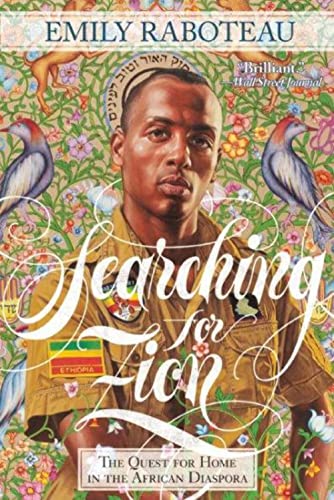
A decade in the making, Emily Raboteau’s Searching for Zion takes readers around the world on an unexpected adventure of faith. Both one woman’s quest for a place to call “home” and an investigation into a people’s search for the Promised Land, this landmark work of creative nonfiction is a trenchant inquiry into contemporary and historical ethnic displacement.
At twenty-three, Raboteau traveled to Israel to visit her childhood best friend. While her friend appeared to have found a place to belong, Raboteau couldn’t relate. As a biracial woman from a country still divided along racial lines, she’d never felt at home in America, unable to find her “Zion,” which she defined as a metaphor for freedom. But in Israel, the Jewish Zion, Raboteau was surprised to discover black Jews. Inspired by their exodus, Raboteau sought out other black communities that had left home in search of a Promised Land. Her question for them is the same she asks herself: have you found the home you’re looking for?
On this ten-year journey back in time and across the globe, Raboteau visits Jamaica, Ethiopia, Ghana, and the American South to explore the complex and contradictory perspectives of Black Zionists. She talks to Rastafarians, African Hebrew Israelites, Evangelicals and Ethiopian Jews, and Katrina transplants from her own family, overturning our ideas of place and patriotism, and displacement and dispossession, in a disarmingly honest and refreshingly brave take on the pull of the story of Exodus.
Die Inhaltsangabe kann sich auf eine andere Ausgabe dieses Titels beziehen.
Über die Autorin bzw. den Autor
Emily Raboteau is the author of the critically acclaimed novel, The Professor’s Daughter. Her fiction and essays have appeared in Best American Short Stories, Best African American Fiction, The Guardian, Oxford American, Tin House and elsewhere. Recipient of numerous awards including a Pushcart Prize and a Literature Fellowship from the National Endowment for the Arts, Raboteau also teaches creative writing at The City College of New York in Harlem.
Auszug. © Genehmigter Nachdruck. Alle Rechte vorbehalten.
ISRAEL: We’re Going to Jerusalem
The security personnel of EL AL Airlines descended on me like a flock of vultures. There were five of them, in uniform, blockading Newark Inernational Airport’s check-in counter. Two women, three men. They looked old enough to have finished their obligatory service in the Israeli Defense Forces but not old enough to have finished college, which meant they were slightly younger than me. I was prepared for the initial question, “What are you?”, which I’ve been asked my entire life, and, though it chafed me, I knew the canned answer that would satisfy: “I look the way I do because my mother is white and my father is black.” This time the usual reply wasn’t good enough. This time the interrogation was tribal. They questioned me rapidly, taking turns.
“What do you mean, black? Where are you from?”
“New Jersey.”
“Why are you going to Israel?”
“To visit a friend.”
“What is your friend?”
“She’s a Cancer.”
“She has cancer?”
“No, no. She’s healthy.”
“She’s Jewish?”
“Yes.”
“How do you know her?”
“We grew up together.”
“Do you speak Hebrew?”
“Shalom,” I began. “Barukh atah Adonai…” I couldn’t remember the rest of the blessing, so I finished with a word I remembered for its perfect onomatopoetic rendering of the sound of liquid being poured from the narrow neck of a vessel: “Bakbuk.”
It means bottle. I must have sounded like a babbling idiot.
“That’s all I know,” I said. I felt ridiculous, but also pissed off at them for making me feel that way. I was twenty-three. I was a kid. I was an angry kid and so were they.
“Where is your father from?”
“Mississippi.”
“No.” By now they were exasperated. “Where are your people from?”
“The United States.”
“Before that. Your ancestors. Where did they come from?”
“My mother’s people are from Ireland.”
They looked doubtful. “What kind of name is this?” They pointed at my opened passport.
I felt cornered and all I had to defend myself with was my big mouth. It was so obviously not a time for joking. “A surname,” I joked.
“How do you say it?”
“Don’t ask me. It’s French.” There was a village in Haiti called Raboteau. That much I knew. Raboteau may once have been a sugar plantation, named for its French owner, one of whose slaves may have been my ancestor. It’s also possible I descended from the master himself. Or from both – master and slave.
“You’re French?” they pressed.
“No, I told you. I’m American.”
“This!” They stabbed at my middle name, Ishem. “What is the meaning of this name?”
“I don’t know,” I answered, honestly. I was named after my father’s great-aunt, Emily Ishem, who died of cancer long before I was born. I had little idea where the name came from, just a vague sense that like many slave names, it was European. My father couldn’t name anyone from our family tree before his great-grandmother, Mary Lloyd, a slave from New Orleans. Preceding her was a terrible blank. After Mary Lloyd came Edward Ishem, the son she named after his white father, a merchant marine who threatened to take the boy back with him to Europe. To save him, Mary shepherded her son to the Bay of St. Louis where it empties into the Mississippi Sound. There he grew up and married a Creole woman called, deliciously, Philomena Laneaux. They gave birth to my grandmother, Mabel Sincere, and her favorite sister, Emily Ishem, for whom I am named.
“It sounds Arabic,” one of them remarked.
“Thank you,” I said.
“Do you speak Arabic?”
“I know better than to try.”
“What do you mean?”
“No, I don’t speak Arabic.”
“What are your origins?”
I felt caught in a loop of the Abbot and Costello routine, “Who’s on first?” There was no place for me inside their rhetoric. I didn’t have the right vocabulary. I didn’t have the right pedigree. My mixed race had made me a perpetual unanswered question. The Atlantic slave trade had made me a mongrel and a threat.
“Ms. Raboteau! Do you want to get on that plane?”
I was beginning to wonder.
“Do you?”
“Yes.”
“Answer the question then! What are your origins?”
What else was I supposed to say?
“A sperm and an egg,” I snapped.
That’s when they grabbed my luggage, whisked me to the basement, stripped off my clothes and probed every inch of my body for explosives, inside and out. When they didn’t find any, they focused on my tattoo, a Japanese character. According to the tattoo artist it meant different, precious, unique.
I was completely naked, and the room was cold. My nipples were hard. I tried to cover myself with my hands. I remember feeling incredibly thirsty. One of them flicked my left shoulder with a latex glove. “What does it mean?” he asked. This was the first time I’d been racially profiled, not that the experience would have been any less humiliating had it been my five hundredth. “It means Fuck You,” I wanted to say, not merely because they’d stripped me of my dignity, but because they’d shoved my face into my own rootlessness. I have never felt more black in my life than I did when I was mistaken for an Arab.
***
Why was I so angry? As a consequence of growing up half white in a nation divided along racial lines, I had never felt at home in the United States. Being half black, I identified with James Baldwin’s line in The Fire Next Time about black GIs returning from war only to discover the democracy they’d risked their lives to defend abroad continued to elude them at home: “Home! The very word begins to have a despairing and diabolical ring.” Though my successful father, Princeton University’s Henry W. Putnam Professor of Religion, was an exception to the rule that black people had fewer opportunities, and though I had advantages up the wazoo, I remained so disillusioned about American equality that much of my young adulthood was spent in a blanket of low-burning rage.
I inherited my sense of displacement from my father. It had something to do with the legacy of our slave past. Our ancestors did not come to this country freely, but by force – the general Kunta Kinte rap of the uprooted. But it had even more to do with the particular circumstances of my grandfather’s death. He was murdered in the state of Mississippi in 1943. Afterwards, my grandmother, Mabel, fled North with her children, in search, like so many blacks who left the South, of the Promised Land. It was as if my father, whose father had been ripped from him, had been exiled. My father’s feelings of...
„Über diesen Titel“ kann sich auf eine andere Ausgabe dieses Titels beziehen.
Suchergebnisse für Searching for Zion

Beispielbild für diese ISBN
Searching for Zion
Anbieter: ThriftBooks-Atlanta, AUSTELL, GA, USA
Verkäuferbewertung 5 von 5 Sternen

Paperback. Zustand: Very Good. No Jacket. May have limited writing in cover pages. Pages are unmarked. ~ ThriftBooks: Read More, Spend Less. Artikel-Nr. G0802122272I4N00
Gebraucht kaufen
EUR 6,38
Versand gratis
Versand innerhalb von USA
Versand innerhalb von USA
Anzahl: 1 verfügbar
Beispielbild für diese ISBN
Searching for Zion
Anbieter: World of Books (was SecondSale), Montgomery, IL, USA
Verkäuferbewertung 5 von 5 Sternen
Paperback. Zustand: Fair. "A brilliant illustration of the ways in which race is an artificial construct that, like beauty, is often a matter of perspective."--The Wall Street Journal "Frank and expansive . . . Each impressionistic, deeply personal vignette is a building block, detailing [Raboteau's] far-flung search for 'home'--a 'promised land' that's as brick-and-mortar tangible as it is spiritually confirming."--Chicago Tribune A decade in the making, Emily Raboteau's Searching for Zion takes readers around the world on an unexpected adventure of faith. Both one woman's quest for a place to call "home" and an investigation into a people's search for the Promised Land, this landmark work of creative nonfiction is a trenchant inquiry into contemporary and historical ethnic displacement. At twenty-three, Raboteau traveled to Israel to visit her childhood best friend. While her friend appeared to have found a place to belong, Raboteau couldn't relate. As a biracial woman from a country still divided along racial lines, she'd never felt at home in America, unable to find her "Zion," which she defined as a metaphor for freedom. But in Israel, the Jewish Zion, Raboteau was surprised to discover black Jews. Inspired by their exodus, Raboteau sought out other black communities that had left home in search of a Promised Land. Her question for them is the same she asks herself: have you found the home you're looking for? On this ten-year journey back in time and across the globe, Raboteau visits Jamaica, Ethiopia, Ghana, and the American South to explore the complex and contradictory perspectives of Black Zionists. She talks to Rastafarians, African Hebrew Israelites, Evangelicals and Ethiopian Jews, and Katrina transplants from her own family, overturning our ideas of place and patriotism, and displacement and dispossession, in a disarmingly honest and refreshingly brave take on the pull of the story of Exodus. Artikel-Nr. 00080111374
Gebraucht kaufen
EUR 6,39
Versand gratis
Versand innerhalb von USA
Versand innerhalb von USA
Anzahl: 1 verfügbar
Beispielbild für diese ISBN
Searching for Zion
Anbieter: World of Books (was SecondSale), Montgomery, IL, USA
Verkäuferbewertung 5 von 5 Sternen
Paperback. Zustand: Good. "A brilliant illustration of the ways in which race is an artificial construct that, like beauty, is often a matter of perspective."--The Wall Street Journal "Frank and expansive . . . Each impressionistic, deeply personal vignette is a building block, detailing [Raboteau's] far-flung search for 'home'--a 'promised land' that's as brick-and-mortar tangible as it is spiritually confirming."--Chicago Tribune A decade in the making, Emily Raboteau's Searching for Zion takes readers around the world on an unexpected adventure of faith. Both one woman's quest for a place to call "home" and an investigation into a people's search for the Promised Land, this landmark work of creative nonfiction is a trenchant inquiry into contemporary and historical ethnic displacement. At twenty-three, Raboteau traveled to Israel to visit her childhood best friend. While her friend appeared to have found a place to belong, Raboteau couldn't relate. As a biracial woman from a country still divided along racial lines, she'd never felt at home in America, unable to find her "Zion," which she defined as a metaphor for freedom. But in Israel, the Jewish Zion, Raboteau was surprised to discover black Jews. Inspired by their exodus, Raboteau sought out other black communities that had left home in search of a Promised Land. Her question for them is the same she asks herself: have you found the home you're looking for? On this ten-year journey back in time and across the globe, Raboteau visits Jamaica, Ethiopia, Ghana, and the American South to explore the complex and contradictory perspectives of Black Zionists. She talks to Rastafarians, African Hebrew Israelites, Evangelicals and Ethiopian Jews, and Katrina transplants from her own family, overturning our ideas of place and patriotism, and displacement and dispossession, in a disarmingly honest and refreshingly brave take on the pull of the story of Exodus. Artikel-Nr. 00085089398
Gebraucht kaufen
EUR 6,39
Versand gratis
Versand innerhalb von USA
Versand innerhalb von USA
Anzahl: 1 verfügbar
Beispielbild für diese ISBN
Searching for Zion
Anbieter: Wonder Book, Frederick, MD, USA
Verkäuferbewertung 5 von 5 Sternen
Zustand: Good. Good condition. A copy that has been read but remains intact. May contain markings such as bookplates, stamps, limited notes and highlighting, or a few light stains. Bundled media such as CDs, DVDs, floppy disks or access codes may not be included. Artikel-Nr. X13B-01225
Gebraucht kaufen
EUR 6,42
Versand gratis
Versand innerhalb von USA
Versand innerhalb von USA
Anzahl: 1 verfügbar
Beispielbild für diese ISBN
Searching for Zion
Verlag:
Grove/Atlantic, Incorporated, 2014
ISBN 10: 0802122272
ISBN 13: 9780802122278
Gebraucht
Softcover
Anbieter: Better World Books, Mishawaka, IN, USA
Verkäuferbewertung 5 von 5 Sternen
Zustand: Good. Former library copy. Pages intact with minimal writing/highlighting. The binding may be loose and creased. Dust jackets/supplements are not included. Includes library markings. Stock photo provided. Product includes identifying sticker. Better World Books: Buy Books. Do Good. Artikel-Nr. 14243347-6
Gebraucht kaufen
EUR 6,56
Versand gratis
Versand innerhalb von USA
Versand innerhalb von USA
Anzahl: 1 verfügbar
Beispielbild für diese ISBN
Searching for Zion
Verlag:
Grove/Atlantic, Incorporated, 2014
ISBN 10: 0802122272
ISBN 13: 9780802122278
Gebraucht
Softcover
Anbieter: Better World Books: West, Reno, NV, USA
Verkäuferbewertung 5 von 5 Sternen
Zustand: Very Good. Pages intact with possible writing/highlighting. Binding strong with minor wear. Dust jackets/supplements may not be included. Stock photo provided. Product includes identifying sticker. Better World Books: Buy Books. Do Good. Artikel-Nr. 13994971-6
Gebraucht kaufen
EUR 6,56
Versand gratis
Versand innerhalb von USA
Versand innerhalb von USA
Anzahl: 1 verfügbar
Beispielbild für diese ISBN
Searching for Zion
Anbieter: Revaluation Books, Exeter, Vereinigtes Königreich
Verkäuferbewertung 5 von 5 Sternen
Paperback. Zustand: Brand New. 320 pages. 8.50x5.75x1.00 inches. In Stock. Artikel-Nr. x-0802122272
Neu kaufen
EUR 20,23
EUR 11,84 Versand
Versand von Vereinigtes Königreich nach USA
Versand von Vereinigtes Königreich nach USA
Anzahl: 2 verfügbar
Foto des Verkäufers
Searching for Zion
Anbieter: AHA-BUCH GmbH, Einbeck, Deutschland
Verkäuferbewertung 5 von 5 Sternen
Taschenbuch. Zustand: Neu. Neuware - "A brilliant illustration of the ways in which race is an artificial construct that, like beauty, is often a matter of perspective."The Wall Street Journal"Frank and expansive . . . Each impressionistic, deeply personal vignette is a building block, detailing [Raboteau's] far-flung search for 'home'a 'promised land' that's as brick-and-mortar tangible as it is spiritually confirming."Chicago TribuneA decade in the making, Emily Raboteau's Searching for Zion takes readers around the world on an unexpected adventure of faith. Both one woman's quest for a place to call "home" and an investigation into a people's search for the Promised Land, this landmark work of creative nonfiction is a trenchant inquiry into contemporary and historical ethnic displacement.At twenty-three, Raboteau traveled to Israel to visit her childhood best friend. While her friend appeared to have found a place to belong, Raboteau couldn't relate. As a biracial woman from a country still divided along racial lines, she'd never felt at home in America, unable to find her "Zion," which she defined as a metaphor for freedom. But in Israel, the Jewish Zion, Raboteau was surprised to discover black Jews. Inspired by their exodus, Raboteau sought out other black communities that had left home in search of a Promised Land. Her question for them is the same she asks herself: have you found the home you're looking for On this ten-year journey back in time and across the globe, Raboteau visits Jamaica, Ethiopia, Ghana, and the American South to explore the complex and contradictory perspectives of Black Zionists. She talks to Rastafarians, African Hebrew Israelites, Evangelicals and Ethiopian Jews, and Katrina transplants from her own family, overturning our ideas of place and patriotism, and displacement and dispossession, in a disarmingly honest and refreshingly brave take on the pull of the story of Exodus. Artikel-Nr. 9780802122278
Neu kaufen
EUR 25,18
EUR 35,00 Versand
Versand von Deutschland nach USA
Versand von Deutschland nach USA
Anzahl: 2 verfügbar
Foto des Verkäufers
Searching for Zion
Anbieter: moluna, Greven, Deutschland
Verkäuferbewertung 5 von 5 Sternen
Zustand: New. Über den AutorrnrnEmily Raboteau is the author of the critically acclaimed novel, The Professor s Daughter. Her fiction and essays have appeared in Best American Short Stories, Best African American Fiction,. Artikel-Nr. 898722578
Neu kaufen
EUR 18,69
EUR 48,99 Versand
Versand von Deutschland nach USA
Versand von Deutschland nach USA
Anzahl: Mehr als 20 verfügbar