
Verwandte Artikel zu Worm: The First Digital World War
Inhaltsangabe
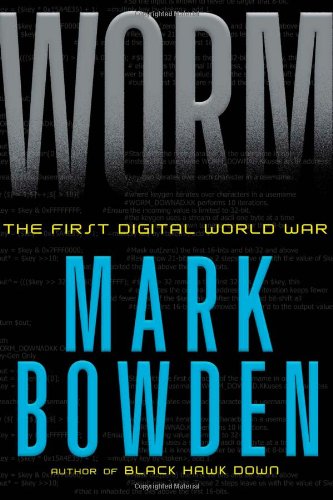
From the bestselling author of Black Hawk Down, the gripping story of the Conficker worm—the cyberattack that nearly toppled the world.
The Conficker worm infected its first computer in November 2008, and within a month had infiltrated 1.5 million computers in 195 countries. Banks, telecommunications companies, and critical government networks—including British Parliament and the French and German military—became infected almost instantaneously. No one had ever seen anything like it.
By January 2009, the worm lay hidden in at least eight million computers, and the botnet of linked computers it had created was big enough that an attack might crash the world. In this "masterpiece" (The Philadelphia Inquirer), Mark Bowden expertly lays out a spellbinding tale of how hackers, researchers, millionaire Internet entrepreneurs, and computer security experts found themselves drawn into a battle between those determined to exploit the Internet and those committed to protecting it.
Die Inhaltsangabe kann sich auf eine andere Ausgabe dieses Titels beziehen.
Über die Autorin bzw. den Autor
Mark Bowden is the author of fifteen books, including the #1 New York Times bestseller Black Hawk Down. He reported at the Philadelphia Inquirer for twenty years and now writes for the Atlantic and other magazines.
Auszug. © Genehmigter Nachdruck. Alle Rechte vorbehalten.
Worm
The First Digital World WarBy Mark BowdenAtlantic Monthly Press
Copyright © 2011 Mark BowdenAll right reserved.
ISBN: 978-0-8021-1983-4
Chapter One
ZeroNEW MUTANT ACTIVITY REGISTERED —X-Men; The Age of Apocalypse
The new worm in Phil Porras's digital petri dish was announced in the usual way: a line of small black type against a white backdrop on one of his three computer screens, displaying just the barest of descriptors—time of arrival ... server type ... point of origin ... nineteen columns in all.
The readout began:
17:52:00 ... Win2K-f ... 201.212.167.29 (NET.AR): PRIMA S.A, BUENOS AIRES, BUENOS AIRES, AR. (DSL) ...
It was near the end of the workday for most Californians, November 20, 2008, a cool evening in Menlo Park. Phil took no notice of the newcomer at first. Scores of these digital infections were recorded on his monitor every day, each a simple line on his Daily Infections Log—actually, his "Multi perspective Malware Infection Analysis Page." This was the 137th that day. It had an Internet Protocol (IP) address from Argentina. Spread out across the screen were the infection's vitals, including one column that noted how familiar it was to the dozens of antivirus (AV) companies who ride herd on malicious software (malware). Most were instantly familiar. For instance, the one just above was known to all 33 of the applicable AV vendors. The one before that: 35 out of 36.
This one registered a zero in the recognition column: 0 of 37. This is what caught his eye when he first noticed it on his Log.
Zero.
Outside it was dark, but as usual Phil was still at his desk in a small second-story office on the grounds of SRI International, a busy hive of labs, hundreds of them, not far from Stanford University. It is a crowded cluster of very plain three-story tan-and-maroon buildings arrayed around small parking lots like rectangular building blocks. There is not a lot of green space. It is a node of condensed brainpower, one of the best-funded centers for applied science in the world, and with about seventeen hundred workers is the second-largest employer in Menlo Park. It began life as the Stanford Research Institute—hence the initials SRI—but it was spun off by the university forty years ago. It's a place where ideas become reality, the birthplace of gizmos like the computer mouse, ultrasound imagery machines, or tiny robot drones. The trappings of Phil's office are simple: a white leather couch, a lamp, and a desk, which is mostly taken up by his array of three computer monitors. On the walls are whiteboards filled with calculations and schematics and several framed photos of vintage World War II fighter planes, vestiges of a boyhood passion for model building. The view out his window, through a few leafy branches, is of an identical building across an enclosed yard. It could be any office in any industrial park in any state in America. But what's remarkable about the view from behind Phil's desk has nothing to do with what's outside his window. It's on those monitors. Spread out in his desktop array of glowing multicolored pixels is a vista of cyberspace equal to ... say, the state of Texas.
One of the inventions SRI pioneered was the Internet. The research center is a cornerstone of the global phenomenon; it owned one of the first two computers formally linked together in 1969, the first strand of a web that today links billions. This was more than two decades before Al Gore popularized the term "information superhighway." There at the genesis, every computer that connected to the nascent network was assigned its own 32-bit identity number or IP address, represented in four octets of ones and zeros. Today the sheer size of the Internet has necessitated a new system that uses 128-bit addresses. SRI ceded authority for assigning and keeping track of such things years ago, but it retains ownership of a very large chunk of cyberspace. Phil's portion of it is a relatively modest, nothing-to-brag-about-but-damned-hard-to-get, "slash 16," a block of the original digital universe containing 65,536 unique IP addresses—in other words, the last two octets of its identity number are variable, so that there are two to the sixteenth (216) possible distinct addresses, one for each potential machine added to its network. It gives him what he calls "a large contact surface" on the Internet. He's like a rancher with his boots propped on the rail on the front porch before a wide-open prairie with, as the country song says, miles of lonesome in every direction. It's good for spotting intruders.
Phil's specialty is computer security, or, rather, Internet security, because few computers today are not linked to others. Each is part of a network tied to another larger network that is in turn linked to a still larger one, and so on, forming an intricate invisible web of electrons that today circle the Earth and reach even to the most distant parts of our galaxy (if you count those wayfaring NASA robot vehicles sending back cool snapshots from mankind's farthest reach into space). This web is the singular marvel of the modern age, a kind of global brain, the world at everyone's fingertips. It is a tool so revolutionary that we have just begun to glimpse its potential—for good and for evil.
Out on his virtual front porch, Phil keeps his eyes peeled for trouble. Most of what he sees is routine, the viral annoyances that have bedeviled computer users everywhere for decades, illustrating the principle that any new tool, no matter how helpful, will also be used for harm. Viruses are responsible for such things as the spamming of your in-box with come-ons for penis enlargement or million-dollar investment opportunities in Nigeria. Some malware is designed to damage or destroy your computer, or threaten to do so unless you purchase a remedy (which turns out to be fake). When you get hit, you know it. But the newest, most sophisticated computer viruses, like the most successful biological viruses, have bigger ambitions, and are designed for stealth. They would be noticed only by the most technically capable and vigilant of geeks. For these, you have to be looking.
Anything new was enough to make Phil's spine tingle. He had been working with computers since he was in high school in Whittier, California, and had sent away in 1984 for a build-it-yourself personal computer. Back then personal computers were not yet on the market. Small companies catered to a fringe community of users, many of them teenagers, who were excited enough and smart enough to see the potential for home use. They would order kits and assemble the machines themselves, using them to play games, mostly, or configuring them to perform simple household or business chores. Phil's dad was an accountant, and his mom ran a care center for senior citizens, so he amazed them by programming his toy to handle time-consuming, monotonous tasks. But mostly he played games. He took computer classes in high school, contributing at least as much as he took away, and in college at the University of California, Irvine, he fell in with a group of like-minded geeks who amused themselves by showing off their programming skills. At the time—this was in the late 1980s—Sun Microsystems dominated the software world with "Solaris," an operating system with a reputation for state-of-the-art security features. Phil and his friends engaged in a game of one-upmanship,...
„Über diesen Titel“ kann sich auf eine andere Ausgabe dieses Titels beziehen.
Suchergebnisse für Worm: The First Digital World War

Beispielbild für diese ISBN
Worm: The First Digital World War
Anbieter: World of Books (was SecondSale), Montgomery, IL, USA
Verkäuferbewertung 5 von 5 Sternen

Hardback. Zustand: Good. From the bestselling author of Black Hawk Down, the gripping story of the Conficker worm--the cyberattack that nearly toppled the world. The Conficker worm infected its first computer in November 2008, and within a month had infiltrated 1.5 million computers in 195 countries. Banks, telecommunications companies, and critical government networks--including British Parliament and the French and German military--became infected almost instantaneously. No one had ever seen anything like it. By January 2009, the worm lay hidden in at least eight million computers, and the botnet of linked computers it had created was big enough that an attack might crash the world. In this "masterpiece" (The Philadelphia Inquirer), Mark Bowden expertly lays out a spellbinding tale of how hackers, researchers, millionaire Internet entrepreneurs, and computer security experts found themselves drawn into a battle between those determined to exploit the Internet and those committed to protecting it. Artikel-Nr. 00094249412
Gebraucht kaufen
EUR 5,03
Versand gratis
Versand innerhalb von USA
Versand innerhalb von USA
Anzahl: 5 verfügbar
Beispielbild für diese ISBN
Worm: The First Digital World War
Anbieter: World of Books (was SecondSale), Montgomery, IL, USA
Verkäuferbewertung 5 von 5 Sternen
Hardback. Zustand: Very Good. From the bestselling author of Black Hawk Down, the gripping story of the Conficker worm--the cyberattack that nearly toppled the world. The Conficker worm infected its first computer in November 2008, and within a month had infiltrated 1.5 million computers in 195 countries. Banks, telecommunications companies, and critical government networks--including British Parliament and the French and German military--became infected almost instantaneously. No one had ever seen anything like it. By January 2009, the worm lay hidden in at least eight million computers, and the botnet of linked computers it had created was big enough that an attack might crash the world. In this "masterpiece" (The Philadelphia Inquirer), Mark Bowden expertly lays out a spellbinding tale of how hackers, researchers, millionaire Internet entrepreneurs, and computer security experts found themselves drawn into a battle between those determined to exploit the Internet and those committed to protecting it. Artikel-Nr. 00105393183
Gebraucht kaufen
EUR 5,03
Versand gratis
Versand innerhalb von USA
Versand innerhalb von USA
Anzahl: 4 verfügbar
Beispielbild für diese ISBN
Worm: The First Digital World War
Verlag:
Atlantic Monthly Press (edition First Edition), 2011
ISBN 10: 0802119832
ISBN 13: 9780802119834
Gebraucht
Hardcover
Erstausgabe
Anbieter: BooksRun, Philadelphia, PA, USA
Verkäuferbewertung 5 von 5 Sternen
Hardcover. Zustand: Very Good. First Edition. With dust jacket. It's a well-cared-for item that has seen limited use. The item may show minor signs of wear. All the text is legible, with all pages included. It may have slight markings and/or highlighting. Artikel-Nr. 0802119832-8-1-29
Gebraucht kaufen
EUR 5,23
Versand gratis
Versand innerhalb von USA
Versand innerhalb von USA
Anzahl: 1 verfügbar
Beispielbild für diese ISBN
Worm : The First Digital World War
Verlag:
Grove/Atlantic, Incorporated, 2011
ISBN 10: 0802119832
ISBN 13: 9780802119834
Gebraucht
Hardcover
Erstausgabe
Anbieter: Better World Books, Mishawaka, IN, USA
Verkäuferbewertung 5 von 5 Sternen
Zustand: Very Good. 1st Edition. Pages intact with possible writing/highlighting. Binding strong with minor wear. Dust jackets/supplements may not be included. Stock photo provided. Product includes identifying sticker. Better World Books: Buy Books. Do Good. Artikel-Nr. 923579-6
Gebraucht kaufen
EUR 6,34
Versand gratis
Versand innerhalb von USA
Versand innerhalb von USA
Anzahl: 1 verfügbar
Beispielbild für diese ISBN
Worm: The First Digital World War
Anbieter: Wonder Book, Frederick, MD, USA
Verkäuferbewertung 5 von 5 Sternen
Zustand: Good. Good condition. Good dust jacket. A copy that has been read but remains intact. May contain markings such as bookplates, stamps, limited notes and highlighting, or a few light stains. Artikel-Nr. Q04N-01354
Gebraucht kaufen
EUR 6,41
Versand gratis
Versand innerhalb von USA
Versand innerhalb von USA
Anzahl: 1 verfügbar
Beispielbild für diese ISBN
Worm: The First Digital World War
Anbieter: Wonder Book, Frederick, MD, USA
Verkäuferbewertung 5 von 5 Sternen
Zustand: Very Good. Very Good condition. Very Good dust jacket. A copy that may have a few cosmetic defects. May also contain light spine creasing or a few markings such as an owner's name, short gifter's inscription or light stamp. Artikel-Nr. H14A-01736
Gebraucht kaufen
EUR 6,41
Versand gratis
Versand innerhalb von USA
Versand innerhalb von USA
Anzahl: 3 verfügbar
Beispielbild für diese ISBN
Worm: The First Digital World War
Anbieter: ThriftBooks-Atlanta, AUSTELL, GA, USA
Verkäuferbewertung 5 von 5 Sternen
Hardcover. Zustand: Very Good. No Jacket. May have limited writing in cover pages. Pages are unmarked. ~ ThriftBooks: Read More, Spend Less. Artikel-Nr. G0802119832I4N00
Gebraucht kaufen
EUR 6,49
Versand gratis
Versand innerhalb von USA
Versand innerhalb von USA
Anzahl: 1 verfügbar
Beispielbild für diese ISBN
Worm: The First Digital World War
Anbieter: ThriftBooks-Atlanta, AUSTELL, GA, USA
Verkäuferbewertung 5 von 5 Sternen
Hardcover. Zustand: Very Good. No Jacket. Missing dust jacket; May have limited writing in cover pages. Pages are unmarked. ~ ThriftBooks: Read More, Spend Less. Artikel-Nr. G0802119832I4N01
Gebraucht kaufen
EUR 6,49
Versand gratis
Versand innerhalb von USA
Versand innerhalb von USA
Anzahl: 1 verfügbar
Beispielbild für diese ISBN
Worm: The First Digital World War
Anbieter: ThriftBooks-Dallas, Dallas, TX, USA
Verkäuferbewertung 5 von 5 Sternen
Hardcover. Zustand: Very Good. No Jacket. May have limited writing in cover pages. Pages are unmarked. ~ ThriftBooks: Read More, Spend Less. Artikel-Nr. G0802119832I4N00
Gebraucht kaufen
EUR 6,49
Versand gratis
Versand innerhalb von USA
Versand innerhalb von USA
Anzahl: 1 verfügbar
Foto des Verkäufers
Worm: The First Digital World War
Verlag:
Grove Press / Atlantic Monthly Press, 2011
ISBN 10: 0802119832
ISBN 13: 9780802119834
Gebraucht
Hardcover
Anbieter: WeBuyBooks, Rossendale, LANCS, Vereinigtes Königreich
Verkäuferbewertung 5 von 5 Sternen
hardcover. Zustand: Very Good. Most items will be dispatched the same or the next working day. A copy that has been read, but is in excellent condition. Pages are intact and not marred by notes or highlighting. The spine remains undamaged. Artikel-Nr. rev2664219387
Gebraucht kaufen
EUR 1,60
EUR 7,96 Versand
Versand von Vereinigtes Königreich nach USA
Versand von Vereinigtes Königreich nach USA
Anzahl: 1 verfügbar