
Verwandte Artikel zu Violent Environments: Social Bonds and Racial Hubris
Inhaltsangabe
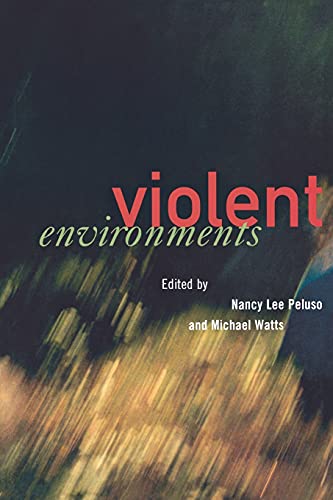
Do environmental problems and processes produce violence? Current U.S. policy about environmental conflict and scholarly work on environmental security assume direct causal links between population growth, resource scarcity, and violence. This belief, a staple of governmental decision-making during both Clinton administrations and widely held in the environmental security field, depends on particular assumptions about the nature of the state, the role of population growth, and the causes of environmental degradation.
The conventional understanding of environmental security, and its assumptions about the relation between violence and the environment, are challenged and refuted in Violent Environments. Chapters by geographers, historians, anthropologists, and sociologists include accounts of ethnic war in Indonesia, petro-violence in Nigeria and Ecuador, wildlife conservation in Tanzania, and "friendly fire" at Russia's nuclear weapons sites.
Violent Environments portrays violence as a site-specific phenomenon rooted in local histories and societies, yet connected to larger processes of material transformation and power relations. The authors argue that specific resource environments, including tropical forests and oil reserves, and environmental processes (such as deforestation, conservation, or resource abundance) are constituted by and in part constitute the political economy of access to and control over resources. Violent Environments demands new approaches to an international set of complex problems, powerfully arguing for deeper, more ethnographically informed analyses of the circumstances and processes that cause violence.
Do environmental problems and processes produce violence? Current U.S. policy about environmental conflict and scholarly work on environmental security assume direct causal links between population growth, resource scarcity, and violence. This belief, a staple of governmental decision-making during both Clinton administrations and widely held in the environmental security field, depends on particular assumptions about the nature of the state, the role of population growth, and the causes of environmental degradation.The conventional understanding of environmental security, and its assumptions about the relation between violence and the environment, are challenged and refuted in Violent Environments. Chapters by geographers, historians, anthropologists, and sociologists include accounts of ethnic war in Indonesia, petro-violence in Nigeria and Ecuador, wildlife conservation in Tanzania, and "friendly fire" at Russia's nuclear weapons sites. Violent Environments portrays violence as a site-specific phenomenon rooted in local histories and societies, yet connected to larger processes of material transformation and power relations. The authors argue that specific resource environments, including tropical forests and oil reserves, and environmental processes (such as deforestation, conservation, or resource abundance) are constituted by and in part constitute the political economy of access to and control over resources. Violent Environments demands new approaches to an international set of complex problems, powerfully arguing for deeper, more ethnographically informed analyses of the circumstances and processes that cause violence.
Die Inhaltsangabe kann sich auf eine andere Ausgabe dieses Titels beziehen.
Über die Autorin bzw. den Autor
Nancy Lee Peluso is Associate Professor of Environmental Sociology and Policy at the University of California, Berkeley. Michael Watts is Director of the Institute of International Studies and Professor of Geography at the University of California, Berkeley.
„Über diesen Titel“ kann sich auf eine andere Ausgabe dieses Titels beziehen.
Suchergebnisse für Violent Environments: Social Bonds and Racial Hubris

Beispielbild für diese ISBN
The Violent Environments: Social Bonds and Racial Hubris
Verlag:
Cornell University Press, 2001
ISBN 10: 0801487110
ISBN 13: 9780801487118
Gebraucht
Paperback
Anbieter: ThriftBooks-Dallas, Dallas, TX, USA
Verkäuferbewertung 5 von 5 Sternen

Paperback. Zustand: Very Good. No Jacket. May have limited writing in cover pages. Pages are unmarked. ~ ThriftBooks: Read More, Spend Less. Artikel-Nr. G0801487110I4N00
Gebraucht kaufen
EUR 9,44
Versand gratis
Versand innerhalb von USA
Versand innerhalb von USA
Anzahl: 1 verfügbar
Beispielbild für diese ISBN
The Violent Environments: Social Bonds and Racial Hubris
Verlag:
Cornell University Press, 2001
ISBN 10: 0801487110
ISBN 13: 9780801487118
Gebraucht
Paperback
Anbieter: ThriftBooks-Atlanta, AUSTELL, GA, USA
Verkäuferbewertung 5 von 5 Sternen
Paperback. Zustand: Good. No Jacket. Pages can have notes/highlighting. Spine may show signs of wear. ~ ThriftBooks: Read More, Spend Less. Artikel-Nr. G0801487110I3N00
Gebraucht kaufen
EUR 9,44
Versand gratis
Versand innerhalb von USA
Versand innerhalb von USA
Anzahl: 1 verfügbar
Beispielbild für diese ISBN
Violent Environments: Social Bonds and Racial Hubris
Verlag:
Cornell University Press, 2001
ISBN 10: 0801487110
ISBN 13: 9780801487118
Gebraucht
Softcover
Anbieter: Anybook.com, Lincoln, Vereinigtes Königreich
Verkäuferbewertung 5 von 5 Sternen
Zustand: Fair. This is an ex-library book and may have the usual library/used-book markings inside.This book has soft covers. Book contains pencil markings. In fair condition, suitable as a study copy. Library sticker on front cover. Please note the Image in this listing is a stock photo and may not match the covers of the actual item,750grams, ISBN:9780801487118. Artikel-Nr. 2279302
Gebraucht kaufen
EUR 19,20
EUR 15,30 Versand
Versand von Vereinigtes Königreich nach USA
Versand von Vereinigtes Königreich nach USA
Anzahl: 1 verfügbar
Beispielbild für diese ISBN
Violent Environments
Anbieter: PBShop.store UK, Fairford, GLOS, Vereinigtes Königreich
Verkäuferbewertung 5 von 5 Sternen
PAP. Zustand: New. New Book. Shipped from UK. Established seller since 2000. Artikel-Nr. FW-9780801487118
Neu kaufen
EUR 37,80
EUR 5,89 Versand
Versand von Vereinigtes Königreich nach USA
Versand von Vereinigtes Königreich nach USA
Anzahl: 1 verfügbar
Beispielbild für diese ISBN
Violent Environments
Anbieter: Ria Christie Collections, Uxbridge, Vereinigtes Königreich
Verkäuferbewertung 5 von 5 Sternen
Zustand: New. In English. Artikel-Nr. ria9780801487118_new
Neu kaufen
EUR 45,64
EUR 13,25 Versand
Versand von Vereinigtes Königreich nach USA
Versand von Vereinigtes Königreich nach USA
Anzahl: 1 verfügbar
Beispielbild für diese ISBN
Violent Environments
Anbieter: Kennys Bookstore, Olney, MD, USA
Verkäuferbewertung 5 von 5 Sternen
Zustand: New. Editor(s): Peluso, Nancy Lee; Watts, Michael. Num Pages: 464 pages, 12. BIC Classification: JPA. Category: (P) Professional & Vocational; (UP) Postgraduate, Research & Scholarly; (UU) Undergraduate. Dimension: 234 x 154 x 30. Weight in Grams: 646. . 2001. Paperback. . . . . Books ship from the US and Ireland. Artikel-Nr. V9780801487118
Neu kaufen
EUR 56,14
EUR 9,33 Versand
Versand innerhalb von USA
Versand innerhalb von USA
Anzahl: 1 verfügbar
Foto des Verkäufers
Violent Environments
Verlag:
Cornell University Press, 2001
ISBN 10: 0801487110
ISBN 13: 9780801487118
Neu
Kartoniert / Broschiert
Anbieter: moluna, Greven, Deutschland
Verkäuferbewertung 5 von 5 Sternen
Kartoniert / Broschiert. Zustand: New. Do environmental problems and processes produce violence? Current U.S. policy about environmental conflict and scholarly work on environmental security assume direct causal links between population growth, resource scarcity, and violence. This belief. Artikel-Nr. 595004343
Neu kaufen
EUR 56,25
EUR 48,99 Versand
Versand von Deutschland nach USA
Versand von Deutschland nach USA
Anzahl: Mehr als 20 verfügbar
Foto des Verkäufers
Violent Environments
Verlag:
Cornell University Press Aug 2001, 2001
ISBN 10: 0801487110
ISBN 13: 9780801487118
Neu
Taschenbuch
Anbieter: AHA-BUCH GmbH, Einbeck, Deutschland
Verkäuferbewertung 5 von 5 Sternen
Taschenbuch. Zustand: Neu. Neuware - Do environmental problems and processes produce violence Current U.S. policy about environmental conflict and scholarly work on environmental security assume direct causal links between population growth, resource scarcity, and violence. This belief, a staple of governmental decision-making during both Clinton administrations and widely held in the environmental security field, depends on particular assumptions about the nature of the state, the role of population growth, and the causes of environmental degradation. Artikel-Nr. 9780801487118
Neu kaufen
EUR 73,88
EUR 35,00 Versand
Versand von Deutschland nach USA
Versand von Deutschland nach USA
Anzahl: 1 verfügbar