
Verwandte Artikel zu The Labor of Development: Workers and the Transformation...
Inhaltsangabe
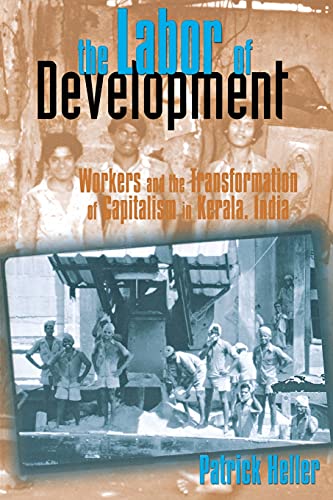
The state of Kerala in southern India is notable for the ways in which lower-class mobilization and state intervention have combined to create one of the most successful cases of social and redistributive development in the Third World. In contrast to predictions that labor militancy in developing countries threatens to overload fledgling democratic institutions and derail economic growth, The Labor of Development shows that the political and economic inclusion of industrial and agricultural workers in Kerala set the stage for a democratically negotiated capitalist transformation.
When compared to the other Indian states, Kerala's departure from the national pattern is tied to its history of social movements and highlights the significance of understanding sub-national patterns of democratic consolidation and state building. The case of Kerala provides important theoretical insights into the circumstances under which the expansion of political and social citizenship can become the basis for managing economic change. Using examples from agriculture, industry, and the informal sector, Patrick Heller examines the institutional and political dynamics through which the demands of organized labor and the imperatives of capitalist growth have evolved from a period of open conflict and stagnation to one of class compromise. He also demonstrates that the Kerala model has broad ramifications for understanding the relationship between substantive democracy and market economies in low-income countries.
The state of Kerala in southern India is notable for the ways in which lower-class mobilization and state intervention have combined to create one of the most successful cases of social and redistributive development in the Third World. In contrast to predictions that labor militancy in developing countries threatens to overload fledgling democratic institutions and derail economic growth, The Labor of Development shows that the political and economic inclusion of industrial and agricultural workers in Kerala set the stage for a democratically negotiated capitalist transformation.When compared to the other Indian states, Kerala's departure from the national pattern is tied to its history of social movements and highlights the significance of understanding sub-national patterns of democratic consolidation and state building. The case of Kerala provides important theoretical insights into the circumstances under which the expansion of political and social citizenship can become the basis for managing economic change. Using examples from agriculture, industry, and the informal sector, Patrick Heller examines the institutional and political dynamics through which the demands of organized labor and the imperatives of capitalist growth have evolved from a period of open conflict and stagnation to one of class compromise. He also demonstrates that the Kerala model has broad ramifications for understanding the relationship between substantive democracy and market economies in low-income countries.
Die Inhaltsangabe kann sich auf eine andere Ausgabe dieses Titels beziehen.
Über die Autorin bzw. den Autor
Patrick Heller is Associate Professor of Sociology at the University of California, Berkeley.
„Über diesen Titel“ kann sich auf eine andere Ausgabe dieses Titels beziehen.
Suchergebnisse für The Labor of Development: Workers and the Transformation...

Beispielbild für diese ISBN
The Labor of Development: Workers and the Transformation of Capitalism in Kerala, India
Verlag:
Cornell University Press, 2000
ISBN 10: 0801486246
ISBN 13: 9780801486241
Gebraucht
Paperback
Anbieter: World of Books (was SecondSale), Montgomery, IL, USA
Verkäuferbewertung 5 von 5 Sternen

Paperback. Zustand: Very Good. The state of Kerala in southern India is notable for the ways in which lower-class mobilization and state intervention have combined to create one of the most successful cases of social and redistributive development in the Third World. In contrast to. Artikel-Nr. 00103130646
Gebraucht kaufen
EUR 15,00
Versand gratis
Versand innerhalb von USA
Versand innerhalb von USA
Anzahl: 1 verfügbar
Beispielbild für diese ISBN
The Labor of Development: Workers and the Transformation of Capitalism in Kerala, India
Verlag:
Cornell University Press (edition 1), 2000
ISBN 10: 0801486246
ISBN 13: 9780801486241
Gebraucht
Paperback
Anbieter: BooksRun, Philadelphia, PA, USA
Verkäuferbewertung 5 von 5 Sternen
Paperback. Zustand: Fair. 1. The item might be beaten up but readable. May contain markings or highlighting, as well as stains, bent corners, or any other major defect, but the text is not obscured in any way. Artikel-Nr. 0801486246-7-1
Gebraucht kaufen
EUR 15,01
Versand gratis
Versand innerhalb von USA
Versand innerhalb von USA
Anzahl: 1 verfügbar
Beispielbild für diese ISBN
The Labor of Development
Anbieter: PBShop.store UK, Fairford, GLOS, Vereinigtes Königreich
Verkäuferbewertung 5 von 5 Sternen
PAP. Zustand: New. New Book. Shipped from UK. Established seller since 2000. Artikel-Nr. FW-9780801486241
Neu kaufen
EUR 40,74
EUR 4,84 Versand
Versand von Vereinigtes Königreich nach USA
Versand von Vereinigtes Königreich nach USA
Anzahl: 1 verfügbar
Beispielbild für diese ISBN
The Labor of Development: Workers and the Transformation of Capitalism in Kerala, India
Anbieter: Kennys Bookstore, Olney, MD, USA
Verkäuferbewertung 5 von 5 Sternen
Zustand: New. Num Pages: 304 pages, 9. BIC Classification: 1FKA; GTF; JFFM; JHBL; KCS. Category: (P) Professional & Vocational; (UP) Postgraduate, Research & Scholarly; (UU) Undergraduate. Dimension: 229 x 152 x 20. Weight in Grams: 457. . 2000. 1st Edition. Paperback. . . . . Books ship from the US and Ireland. Artikel-Nr. V9780801486241
Neu kaufen
EUR 49,32
EUR 9,22 Versand
Versand innerhalb von USA
Versand innerhalb von USA
Anzahl: 1 verfügbar
Beispielbild für diese ISBN
The Labor of Development: Workers and the Transformation of Capitalism in Kerala, India
Anbieter: Ria Christie Collections, Uxbridge, Vereinigtes Königreich
Verkäuferbewertung 5 von 5 Sternen
Zustand: New. In English. Artikel-Nr. ria9780801486241_new
Neu kaufen
EUR 48,78
EUR 13,13 Versand
Versand von Vereinigtes Königreich nach USA
Versand von Vereinigtes Königreich nach USA
Anzahl: 1 verfügbar
Beispielbild für diese ISBN
The Labor of Development Workers and the Transformation of Capitalism in Kerala, India
Anbieter: Revaluation Books, Exeter, Vereinigtes Königreich
Verkäuferbewertung 5 von 5 Sternen
Paperback. Zustand: Brand New. 1st edition. 304 pages. 9.00x6.25x0.75 inches. In Stock. Artikel-Nr. xr0801486246
Neu kaufen
EUR 76,35
EUR 11,63 Versand
Versand von Vereinigtes Königreich nach USA
Versand von Vereinigtes Königreich nach USA
Anzahl: 1 verfügbar
Foto des Verkäufers
LABOR OF DEVELOPMENT
Anbieter: moluna, Greven, Deutschland
Verkäuferbewertung 5 von 5 Sternen
Zustand: New. The state of Kerala in southern India is notable for the ways in which lower-class mobilization and state intervention have combined to create one of the most successful cases of social and redistributive development in the Third World. In contrast to. Artikel-Nr. 595004298
Neu kaufen
EUR 58,70
EUR 48,99 Versand
Versand von Deutschland nach USA
Versand von Deutschland nach USA
Anzahl: Mehr als 20 verfügbar
Foto des Verkäufers
The Labor of Development : Workers and the Transformation of Capitalism in Kerala, India
Verlag:
Cornell University Press Jan 2000, 2000
ISBN 10: 0801486246
ISBN 13: 9780801486241
Neu
Taschenbuch
Anbieter: AHA-BUCH GmbH, Einbeck, Deutschland
Verkäuferbewertung 5 von 5 Sternen
Taschenbuch. Zustand: Neu. Neuware - The state of Kerala in southern India is notable for the ways in which lower-class mobilization and state intervention have combined to create one of the most successful cases of social and redistributive development in the Third World. In contrast to predictions that labor militancy in developing countries threatens to overload fledgling democratic institutions and derail economic growth, The Labor of Development shows that the political and economic inclusion of industrial and agricultural workers in Kerala set the stage for a democratically negotiated capitalist transformation. Artikel-Nr. 9780801486241
Neu kaufen
EUR 77,92
EUR 35,00 Versand
Versand von Deutschland nach USA
Versand von Deutschland nach USA
Anzahl: 1 verfügbar