
Verwandte Artikel zu The Geography of Money
Inhaltsangabe
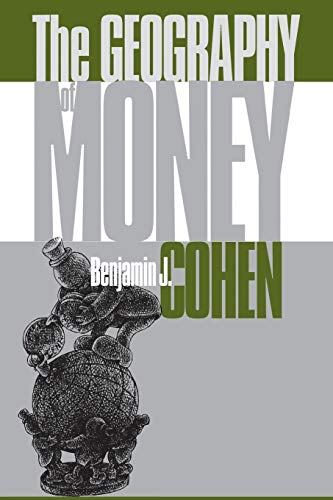
The traditional assumption holds that the territory of money coincides precisely with the political frontiers of each nation state: France has the franc, the United Kingdom has the pound, the United States has the dollar. But the disparity between that simple mental landscape and the actual organization of currency spaces has grown in recent years, as territorial boundaries of individual states limit currency circulation less and less. Many currencies are used outside their "home" country for transactions either between nations or within foreign states. In this book, Benjamin J. Cohen asks what this new geography of money reveals about financial and political power.
Cohen shows how recent changes in the geography of money challenge state sovereignty. He examines the role of money and the scope of cross-border currency competition in today's world. Drawing on new work in geography and network theory to explain the new spatial organization of monetary relations, Cohen suggests that international relations, political as well as economic, are being dramatically reshaped by the increasing interpenetration of national monetary spaces. This process, he explains, generates tensions and insecurities as well as opportunities for cooperation.
The traditional assumption holds that the territory of money coincides precisely with the political frontiers of each nation state: France has the franc, the United Kingdom has the pound, the United States has the dollar. But the disparity between that simple mental landscape and the actual organization of currency spaces has grown in recent years, as territorial boundaries of individual states limit currency circulation less and less. Many currencies are used outside their "home" country for transactions either between nations or within foreign states. In this book, Benjamin J. Cohen asks what this new geography of money reveals about financial and political power. Cohen shows how recent changes in the geography of money challenge state sovereignty. He examines the role of money and the scope of cross-border currency competition in today's world. Drawing on new work in geography and network theory to explain the new spatial organization of monetary relations, Cohen suggests that international relations, political as well as economic, are being dramatically reshaped by the increasing interpenetration of national monetary spaces. This process, he explains, generates tensions and insecurities as well as opportunities for cooperation.
Die Inhaltsangabe kann sich auf eine andere Ausgabe dieses Titels beziehen.
Über die Autorin bzw. den Autor
Benjamin J. Cohen is Louis G. Lancaster Professor of International Political Economy at the University of California, Santa Barbara. He is the author of many other books, including The Future of Money, In Whose Interest? International Banking and American Foreign Policy and Organizing the World's Money: The Political Economy of International Monetary Relations.
„Über diesen Titel“ kann sich auf eine andere Ausgabe dieses Titels beziehen.
Suchergebnisse für The Geography of Money

Beispielbild für diese ISBN
The Geography of Money
Verlag:
Cornell University Press, 2000
ISBN 10: 0801485134
ISBN 13: 9780801485138
Gebraucht
Softcover
Anbieter: Better World Books, Mishawaka, IN, USA
Verkäuferbewertung 5 von 5 Sternen

Zustand: Good. Former library copy. Pages intact with minimal writing/highlighting. The binding may be loose and creased. Dust jackets/supplements are not included. Includes library markings. Stock photo provided. Product includes identifying sticker. Better World Books: Buy Books. Do Good. Artikel-Nr. GRP64601411
Gebraucht kaufen
EUR 9,90
Versand gratis
Versand innerhalb von USA
Versand innerhalb von USA
Anzahl: 1 verfügbar
Beispielbild für diese ISBN
The Geography of Money
Verlag:
Cornell University Press, 2000
ISBN 10: 0801485134
ISBN 13: 9780801485138
Gebraucht
Softcover
Anbieter: Better World Books, Mishawaka, IN, USA
Verkäuferbewertung 5 von 5 Sternen
Zustand: Good. Pages intact with minimal writing/highlighting. The binding may be loose and creased. Dust jackets/supplements are not included. Stock photo provided. Product includes identifying sticker. Better World Books: Buy Books. Do Good. Artikel-Nr. 7703394-6
Gebraucht kaufen
EUR 9,90
Versand gratis
Versand innerhalb von USA
Versand innerhalb von USA
Anzahl: 1 verfügbar
Beispielbild für diese ISBN
The Geography of Money
Verlag:
Cornell University Press, 2000
ISBN 10: 0801485134
ISBN 13: 9780801485138
Gebraucht
Paperback
Anbieter: ThriftBooks-Dallas, Dallas, TX, USA
Verkäuferbewertung 5 von 5 Sternen
Paperback. Zustand: Fair. No Jacket. Readable copy. Pages may have considerable notes/highlighting. ~ ThriftBooks: Read More, Spend Less. Artikel-Nr. G0801485134I5N00
Gebraucht kaufen
EUR 19,16
Versand gratis
Versand innerhalb von USA
Versand innerhalb von USA
Anzahl: 1 verfügbar
Beispielbild für diese ISBN
The Geography of Money
Verlag:
Cornell University Press, 2000
ISBN 10: 0801485134
ISBN 13: 9780801485138
Gebraucht
Paperback
Anbieter: WorldofBooks, Goring-By-Sea, WS, Vereinigtes Königreich
Verkäuferbewertung 5 von 5 Sternen
Paperback. Zustand: Fair. A readable copy of the book which may include some defects such as highlighting and notes. Cover and pages may be creased and show discolouration. Artikel-Nr. GOR008082132
Gebraucht kaufen
EUR 21,34
EUR 6,63 Versand
Versand von Vereinigtes Königreich nach USA
Versand von Vereinigtes Königreich nach USA
Anzahl: 1 verfügbar
Foto des Verkäufers
The Geography of Money
Verlag:
Cornell University Press, 2000
ISBN 10: 0801485134
ISBN 13: 9780801485138
Gebraucht
Encuadernación de tapa blanda
Erstausgabe
Anbieter: Campbell Llibres, Barcelona, B, Spanien
Verkäuferbewertung 5 von 5 Sternen
Encuadernación de tapa blanda. Zustand: Bien. 1ª Edición. Good condition, no damages nor handwritings. Artikel-Nr. 013864
Gebraucht kaufen
EUR 12,20
EUR 23,30 Versand
Versand von Spanien nach USA
Versand von Spanien nach USA
Anzahl: 1 verfügbar
Beispielbild für diese ISBN
The Geography of Money
Anbieter: PBShop.store UK, Fairford, GLOS, Vereinigtes Königreich
Verkäuferbewertung 5 von 5 Sternen
PAP. Zustand: New. New Book. Shipped from UK. Established seller since 2000. Artikel-Nr. FW-9780801485138
Neu kaufen
EUR 40,34
EUR 4,92 Versand
Versand von Vereinigtes Königreich nach USA
Versand von Vereinigtes Königreich nach USA
Anzahl: 1 verfügbar
Beispielbild für diese ISBN
The Geography of Money
Anbieter: Ria Christie Collections, Uxbridge, Vereinigtes Königreich
Verkäuferbewertung 5 von 5 Sternen
Zustand: New. In English. Artikel-Nr. ria9780801485138_new
Neu kaufen
EUR 48,46
EUR 11,09 Versand
Versand von Vereinigtes Königreich nach USA
Versand von Vereinigtes Königreich nach USA
Anzahl: 1 verfügbar
Beispielbild für diese ISBN
The Geography of Money
Anbieter: Kennys Bookstore, Olney, MD, USA
Verkäuferbewertung 5 von 5 Sternen
Zustand: New. Num Pages: 248 pages, 16. BIC Classification: JPA; KCBM. Category: (P) Professional & Vocational; (UP) Postgraduate, Research & Scholarly; (UU) Undergraduate. Dimension: 229 x 157 x 15. Weight in Grams: 350. . 2000. 1st Edition. Paperback. . . . . Books ship from the US and Ireland. Artikel-Nr. V9780801485138
Neu kaufen
EUR 62,90
EUR 9,41 Versand
Versand innerhalb von USA
Versand innerhalb von USA
Anzahl: 1 verfügbar
Beispielbild für diese ISBN
The Geography of Money
Anbieter: Revaluation Books, Exeter, Vereinigtes Königreich
Verkäuferbewertung 5 von 5 Sternen
Paperback. Zustand: Brand New. 1st edition. 248 pages. 6.25x9.00x0.50 inches. In Stock. Artikel-Nr. x-0801485134
Neu kaufen
EUR 75,63
EUR 11,84 Versand
Versand von Vereinigtes Königreich nach USA
Versand von Vereinigtes Königreich nach USA
Anzahl: 2 verfügbar
Foto des Verkäufers
GEOGRAPHY OF MONEY
Verlag:
CORNELL UNIV PR, 2000
ISBN 10: 0801485134
ISBN 13: 9780801485138
Neu
Kartoniert / Broschiert
Anbieter: moluna, Greven, Deutschland
Verkäuferbewertung 5 von 5 Sternen
Kartoniert / Broschiert. Zustand: New. The traditional assumption holds that the territory of money coincides precisely with the political frontiers of each nation state: France has the franc, the United Kingdom has the pound, the United States has the dollar. But the disparity between. Artikel-Nr. 595004252
Neu kaufen
EUR 57,00
EUR 48,99 Versand
Versand von Deutschland nach USA
Versand von Deutschland nach USA
Anzahl: Mehr als 20 verfügbar