
Verwandte Artikel zu Causes of War: Power and the Roots of Conflict (Cornell...
Inhaltsangabe
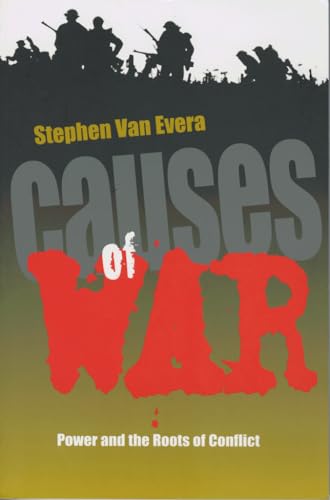
What causes war? How can military conflicts best be prevented? A prominent political scientist here addresses these questions, offering ideas that will be widely debated.
Stephen Van Evera frames five conditions that increase the risk of interstate war: false optimism about the likely outcome of a war, a first-strike advantage, fluctuation in the relative power of states, circumstances that allow nations to parlay one conquest into another, and circumstances that make conquest easy. According to Van Evera, all but one of these conditions—false optimism—rarely occur today, but policymakers often erroneously believe in their existence. He argues that these misperceptions are responsible for many modern wars, and explores both World Wars, the Korean War, and the 1967 Mideast War as test cases. Finally, he assesses the possibility of nuclear war by applying all five hypotheses to its potential onset.
Van Evera's book demonstrates that ideas from the Realist paradigm can offer strong explanations for international conflict and valuable prescriptions for its control.
What causes war? How can military conflicts best be prevented? In this book, Stephen Van Evera frames five conditions that increase the risk of interstate war: false optimism about the likely outcome of a war, a first-strike advantage, fluctuation in the relative power of states, circumstances that allow nations to parlay one conquest into another, and circumstances that make conquest easy.
According to Van Evera, all but one of these conditions—false optimism—rarely occur today, but policymakers often erroneously believe in their existence. He argues that these misperceptions are responsible for many modern wars, and explores both World Wars, the Korean War, and the 1967 Mideast War as test cases. Finally, he assesses the possibility of nuclear war by applying all five hypotheses to its potential onset. Van Evera's book demonstrates that ideas from the Realist paradigm can offer strong explanations for international conflict and valuable prescriptions for its control.
Die Inhaltsangabe kann sich auf eine andere Ausgabe dieses Titels beziehen.
Über die Autorin bzw. den Autor
Stephen Van Evera is Professor of Political Science at the Massachusetts Institute of Technology and Associate Director of the MIT Center for International Studies. His other works include Guide to Methods for Students of Political Science, also from Cornell.
Von der hinteren Coverseite
What causes war? How can military conflicts best be prevented? A prominent political scientist here addresses these questions, offering ideas that will be widely debated. Stephen Van Evera frames five conditions that increase the risk of interstate war: false optimism about the likely outcome of a war, a first-strike advantage, fluctuation in the relative power of states, circumstances that allow nations to parlay one conquest into another, and circumstances that make conquest easy.
„Über diesen Titel“ kann sich auf eine andere Ausgabe dieses Titels beziehen.
Suchergebnisse für Causes of War: Power and the Roots of Conflict (Cornell...

Beispielbild für diese ISBN
Causes of War: Power and the Roots of Conflict
Verlag:
Cornell University Press, 2001
ISBN 10: 080148295X
ISBN 13: 9780801482953
Gebraucht
Paperback
Anbieter: World of Books (was SecondSale), Montgomery, IL, USA
Verkäuferbewertung 5 von 5 Sternen

Paperback. Zustand: Good. What causes war? How can military conflicts best be prevented? In this book, Stephen Van Evera frames five conditions that increase the risk of interstate war. Artikel-Nr. 00100535859
Gebraucht kaufen
EUR 22,64
Versand gratis
Versand innerhalb von USA
Versand innerhalb von USA
Anzahl: 1 verfügbar
Beispielbild für diese ISBN
Causes of War: Power and the Roots of Conflict
Verlag:
Cornell University Press, 2001
ISBN 10: 080148295X
ISBN 13: 9780801482953
Gebraucht
Paperback
Anbieter: World of Books (was SecondSale), Montgomery, IL, USA
Verkäuferbewertung 5 von 5 Sternen
Paperback. Zustand: Fair. What causes war? How can military conflicts best be prevented? In this book, Stephen Van Evera frames five conditions that increase the risk of interstate war. Artikel-Nr. CIN080148295XA
Gebraucht kaufen
EUR 22,64
Versand gratis
Versand innerhalb von USA
Versand innerhalb von USA
Anzahl: 1 verfügbar
Beispielbild für diese ISBN
Causes of War Vol. 1 : Power and the Roots of Conflict
Verlag:
Cornell University Press, 2001
ISBN 10: 080148295X
ISBN 13: 9780801482953
Gebraucht
Softcover
Anbieter: Better World Books, Mishawaka, IN, USA
Verkäuferbewertung 5 von 5 Sternen
Zustand: Very Good. Pages intact with possible writing/highlighting. Binding strong with minor wear. Dust jackets/supplements may not be included. Stock photo provided. Product includes identifying sticker. Better World Books: Buy Books. Do Good. Artikel-Nr. 13836525-6
Gebraucht kaufen
EUR 30,84
Versand gratis
Versand innerhalb von USA
Versand innerhalb von USA
Anzahl: 1 verfügbar
Beispielbild für diese ISBN
Causes of War: Power and the Roots of Conflict
Verlag:
Cornell University Press, United States, Ithaca, 2001
ISBN 10: 080148295X
ISBN 13: 9780801482953
Gebraucht
Paperback
Anbieter: WorldofBooks, Goring-By-Sea, WS, Vereinigtes Königreich
Verkäuferbewertung 5 von 5 Sternen
Paperback. Zustand: Very Good. What causes war? How can military conflicts best be prevented? In this book, Stephen Van Evera frames five conditions that increase the risk of interstate war: false optimism about the likely outcome of a war, a first-strike advantage, fluctuation in the relative power of states, circumstances that allow nations to parlay one conquest into another, and circumstances that make conquest easy. According to Van Evera, all but one of these conditionsfalse optimismrarely occur today, but policymakers often erroneously believe in their existence. He argues that these misperceptions are responsible for many modern wars, and explores both World Wars, the Korean War, and the 1967 Mideast War as test cases. Finally, he assesses the possibility of nuclear war by applying all five hypotheses to its potential onset. Van Evera's book demonstrates that ideas from the Realist paradigm can offer strong explanations for international conflict and valuable prescriptions for its control. The book has been read, but is in excellent condition. Pages are intact and not marred by notes or highlighting. The spine remains undamaged. Artikel-Nr. GOR013176317
Gebraucht kaufen
EUR 30,23
EUR 6,70 Versand
Versand von Vereinigtes Königreich nach USA
Versand von Vereinigtes Königreich nach USA
Anzahl: 1 verfügbar
Beispielbild für diese ISBN
Causes of War
Anbieter: PBShop.store UK, Fairford, GLOS, Vereinigtes Königreich
Verkäuferbewertung 5 von 5 Sternen
PAP. Zustand: New. New Book. Shipped from UK. Established seller since 2000. Artikel-Nr. FW-9780801482953
Neu kaufen
EUR 33,18
EUR 4,98 Versand
Versand von Vereinigtes Königreich nach USA
Versand von Vereinigtes Königreich nach USA
Anzahl: 2 verfügbar
Foto des Verkäufers
Causes of War
Anbieter: Rarewaves.com USA, London, LONDO, Vereinigtes Königreich
Verkäuferbewertung 5 von 5 Sternen
Paperback. Zustand: New. What causes war? How can military conflicts best be prevented? In this book, Stephen Van Evera frames five conditions that increase the risk of interstate war: false optimism about the likely outcome of a war, a first-strike advantage, fluctuation in the relative power of states, circumstances that allow nations to parlay one conquest into another, and circumstances that make conquest easy. According to Van Evera, all but one of these conditions-false optimism-rarely occur today, but policymakers often erroneously believe in their existence. He argues that these misperceptions are responsible for many modern wars, and explores both World Wars, the Korean War, and the 1967 Mideast War as test cases. Finally, he assesses the possibility of nuclear war by applying all five hypotheses to its potential onset. Van Evera's book demonstrates that ideas from the Realist paradigm can offer strong explanations for international conflict and valuable prescriptions for its control. Artikel-Nr. LU-9780801482953
Neu kaufen
EUR 39,52
Versand gratis
Versand von Vereinigtes Königreich nach USA
Versand von Vereinigtes Königreich nach USA
Anzahl: 1 verfügbar
Beispielbild für diese ISBN
Causes of War
Anbieter: Kennys Bookshop and Art Galleries Ltd., Galway, GY, Irland
Verkäuferbewertung 5 von 5 Sternen
Zustand: New. Series: Cornell Studies in Security Affairs. Num Pages: 278 pages, 8, charts. BIC Classification: JPA. Category: (P) Professional & Vocational; (UP) Postgraduate, Research & Scholarly; (UU) Undergraduate. Dimension: 230 x 150 x 17. Weight in Grams: 404. . 2001. Paperback. . . . . Artikel-Nr. V9780801482953
Neu kaufen
EUR 40,78
EUR 9,50 Versand
Versand von Irland nach USA
Versand von Irland nach USA
Anzahl: 1 verfügbar
Foto des Verkäufers
Causes of War : Power and the Roots of Conflict
Anbieter: GreatBookPricesUK, Woodford Green, Vereinigtes Königreich
Verkäuferbewertung 5 von 5 Sternen
Zustand: New. Artikel-Nr. 264398-n
Neu kaufen
EUR 36,62
EUR 17,95 Versand
Versand von Vereinigtes Königreich nach USA
Versand von Vereinigtes Königreich nach USA
Anzahl: 1 verfügbar
Beispielbild für diese ISBN
Causes of War: Power and the Roots of Conflict
Anbieter: Ria Christie Collections, Uxbridge, Vereinigtes Königreich
Verkäuferbewertung 5 von 5 Sternen
Zustand: New. In English. Artikel-Nr. ria9780801482953_new
Neu kaufen
EUR 41,67
EUR 13,41 Versand
Versand von Vereinigtes Königreich nach USA
Versand von Vereinigtes Königreich nach USA
Anzahl: 2 verfügbar
Foto des Verkäufers
Causes of War : Power and the Roots of Conflict
Verlag:
Cornell University Press, 2001
ISBN 10: 080148295X
ISBN 13: 9780801482953
Gebraucht
Softcover
Anbieter: GreatBookPricesUK, Woodford Green, Vereinigtes Königreich
Verkäuferbewertung 5 von 5 Sternen
Zustand: As New. Unread book in perfect condition. Artikel-Nr. 264398
Gebraucht kaufen
EUR 41,03
EUR 17,95 Versand
Versand von Vereinigtes Königreich nach USA
Versand von Vereinigtes Königreich nach USA
Anzahl: 1 verfügbar