
Verwandte Artikel zu The Asian Financial Crisis: Origins, Implications,...
Inhaltsangabe
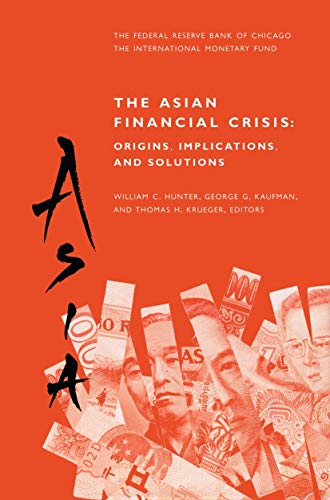
In the late 1990s, Korea, Thailand, Indonesia and Malaysia experienced a series of major financial crises evinced by widespread bank insolvencies and currency depreciations, as well as sharp declines in gross domestic production. This sudden disruption of the Asian economic `miracle' astounded many observers around the world, raised questions about the stability of the international financial system and caused widespread fear that this financial crisis would spread to other countries. What has been called the Asian crisis followed a prolonged slump in Japan dating from the early 1980s and came after the Mexican currency crisis in the mid-1990s. Thus, the Asian crisis became a major policy concern at the International Monetary Fund as well as among developed countries whose cooperation in dealing with such financial crises is necessary to maintain the stability and efficiency of global financial markets.
This book collects the papers and discussions delivered at an October 1998 Conference co-sponsored by the Federal Reserve Bank of Chicago and the International Monetary Fund to examine the causes, implications and possible solutions to the crises. The conference participants included a broad range of academic, industry, and regulatory experts representing more than thirty countries. Topics discussed included the origin of the individual crises; early warning indicators; the role played by the global financial sector in this crisis; how, given an international safety net, potential risks of moral hazard might contribute to further crises; the lessons for the international financial system to be drawn from the Asian crisis; and what the role of the International Monetary Fund might be in future rescue operations.
Because the discussions of these topics include a wide diversity of critical views and opinions, the book offers a particularly rich presentation of current and evolving thinking on the causes and preventions of international banking and monetary crises. The book promises to be one of the timeliest as well as one of the most complete treatments of the Asian financial crisis and its implications for future policymaking.
Die Inhaltsangabe kann sich auf eine andere Ausgabe dieses Titels beziehen.
Suchergebnisse für The Asian Financial Crisis: Origins, Implications,...

Beispielbild für diese ISBN
The Asian Financial Crisis
Anbieter: Romtrade Corp., STERLING HEIGHTS, MI, USA
Verkäuferbewertung 5 von 5 Sternen

Zustand: New. This is a Brand-new US Edition. This Item may be shipped from US or any other country as we have multiple locations worldwide. Artikel-Nr. ABBB-163128
Beispielbild für diese ISBN
The Asian Financial Crisis
Anbieter: Majestic Books, Hounslow, Vereinigtes Königreich
Verkäuferbewertung 4 von 5 Sternen

Zustand: Used. pp. 548 52:B&W 6.14 x 9.21in or 234 x 156mm (Royal 8vo) Case Laminate on White w/Gloss Lam. Artikel-Nr. 7547240
Gebraucht kaufen
EUR 183,62
EUR 7,69 Versand
Versand von Vereinigtes Königreich nach USA
Versand von Vereinigtes Königreich nach USA
Anzahl: 1 verfügbar
Beispielbild für diese ISBN
The Asian Financial Crisis
Anbieter: Biblios, Frankfurt am main, HESSE, Deutschland
Verkäuferbewertung 4 von 5 Sternen
Zustand: Used. pp. 548 Acknowledgements. Artikel-Nr. 18300733
Gebraucht kaufen
EUR 185,71
EUR 9,95 Versand
Versand von Deutschland nach USA
Versand von Deutschland nach USA
Anzahl: 1 verfügbar
Beispielbild für diese ISBN
The Asian Financial Crisis: Origins, Implications, and Solutions
Anbieter: Ria Christie Collections, Uxbridge, Vereinigtes Königreich
Verkäuferbewertung 5 von 5 Sternen
Zustand: New. In English. Artikel-Nr. ria9780792384724_new
Neu kaufen
EUR 253,85
EUR 17,68 Versand
Versand von Vereinigtes Königreich nach USA
Versand von Vereinigtes Königreich nach USA
Anzahl: Mehr als 20 verfügbar
Beispielbild für diese ISBN
The Asian Financial Crisis. Origins, Implications and Solutions.
Anbieter: Kennys Bookstore, Olney, MD, USA
Verkäuferbewertung 5 von 5 Sternen
Zustand: New. Presents the papers and discussions delivered at an October 1998 Conference co-sponsored by the Federal Reserve Bank of Chicago and the International Monetary Fund to examine the causes, implications and possible solutions to the Asian economic crises. This book offers the causes and preventions of international banking and monetary crises. Editor(s): Hunter, William C.; Kaufman, George G.; Krueger, Thomas H. Num Pages: 526 pages, biography. BIC Classification: 1F; KC; KFF. Category: (P) Professional & Vocational; (UP) Postgraduate, Research & Scholarly; (UU) Undergraduate. Dimension: 235 x 155 x 30. Weight in Grams: 2070. . 1999. Hardback. . . . . Books ship from the US and Ireland. Artikel-Nr. V9780792384724
Neu kaufen
EUR 292,94
EUR 9,37 Versand
Versand innerhalb von USA
Versand innerhalb von USA
Anzahl: 15 verfügbar
Foto des Verkäufers
The Asian Financial Crisis: Origins, Implications, and Solutions
Anbieter: AHA-BUCH GmbH, Einbeck, Deutschland
Verkäuferbewertung 5 von 5 Sternen
Buch. Zustand: Neu. Druck auf Anfrage Neuware - Printed after ordering - In the late 1990s, Korea, Thailand, Indonesia and Malaysia experienced a series of major financial crises evinced by widespread bank insolvencies and currency depreciations, as well as sharp declines in gross domestic production. This sudden disruption of the Asian economic `miracle' astounded many observers around the world, raised questions about the stability of the international financial system and caused widespread fear that this financial crisis would spread to other countries. What has been called the Asian crisis followed a prolonged slump in Japan dating from the early 1980s and came after the Mexican currency crisis in the mid-1990s. Thus, the Asian crisis became a major policy concern at the International Monetary Fund as well as among developed countries whose cooperation in dealing with such financial crises is necessary to maintain the stability and efficiency of global financial markets. This book collects the papers and discussions delivered at an October 1998 Conference co-sponsored by the Federal Reserve Bank of Chicago and the International Monetary Fund to examine the causes, implications and possible solutions to the crises. The conference participants included a broad range of academic, industry, and regulatory experts representing more than thirty countries. Topics discussed included the origin of the individual crises; early warning indicators; the role played by the global financial sector in this crisis; how, given an international safety net, potential risks of moral hazard might contribute to further crises; the lessons for the international financial system to be drawn from the Asian crisis; and what the role of the International Monetary Fund might be in future rescue operations. Because the discussions of these topics include a wide diversity of critical views and opinions, the book offers a particularly rich presentation of current and evolving thinking on the causes and preventions of international banking and monetary crises. The book promises to be one of the timeliest as well as one of the most complete treatments of the Asian financial crisis and its implications for future policymaking. Artikel-Nr. 9780792384724
Neu kaufen
EUR 350,90
EUR 35,00 Versand
Versand von Deutschland nach USA
Versand von Deutschland nach USA
Anzahl: 1 verfügbar