
Verwandte Artikel zu Pathways to Institutional Improvement with Information...
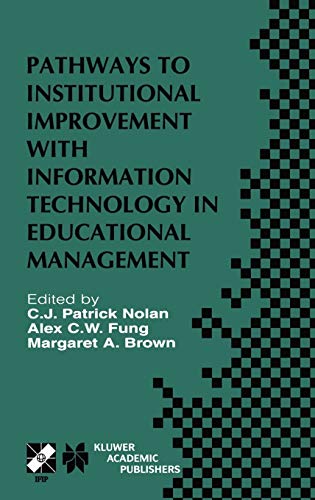
Pathways to Institutional Improvement with Information Technology in Educational Management: IFIP TC3/WG3.7 Fourth International Working Conference on ... and Communication Technology, Band 71) - Hardcover
Inhaltsangabe
New Zealand schools have experienced unprecedented change during the lastdecade. Radicalrestructuringoftheframeworksforbothcurriculumand qualificationsfollowedamovementtowards self-managementin 1989. The curriculum framework, consisting of seven essential learning areas, has been progressively introduced with completionnotexpecteduntil 2002. Thenew Qualifications Framework, based on unit standards, was launched in 1994. The introduction of unit standards signalled an emphatic movement towards the use of internal assessment for awarding qualifications at the seniorsecondaryschoollevel. Eachcoursehadunitstandardsdefined,which described the outcomes and the performance criteria that would be used to determine whether or not the standard had been achieved. Approximately five to eight standards would be used for each full year course and each standard had a number of credits associated with it. The plan, which has since been modified, was for these credits to contribute to a National Certificate of Educational Achievement, at years 12 and 13, and other, subject specific, National Certificates. Secondary schools were faced with the task of recording and reporting 1 unit standardresults to theNew Zealand Qualifications Authority . This, by itself, was not a major issue as the significant suppliers of CSIS had modules availablewhichsatisfiedthis need. Atthistimeamodelwasbeingpresented to school audiences demonstrating how the recording, reporting and evaluation ofassessment data, relating to the curriculumframework, could be relatively straight forward IF there was a common assessment ‘currency’ across the school. This model was converted into software form for demonstration purposes.
Die Inhaltsangabe kann sich auf eine andere Ausgabe dieses Titels beziehen.
Suchergebnisse für Pathways to Institutional Improvement with Information...

Beispielbild für diese ISBN
Pathways To Institutional Improvement With Information Technology In Education Management (ifip International Federation For Information Processing)
Anbieter: Romtrade Corp., STERLING HEIGHTS, MI, USA
Verkäuferbewertung 5 von 5 Sternen

Zustand: New. This is a Brand-new US Edition. This Item may be shipped from US or any other country as we have multiple locations worldwide. Artikel-Nr. ABBB-159254
Beispielbild für diese ISBN
Pathways to Institutional Improvement with Information Technology in Educational Management: IFIP TC3/WG3.7 Fourth International Working Conference on Information Technology in Educational Management July 27-31, 2000, Auckland, New Zealand
Anbieter: Ria Christie Collections, Uxbridge, Vereinigtes Königreich
Verkäuferbewertung 5 von 5 Sternen
Zustand: New. In English. Artikel-Nr. ria9780792374930_new
Neu kaufen
EUR 129,58
EUR 13,31 Versand
Versand von Vereinigtes Königreich nach USA
Versand von Vereinigtes Königreich nach USA
Anzahl: Mehr als 20 verfügbar
Beispielbild für diese ISBN
Pathways to Institutional Improvement with Information Technology in Educational Management
Anbieter: Majestic Books, Hounslow, Vereinigtes Königreich
Verkäuferbewertung 4 von 5 Sternen

Zustand: Used. pp. 184 Illus. Artikel-Nr. 7562731
Gebraucht kaufen
EUR 139,47
EUR 7,66 Versand
Versand von Vereinigtes Königreich nach USA
Versand von Vereinigtes Königreich nach USA
Anzahl: 1 verfügbar
Beispielbild für diese ISBN
Pathways to Institutional Improvement with Information Technology in Educational Management
Anbieter: Biblios, Frankfurt am main, HESSE, Deutschland
Verkäuferbewertung 4 von 5 Sternen
Zustand: Used. pp. 184. Artikel-Nr. 18318014
Gebraucht kaufen
EUR 140,17
EUR 9,95 Versand
Versand von Deutschland nach USA
Versand von Deutschland nach USA
Anzahl: 1 verfügbar
Foto des Verkäufers
Pathways to Institutional Improvement with Information Technology in Educational Management
Anbieter: moluna, Greven, Deutschland
Verkäuferbewertung 5 von 5 Sternen
Gebunden. Zustand: New. Includes supplementary material: sn.pub/extrasNew Zealand schools have experienced unprecedented change during the lastdecade. Radicalrestructuringoftheframeworksforbothcurriculumand qualificationsfollowedamovementtowards self-managementin 1989. . Artikel-Nr. 5970204
Neu kaufen
EUR 128,20
EUR 48,99 Versand
Versand von Deutschland nach USA
Versand von Deutschland nach USA
Anzahl: Mehr als 20 verfügbar
Beispielbild für diese ISBN
Pathways to Institutional Improvement with Information Technology in Educational Management
Anbieter: Kennys Bookstore, Olney, MD, USA
Verkäuferbewertung 5 von 5 Sternen
Zustand: New. Presents findings and insights from contemporary thinking and research about alternative ways that computerised information systems might be designed and used to support the improvement of educational institutions. This book is suitable for a range of educational professionals, researchers and system designers. Editor(s): Nolan, C.J.Patrick; Fung, A. C. W.; Brown, Margaret. Series: IFIP Advances in Information and Communication Technology. Num Pages: 173 pages, 19 black & white illustrations, biography. BIC Classification: JNK; JNV. Category: (P) Professional & Vocational; (UP) Postgraduate, Research & Scholarly; (UU) Undergraduate. Dimension: 234 x 156 x 12. Weight in Grams: 438. . 2001. 2001st Edition. hardcover. . . . . Books ship from the US and Ireland. Artikel-Nr. V9780792374930
Neu kaufen
EUR 169,41
EUR 9,33 Versand
Versand innerhalb von USA
Versand innerhalb von USA
Anzahl: 15 verfügbar
Foto des Verkäufers
Pathways to Institutional Improvement with Information Technology in Educational Management : Ifip Tc3/Wg3.7 Fourth International Working Conference on Information Technology in Educational Management July 27-31, 2000, Auckland, New Zealand
Anbieter: AHA-BUCH GmbH, Einbeck, Deutschland
Verkäuferbewertung 5 von 5 Sternen
Buch. Zustand: Neu. Neuware - New Zealand schools have experienced unprecedented change during the lastdecade. Radicalrestructuringoftheframeworksforbothcurriculumand qualificationsfollowedamovementtowards self-managementin 1989. The curriculum framework, consisting of seven essential learning areas, has been progressively introduced with completionnotexpecteduntil 2002. Thenew Qualifications Framework, based on unit standards, was launched in 1994. The introduction of unit standards signalled an emphatic movement towards the use of internal assessment for awarding qualifications at the seniorsecondaryschoollevel. Eachcoursehadunitstandardsdefined,which described the outcomes and the performance criteria that would be used to determine whether or not the standard had been achieved. Approximately five to eight standards would be used for each full year course and each standard had a number of credits associated with it. The plan, which has since been modified, was for these credits to contribute to a National Certificate of Educational Achievement, at years 12 and 13, and other, subject specific, National Certificates. Secondary schools were faced with the task of recording and reporting 1 unit standardresults to theNew Zealand Qualifications Authority . This, by itself, was not a major issue as the significant suppliers of CSIS had modules availablewhichsatisfiedthis need. Atthistimeamodelwasbeingpresented to school audiences demonstrating how the recording, reporting and evaluation ofassessment data, relating to the curriculumframework, could be relatively straight forward IF there was a common assessment 'currency' across the school. This model was converted into software form for demonstration purposes. Artikel-Nr. 9780792374930
Neu kaufen
EUR 159,41
EUR 35,00 Versand
Versand von Deutschland nach USA
Versand von Deutschland nach USA
Anzahl: 1 verfügbar