
Verwandte Artikel zu Cancer Cell Lines Part 1 (Human Cell Culture, Band...
Inhaltsangabe
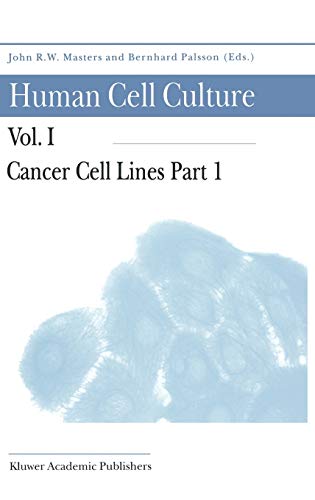
Continuous cell lines derived from human cancers are the most widely used resource in laboratory-based cancer research. The first 3 volumes of this series on Human Cell Culture are devoted to these cancer cell lines. The chapters in these first 3 volumes have a common aim. Their purpose is to address 3 questions of fundamental importance to the relevance of human cancer cell lines as model systems of each type of cancer: 1. Do the cell lines available accurately represent the clinical presentation? 2. Do the cell lines accurately represent the histopathology of the original tumors? 3. Do the cell lines accurately represent the molecular genetics of this type of cancer? The cancer cell lines available are derived, in most cases, from the more aggressive and advanced cancers. There are few cell lines derived from low grade organ-confined cancers. This gap can be filled with conditionally immortalized human cancer cell lines. We do not know why the success rate for establishing cell lines is so low for some types of cancer and so high for others. The histopathology of the tumor of origin and the extent to which the derived cell line retains the differentiated features of that tumor are critical. The concept that a single cell line derived from a tumor at a particular site is representative of tumors at that site is naïve and misleading.
Die Inhaltsangabe kann sich auf eine andere Ausgabe dieses Titels beziehen.
Suchergebnisse für Cancer Cell Lines Part 1 (Human Cell Culture, Band...

Beispielbild für diese ISBN
Cancer Cell Lines Part 1 (Human Cell Culture, 1)
Verlag:
Kluwer Academic Publishers -, 1998
ISBN 10: 0792351436
ISBN 13: 9780792351436
Gebraucht
Hardcover
Anbieter: Bahamut Media, Reading, Vereinigtes Königreich
Verkäuferbewertung 4 von 5 Sternen

hardcover. Zustand: Very Good. Shipped within 24 hours from our UK warehouse. Clean, undamaged book with no damage to pages and minimal wear to the cover. Spine still tight, in very good condition. Remember if you are not happy, you are covered by our 100% money back guarantee. Artikel-Nr. 6545-9780792351436
Gebraucht kaufen
EUR 12,13
EUR 8,23 Versand
Versand von Vereinigtes Königreich nach USA
Versand von Vereinigtes Königreich nach USA
Anzahl: 1 verfügbar
Beispielbild für diese ISBN
Cancer Cell Lines
Anbieter: Better World Books, Mishawaka, IN, USA
Verkäuferbewertung 5 von 5 Sternen

Zustand: Very Good. Former library copy. Pages intact with possible writing/highlighting. Binding strong with minor wear. Dust jackets/supplements may not be included. Includes library markings. Stock photo provided. Product includes identifying sticker. Better World Books: Buy Books. Do Good. Artikel-Nr. 68499890-6
Gebraucht kaufen
EUR 28,70
Versand gratis
Versand innerhalb von USA
Versand innerhalb von USA
Anzahl: 1 verfügbar
Beispielbild für diese ISBN
Cancer Cell Lines Part 1 (Human Cell Culture)
Anbieter: AwesomeBooks, Wallingford, Vereinigtes Königreich
Verkäuferbewertung 5 von 5 Sternen
Hardcover. Zustand: Very Good. Cancer Cell Lines Part 1 (Human Cell Culture) This book is in very good condition and will be shipped within 24 hours of ordering. The cover may have some limited signs of wear but the pages are clean, intact and the spine remains undamaged. This book has clearly been well maintained and looked after thus far. Money back guarantee if you are not satisfied. See all our books here, order more than 1 book and get discounted shipping. Artikel-Nr. 7719-9780792351436
Gebraucht kaufen
EUR 39,70
EUR 4,86 Versand
Versand von Vereinigtes Königreich nach USA
Versand von Vereinigtes Königreich nach USA
Anzahl: 2 verfügbar
Foto des Verkäufers
Cancer Cell Lines Part 1
Anbieter: moluna, Greven, Deutschland
Verkäuferbewertung 5 von 5 Sternen
Gebunden. Zustand: New. Continuous cell lines derived from human cancers are the most widely used resource in laboratory-based cancer research. The first 3 volumes of this series on Human Cell Culture are devoted to these cancer cell lines. The chapters in these first 3 volumes ha. Artikel-Nr. 5968520
Neu kaufen
EUR 178,14
EUR 48,99 Versand
Versand von Deutschland nach USA
Versand von Deutschland nach USA
Anzahl: Mehr als 20 verfügbar
Beispielbild für diese ISBN
Human Cell Culture: Cancer Cell Lines: Vol 1
Anbieter: Revaluation Books, Exeter, Vereinigtes Königreich
Verkäuferbewertung 5 von 5 Sternen
Hardcover. Zustand: Brand New. 1st edition. 320 pages. 9.50x6.50x0.75 inches. In Stock. Artikel-Nr. x-0792351436
Neu kaufen
EUR 242,50
EUR 14,75 Versand
Versand von Vereinigtes Königreich nach USA
Versand von Vereinigtes Königreich nach USA
Anzahl: 2 verfügbar
Beispielbild für diese ISBN
Human Cell Culture
Anbieter: Kennys Bookstore, Olney, MD, USA
Verkäuferbewertung 5 von 5 Sternen
Zustand: New. Part of a series which studies the culture of human cells. It presents a detailed manual and reference resource for aspects of medicine, biology, technology and immunobiology using human cells. The first three volumes focus on the culture of established cell lines for every type of human cancer. Editor(s): Masters, John R. W.; Palsson, Bernhard. Series: Human Cell Culture. Num Pages: 303 pages, biography. BIC Classification: PSF; PSV. Category: (P) Professional & Vocational; (UP) Postgraduate, Research & Scholarly. Dimension: 234 x 156 x 19. Weight in Grams: 609. . 1998. Hardback. . . . . Books ship from the US and Ireland. Artikel-Nr. V9780792351436
Neu kaufen
EUR 255,37
EUR 9,37 Versand
Versand innerhalb von USA
Versand innerhalb von USA
Anzahl: 15 verfügbar
Beispielbild für diese ISBN
Cancer Cell Lines, Part 1
Anbieter: Ria Christie Collections, Uxbridge, Vereinigtes Königreich
Verkäuferbewertung 5 von 5 Sternen
Zustand: New. In English. Artikel-Nr. ria9780792351436_new
Neu kaufen
EUR 253,03
EUR 13,32 Versand
Versand von Vereinigtes Königreich nach USA
Versand von Vereinigtes Königreich nach USA
Anzahl: Mehr als 20 verfügbar
Foto des Verkäufers
Cancer Cell Lines Part 1
Anbieter: AHA-BUCH GmbH, Einbeck, Deutschland
Verkäuferbewertung 5 von 5 Sternen
Buch. Zustand: Neu. Neuware - Continuous cell lines derived from human cancers are the most widely used resource in laboratory-based cancer research. The first 3 volumes of this series on Human Cell Culture are devoted to these cancer cell lines. The chapters in these first 3 volumes have a common aim. Their purpose is to address 3 questions of fundamental importance to the relevance of human cancer cell lines as model systems of each type of cancer: 1. Do the cell lines available accurately represent the clinical presentation 2. Do the cell lines accurately represent the histopathology of the original tumors 3. Do the cell lines accurately represent the molecular genetics of this type of cancer The cancer cell lines available are derived, in most cases, from the more aggressive and advanced cancers. There are few cell lines derived from low grade organ-confined cancers. This gap can be filled with conditionally immortalized human cancer cell lines. We do not know why the success rate for establishing cell lines is so low for some types of cancer and so high for others. The histopathology of the tumor of origin and the extent to which the derived cell line retains the differentiated features of that tumor are critical. The concept that a single cell line derived from a tumor at a particular site is representative of tumors at that site is naïve and misleading. Artikel-Nr. 9780792351436
Neu kaufen
EUR 247,94
EUR 35,00 Versand
Versand von Deutschland nach USA
Versand von Deutschland nach USA
Anzahl: 2 verfügbar