
Verwandte Artikel zu Treasures of 19th and 20th Century Painting: The Art...
Inhaltsangabe
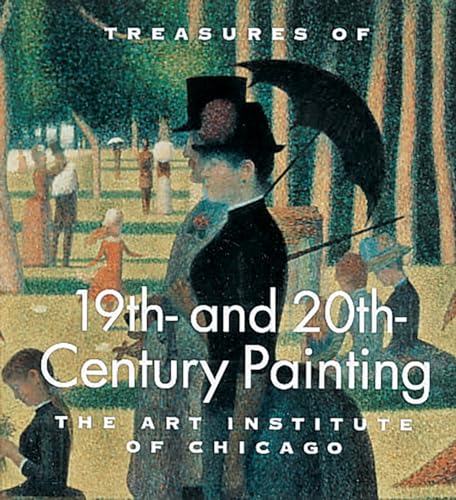
This Tiny Folio book highlights some of the most celebrated European and American paintings from the nineteenth and twentieth centuries that are part of the permanent collection at The Art Institute of Chicago.
Included in this collection are numerous masterpieces of Realism, Impressionism, Post–Impressionism, Surrealism, Cubism, Abstract Expressionism, and other aspects of Modernism. Today a number of these paintings are revered as icons of modern Western culture, emblems of the inspired experimentation that has taken place on both sides of the Atlantic.
For the last century, the Art Institute has supported the achievements of the most distinguished artists from Europe and America, acquiring and exhibiting now–beloved works of Edgar Degas, Henri Matisse, Georgia O'Keeffe, Jackson Pollock, and others. This folio is presented as both an introduction to this collection and as a survey of the styles, subjects, and themes of Western art of the last two centuries, from the linear classicism of Jean–Auguste–Dominique Ingres through the optical studies of Claude Monet and the Impressionists; from the lyrical, colorful abstractions of Vasily Kandinsky to the fractured picture planes of Pablo Picasso and the Cubists; from the enigmatic compositions of Salvador Dali and the Surrealists to the media–appropriated Pop–art portraits of Andy Warhol. These magnificent paintings eloquently narrate the discussions of the nature of art, quality, innovation, style, and form that have defined the modern era in art history.
Included in this collection are numerous masterpieces of Realism, Impressionism, Post–Impressionism, Surrealism, Cubism, Abstract Expressionism, and other aspects of Modernism. Today a number of these paintings are revered as icons of modern Western culture, emblems of the inspired experimentation that has taken place on both sides of the Atlantic.
For the last century, the Art Institute has supported the achievements of the most distinguished artists from Europe and America, acquiring and exhibiting now–beloved works of Edgar Degas, Henri Matisse, Georgia O'Keeffe, Jackson Pollock, and others. This folio is presented as both an introduction to this collection and as a survey of the styles, subjects, and themes of Western art of the last two centuries, from the linear classicism of Jean–Auguste–Dominique Ingres through the optical studies of Claude Monet and the Impressionists; from the lyrical, colorful abstractions of Vasily Kandinsky to the fractured picture planes of Pablo Picasso and the Cubists; from the enigmatic compositions of Salvador Dali and the Surrealists to the media–appropriated Pop–art portraits of Andy Warhol. These magnificent paintings eloquently narrate the discussions of the nature of art, quality, innovation, style, and form that have defined the modern era in art history.
Die Inhaltsangabe kann sich auf eine andere Ausgabe dieses Titels beziehen.
Über die Autorin bzw. den Autor
James N. Wood was the Director of The Art Institute of Chicago for 25 years. He also served as president and chief executive of the Getty Trust in 2006 and before taking over the Art Institute, he was the director of the St. Louis Art Museum for six years. He also held positions at the Metropolitan Museum of Art and the Albright–Knox Art Gallery in Buffalo.
Von der hinteren Coverseite
This Tiny Folio book highlights some of the most celebrated European and American paintings from the nineteenth and twentieth centuries that are part of the permanent collection at The Art Institute of Chicago.
Auszug. © Genehmigter Nachdruck. Alle Rechte vorbehalten.
Excerpt from: Treasures of 19th and 20th Century Painting
Introduction
Perhaps no other collection in The Art Institute of Chicago is more renowned and beloved than the American and European paintings from the nineteenth and twentieth centuries. Some of our more notable works have become modern icons: both Grant Wood’s American Gothic (page 280) and Edward Hopper’s Nighthawks (page 293) are now emblems of American culture. Georges Seurat’s Sunday on La Grande Jatte–1884 (page 99) and Gustave Caillebotte’s Paris Street; Rainy Day (page 69) have come to stand for the bold experimentation and achievements of the avant–garde in late nineteenth–century France. But what is so easily forgotten today is that the viewing public initially rejected this art, labeling it unrefined, banal, and unartistic. The astonishing story of these paintings is also that of the dedicated artists who weathered the heated diatribes delivered against their works and pursued a range of issues that were as varied and radical as the styles in which they painted. For the most part, however, they explored what it meant to create a record of their immediate world; what it meant to be, as the French poet and critic Charles Baudelaire so eloquently articulated for them, not merely part of a great historical tradition, but rather active, sentient beings living in the present, and searching for meaning in their own time. Now, at the close of the twentieth century, these paintings are lauded as the revered relics of an earlier era, transformed by history from obscurity into icons of modernity. This folio is presented as both an introduction to this celebrated collection and a thoughtful survey of the styles, subjects, and themes of Western art of the last two centuries, from the crisp, linear classicism of Jean–Auguste–Dominique Ingres, through the innovative optical studies of Claude Monet and the Impressionists; from the colorful, lyrical abstractions of Vasily Kandinsky to the fractured monochromatic picture surfaces of Pablo Picasso and the Cubists; from the enigmatic compositions of Salvador Dali and the Surrealists to the media–appropriated, Pop–art portraits of Andy Warhol.
By the mid–nineteenth century, most museums were following the precedents established by the salons in Paris in acquiring contemporary works of art. Only those pieces that fit comfortably into the traditional classical mold—those that depicted scenes from literature, mythology, or history—were considered worthy of collecting. Jean–Léon Gérômes Chariot Race (page 68) is a fine example of what was most admired at the salons. But developing concurrently with nineteenth–century "retroclassicism" was a sub–culture of artists experimenting with alternative styles and subjects, venturing out of the academic studios into the streets and the countryside, and moving away from established subject matter in their art. The works of these radicals elicited cries of dismay from Parisian critics, and we might recognize the treatment these artists received as a harbinger of the difficulty twentieth–century innovators would face. From its birth, the history of modern art has been defined by a debate on the nature of art, quality, innovation, style, and form.
The Art Institute of Chicago’s commitment to establishing a collection of modern paintings dates back to 1894, shortly after the founding of the museum, when Mrs. Henry Field donated in her husband’s memory a substantial group of Barbizon paintings, including such works as Jules Breton’s Song of the Lark (page 92), Jean–François Millet’s Peasants Bringing Home a Calf Born in the Fields (page 39), and Théodore Rousseau’s Springtime (page 32). The hazy, atmospheric renditions by these painters of the countryside north of Paris celebrated a rustic setting that was threatened by rapidly encroaching heavy industry. The thick brushstrokes and textured surfaces of these softly toned paintings came out of the same formal tradition that had produced the exuberant Romantic works of Eugène Delacroix (page 24), and proved to be influential on such later artists as Jean–Baptiste–Camille Corot (page 49) and Vincent van Gogh (page 109).
The 1933 bequest of Mr. and Mrs. Martin A. Ryerson contained a number of exceptional French paintings, including works by Monet (page 57). Annie Swann Coburn (Mrs. Lewis Larned Coburn) frequently traveled abroad to visit the French salons and accumulated an impressive collection that contributed considerably to the museums holdings. Among her more noteworthy gifts are a magnificent winter landscape by Camille Pissarro (page 46) and a stirring double portrait by Edgar Degas (page 65). Charles H. and Mary F. S. Worcester were other collectors who shared the Ryerson’s and Mrs. Coburn’s vision, donating fine mid–century paintings such as Frédéric Bazille’s Landscape at Chailly (page 42).
These artists were among those who objected to the rigid structure and strict academic standards of the officially sanctioned salon. In 1874, Degas, Pissarro, Monet, and others organized an independent exhibition of their work. Their paintings, along with those of Paul Cézanne, Berthe Morisot, Pierre–Auguste Renoir, and Alfred Sisley were exhibited and were, for the most part, dismissed by the reviewers and the public. Dubbed "the Impressionists" by an unsympathetic critic, the group shared an interest in loose brushwork, bright colors, and an emphasis on capturing the fleeting moments of everyday life. Contemporary subjects dominated their canvases, from the dapper flâneurs strutting down the boulevards of Paris (page 69) and the powerful, new steam engines criss-crossing the continent (page 70), to views of the French countryside, painted in natural light (page 81).
The museums wealth of Impressionist art is regarded as one of the most comprehensive collections of its kind. Mr. and Mrs. Potter Palmer, renowned collectors and early turn–of–the–century supporters of French avant–garde art, donated, among other key works, pieces by Degas (page 112), Manet (page 40), Monet (page 96), Pissarro (page 86), Renoir (page 64), and Sisley (page 111). Mrs. Palmer, who became an unofficial dealer of Impressionist art, especially of the work of Monet, encouraged her friends nationwide to collect Impressionism, an effort that has contributed to the richness of many American museums in this area.
The last decade of the nineteenth century witnessed the rise of Post-Impressionism, as seen in the works of Cézanne, van Gogh, and Paul Gauguin. Unlike the Impressionists, these artists remained on the periphery of the art world, for the most part avoiding the salons, middle-class social settings and, whether intentionally or not, the art markets as well. Van Gogh and Gauguin retreated to the countryside (Gauguin eventually fled to the South Pacific), isolating themselves from their peers. Along with Cézanne, these two contributed to innovative formal developments: the harmonic color schemes of Gauguin (page 128), the thickly textured brushstrokes of van Gogh (page 104), and the shifting, geometric planes of Cézanne (page 105) proved to be influential on many of the major avant-garde movements of the twentieth century. Gauguin and van Gogh also expanded the spiritual and emotional vocabulary of painting.
Works from this period came to the Art Institute from various sources, reflecting the expanding collecting tastes in the first quarter of the century. Frederic Clay Bartlett established the Helen Birch Bartlett Memorial Collection at the Art Institute in 1926, in memory of his second wife. The...
Introduction
Perhaps no other collection in The Art Institute of Chicago is more renowned and beloved than the American and European paintings from the nineteenth and twentieth centuries. Some of our more notable works have become modern icons: both Grant Wood’s American Gothic (page 280) and Edward Hopper’s Nighthawks (page 293) are now emblems of American culture. Georges Seurat’s Sunday on La Grande Jatte–1884 (page 99) and Gustave Caillebotte’s Paris Street; Rainy Day (page 69) have come to stand for the bold experimentation and achievements of the avant–garde in late nineteenth–century France. But what is so easily forgotten today is that the viewing public initially rejected this art, labeling it unrefined, banal, and unartistic. The astonishing story of these paintings is also that of the dedicated artists who weathered the heated diatribes delivered against their works and pursued a range of issues that were as varied and radical as the styles in which they painted. For the most part, however, they explored what it meant to create a record of their immediate world; what it meant to be, as the French poet and critic Charles Baudelaire so eloquently articulated for them, not merely part of a great historical tradition, but rather active, sentient beings living in the present, and searching for meaning in their own time. Now, at the close of the twentieth century, these paintings are lauded as the revered relics of an earlier era, transformed by history from obscurity into icons of modernity. This folio is presented as both an introduction to this celebrated collection and a thoughtful survey of the styles, subjects, and themes of Western art of the last two centuries, from the crisp, linear classicism of Jean–Auguste–Dominique Ingres, through the innovative optical studies of Claude Monet and the Impressionists; from the colorful, lyrical abstractions of Vasily Kandinsky to the fractured monochromatic picture surfaces of Pablo Picasso and the Cubists; from the enigmatic compositions of Salvador Dali and the Surrealists to the media–appropriated, Pop–art portraits of Andy Warhol.
By the mid–nineteenth century, most museums were following the precedents established by the salons in Paris in acquiring contemporary works of art. Only those pieces that fit comfortably into the traditional classical mold—those that depicted scenes from literature, mythology, or history—were considered worthy of collecting. Jean–Léon Gérômes Chariot Race (page 68) is a fine example of what was most admired at the salons. But developing concurrently with nineteenth–century "retroclassicism" was a sub–culture of artists experimenting with alternative styles and subjects, venturing out of the academic studios into the streets and the countryside, and moving away from established subject matter in their art. The works of these radicals elicited cries of dismay from Parisian critics, and we might recognize the treatment these artists received as a harbinger of the difficulty twentieth–century innovators would face. From its birth, the history of modern art has been defined by a debate on the nature of art, quality, innovation, style, and form.
The Art Institute of Chicago’s commitment to establishing a collection of modern paintings dates back to 1894, shortly after the founding of the museum, when Mrs. Henry Field donated in her husband’s memory a substantial group of Barbizon paintings, including such works as Jules Breton’s Song of the Lark (page 92), Jean–François Millet’s Peasants Bringing Home a Calf Born in the Fields (page 39), and Théodore Rousseau’s Springtime (page 32). The hazy, atmospheric renditions by these painters of the countryside north of Paris celebrated a rustic setting that was threatened by rapidly encroaching heavy industry. The thick brushstrokes and textured surfaces of these softly toned paintings came out of the same formal tradition that had produced the exuberant Romantic works of Eugène Delacroix (page 24), and proved to be influential on such later artists as Jean–Baptiste–Camille Corot (page 49) and Vincent van Gogh (page 109).
The 1933 bequest of Mr. and Mrs. Martin A. Ryerson contained a number of exceptional French paintings, including works by Monet (page 57). Annie Swann Coburn (Mrs. Lewis Larned Coburn) frequently traveled abroad to visit the French salons and accumulated an impressive collection that contributed considerably to the museums holdings. Among her more noteworthy gifts are a magnificent winter landscape by Camille Pissarro (page 46) and a stirring double portrait by Edgar Degas (page 65). Charles H. and Mary F. S. Worcester were other collectors who shared the Ryerson’s and Mrs. Coburn’s vision, donating fine mid–century paintings such as Frédéric Bazille’s Landscape at Chailly (page 42).
These artists were among those who objected to the rigid structure and strict academic standards of the officially sanctioned salon. In 1874, Degas, Pissarro, Monet, and others organized an independent exhibition of their work. Their paintings, along with those of Paul Cézanne, Berthe Morisot, Pierre–Auguste Renoir, and Alfred Sisley were exhibited and were, for the most part, dismissed by the reviewers and the public. Dubbed "the Impressionists" by an unsympathetic critic, the group shared an interest in loose brushwork, bright colors, and an emphasis on capturing the fleeting moments of everyday life. Contemporary subjects dominated their canvases, from the dapper flâneurs strutting down the boulevards of Paris (page 69) and the powerful, new steam engines criss-crossing the continent (page 70), to views of the French countryside, painted in natural light (page 81).
The museums wealth of Impressionist art is regarded as one of the most comprehensive collections of its kind. Mr. and Mrs. Potter Palmer, renowned collectors and early turn–of–the–century supporters of French avant–garde art, donated, among other key works, pieces by Degas (page 112), Manet (page 40), Monet (page 96), Pissarro (page 86), Renoir (page 64), and Sisley (page 111). Mrs. Palmer, who became an unofficial dealer of Impressionist art, especially of the work of Monet, encouraged her friends nationwide to collect Impressionism, an effort that has contributed to the richness of many American museums in this area.
The last decade of the nineteenth century witnessed the rise of Post-Impressionism, as seen in the works of Cézanne, van Gogh, and Paul Gauguin. Unlike the Impressionists, these artists remained on the periphery of the art world, for the most part avoiding the salons, middle-class social settings and, whether intentionally or not, the art markets as well. Van Gogh and Gauguin retreated to the countryside (Gauguin eventually fled to the South Pacific), isolating themselves from their peers. Along with Cézanne, these two contributed to innovative formal developments: the harmonic color schemes of Gauguin (page 128), the thickly textured brushstrokes of van Gogh (page 104), and the shifting, geometric planes of Cézanne (page 105) proved to be influential on many of the major avant-garde movements of the twentieth century. Gauguin and van Gogh also expanded the spiritual and emotional vocabulary of painting.
Works from this period came to the Art Institute from various sources, reflecting the expanding collecting tastes in the first quarter of the century. Frederic Clay Bartlett established the Helen Birch Bartlett Memorial Collection at the Art Institute in 1926, in memory of his second wife. The...
„Über diesen Titel“ kann sich auf eine andere Ausgabe dieses Titels beziehen.
Suchergebnisse für Treasures of 19th and 20th Century Painting: The Art...

Beispielbild für diese ISBN
Treasures of 19th- and 20th-Century Painting: The Art Institute of Chicago (Tiny Folios Series)
Verlag:
Abbeville Press (edition ), 1997
ISBN 10: 0789204029
ISBN 13: 9780789204028
Gebraucht
Hardcover
Anbieter: BooksRun, Philadelphia, PA, USA
Verkäuferbewertung 5 von 5 Sternen

Hardcover. Zustand: Fair. The item might be beaten up but readable. May contain markings or highlighting, as well as stains, bent corners, or any other major defect, but the text is not obscured in any way. Artikel-Nr. 0789204029-7-1
Gebraucht kaufen
EUR 4,65
Versand gratis
Versand innerhalb von USA
Versand innerhalb von USA
Anzahl: 1 verfügbar
Beispielbild für diese ISBN
Treasures of 19th and 20th Century Painting: The Art Institute of Chicago
Anbieter: ThriftBooks-Atlanta, AUSTELL, GA, USA
Verkäuferbewertung 5 von 5 Sternen
Hardcover. Zustand: Very Good. No Jacket. May have limited writing in cover pages. Pages are unmarked. ~ ThriftBooks: Read More, Spend Less. Artikel-Nr. G0789204029I4N00
Gebraucht kaufen
EUR 6,27
Versand gratis
Versand innerhalb von USA
Versand innerhalb von USA
Anzahl: 1 verfügbar
Beispielbild für diese ISBN
Treasures of 19th and 20th Century Painting: The Art Institute of Chicago
Anbieter: ThriftBooks-Atlanta, AUSTELL, GA, USA
Verkäuferbewertung 5 von 5 Sternen
Hardcover. Zustand: Fair. No Jacket. Readable copy. Pages may have considerable notes/highlighting. ~ ThriftBooks: Read More, Spend Less. Artikel-Nr. G0789204029I5N00
Gebraucht kaufen
EUR 6,27
Versand gratis
Versand innerhalb von USA
Versand innerhalb von USA
Anzahl: 1 verfügbar
Beispielbild für diese ISBN
Treasures of 19th and 20th Century Painting: The Art Institute of Chicago
Anbieter: ThriftBooks-Dallas, Dallas, TX, USA
Verkäuferbewertung 5 von 5 Sternen
Hardcover. Zustand: Fair. No Jacket. Readable copy. Pages may have considerable notes/highlighting. ~ ThriftBooks: Read More, Spend Less. Artikel-Nr. G0789204029I5N00
Gebraucht kaufen
EUR 6,27
Versand gratis
Versand innerhalb von USA
Versand innerhalb von USA
Anzahl: 1 verfügbar
Beispielbild für diese ISBN
Treasures of 19th and 20th Century Painting: The Art Institute of Chicago
Anbieter: ThriftBooks-Dallas, Dallas, TX, USA
Verkäuferbewertung 5 von 5 Sternen
Hardcover. Zustand: Good. No Jacket. Pages can have notes/highlighting. Spine may show signs of wear. ~ ThriftBooks: Read More, Spend Less. Artikel-Nr. G0789204029I3N00
Gebraucht kaufen
EUR 6,27
Versand gratis
Versand innerhalb von USA
Versand innerhalb von USA
Anzahl: 1 verfügbar
Beispielbild für diese ISBN
Treasures of 19th and 20th Century Painting : The Art Institute of Chicago
Verlag:
Abbeville Press, Incorporated, 1997
ISBN 10: 0789204029
ISBN 13: 9780789204028
Gebraucht
Hardcover
Anbieter: Better World Books: West, Reno, NV, USA
Verkäuferbewertung 5 von 5 Sternen
Zustand: Very Good. New Ed. Pages intact with possible writing/highlighting. Binding strong with minor wear. Dust jackets/supplements may not be included. Stock photo provided. Product includes identifying sticker. Better World Books: Buy Books. Do Good. Artikel-Nr. GRP26708527
Gebraucht kaufen
EUR 10,34
Versand gratis
Versand innerhalb von USA
Versand innerhalb von USA
Anzahl: 1 verfügbar
Beispielbild für diese ISBN
Treasures of 19th and 20th Century Painting: The Art Institute of Chicago: 8 (Tiny Folio)
Anbieter: WorldofBooks, Goring-By-Sea, WS, Vereinigtes Königreich
Verkäuferbewertung 5 von 5 Sternen
Hardback. Zustand: Very Good. The book has been read, but is in excellent condition. Pages are intact and not marred by notes or highlighting. The spine remains undamaged. Artikel-Nr. GOR002425315
Gebraucht kaufen
EUR 7,52
EUR 6,59 Versand
Versand von Vereinigtes Königreich nach USA
Versand von Vereinigtes Königreich nach USA
Anzahl: 2 verfügbar
Beispielbild für diese ISBN
Treasures of 19th - And 20th - Century Painting: The Art Institute of Chicago
Verlag:
Abbeville Press Inc.,U.S., 1997
ISBN 10: 0789204029
ISBN 13: 9780789204028
Gebraucht
Hardcover
Anbieter: Ammareal, Morangis, Frankreich
Verkäuferbewertung 5 von 5 Sternen
Hardcover. Zustand: Très bon. Légères traces d'usure sur la couverture. Edition 1997. Ammareal reverse jusqu'à 15% du prix net de cet article à des organisations caritatives. ENGLISH DESCRIPTION Book Condition: Used, Very good. Slight signs of wear on the cover. Edition 1997. Ammareal gives back up to 15% of this item's net price to charity organizations. Artikel-Nr. E-874-110
Gebraucht kaufen
EUR 6,17
EUR 16,50 Versand
Versand von Frankreich nach USA
Versand von Frankreich nach USA
Anzahl: 1 verfügbar