
Verwandte Artikel zu Leadership Gold: Lessons I've Learned from a Lifetime...
Inhaltsangabe
Smart leaders learn from their own mistakes. Smarter leaders learn from other’s mistakes and their successes.
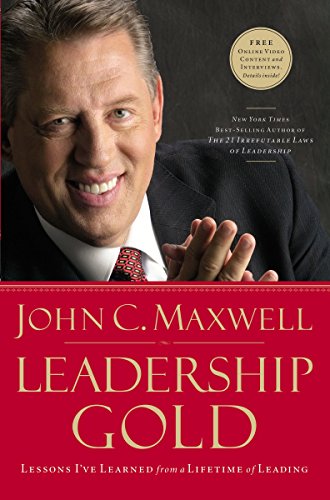
Bestselling author and leadership guru Dr. John C. Maxwell wants to help you become the smartest leader you can be by sharing Leadership Gold with you. After more than forty years of leading and teaching, Maxwell has mined the gold so you don't have to. Each gold nugget is contained in one of twenty-six chapters designed to be a six-month mentorship from the international leadership expert.
A leader among leaders, Maxwell promised himself early in his career that he wouldn't write this book until he was sixty. Now, the time is finally here.
In Leadership Gold, he shares valuable lessons such as:
- Don’t send your sucks to eagle school
- People quit people, not companies
- Influence should be loaned but never given
- When you get kicked in the rear, you know you’re out in front
- People will summarize your life in one sentence – pick it now
With his signature style, Maxwell comes alongside like a mentor, candidly taking you through what feels like a one-on-one leadership program.?Each chapter contains detailed application exercises and a “Mentoring Moment” for leaders who desire to mentor others using the book.
Leadership Gold offers the best of the best, the tried-and-true lessons that no one but Maxwell can share.
Die Inhaltsangabe kann sich auf eine andere Ausgabe dieses Titels beziehen.
Über die Autorin bzw. den Autor
John C. Maxwell is a #1 New York Times bestselling author, coach, and speaker who has sold more than 33 million books in fifty languages. He has been identified as the #1 leader in business and the most influential leadership expert in the world. His organizations - the John Maxwell Company, The John Maxwell Team, EQUIP, and the John Maxwell Leadership Foundation - have translated his teachings into seventy languages and used them to train millions of leaders from every country of the world. A recipient of the Horatio Alger Award, as well as the Mother Teresa Prize for Global Peace and Leadership from the Luminary Leadership Network, Dr. Maxwell influences Fortune 500 CEOs, the presidents of nations, and entrepreneurs worldwide. For more information about him visit JohnMaxwell.com.
Auszug. © Genehmigter Nachdruck. Alle Rechte vorbehalten.
LEADERSHIP GOLD
Lessons Learned from a Lifetime of LeadingBy John C. MaxwellThomas Nelson
Copyright © 2008 John C. MaxwellAll right reserved.
ISBN: 978-0-7852-1411-3
Contents
Acknowledgments...........................................................................vSearching for Gold........................................................................vii1. If It's Lonely at the Top, You're Not Doing Something Right............................12. The Toughest Person to Lead Is Always Yourself.........................................113. Defining Moments Define Your Leadership................................................204. When You Get Kicked in the Rear, You Know You're out in Front..........................325. Never Work a Day in Your Life..........................................................416. The Best Leaders Are Listeners.........................................................497. Get in the Zone and Stay There.........................................................578. A Leader's First Responsibility Is to Define Reality...................................669. To See How the Leader Is Doing, Look at the People.....................................7410. Don't Send Your Ducks to Eagle School.................................................8511. Keep Your Mind on the Main Thing......................................................9612. Your Biggest Mistake Is Not Asking What Mistake You're Making.........................10513. Don't Manage Your Time-Manage Your Life...............................................11414. Keep Learning to Keep Leading.........................................................12415. Leaders Distinguish Themselves During Tough Times.....................................13416. People Quit People, Not Companies.....................................................14317. Experience Is Not the Best Teacher....................................................15418. The Secret to a Good Meeting Is the Meeting Before the Meeting........................16419. Be a Connector, Not Just a Climber....................................................17420. The Choices You Make, Make You........................................................18421. Influence Should Be Loaned but Never Given............................................19322. For Everything You Gain, You Give Up Something........................................20323. Those Who Start the Journey with You Seldom Finish with You...........................21324. Few Leaders Are Successful Unless a Lot of People Want Them to Be.....................22325. You Only Get Answers to the Questions You Ask.........................................23226. People Will Summarize Your Life in One Sentence-Pick It Now...........................244Conclusion................................................................................253Notes.....................................................................................255
Chapter One
If It's Lonely at the Top, You're Not Doing Something Right
My father's generation believed that leaders should never get too close to the people they lead. "Keep a distance" was a phrase I often heard. Good leaders were supposed to be a little above and apart from those they led. As a result, when I began my leadership journey, I made sure to keep some distance between me and my people. I tried to be close enough to lead them, but far enough away to not be influenced by them.
This balancing act immediately created a lot of inner conflict for me. Honestly, I liked being close to the people I led. Plus, I felt that one of my strengths was my ability to connect with people. Both of these factors caused me to fight the instruction I had received to keep a distance. And sure enough, within a few months of accepting my first leadership position, my wife, Margaret, and I began developing close friendships. We were enjoying our work and the people in the organization.
Like many leaders early in their career, I knew that I would not stay in this first job forever. It was a good experience, but I was soon ready for bigger challenges. After three years, I resigned to accept a position in Lancaster, Ohio. I'll never forget the response of most people when they realized we were leaving: "How could you do this after all we have done together?" Many people took my departure personally. I could see they felt hurt. That really bothered me. Instantly, the words of older leaders rang in my ears: "Don't get too close to your people." As I left that assignment to take my next leadership position, I promised myself to keep people from getting too close to me.
This Time It's Personal
In my second position, for the first time in my leadership journey, I could employ staff to help me. One young man showed great promise, so I hired him and began pouring my life into him. I soon discovered that training and developing people was both a strength and a joy.
This staff member and I did everything together. One of the best ways to train others is to let them accompany you to observe what you do, give some training, and then let them make an attempt at doing it. That's what we did. It was my first experience in mentoring.
I thought everything was going great. Then one day I found out that he had taken some sensitive information I had shared with him and violated my confidence by telling others about it. It not only hurt me as a leader, but it also hurt me personally. I felt betrayed. Needless to say, I let him go. And once again, the words of more experienced leaders rang in my ears: "Don't get too close to your people."
This time I had learned my lesson. I once again determined to keep space between me and everyone around me. I would hire staff to do their jobs. And I would do my job. And we would only get together at the annual Christmas party!
For six months I managed to maintain this professional separation. But then one day I realized that keeping everyone at a distance was a double-edged sword. The good news was that if I kept people at a distance, nobody would ever hurt me. But the bad news was that no one would ever be able to help me either. So at age twenty-five, I made a decision: As a leader, I would "walk slowly through the crowd." I would take the time-and the risk-of getting close to people and letting them get close to me. I would vow to love people before trying to lead them. This choice would at times make me vulnerable. I would get hurt. Yet the close relationships would allow me to help them as well as be helped by them. That decision has changed my life and my leadership.
Loneliness Is Not a Leadership Issue
There's a cartoon in which an executive is shown sitting forlornly behind a huge desk. Standing meekly on the other side of the desk is a man dressed in work clothes, who says, "If it's any comfort to you, it's lonely at the bottom too." Being at the top doesn't mean you have to be lonely. Neither does being at the bottom. I've met lonely people at the bottom, on the top, and in the middle. I now realize that loneliness is not a positional issue; it is a personality issue.
To many people, the leader's image is that of an individual standing alone at the top of the mountain, looking down on his people. He's separated, isolated, and lonely. Thus the saying "It's lonely at the top." But I would argue that the phrase was never made by a great leader. If you are leading others and you're lonely, then you're not doing it...
„Über diesen Titel“ kann sich auf eine andere Ausgabe dieses Titels beziehen.
Suchergebnisse für Leadership Gold: Lessons I've Learned from a Lifetime...

Beispielbild für diese ISBN
Leadership Gold: Lessons I've
Verlag:
HarperCollins Leadership, 2008
ISBN 10: 0785214119
ISBN 13: 9780785214113
Gebraucht
Hardcover
Anbieter: World of Books (was SecondSale), Montgomery, IL, USA
Verkäuferbewertung 5 von 5 Sternen

Zustand: Very Good. Item in very good condition! Textbooks may not include supplemental items i.e. CDs, access codes etc. Artikel-Nr. 00102671097
Gebraucht kaufen
EUR 3,79
Versand gratis
Versand innerhalb von USA
Versand innerhalb von USA
Anzahl: 4 verfügbar
Beispielbild für diese ISBN
Leadership Gold: Lessons I've Learned from a Lifetime of Leading
Anbieter: World of Books (was SecondSale), Montgomery, IL, USA
Verkäuferbewertung 5 von 5 Sternen
Hardback. Zustand: Good. After nearly forty years of leading, Maxwell has mined the gold so you dont have to. Each gold nugget is contained in one of twenty-six chapters designed to be a six-month mentorship from the leadership expert. Each chapter contains detailed application exercises and a Mentoring Moment for leaders who desire to mentor others using the book. Artikel-Nr. 00095364131
Gebraucht kaufen
EUR 3,79
Versand gratis
Versand innerhalb von USA
Versand innerhalb von USA
Anzahl: Mehr als 20 verfügbar
Beispielbild für diese ISBN
Leadership Gold: Lessons I've
Verlag:
HarperCollins Leadership, 2008
ISBN 10: 0785214119
ISBN 13: 9780785214113
Gebraucht
Hardcover
Anbieter: World of Books (was SecondSale), Montgomery, IL, USA
Verkäuferbewertung 5 von 5 Sternen
Zustand: Acceptable. Item in acceptable condition! Textbooks may not include supplemental items i.e. CDs, access codes etc. Artikel-Nr. 00096341836
Gebraucht kaufen
EUR 3,79
Versand gratis
Versand innerhalb von USA
Versand innerhalb von USA
Anzahl: 3 verfügbar
Beispielbild für diese ISBN
Leadership Gold: Lessons I've Learned from a Lifetime of Leading
Verlag:
HarperCollins Leadership (edition 1), 2008
ISBN 10: 0785214119
ISBN 13: 9780785214113
Gebraucht
Hardcover
Anbieter: BooksRun, Philadelphia, PA, USA
Verkäuferbewertung 5 von 5 Sternen
Hardcover. Zustand: Very Good. 1. With dust jacket. It's a well-cared-for item that has seen limited use. The item may show minor signs of wear. All the text is legible, with all pages included. It may have slight markings and/or highlighting. Artikel-Nr. 0785214119-11-1-29
Gebraucht kaufen
EUR 5,17
Versand gratis
Versand innerhalb von USA
Versand innerhalb von USA
Anzahl: 2 verfügbar
Beispielbild für diese ISBN
Leadership Gold: Lessons I've Learned from a Lifetime of Leading
Verlag:
HarperCollins Leadership (edition 1), 2008
ISBN 10: 0785214119
ISBN 13: 9780785214113
Gebraucht
Hardcover
Anbieter: BooksRun, Philadelphia, PA, USA
Verkäuferbewertung 5 von 5 Sternen
Hardcover. Zustand: Fair. 1. With dust jacket. The item might be beaten up but readable. May contain markings or highlighting, as well as stains, bent corners, or any other major defect, but the text is not obscured in any way. Artikel-Nr. 0785214119-7-1-29
Gebraucht kaufen
EUR 5,39
Versand gratis
Versand innerhalb von USA
Versand innerhalb von USA
Anzahl: 1 verfügbar
Beispielbild für diese ISBN
Leadership Gold: Lessons I've Learned from a Lifetime of Leading
Verlag:
HarperCollins Leadership, 2008
ISBN 10: 0785214119
ISBN 13: 9780785214113
Gebraucht
Hardcover
Anbieter: ThriftBooks-Atlanta, AUSTELL, GA, USA
Verkäuferbewertung 5 von 5 Sternen
Hardcover. Zustand: Very Good. No Jacket. Former library book; May have limited writing in cover pages. Pages are unmarked. ~ ThriftBooks: Read More, Spend Less. Artikel-Nr. G0785214119I4N10
Gebraucht kaufen
EUR 5,89
Versand gratis
Versand innerhalb von USA
Versand innerhalb von USA
Anzahl: 1 verfügbar
Beispielbild für diese ISBN
Leadership Gold: Lessons I've Learned from a Lifetime of Leading
Verlag:
HarperCollins Leadership, 2008
ISBN 10: 0785214119
ISBN 13: 9780785214113
Gebraucht
Hardcover
Anbieter: ThriftBooks-Dallas, Dallas, TX, USA
Verkäuferbewertung 5 von 5 Sternen
Hardcover. Zustand: Very Good. No Jacket. Former library book; May have limited writing in cover pages. Pages are unmarked. ~ ThriftBooks: Read More, Spend Less. Artikel-Nr. G0785214119I4N10
Gebraucht kaufen
EUR 5,89
Versand gratis
Versand innerhalb von USA
Versand innerhalb von USA
Anzahl: 1 verfügbar
Beispielbild für diese ISBN
Leadership Gold: Lessons I've Learned from a Lifetime of Leading
Verlag:
HarperCollins Leadership, 2008
ISBN 10: 0785214119
ISBN 13: 9780785214113
Gebraucht
Hardcover
Anbieter: ThriftBooks-Dallas, Dallas, TX, USA
Verkäuferbewertung 5 von 5 Sternen
Hardcover. Zustand: As New. No Jacket. Pages are clean and are not marred by notes or folds of any kind. ~ ThriftBooks: Read More, Spend Less. Artikel-Nr. G0785214119I2N00
Gebraucht kaufen
EUR 5,89
Versand gratis
Versand innerhalb von USA
Versand innerhalb von USA
Anzahl: 1 verfügbar
Beispielbild für diese ISBN
Leadership Gold: Lessons I've Learned from a Lifetime of Leading
Verlag:
HarperCollins Leadership, 2008
ISBN 10: 0785214119
ISBN 13: 9780785214113
Gebraucht
Hardcover
Anbieter: ThriftBooks-Phoenix, Phoenix, AZ, USA
Verkäuferbewertung 5 von 5 Sternen
Hardcover. Zustand: Very Good. No Jacket. May have limited writing in cover pages. Pages are unmarked. ~ ThriftBooks: Read More, Spend Less. Artikel-Nr. G0785214119I4N00
Gebraucht kaufen
EUR 5,89
Versand gratis
Versand innerhalb von USA
Versand innerhalb von USA
Anzahl: 1 verfügbar
Beispielbild für diese ISBN
Leadership Gold: Lessons I've Learned from a Lifetime of Leading
Verlag:
HarperCollins Leadership, 2008
ISBN 10: 0785214119
ISBN 13: 9780785214113
Gebraucht
Hardcover
Anbieter: ThriftBooks-Dallas, Dallas, TX, USA
Verkäuferbewertung 5 von 5 Sternen
Hardcover. Zustand: Very Good. No Jacket. May have limited writing in cover pages. Pages are unmarked. ~ ThriftBooks: Read More, Spend Less. Artikel-Nr. G0785214119I4N00
Gebraucht kaufen
EUR 5,89
Versand gratis
Versand innerhalb von USA
Versand innerhalb von USA
Anzahl: 1 verfügbar