
Verwandte Artikel zu Under the Ribs of Death (New Canadian Library S.)
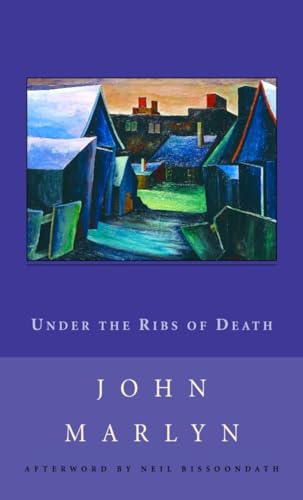
Inhaltsangabe
Set in the immigrant community of Winnipeg’s North End, Under the Ribs of Death follows the progress of young Sandor Hunyadi as he struggles to cast off his Hungarian background and become a “real Canadian.” Embittered by poverty and social humiliation, Sandor rejects his father’s impractical idealism and devotes himself single-mindedly to becoming a successful businessman. Equipped with a new name and a hardened heart, he is close to realizing his ambition when fortune’s wheel takes an unexpected – and possibly redemptive – turn.
Combining social realism and moral parable, Under the Ribs of Death is John Marlyn’s ironic portrayal of the immigrant experience in the years leading up to the Great Depression. As a commentary on the problems of cultural assimilation, this novel is as relevant today as it was when first published in 1957.
Die Inhaltsangabe kann sich auf eine andere Ausgabe dieses Titels beziehen.
Über die Autorin bzw. den Autor
John Marlyn was born in Nagy Becskerek, Hungary, in 1912. When he was six months old, his family moved to Winnipeg’s North End, the setting of his fiction.
Unable to find employment during the thirties, Marlyn went to England, where he worked as a script reader for a film studio. He returned to Canada just before the outbreak of the Second World War and has worked since that time as a writer for various government offices in Ottawa. From 1963 until 1967 he also taught creative writing at Carleton University.
Under the Ribs of Death, Marlyn’s first novel and a powerful portrait of immigrant life in its aspirations, its tragedies, and its search for values, won the Beta Sigma Phi First Novel Award.
John Marlyn resides in the Canary Islands.
Auszug. © Genehmigter Nachdruck. Alle Rechte vorbehalten.
One
The street was quiet now. His footsteps beat a lonely tattoo on the wooden sidewalk. The wind behind him ruffled his hair. Above him the lights went on, and over the face of Henry Avenue, half-hidden the moment before by soft, fraudulent shadows, there sprang into view an endless grey expanse of mouldering ruin. From the other side of the freight sheds came the rumble of the engines as they started on their nightly round of shunting box-cars to and fro.
Through the mingled odours of the neighbourhood, the pervading smell of coal gas and wood rot, there reached him suddenly the aroma of frying meat. He breathed it in hungrily and quickened his steps until he remembered that tonight there would be bologny for supper, with potato salad—yesterday’s potatoes in vinegar and water with onions.
His shadow moved before him, rippling buoyantly over the uneven boards of the sidewalk. He watched it grow and a deep longing came over him. He saw himself the way he would be when he was a man, sitting in the lobby of the Hotel, bright button shoes on his feet, his hat and cane on a table nearby—rich and well fed and at ease there in one of the great leather chairs, smoking an after-dinner cigar.
Some day he would grow up and leave all this, he thought, leave it behind him forever and never look back, never remember again this dirty, foreign neighbourhood and the English gang who chased him home from school every day. He would forget how it felt to wear rummage-sale clothes and be hungry all the time, and nobody would laugh at him again, not even the English, because by then he would have changed his name and would be working in an office the way the English did, and nobody would be able to tell that he had ever been a foreigner.
Sandor crossed the street. He climbed to the bench in front of the house and peered into the front room. His father sat there in his working-clothes with his back to the lightbulb, reading; a sad grey figure with bent back and softly moving lips, his face aglow with the reflected light from the open book.
A faint scowl came over the boy’s face. “Yah, books,” he muttered, and dropped quietly from the bench and walked around to the side of the house, cursing as he stumbled over the rubbish that littered the back lane.
Now everything depended upon his mother. She had but to raise her voice and his father would give him a beating. He was late, his clothes were torn. He had not done his chores, and worst of all, he had been fighting again.
He crept to the open window of the kitchen and looked in. His mother was in the centre of the kitchen with the baby in her lap, humming while she swayed to and fro. It was the first time he remembered seeing her in repose. Her face was free of anxiety, her dark, luminous eyes sad in their depths. He wondered why both his parents always seemed so sad. When he looked at her again it seemed to him that he was looking at a stranger. He had not known that she was beautiful nor had he noticed that she looked so tired.
He tip-toed to the woodshed and had already begun to chop some kindling when he noticed a pile of it stacked beside the door.
“Christ-aw-mighty,” he groaned. “Pa’s done it awready.”
He banged the door shut and walked into the kitchen, rejecting the solicitude that came into his mother’s eyes.
“You been fighting,” she said in a low voice . . . but not low enough.
There was a sudden stir in the front room. His heart sank within him as his father appeared.
The place where his lip was swollen began to throb now that he felt his father’s eyes upon it. He lowered his head.
“Come with me.”
As they walked into the front room his father reached for a length of cord from behind the door. “Only one thing I beat you for,” he said. “Fighting. You’re nearly twelve years old already—old enough to understand. Why do you fight? Does it prove something?”
He waited for an answer and then suddenly shouted, “Can you reason?”
His voice rang out. “Reason!”
He raised his arm.
Sandor closed his eyes as the cord came down across his shoulders. The pain was bearable. It was the world filled with hate and injustice and himself impotent in his humiliation that threatened his resolution not to cry. The cord came down again. He gritted his teeth.
He knew that he had only to cry out and the beating would stop. But it was a matter of pride with him not to do so. Instead he kicked and lashed out until, finally breaking loose, he ran into the kitchen and sat down on the window- sill.
Beating me for nothing, he thought, and bitterly wiped away his tears. He hasn’t even got the right to beat me. He’s not even my father. . . . His real father was an English lord. One day he would return and then this Joseph Hunyadi had better watch himself.
Out of the yielding stuff of memory he spun a familiar, consoling fantasy. There came back to him an image of a tall, distinguished man high above him on the deck of the ship that had brought him and his mother to Canada. Every day this man had appeared with an orange for him and a smile for his mother. He remembered the colour on his mother’s cheeks and her embarrassment . . . and the mysterious death of an older brother who must also have been the son of that English lord. This Joseph Hunyadi had found out about it and killed him.
Sandor shivered, whether with fear or delight or with both he scarcely knew. There were times when Joseph Hunyadi looked at him strangely. Did he suspect? If he did . . .
He looked up and waved his mother away as she approached him with a face-cloth.
“Why do you fight?” she asked.
“I like to fight,” he shouted.
She glanced into the next room. “Your father should hear you. Are you hurt?”
“No.” He pulled away from her as she turned his head to the light.
“So here, take the towel and wipe your face,” she said. “Now where’s the messer to cut the bread?”
Sandor cupped his chin in his hand and gazed out into the back yard. Behind him his mother bustled about the kitchen. The baby began to cry. Upstairs two of the boarders were arguing. He stuck his head out of the window to listen. But they were talking Hungarian.
He wished that supper were over so that he could join the gang inside the red fence.
“Sandor.” His mother pointed to the stove. “I want you should take this soup upstairs to Mr. Laszlo.”
For the first time he became aware of the rich odour that filled the kitchen. Beef soup. He caught a fleeting vision of a brimming plateful of it with fine glistening bubbles of fat floating on the surface, with home-made noodles and the steaming fragrance of the vegetables—and meat, real meat that one could sink one’s teeth into. It was more than he could bear.
“I won’t take it,” he shouted. “We eat bologny and Mr. Laszlo eats our soup. And he’s not even paying.”
“You’re not ashamed?” his mother asked. She sighed. “Poor man. To be sick and so far from home.”
“Yeah and we’re not poor,” he jeered. “No, we’re millionaires. We like eatin’ bologny every night for supper. Lookit my clothes. The English kids laugh at me in school. For over a year I been wantin’ to get a bed insteada...
„Über diesen Titel“ kann sich auf eine andere Ausgabe dieses Titels beziehen.
Suchergebnisse für Under the Ribs of Death (New Canadian Library S.)

Beispielbild für diese ISBN
Under the Ribs of Death
Verlag:
New Canadian Library (edition ), 1990
ISBN 10: 0771098669
ISBN 13: 9780771098666
Gebraucht
Mass Market Paperback
Anbieter: BooksRun, Philadelphia, PA, USA
Verkäuferbewertung 5 von 5 Sternen

Mass Market Paperback. Zustand: Fair. The item might be beaten up but readable. May contain markings or highlighting, as well as stains, bent corners, or any other major defect, but the text is not obscured in any way. Artikel-Nr. 0771098669-7-1
Gebraucht kaufen
EUR 4,28
Versand gratis
Versand innerhalb von USA
Versand innerhalb von USA
Anzahl: 1 verfügbar
Beispielbild für diese ISBN
Under the Ribs of Death
Anbieter: World of Books (was SecondSale), Montgomery, IL, USA
Verkäuferbewertung 5 von 5 Sternen
Zustand: Acceptable. Item in acceptable condition! Textbooks may not include supplemental items i.e. CDs, access codes etc. Artikel-Nr. 00099912298
Gebraucht kaufen
EUR 4,30
Versand gratis
Versand innerhalb von USA
Versand innerhalb von USA
Anzahl: 1 verfügbar
Beispielbild für diese ISBN
Under the Ribs of Death
Verlag:
New Canadian Library, 1990
ISBN 10: 0771098669
ISBN 13: 9780771098666
Gebraucht
Mass Market Paperback
Anbieter: ThriftBooks-Atlanta, AUSTELL, GA, USA
Verkäuferbewertung 5 von 5 Sternen
Mass Market Paperback. Zustand: Very Good. No Jacket. May have limited writing in cover pages. Pages are unmarked. ~ ThriftBooks: Read More, Spend Less. Artikel-Nr. G0771098669I4N00
Gebraucht kaufen
EUR 6,21
Versand gratis
Versand innerhalb von USA
Versand innerhalb von USA
Anzahl: 1 verfügbar
Beispielbild für diese ISBN
Under the Ribs of Death
Verlag:
New Canadian Library, 1990
ISBN 10: 0771098669
ISBN 13: 9780771098666
Gebraucht
Mass Market Paperback
Anbieter: ThriftBooks-Atlanta, AUSTELL, GA, USA
Verkäuferbewertung 5 von 5 Sternen
Mass Market Paperback. Zustand: Good. No Jacket. Pages can have notes/highlighting. Spine may show signs of wear. ~ ThriftBooks: Read More, Spend Less. Artikel-Nr. G0771098669I3N00
Gebraucht kaufen
EUR 6,21
Versand gratis
Versand innerhalb von USA
Versand innerhalb von USA
Anzahl: 1 verfügbar
Beispielbild für diese ISBN
Under the Ribs of Death
Anbieter: Better World Books: West, Reno, NV, USA
Verkäuferbewertung 5 von 5 Sternen
Zustand: Good. Pages intact with minimal writing/highlighting. The binding may be loose and creased. Dust jackets/supplements are not included. Stock photo provided. Product includes identifying sticker. Better World Books: Buy Books. Do Good. Artikel-Nr. 55032892-75
Gebraucht kaufen
EUR 7,01
Versand gratis
Versand innerhalb von USA
Versand innerhalb von USA
Anzahl: 1 verfügbar