
Verwandte Artikel zu A Nurse's Story: LIFE, DEATH, AND IN-BETWEEN IN...
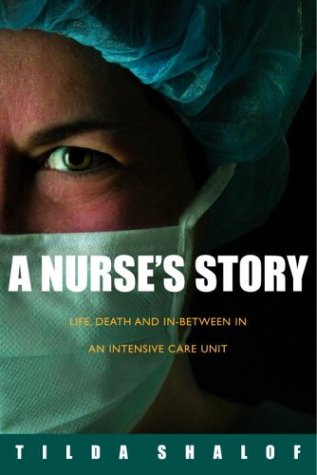
Inhaltsangabe
The team of nurses that Tilda Shalof found herself working with in the intensive care unit (ICU) of a big-city hospital was known as “Laura’s Line.” They were a bit wild: smart, funny, disrespectful of authority, but also caring and incredibly committed to their jobs. Laura set the tone with her quick remarks. Frances, from Newfoundland, was famous for her improvised recipes. Justine, the union rep, wore t-shirts emblazoned with defiant slogans, like “Nurses Care But It’s Not in the Budget.” Shalof was the one who had been to university. The others accused her of being “sooo sensitive.”
They depended upon one another. Working in the ICU was both emotionally grueling and physically exhausting. Many patients, quite simply, were dying, and the staff strove mightily to prolong their lives. With their skill, dedication, and the resources of modern science, they sometimes were almost too successful. Doctors and nurses alike wondered if what they did for terminally-ill patients was not, in some cases, too extreme. A number of patients were admitted when it was too late even for heroic measures. A boy struck down by a cerebral aneurysm in the middle of a little-league hockey game. A woman rescued – too late – from a burning house. It all took its toll on the staff.
And yet, on good days, they thrived on what they did. Shalof describes a colleague who is managing a “crashing” patient: “I looked at her. Nicky was flushed with excitement. She was doing five different things at the same time, planning ahead for another five. She was totally focused, in her element, in control, completely at home with the chaos. There was a huge smile on her face. Nurses like to fix things. If they can.”
Shalof, a veteran ICU nurse, reveals what it is really like to work behind the closed hospital curtains. The drama, the sardonic humour, the grinding workload, the cheerful camaraderie, the big issues and the small, all are brought vividly to life in this remarkable book.
Die Inhaltsangabe kann sich auf eine andere Ausgabe dieses Titels beziehen.
Über die Autorin bzw. den Autor
An intensive care unit nurse with twenty years of experience in Israel and Canada, Tilda Shalof now lives in Toronto.
Aus dem Klappentext
The team of nurses that Tilda Shalof found herself working with in the intensive care unit (ICU) of a big-city hospital was known as Laura s Line. They were a bit wild: smart, funny, disrespectful of authority, but also caring and incredibly committed to their jobs. Laura set the tone with her quick remarks. Frances, from Newfoundland, was famous for her improvised recipes. Justine, the union rep, wore t-shirts emblazoned with defiant slogans, like Nurses Care But It s Not in the Budget. Shalof was the one who had been to university. The others accused her of being sooo sensitive.
They depended upon one another. Working in the ICU was both emotionally grueling and physically exhausting. Many patients, quite simply, were dying, and the staff strove mightily to prolong their lives. With their skill, dedication, and the resources of modern science, they sometimes were almost too successful. Doctors and nurses alike wondered if what they did for terminally-ill patients was not, in some cases, too extreme. A number of patients were admitted when it was too late even for heroic measures. A boy struck down by a cerebral aneurysm in the middle of a little-league hockey game. A woman rescued too late from a burning house. It all took its toll on the staff.
And yet, on good days, they thrived on what they did. Shalof describes a colleague who is managing a crashing patient: I looked at her. Nicky was flushed with excitement. She was doing five different things at the same time, planning ahead for another five. She was totally focused, in her element, in control, completely at home with the chaos. There was a huge smile on her face. Nurses like to fix things. If they can.
Shalof, a veteran ICU nurse, reveals what it is really like to work behind the closed hospital curtains. The drama, the sardonic humour, the grinding workload, the cheerful camaraderie, the big issues and the small, all are brought vividly to life in this remarkable book.
Auszug. © Genehmigter Nachdruck. Alle Rechte vorbehalten.
It’s night shift. I jot down a series of numbers onto my patient’s twenty-four-hour flow sheet and then prepare to read them out loud to the medical resident who is standing with me at the patient’s bedside, waiting to hear them.
“Everything is out of whack,” I say: “7.26, 68, 76, 14.”
That’s a losing lottery ticket. No one can survive such a deranged acid-base balance, sky-high carbon dioxide levels, and plummeting oxygenation and bicarbonate ions.
“Those numbers are not compatible with life,” the resident says.
“Not life on this planet, anyway,” says Lynne, the nurse who’s kneeling by the door, packing up her knapsack, getting ready to leave. She was on the day shift and is the only one in the room who’s smiling: she’s going home. “I’m outta here. I’m going home to have sex with my husband.” Lynne has finished giving me report on Mr. DeWitt, all the facts and the numbers, what’s high, what’s low, what’s rising, and what’s falling. Now it’s up to me to carry on throughout the night.
“Have fun,” I say as I’m thinking about something else. “You know what, Lynne? I think we should call a family meeting. Does his wife know how bad the situation is? Has anyone told her? I’m going to call her. I think she needs to come in.”
“She just went home,” says Lynne. “She’s been here all day and was exhausted when she left. What makes you think he might not make it through the night? He’s been spiralling downward for weeks. You could probably get him through the night.”
Together we stand there, Lynne just outside the door, me just inside, surveying the body of the middle-aged man stretched out in the bed, surrounded by machines and monitors, tubes and wires, bags and drains that expose all the secret fluids of the body.
“I see your point, though,” Lynne said. “When you take a minute to step back and really look at it all, you do start to wonder sometimes. But do you really think it’s going to be tonight?”
“I have a feeling.” I have learned to trust my feelings.
I consult with the medical resident and together we decide that I should call Mrs. DeWitt and ask her to come in. I tell her that unfortunately, her husband is not doing well. His blood pressure is very low, I say. It is dropping, I add, as gently as possible. He is on powerful intravenous medications for his blood pressure, inotropes we call them, but we have had to add another drug because of the serious heart irregularities that he developed today. Another problem is that his urine output is dropping off. Perhaps she would like to return to the hospital and we can talk about it further? Is there someone who could drive her?
*****
“FAMILY MEETING” is the term we use to gather all the people closest to the patient to provide them with an update on the patient’s condition. Sometimes we call a family meeting to discuss the death and how we will let it happen. A family meeting is rarely called if the patient is improving.
We convene in a shabby, cramped room called the “quiet room.” It is a tiny room with buzzing fluorescent lights, no windows — I would never take anyone in there if they suffered from claustrophobia. It has the feel of a bunker in a war zone, but aesthetics aside, it seems to be the only room in this huge, bustling, overcrowded, downtown hospital that could be made available for this purpose. The quiet room! It is probably the most disquieting place in the whole hospital. Bombs are detonated in here.
We turn our attention to Mrs. DeWitt. She is the one who knows Edgar DeWitt best. She is the person who will speak on his behalf, as he is no longer conscious and cannot tell us himself what he wants us to do. She perches on the chair, frail, but tensed up. She knows why we’re gathered here.
“What would Mr. DeWitt have wanted?” the doctor asks his wife.
“To live! That’s what he would have wanted.” She sobs into her hands.
Of course. Isn’t it obvious? Isn’t that what anyone would want?
“We understand,” the doctor says, “but, given his deteriorating condition and his irreversible medical problems, if we continue with the life-support measures that we have in place, we are merely prolonging the inevitable.”
I watch Mrs. DeWitt and I can see that in her panicked state, she finds comfort in the simple fact that the doctor is talking, because all the time the doctor is talking, her husband is still alive.
“We do not believe that we can reverse his medical problems. Perhaps the time has come, that we should very gently, slowly, when you are ready, of course, remove the ventilator, all the life supports, and let nature take its course?”
She sits weeping into the cave of her two hands. I offer her a new box of tissues and pull out the first one to get it started.
“Did you ever discuss this situation with him?” I press gently. “Do you think he would want all this to be done?” My words are like sticks, poking at a fire, making it flare.
“Who would want all this done?” she asks.
The doctor and I smile at her response, so true and honest.
“I don’t know what to do,” Mrs. DeWitt says. “Whenever we had a big decision to make, Ed and I always made it together.”
“There’s no need to decide anything this minute,” I say, “but his condition is very critical. Anything could happen tonight.”
Whatever happens, it will be a long night for all of us.
The family meeting is over and we return to Mr. DeWitt’s room.
Frances peeks her head in the door and whispers, “Do you want to order in food, Tilda?”
„Über diesen Titel“ kann sich auf eine andere Ausgabe dieses Titels beziehen.
Suchergebnisse für A Nurse's Story: LIFE, DEATH, AND IN-BETWEEN IN...

Beispielbild für diese ISBN
A Nurse's Story: Life, Death, and In-between in an Intensive Care Unit
Anbieter: World of Books (was SecondSale), Montgomery, IL, USA
Verkäuferbewertung 5 von 5 Sternen

Zustand: Very Good. Item in very good condition! Textbooks may not include supplemental items i.e. CDs, access codes etc. Artikel-Nr. 00103637438
Gebraucht kaufen
EUR 4,05
Versand gratis
Versand innerhalb von USA
Versand innerhalb von USA
Anzahl: 1 verfügbar
Beispielbild für diese ISBN
A Nurse's Story: Life, Death, and In-between in an Intensive Care Unit
Verlag:
McClelland & Stewart (edition First Edition), 2004
ISBN 10: 0771080867
ISBN 13: 9780771080869
Gebraucht
Hardcover
Erstausgabe
Anbieter: BooksRun, Philadelphia, PA, USA
Verkäuferbewertung 5 von 5 Sternen
Hardcover. Zustand: Fair. First Edition. The item might be beaten up but readable. May contain markings or highlighting, as well as stains, bent corners, or any other major defect, but the text is not obscured in any way. Artikel-Nr. 0771080867-7-1
Gebraucht kaufen
EUR 6,70
Versand gratis
Versand innerhalb von USA
Versand innerhalb von USA
Anzahl: 1 verfügbar
Beispielbild für diese ISBN
A Nurse's Story: Life, Death, and In-between in an Intensive Care Unit
Anbieter: ThriftBooks-Atlanta, AUSTELL, GA, USA
Verkäuferbewertung 5 von 5 Sternen
Hardcover. Zustand: Good. No Jacket. Pages can have notes/highlighting. Spine may show signs of wear. ~ ThriftBooks: Read More, Spend Less. Artikel-Nr. G0771080867I3N00
Gebraucht kaufen
EUR 6,96
Versand gratis
Versand innerhalb von USA
Versand innerhalb von USA
Anzahl: 1 verfügbar
Beispielbild für diese ISBN
A Nurse's Story: Life, Death, and In-between in an Intensive Care Unit
Anbieter: ThriftBooks-Reno, Reno, NV, USA
Verkäuferbewertung 5 von 5 Sternen
Hardcover. Zustand: Very Good. No Jacket. May have limited writing in cover pages. Pages are unmarked. ~ ThriftBooks: Read More, Spend Less. Artikel-Nr. G0771080867I4N00
Gebraucht kaufen
EUR 6,96
Versand gratis
Versand innerhalb von USA
Versand innerhalb von USA
Anzahl: 1 verfügbar
Beispielbild für diese ISBN
A Nurse's Story: Life, Death, and In-between in an Intensive Care Unit
Anbieter: ThriftBooks-Reno, Reno, NV, USA
Verkäuferbewertung 5 von 5 Sternen
Hardcover. Zustand: Good. No Jacket. Pages can have notes/highlighting. Spine may show signs of wear. ~ ThriftBooks: Read More, Spend Less. Artikel-Nr. G0771080867I3N00
Gebraucht kaufen
EUR 6,96
Versand gratis
Versand innerhalb von USA
Versand innerhalb von USA
Anzahl: 1 verfügbar
Beispielbild für diese ISBN
A Nurse's Story: Life, Death, and In-between in an Intensive Care Unit
Anbieter: ThriftBooks-Dallas, Dallas, TX, USA
Verkäuferbewertung 5 von 5 Sternen
Hardcover. Zustand: Very Good. No Jacket. May have limited writing in cover pages. Pages are unmarked. ~ ThriftBooks: Read More, Spend Less. Artikel-Nr. G0771080867I4N00
Gebraucht kaufen
EUR 6,96
Versand gratis
Versand innerhalb von USA
Versand innerhalb von USA
Anzahl: 1 verfügbar
Beispielbild für diese ISBN
A Nurse's Story: Life, Death, and In-between in an Intensive Care Unit
Anbieter: ThriftBooks-Atlanta, AUSTELL, GA, USA
Verkäuferbewertung 5 von 5 Sternen
Hardcover. Zustand: Very Good. No Jacket. May have limited writing in cover pages. Pages are unmarked. ~ ThriftBooks: Read More, Spend Less. Artikel-Nr. G0771080867I4N00
Gebraucht kaufen
EUR 6,96
Versand gratis
Versand innerhalb von USA
Versand innerhalb von USA
Anzahl: 1 verfügbar
Beispielbild für diese ISBN
A Nurse's Story: Life, Death, and In-between in an Intensive Care Unit
Anbieter: ThriftBooks-Dallas, Dallas, TX, USA
Verkäuferbewertung 5 von 5 Sternen
Hardcover. Zustand: Good. No Jacket. Pages can have notes/highlighting. Spine may show signs of wear. ~ ThriftBooks: Read More, Spend Less. Artikel-Nr. G0771080867I3N00
Gebraucht kaufen
EUR 6,96
Versand gratis
Versand innerhalb von USA
Versand innerhalb von USA
Anzahl: 1 verfügbar