
Verwandte Artikel zu Stealing Your Life: The Ultimate Identity Theft Prevention...
Inhaltsangabe
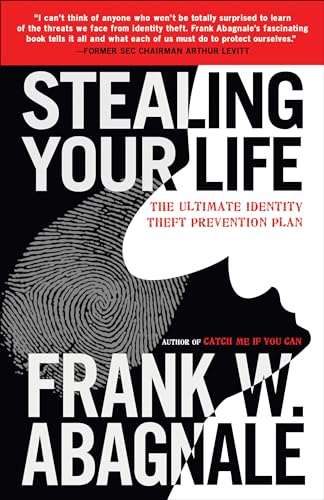
The charismatic forger immortalized in Catch Me If You Can exposes the astonishing tactics of today’s identity theft criminals and offers powerful strategies to thwart them based on his second career as an acclaimed fraud-fighting consultant.
When Frank Abagnale trains law enforcement officers around the country about identity theft, he asks officers for their names and addresses and nothing more. In a matter of hours he can obtain everything he would need to steal their lives: Social Security numbers, dates of birth, current salaries, checking account numbers, the names of everyone in their families, and more. This illustrates how easy it is for anyone from anywhere in the world to assume our identities and in a matter of hours devastate our lives in ways that can take years to recover from. Considering that a fresh victim is hit every four seconds, Stealing Your Life is the reference everyone needs by an unsurpassed authority on the latest identity theft schemes.
Consider these sobering facts:
• Six out of ten American companies and government agencies have already been hacked.
• An estimated 80 percent of birth certificate requests are fulfilled through the mail for people using only a name and a return address.
• Americans write 39 billion checks a year, and half of them never reconcile their bank statements.
• A Social Security number costs $49 on the black market. A driver’s license goes for $90. A birth certificate will set you back $79.
Abagnale offers dozens of concrete steps to transform anyone from an easy mark into a hard case that criminals are likely to bypass:
• Don’t allow your kids to use the computer on which you do online banking and store financial records (children are apt to download games and attachments that host damaging viruses or attract spyware).
• Beware of offers that appeal to greed or fear in exchange for personal data.
• Monitor your credit report regularly and know if anyone’s been “knocking on your door.”
• Read privacy statements carefully and choose to opt out of sharing information whenever possible.
Brimming with anecdotes of creative criminality that are as entertaining as they are enlightening, Stealing Your Life is the practical way to shield yourself from one of today’s most nefarious and common crimes.
Die Inhaltsangabe kann sich auf eine andere Ausgabe dieses Titels beziehen.
Über die Autorin bzw. den Autor
FRANK W. ABAGNALE is the author of the bestselling memoir Catch Me If You Can and The Art of the Steal. He works closely with the FBI and corporations around the world as an expert on counterfeiting and secure documents. He lives in the Midwest with his wife and is the father of three sons.
Auszug. © Genehmigter Nachdruck. Alle Rechte vorbehalten.
1
The Sweetest Con of All
Anthony Dwight Stone was perfectly happy being Anthony Dwight Stone, for all of his first thirty–one years. This sense of contentment continued right up until the day, a few years ago, when he learned that Thomas Earl Batts had decided to also become Anthony Dwight Stone, and the world got a little too crowded.
The real Anthony Stone was driving through Nash County, North Carolina, when he was stopped for speeding. When his license was inspected, the police gave him the news that he was wanted for drug possession. Geez, he said, they had to be kidding. They weren’t, and he got tossed in jail for the night. Then the police showed him a picture that was supposedly him. It was of a man with his hair coiled in braids and a stomach that ran on forever who easily weighed three hundred pounds; Stone boasted curly hair and weighed 170, tops. He recognized the man right away. That was Thomas Earl Batts, his sister’s boyfriend.
Being his sister’s boyfriend had made it pretty easy for Batts to gather the necessary information—Social Security number and a few other key facts—and slip into Anthony Stone’s identity. And it certainly changed Anthony Stone’s view of what sisters are for.
As it turned out, Stone said, Batts had quietly appropriated Stone’s identity some ten years earlier and had been living right alongside him, using credit cards in Stone’s name to buy various necessary and unnecessary merchandise. He had gone and gotten a loan in Stone’s name to purchase a house. And out of force of bad habit, he had built up a tidy little rap sheet.
None of this was a good thing for Anthony Stone. Batts, for instance, didn’t bother to keep current with his credit. But then, what did he care? He wasn’t really Anthony Stone. And so the real Anthony Stone found himself branded as a congenital loser. He had an impossible time getting credit—any credit. “Doors of all kind were shut in my face,” he said. He’d apply for a job and would be promptly turned down; once he found work and, after a lagging credit check, was whisked right out of a company car.
When he belatedly got around to applying to college, he got nothing but rejections, since his sketchy credit and criminal misdeeds weren’t quite what the admissions people had in mind for their incoming class. It didn’t seem to matter that it wasn't his credit record or his criminal record. “I’d get into my apartment and get a notice six or seven times that I was evicted,” he said. “I felt like life had stopped.”
It took years to untangle the mess. And Anthony Stone had to wonder, what if it happened again? Which is why he went to court and changed his name to Stone Tyler, essentially ceding his old identity to the dustbin. At the same time, he applied for a new Social Security number. He was laughed at and told it couldn’t be done, but he ultimately did get it done. “Basically, you can’t get your Social Security number changed unless it’s life–threatening,” he said.
Tyler, who lives in Durham, North Carolina, at last got into college and found a job with Blue Cross Blue Shield. Batts served a brief jail sentence, and that was it. For many people, the metamorphosis that Stone Tyler chose—new name, new Social Security number—might seem like an extreme response to an admittedly awful situation, and I wouldn’t recommend going quite that far. But from where he sat he saw no choice. This con was just too much for him.
His rude ordeal taught this young man, who had been leading an unremarkable life in North Carolina, that he lived in a new world in which all identities are at risk and, in essence, are in play.
I know cons, and right away I saw that this one was going to be the sweetest of all. For the past thirty–two years, ever since forsaking my foolish teenage infatuation with perpetrating swindles, I’ve been a professional expert in how to prevent fraud. Nearly twenty years ago, as I was busy trying to help banks and businesses stop the spiraling increase in rubber checks and wily embezzlement schemes, it became obvious to me that a brand–new fraud, still in its formative stages and without even a clarifying name, was destined to overwhelm all the others as the clear crime of choice. In fact, it was a crook’s dream come true, the sort of surefire caper that makes a career criminal glad he ignored his mother’s advice and picked the wrong side of the law.
Years before, I would never have guessed that it could even be invented, for it was the most incredible but also the simplest crime ever perpetrated. And if I manage to live forty more years, it will remain the simplest crime ever committed—and the most profitable.
This festering crime is what we now know as identity theft, the wholesale lifting of someone’s identity for illicit gain. It’s stealing that identity, then using it to access a person’s bank account, their personal information, and their personal finances. It’s becoming someone else for the bucks.
Why did I think it contained such enormous promise for thieves? First of all, it is elementary to pull off. If you have my name, my date of birth, and my Social Security number, that’s pretty much all you need in order to become me. It takes very little investment capital. A phone and a cheap computer will get you started. If you want to write phony checks, you’ll need a few vital tools like a blow–dryer, cake pans, and a common household chemical. You can pick them up at your nearest discount drugstore, and no one will be the wiser.
Then, the rewards are enormous. Identity theft will afford you access not only to someone’s wallet and bank account but to his very life and character, his entire ability to borrow and spend. Are you worried about the law? No need. Technology has made identity theft easy to execute behind the shadowy cloak of a computer keyboard. You don’t even have to be in the same city, or country, as your victim. You can steal someone’s identity without being able to speak his language or pronounce her name.
Moreover, law enforcement cares less about identity theft than it does about double–parked cars and public loiterers. Your chances of getting caught are minuscule. But even if you do get caught, you are unlikely to spend a single night in jail. Swiping a kid’s bike might have graver consequences.
When I ran all these things through my mind, they unnerved me to no end. And my long–dormant criminal instincts stirred a little and made me think, Why didn’t they invent this con back when I could have used it?
When I was passing phony checks in other people’s names more than thirty years ago, for example, it took me three months and a million–dollar Heidelberg printing press to create and cash a realistic–looking product. Today criminals do it in an instant on a $500 computer, with no witnesses to pick them out in a lineup, because they’re doing it from an armchair in China or Russia, a continent away. And checks are simply one piece of an identity thief’s arsenal.
In recent years identity theft has become the very monster I feared it would become. It’s a crime so versatile that the list of potential targets is endless. Who’s at risk? Anyone who has a credit card or a bank account, or who pays a bill. Anyone who has a mortgage, a car loan, or a debit card. Anyone who has a driver’s license, a Social Security number, or a job. Anyone who has phone service or health insurance. Anyone who goes on the Internet.
Even somebody who’s always watching his back, like...
„Über diesen Titel“ kann sich auf eine andere Ausgabe dieses Titels beziehen.
Suchergebnisse für Stealing Your Life: The Ultimate Identity Theft Prevention...

Beispielbild für diese ISBN
Stealing Your Life: The Ultimate Identity Theft Prevention Plan
ISBN 10: 0767925874
ISBN 13: 9780767925877
Gebraucht
Paperback
Anbieter: World of Books (was SecondSale), Montgomery, IL, USA
Verkäuferbewertung 5 von 5 Sternen

Paperback. Zustand: Good. The charismatic forger immortalized inCatch Me If You Canexposes the astonishing tactics of today's identity theft criminals and offers powerful strategies to thwart them based on his second career as an acclaimed fraud-fighting consultant. When Frank Abagnale trains law enforcement officers around the country about identity theft, he asks officers for their names and addresses and nothing more. In a matter of hours he can obtain everything he would need to steal their lives: Social Security numbers, dates of birth, current salaries, checking account numbers, the names of everyone in their families, and more. This illustrates how easy it is for anyone from anywhere in the world to assume our identities and in a matter of hours devastate our lives in ways that can take years to recover from. Considering that a fresh victim is hit every four seconds,Stealing Your Lifeis the reference everyone needs by an unsurpassed authority on the latest identity theft schemes. Consider these sobering facts: .Six out of ten American companies and government agencies have already been hacked. .An estimated 80 percent of birth certificate requests are fulfilled through the mail for people using only a name and a return address. .Americans write 39 billion checks a year, and half of them never reconcile their bank statements. .A Social Security number costs $49 on the black market. A driver's license goes for $90. A birth certificate will set you back $79. Abagnale offers dozens of concrete steps to transform anyone from an easy mark into a hard case that criminals are likely to bypass: . Don't allow your kids to use the computer on which you do online banking and store financial records (children are apt to download games and attachments that host damaging viruses or attract spyware). . Beware of offers that appeal to greed or fear in exchange for personal data. . Monitor your credit report regularly and know if anyone's been "knocking on your door." . Read privacy statements carefully and choose to opt out of sharing information whenever possible. Brimming with anecdotes of creative criminality that are as entertaining as they are enlightening,Stealing Your Lifeis the practical way to shield yourself from one of today's most nefarious and common crimes. Artikel-Nr. 00090662331
Gebraucht kaufen
EUR 4,53
Versand gratis
Versand innerhalb von USA
Versand innerhalb von USA
Anzahl: 7 verfügbar
Beispielbild für diese ISBN
Stealing Your Life: The Ultimate Identity Theft Prevention Plan
ISBN 10: 0767925874
ISBN 13: 9780767925877
Gebraucht
Paperback
Anbieter: World of Books (was SecondSale), Montgomery, IL, USA
Verkäuferbewertung 5 von 5 Sternen
Paperback. Zustand: Fair. The charismatic forger immortalized inCatch Me If You Canexposes the astonishing tactics of today's identity theft criminals and offers powerful strategies to thwart them based on his second career as an acclaimed fraud-fighting consultant. When Frank Abagnale trains law enforcement officers around the country about identity theft, he asks officers for their names and addresses and nothing more. In a matter of hours he can obtain everything he would need to steal their lives: Social Security numbers, dates of birth, current salaries, checking account numbers, the names of everyone in their families, and more. This illustrates how easy it is for anyone from anywhere in the world to assume our identities and in a matter of hours devastate our lives in ways that can take years to recover from. Considering that a fresh victim is hit every four seconds,Stealing Your Lifeis the reference everyone needs by an unsurpassed authority on the latest identity theft schemes. Consider these sobering facts: .Six out of ten American companies and government agencies have already been hacked. .An estimated 80 percent of birth certificate requests are fulfilled through the mail for people using only a name and a return address. .Americans write 39 billion checks a year, and half of them never reconcile their bank statements. .A Social Security number costs $49 on the black market. A driver's license goes for $90. A birth certificate will set you back $79. Abagnale offers dozens of concrete steps to transform anyone from an easy mark into a hard case that criminals are likely to bypass: . Don't allow your kids to use the computer on which you do online banking and store financial records (children are apt to download games and attachments that host damaging viruses or attract spyware). . Beware of offers that appeal to greed or fear in exchange for personal data. . Monitor your credit report regularly and know if anyone's been "knocking on your door." . Read privacy statements carefully and choose to opt out of sharing information whenever possible. Brimming with anecdotes of creative criminality that are as entertaining as they are enlightening,Stealing Your Lifeis the practical way to shield yourself from one of today's most nefarious and common crimes. Artikel-Nr. 00101844462
Gebraucht kaufen
EUR 4,53
Versand gratis
Versand innerhalb von USA
Versand innerhalb von USA
Anzahl: 1 verfügbar
Beispielbild für diese ISBN
Stealing Your Life: The Ultimate Identity Theft Prevention Plan
Verlag:
Crown (edition Reprint), 2008
ISBN 10: 0767925874
ISBN 13: 9780767925877
Gebraucht
Paperback
Anbieter: BooksRun, Philadelphia, PA, USA
Verkäuferbewertung 5 von 5 Sternen
Paperback. Zustand: Very Good. Reprint. It's a well-cared-for item that has seen limited use. The item may show minor signs of wear. All the text is legible, with all pages included. It may have slight markings and/or highlighting. Artikel-Nr. 0767925874-11-1
Gebraucht kaufen
EUR 4,98
Versand gratis
Versand innerhalb von USA
Versand innerhalb von USA
Anzahl: 1 verfügbar
Beispielbild für diese ISBN
Stealing Your Life: The Ultimate Identity Theft Prevention Plan
Verlag:
Crown (edition Reprint), 2008
ISBN 10: 0767925874
ISBN 13: 9780767925877
Gebraucht
Paperback
Anbieter: BooksRun, Philadelphia, PA, USA
Verkäuferbewertung 5 von 5 Sternen
Paperback. Zustand: Very Good. Reprint. It's a well-cared-for item that has seen limited use. The item may show minor signs of wear. All the text is legible, with all pages included. It may have slight markings and/or highlighting. Artikel-Nr. 0767925874-8-1
Gebraucht kaufen
EUR 5,28
Versand gratis
Versand innerhalb von USA
Versand innerhalb von USA
Anzahl: 1 verfügbar
Beispielbild für diese ISBN
Stealing Your Life : The Ultimate Identity Theft Prevention Plan
Verlag:
Crown Publishing Group, The, 2008
ISBN 10: 0767925874
ISBN 13: 9780767925877
Gebraucht
Softcover
Anbieter: Better World Books, Mishawaka, IN, USA
Verkäuferbewertung 5 von 5 Sternen
Zustand: Good. Reprint. Former library copy. Pages intact with minimal writing/highlighting. The binding may be loose and creased. Dust jackets/supplements are not included. Includes library markings. Stock photo provided. Product includes identifying sticker. Better World Books: Buy Books. Do Good. Artikel-Nr. 5224525-6
Gebraucht kaufen
EUR 6,17
Versand gratis
Versand innerhalb von USA
Versand innerhalb von USA
Anzahl: 1 verfügbar
Beispielbild für diese ISBN
Stealing Your Life: The Ultimate Identity Theft Prevention Plan
Anbieter: Wonder Book, Frederick, MD, USA
Verkäuferbewertung 5 von 5 Sternen
Zustand: Good. Good condition. A copy that has been read but remains intact. May contain markings such as bookplates, stamps, limited notes and highlighting, or a few light stains. Artikel-Nr. L03C-03339
Gebraucht kaufen
EUR 6,41
Versand gratis
Versand innerhalb von USA
Versand innerhalb von USA
Anzahl: 1 verfügbar
Beispielbild für diese ISBN
Stealing Your Life: The Ultimate Identity Theft Prevention Plan
Verlag:
Crown Publishing Group (NY), 2008
ISBN 10: 0767925874
ISBN 13: 9780767925877
Gebraucht
Paperback
Anbieter: ThriftBooks-Dallas, Dallas, TX, USA
Verkäuferbewertung 5 von 5 Sternen
Paperback. Zustand: Very Good. No Jacket. May have limited writing in cover pages. Pages are unmarked. ~ ThriftBooks: Read More, Spend Less. Artikel-Nr. G0767925874I4N00
Gebraucht kaufen
EUR 6,52
Versand gratis
Versand innerhalb von USA
Versand innerhalb von USA
Anzahl: 1 verfügbar
Beispielbild für diese ISBN
Stealing Your Life: The Ultimate Identity Theft Prevention Plan
Verlag:
Crown Publishing Group (NY), 2008
ISBN 10: 0767925874
ISBN 13: 9780767925877
Gebraucht
Paperback
Anbieter: ThriftBooks-Atlanta, AUSTELL, GA, USA
Verkäuferbewertung 5 von 5 Sternen
Paperback. Zustand: As New. No Jacket. Pages are clean and are not marred by notes or folds of any kind. ~ ThriftBooks: Read More, Spend Less. Artikel-Nr. G0767925874I2N00
Gebraucht kaufen
EUR 6,52
Versand gratis
Versand innerhalb von USA
Versand innerhalb von USA
Anzahl: 1 verfügbar
Beispielbild für diese ISBN
Stealing Your Life: The Ultimate Identity Theft Prevention Plan
Verlag:
Crown Publishing Group (NY), 2008
ISBN 10: 0767925874
ISBN 13: 9780767925877
Gebraucht
Paperback
Anbieter: ThriftBooks-Phoenix, Phoenix, AZ, USA
Verkäuferbewertung 5 von 5 Sternen
Paperback. Zustand: Very Good. No Jacket. May have limited writing in cover pages. Pages are unmarked. ~ ThriftBooks: Read More, Spend Less. Artikel-Nr. G0767925874I4N00
Gebraucht kaufen
EUR 6,52
Versand gratis
Versand innerhalb von USA
Versand innerhalb von USA
Anzahl: 1 verfügbar
Foto des Verkäufers
Stealing Your Life: The Ultimate Identity Theft Prevention Plan
Anbieter: WeBuyBooks, Rossendale, LANCS, Vereinigtes Königreich
Verkäuferbewertung 5 von 5 Sternen
Zustand: Good. Most items will be dispatched the same or the next working day. A copy that has been read but remains in clean condition. All of the pages are intact and the cover is intact and the spine may show signs of wear. The book may have minor markings which are not specifically mentioned. Artikel-Nr. rev1534556308
Gebraucht kaufen
EUR 1,21
EUR 6,03 Versand
Versand von Vereinigtes Königreich nach USA
Versand von Vereinigtes Königreich nach USA
Anzahl: 1 verfügbar