
Verwandte Artikel zu The Gaslight Effect: How to Spot and Survive the Hidden...
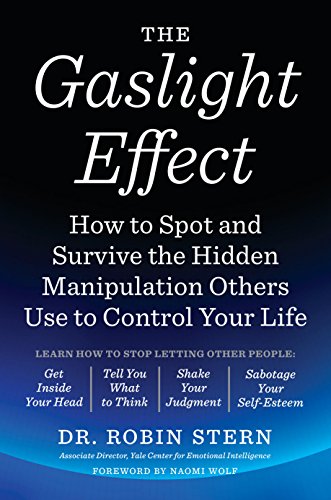
The Gaslight Effect: How to Spot and Survive the Hidden Manipulation Others Use to Control Your Life - Softcover
Inhaltsangabe
In this groundbreaking guide, the prominent therapist Dr. Robin Stern shows how the Gaslight Effect works, how you can decide which relationships can be saved and which you have to walk away from—and how to gasproof your life so you'll avoid gaslighting relationship.
Your husband crosses the line in his flirtations with another woman at a dinner party. When you confront him, he asks you to stop being insecure and controlling. After a long argument, you apologize for giving him a hard time.
Your mother belittles your clothes, your job, and your boyfriend. But instead of fighting back, you wonder if your mother is right and figure that a mature person should be able to take a little criticism.
If you think things like this can’t happen to you, think again. Gaslighting is an insidious form of emotional abuse and manipulation that is difficult to recognize and even harder to break free from.
Are you being gaslighted? Check for these telltale signs:
1) Does your opinion of yourself change according to approval or disapproval from your spouse?
2) When your boss praises you, do you feel as if you could conquer the world?
3) Do you dread having small things go wrong at home—buying the wrong brand of toothpaste, not having dinner ready on time, a mistaken appointment written on the calendar?
4) Do you have trouble making simple decisions and constantly second guess yourself?
5) Do you frequently make excuses for your partner's behavior to your family and friends?
6) Do you feel hopeless and joyless?
Die Inhaltsangabe kann sich auf eine andere Ausgabe dieses Titels beziehen.
Über die Autorin bzw. den Autor
ROBIN STERN, Ph.D., is the associate director for the Yale Center for Emotional Intelligence and an associate research scientist at the Child Study Center at Yale. She is a licensed psychoanalyst with 30 years of experience treating individuals, couples, and families. Robin is the co-developer of RULER, the Yale Center’s approach to bringing emotion intelligence to school communities and to the workplace; she is a co-developer of RULER for Families and a lead trainer for the Center’s Institutes. Robin is also on the faculty of Teachers College, Columbia University and the author of two books: The Gaslight Effect and Project Rebirth.
Robin was a founding member of the Woodhull Institute, where she spent 15 years creating and facilitating development programs for women leaders. She has been a guest on many local and national radio shows and has traveled widely to lecture on emotional intelligence and on relational bullying. Robin regularly consults to schools and companies around the world, and for the last 5 years has worked with Facebook to develop tools that help adults and children develop emotional intelligence and resolve online conflict. Currently, Robin consults to Smilow Cancer Hospital in New Haven, helping physicians and nurses build emotional intelligence. In 2014-15 Robin was a fellow in the Yale Public Voices Fellowship, and her work has been published in popular media, such as Psychology Today, The Huffington Post, Time.com, The Washington Post, The Hill, and Harvard Business Review. She serves on the Emotional Intelligence Consortium and the advisory board for Crisis Text Line and I’ll Go First.
Robin lives in New York and treasures her relationship with her son, Scott and daughter, Melissa who are following their own passions.
Auszug. © Genehmigter Nachdruck. Alle Rechte vorbehalten.
Chapter 1
What Is Gaslighting?
Katie is a friendly, upbeat person who walks down the street with a smile for everyone. Her job as a sales rep means that she’s often talking to new people, which she loves. An attractive woman in her late twenties, she went through a long period of dating before she finally settled on her current boyfriend, Brian.
Brian can be sweet, protective, and considerate, but he’s also an anxious, fearful guy who treats every new person with suspicion. When the two of them go on a walk together, Katie is outgoing and talkative, easily falling into conversation with the man who stops to ask directions or the woman whose dog cuts across their path. Brian, though, is full of criticism. Can’t she see how people are laughing at her? She thinks they like these casual conversations, but they’re actually rolling their eyes and wondering why she’s so chatty. And that man who asked them for directions? He was only trying to seduce her—she should have seen how he leered at her the moment her back was turned. Besides, behaving in such a manner is highly disrespectful to him, her boyfriend. How does she think it makes him feel to see her making eyes at every guy she passes?
At first, Katie laughs off her boyfriend’s complaints. She’s been like this all her life, she tells him, and she enjoys being friendly. But after weeks of relentless criticism, she starts to doubt herself. Maybe people are laughing and leering at her. Maybe she is being flirtatious and rubbing her boyfriend’s nose in it—what a terrible way to treat the man who loves her!
Eventually, when Katie walks down the street, she can’t decide how to behave. She doesn’t want to give up her warm and friendly approach to the world—but now, whenever she smiles at a stranger, she can’t help imagining what Brian would think.
LIZ is a top–level executive in a major advertising firm. A stylish woman in her late forties with a solid, twenty–year marriage and no children, she’s worked hard to get where she is, pouring all her extra energy into her career. Now she seems to be on the verge of reaching her goal, in line to take over the company’s New York office.
Then, at the last minute, someone else is brought in to take the job. Liz swallows her pride and offers to give him all the help she can. At first, the new boss seems charming and appreciative. But soon Liz starts to notice that she’s being left out of important decisions and not invited to major meetings. She hears rumors that clients are being told she doesn’t want to work with them anymore and has recommended that they speak to her new boss instead. When she complains to her colleagues, they look at her in bewilderment. “But he always praises you to the skies,” they insist. “Why would he say such nice things if he was out to get you?”
Finally, Liz confronts her boss, who has a plausible explanation for every incident. “Look,” he says kindly at the end of the meeting. “I think you’re being way too sensitive about all this—maybe even a little paranoid. Would you like a few days off to destress?”
Liz feels completely disabled. She knows she’s being sabotaged—but why is she the only one who thinks so?
MITCHELL is a grad student in his mid–twenties who’s studying to become an electrical engineer. Tall, gangly, and somewhat shy, he’s taken a long time to find the right woman, but he’s just begun dating someone he really likes. One day, his girlfriend mildly points out that Mitchell still dresses like a little boy. Mitchell is mortified, but he sees what she means. Off he goes to a local department store, where he asks the personal shopper to help him choose an entire wardrobe. The clothes make him feel like a new man—sophisticated, attractive—and he enjoys the appreciative glances women give him on the bus ride home.
But when he wears the new clothes to Sunday dinner at his parents’ home, his mother bursts out laughing. “Oh, Mitchell, that outfit is all wrong for you—you look ridiculous,” she says. “Please, dear, the next time you go shopping, let me help you.” When Mitchell feels hurt and asks his mother to apologize, she shakes her head sadly. “I was only trying to help,” she says. “And I’d like an apology from you for that tone of voice.”
Mitchell is confused. He liked his new clothes—but maybe he does look ridiculous. And has he really been rude to his mother?
Understanding the Gaslight Effect
Katie, Liz, and Mitchell have one thing in common: they’re all suffering from the Gaslight Effect. The Gaslight Effect results from a relationship between two people: a gaslighter, who needs to be right in order to preserve his own sense of self and his sense of having power in the world; and a gaslightee, who allows the gaslighter to define her sense of reality because she idealizes him and seeks his approval. Gaslighters and gaslightees can be of either gender, and gaslighting can happen in any type of relationship. But I’m going to call gaslighters “he” and gaslightees “she,” since that’s the pairing I most often see in my practice. I’ll explore a variety of relationships—with friends, family, bosses, and colleagues—but the male–female romantic pairing will be my major focus.
For example, Katie’s gaslighting boyfriend insists that the world is a dangerous place and that Katie’s behavior is inappropriate and insensitive. When he feels stressed or threatened, he has to be right about these issues, and he has to get Katie to agree that he is. Katie values the relationship and doesn't want to lose Brian, so she starts to see things from his point of view. Maybe the people they meet are laughing at her. Maybe she is being flirtatious. Gaslighting has begun.
Likewise, Liz’s boss insists that he really cares about her and that any concerns she has are because she’s paranoid. Liz wants her boss to think well of her—after all, her career is at stake—so she starts to doubt her own perceptions and tries to adopt his. But her boss’s view of things really doesn’t make sense to Liz. If he’s not trying to sabotage her, why is she missing all those meetings? Why are her clients failing to return her calls? Why is she feeling so worried and confused? Liz is so trusting that she just can’t believe anyone could be as blatantly manipulative as her boss seems to be; she has to be doing something that warrants his terrible treatment. Wishing desperately for her boss to be right, but knowing deep down that he isn’t, makes Liz feels completely disoriented, no longer sure of what she sees or what she knows. Her gaslighting is in full swing.
Mitchell’s mother insists that she’s entitled to say anything she wants to her son and that he is being rude if he objects. Mitchell would like to see his mother as a good, loving person, not as someone who says mean things to him. So when she hurts his feelings, he blames himself, not her. Both Mitchell and his mother agree: the mother is right, and Mitchell is wrong. Together, they are creating the Gaslight Effect.
Of course, Katie, Liz, and Mitchell all have other choices. Katie might ignore her boyfriend's negative remarks, ask him to stop making them, or as a last resort, break up with him. Liz could say to herself, “Wow, this new boss is a piece of work. Well; maybe that smarmy charm has fooled everyone else in this company—but not me!” Mitchell might reply calmly,...
„Über diesen Titel“ kann sich auf eine andere Ausgabe dieses Titels beziehen.
Suchergebnisse für The Gaslight Effect: How to Spot and Survive the Hidden...

Beispielbild für diese ISBN
The Gaslight Effect: How to Spot and Survive the Hidden Manipulation Others Use to Control Your Life
Anbieter: ThriftBooks-Phoenix, Phoenix, AZ, USA
Verkäuferbewertung 5 von 5 Sternen

Paperback. Zustand: Fair. No Jacket. Readable copy. Pages may have considerable notes/highlighting. ~ ThriftBooks: Read More, Spend Less. Artikel-Nr. G0767924460I5N00
Gebraucht kaufen
EUR 5,82
Versand gratis
Versand innerhalb von USA
Versand innerhalb von USA
Anzahl: 2 verfügbar
Beispielbild für diese ISBN
The Gaslight Effect: How to Spot and Survive the Hidden Manipulation Others Use to Control Your Life
Anbieter: ThriftBooks-Dallas, Dallas, TX, USA
Verkäuferbewertung 5 von 5 Sternen
Paperback. Zustand: Good. No Jacket. Pages can have notes/highlighting. Spine may show signs of wear. ~ ThriftBooks: Read More, Spend Less. Artikel-Nr. G0767924460I3N00
Gebraucht kaufen
EUR 5,82
Versand gratis
Versand innerhalb von USA
Versand innerhalb von USA
Anzahl: 3 verfügbar
Beispielbild für diese ISBN
The Gaslight Effect: How to Spot and Survive the Hidden Manipulation Others Use to Control Your Life
Anbieter: ThriftBooks-Reno, Reno, NV, USA
Verkäuferbewertung 5 von 5 Sternen
Paperback. Zustand: Fair. No Jacket. Readable copy. Pages may have considerable notes/highlighting. ~ ThriftBooks: Read More, Spend Less. Artikel-Nr. G0767924460I5N00
Gebraucht kaufen
EUR 5,82
Versand gratis
Versand innerhalb von USA
Versand innerhalb von USA
Anzahl: 2 verfügbar
Beispielbild für diese ISBN
The Gaslight Effect: How to Spot and Survive the Hidden Manipulation Others Use to Control Your Life
Anbieter: ThriftBooks-Dallas, Dallas, TX, USA
Verkäuferbewertung 5 von 5 Sternen
Paperback. Zustand: Fair. No Jacket. Readable copy. Pages may have considerable notes/highlighting. ~ ThriftBooks: Read More, Spend Less. Artikel-Nr. G0767924460I5N00
Gebraucht kaufen
EUR 5,82
Versand gratis
Versand innerhalb von USA
Versand innerhalb von USA
Anzahl: 3 verfügbar
Beispielbild für diese ISBN
The Gaslight Effect: How to Spot and Survive the Hidden Manipulation Others Use to Control Your Life
Anbieter: ThriftBooks-Atlanta, AUSTELL, GA, USA
Verkäuferbewertung 5 von 5 Sternen
Paperback. Zustand: Fair. No Jacket. Readable copy. Pages may have considerable notes/highlighting. ~ ThriftBooks: Read More, Spend Less. Artikel-Nr. G0767924460I5N00
Gebraucht kaufen
EUR 5,82
Versand gratis
Versand innerhalb von USA
Versand innerhalb von USA
Anzahl: 3 verfügbar
Beispielbild für diese ISBN
The Gaslight Effect: How to Spot and Survive the Hidden Manipulation Others Use to Control Your Life
Anbieter: ThriftBooks-Reno, Reno, NV, USA
Verkäuferbewertung 5 von 5 Sternen
Paperback. Zustand: Good. No Jacket. Pages can have notes/highlighting. Spine may show signs of wear. ~ ThriftBooks: Read More, Spend Less. Artikel-Nr. G0767924460I3N00
Gebraucht kaufen
EUR 5,82
Versand gratis
Versand innerhalb von USA
Versand innerhalb von USA
Anzahl: 2 verfügbar
Beispielbild für diese ISBN
The Gaslight Effect: How to Spot and Survive the Hidden Manipulation Others Use to Control Your Life
Anbieter: ThriftBooks-Dallas, Dallas, TX, USA
Verkäuferbewertung 5 von 5 Sternen
Paperback. Zustand: Good. No Jacket. Former library book; Pages can have notes/highlighting. Spine may show signs of wear. ~ ThriftBooks: Read More, Spend Less. Artikel-Nr. G0767924460I3N10
Gebraucht kaufen
EUR 5,82
Versand gratis
Versand innerhalb von USA
Versand innerhalb von USA
Anzahl: 1 verfügbar
Beispielbild für diese ISBN
The Gaslight Effect: How to Spot and Survive the Hidden Manipulation Others Use to Control Your Life
Anbieter: ThriftBooks-Phoenix, Phoenix, AZ, USA
Verkäuferbewertung 5 von 5 Sternen
Paperback. Zustand: Good. No Jacket. Pages can have notes/highlighting. Spine may show signs of wear. ~ ThriftBooks: Read More, Spend Less. Artikel-Nr. G0767924460I3N00
Gebraucht kaufen
EUR 5,82
Versand gratis
Versand innerhalb von USA
Versand innerhalb von USA
Anzahl: 2 verfügbar
Beispielbild für diese ISBN
The Gaslight Effect: How to Spot and Survive the Hidden Manipulation Others Use to Control Your Life
Anbieter: ThriftBooks-Atlanta, AUSTELL, GA, USA
Verkäuferbewertung 5 von 5 Sternen
Paperback. Zustand: Good. No Jacket. Pages can have notes/highlighting. Spine may show signs of wear. ~ ThriftBooks: Read More, Spend Less. Artikel-Nr. G0767924460I3N00
Gebraucht kaufen
EUR 5,82
Versand gratis
Versand innerhalb von USA
Versand innerhalb von USA
Anzahl: 3 verfügbar
Beispielbild für diese ISBN
The Gaslight Effect: How to Spot and Survive the Hidden Manipulation Others Use to Control Your Life
Anbieter: ThriftBooks-Phoenix, Phoenix, AZ, USA
Verkäuferbewertung 5 von 5 Sternen
Paperback. Zustand: Good. No Jacket. Former library book; Pages can have notes/highlighting. Spine may show signs of wear. ~ ThriftBooks: Read More, Spend Less. Artikel-Nr. G0767924460I3N10
Gebraucht kaufen
EUR 5,82
Versand gratis
Versand innerhalb von USA
Versand innerhalb von USA
Anzahl: 1 verfügbar