
Verwandte Artikel zu The Essential C-Section Guide: Pain Control, Healing...
The Essential C-Section Guide: Pain Control, Healing at Home, Getting Your Body Back, and Everything Else You Need to Know About a Cesarean Birth - Softcover
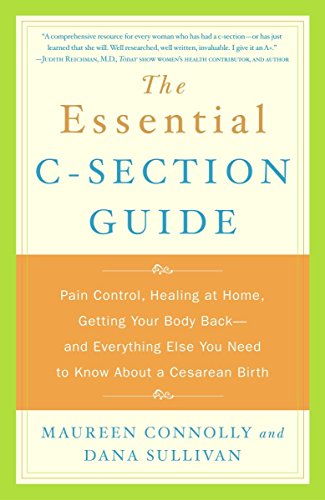
Inhaltsangabe
Childbirth is a life-altering experience for any woman, but a Cesarean delivery can be overwhelming, whether it’s unexpected or planned. Despite the fact that roughly one in four babies in the United States is delivered by c-section, very little information about the experience is included in typical pregnancy books and physicians and childbirth educators often gloss over the details.
The Essential C-Section Guide is written not only for women to read in preparation for a scheduled c-section and for those considered “high risk” who know that a c-section may become necessary but also for women recovering from an unexpected surgical delivery. This book provides answers to important questions about what the surgery entails, what a woman can expect as she recovers, and what considerations should be made for future pregnancies and deliveries.
With frank discussions about the physical and emotional aspects surrounding a c-section, the authors share comforting wisdom about early bonding, pain control, breastfeeding, infant care, healing from surgery, postpartum exercise, partner involvement, and much more, in detail not available anywhere else.
Written by authors who have firsthand knowledge of birth by c-section, The Essential C-Section Guide is well-researched and addresses its unique concerns with intelligence and compassion.
www.broadwaybooks.com
Die Inhaltsangabe kann sich auf eine andere Ausgabe dieses Titels beziehen.
Über die Autorin bzw. den Autor
MAUREEN CONNOLLY has served on the staffs of Parenting, Family Circle, Self, and Woman’s Day and was a contributing writer/editor for venues such as The New York Times Women's Magazines, babycenter.com, and YourBabyToday.com. Her articles have appeared in Redbook, Parenting, Parents, Health, and Family Circle. DANA SULLIVAN is a contributing editor at Shape’s Fit Pregnancy. She served on the staff of Parenting and has written for numerous national magazines, including Parents, Glamour, and Redbook. Both authors delivered each of their two children via cesarean.
Von der hinteren Coverseite
Childbirth is a life-altering experience for any woman, but a Cesarean delivery can be overwhelming, whether it's unexpected or planned. Despite the fact that roughly one in four babies in the United States is delivered by c-section, very little information about the experience is included in typical pregnancy books and physicians and childbirth educators often gloss over the details.
"The Essential C-Section Guide is written not only for women to read in preparation for a scheduled c-section and for those considered "high risk" who know that a c-section may become necessary but also for women recovering from an unexpected surgical delivery. This book provides answers to important questions about what the surgery entails, what a woman can expect as she recovers, and what considerations should be made for future pregnancies and deliveries.
With frank discussions about the physical and emotional aspects surrounding a c-section, the authors share comforting wisdom about early bonding, pain control, breastfeeding, infant care, healing from surgery, postpartum exercise, partner involvement, and much more, in detail not available anywhere else.
Written by authors who have firsthand knowledge of birth by c-section, "The Essential C-Section Guide is well-researched and addresses its unique concerns with intelligence and compassion.
www.broadwaybooks.com
Auszug. © Genehmigter Nachdruck. Alle Rechte vorbehalten.
Chapter 1
Why a Cesarean?
"'Don't cut her open, she's not numb!' I heard the anesthesiologist yell to my OB as a team of nurses rushed me down the hall toward an operating room. 'Wait, wait, wait!' was all I could think, so stunned that I couldn't even speak. This wasn't how it was supposed to happen. 'But I'm barely in labor,' I managed to say before the anesthesiologist placed a mask over my face and instructed me to breathe. He counted to three and the lights went out. When I woke up later, it was to the news that my newborn son was on life support."
That was how one of our perfect and perfectly uneventful pregnancies (Dana's) ended. In a matter of minutes, labor shifted from ordinary to potentially disastrous and an emergency Cesarean became necessary.
Even though we had completely different experiences with our first Cesareans--Maureen labored for nine hours, pushing for two and a half of them, before it became clear that her son Jack wasn't going to come out any way but through her belly--there were many similar themes. We each had "normal," healthy pregnancies; we both felt very prepared for labor by the end of our childbirth classes; and neither of us even considered the possibility that we would have Cesareans. In the weeks after our babies' births, when we were home and well on the road to recovery following the surgery, we both felt an overwhelming sense of failure. "Why me?" and "What did I do wrong?" were questions we asked ourselves for months.
Making Sense of the Statistics
With the benefit of hindsight, we know that our Cesarean deliveries weren't the result of anything we did--or didn't do. But very few pregnant women (at least those who are not carrying multiples or have certain medical conditions) plan even for the possibility that they will give birth via c-section. More of us should; the odds that a baby born in the United States will be delivered via Cesarean are more than one in four, 26.1 percent to be exact; 18 percent of the Cesareans performed in 2002 were primary, that is, performed on women who had not had a previous Cesarean delivery.
During the past few years, there has been a lot of controversy surrounding these statistics. A number of healthcare providers, including some OB/GYNs, believe that the Cesarean birth rate in the United States is too high and, in many cases, that surgical deliveries are unnecessary. "We have turned childbirth into a medical procedure," is a frequent refrain. While we certainly don't believe that a Cesarean is the ideal way to give birth--and we would never encourage anyone to request a c-section for the sake of convenience--neither should women who have one feel that their birth experience is anything but extraordinary. Childbirth by Cesarean is still childbirth. It's also worth noting one fact that is rarely brought up by the media: medical advances during the last several decades have made c-section surgery much safer, so today many physicians will opt for a Cesarean birth well before the situation becomes desperate.
The fact that the technique now used in about 90 percent of all c-sections--called a "low transverse" incision--has fewer complications than the vertical incision that was used for many years is one reason. This refined surgical technique has made it possible for women to attempt a vaginal birth after Cesarean (called a VBAC) in subsequent pregnancies. This makes some physicians less reluctant to perform a Cesarean on a first-time mom. Another reason is developments in anesthesia. Namely, that a regional anesthetic can be used 90 percent of the time, rather than a general, which lowers the risk of complication and death from anesthesia. Now there also are a variety of antibiotics that protect against postoperative infection, which was a substantial risk historically associated with Cesarean deliveries. Finally, the number of women who are delivering babies in their thirties and forties has increased dramatically. Women between the ages of thirty and fifty-four have a 35 percent chance of delivery by Cesarean; women under twenty-nine face a 22 percent chance. (In part, that's because older women face a host of age-related risk factors, including a higher likelihood of experiencing preterm labor, which necessitate a Cesarean delivery to preserve the health of the baby.) Each of these factors has contributed to the increase in Cesarean deliveries.
During the course of our research for this book, we heard two telling comments from physicians. The first was, "When something goes wrong during labor, it generally doesn't go just a little bit wrong. Things can go from bad to tragic in a matter of minutes." The second was, "The few inches that a baby travels during childbirth is the most dangerous distance he'll travel during his whole life." With those two thoughts in mind, and before we veer into melodrama, let us state that we are grateful that we had emergency obstetric delivery options available to us. Until the early 1900s, both babies and mothers were not always expected to survive a Cesarean delivery in this country. In many parts of the world today, women still don't have the procedure available to them--and the cost in human lives is heartbreaking.
The History of the Cesarean
It is generally believed that the term "Cesarean" originated with the surgical birth of Julius Caesar. At the time of his birth, babies were delivered surgically in order to save the life of a baby whose mother was dying or already dead. But it is known that Julius Caesar's mother, Aurelia, was alive at least long enough to hear of her son's invasion of Britain--making it unlikely that his was a surgical birth. A more plausible origin for the term may have to do with Roman law under Caesar, which required that women who were beyond saving during childbirth be cut open in order to preserve the life of the baby. Babies were highly valued because they added numbers to the country's population. Another theory is that the term comes from the Latin words caedre, which means "to cut," or caesones, a label that was given to babies who were born after their mothers had died.
The first successful Cesarean delivery using Western medical techniques is credited to a female physician named James Miranda Stuart Barry, who was masquerading as a man (women were generally denied admission to medical schools) and serving in the British Army in South Africa. The surgery took place sometime between 1815 and 1821. Dr. Barry's surgical delivery probably wasn't the first successful surgical delivery in the world, however. Europeans traveling in Uganda and Rwanda in the nineteenth century also reported witnessing surgical deliveries. In these deliveries the "healer" would use wine to sedate the patient and pin the incision closed with iron needles instead of Western-style sutures.
In the mid-nineteenth century, a Massachusetts dentist successfully used diethyl ether to anesthetize a patient so he could remove a facial tumor. After that, anesthesia became widely used for many surgical procedures. It took some years before anesthesia was used for Cesareans, however, because women were still expected to "sorrow"--i.e., suffer in pain--as they brought children into the world. In the later nineteenth and early twentieth centuries, advancements in anesthesia and antiseptic formulas made it possible for surgeons to operate slowly and to properly cleanse the abdominal region, which prevented women from dying of infection and shock. By the early twentieth century, the availability of penicillin significantly reduced the number of women who died as a result of infection.
Why a Cesarean Today?
Fast forward to the twenty-first century....
„Über diesen Titel“ kann sich auf eine andere Ausgabe dieses Titels beziehen.
Suchergebnisse für The Essential C-Section Guide: Pain Control, Healing...

Beispielbild für diese ISBN
The Essential C-Section Guide: Pain Control, Healing at Home, Getting Your Body Back, and Everything Else You Need to Know About a Cesarean Birth
Verlag:
Harmony/Rodale/Convergent, 2004
ISBN 10: 0767916077
ISBN 13: 9780767916073
Gebraucht
Paperback
Anbieter: ThriftBooks-Dallas, Dallas, TX, USA
Verkäuferbewertung 5 von 5 Sternen

Paperback. Zustand: Very Good. No Jacket. May have limited writing in cover pages. Pages are unmarked. ~ ThriftBooks: Read More, Spend Less. Artikel-Nr. G0767916077I4N00
Gebraucht kaufen
EUR 5,96
Versand gratis
Versand innerhalb von USA
Versand innerhalb von USA
Anzahl: 1 verfügbar
Beispielbild für diese ISBN
The Essential C-Section Guide: Pain Control, Healing at Home, Getting Your Body Back, and Everything Else You Need to Know About a Cesarean Birth
Verlag:
Harmony/Rodale/Convergent, 2004
ISBN 10: 0767916077
ISBN 13: 9780767916073
Gebraucht
Paperback
Anbieter: ThriftBooks-Atlanta, AUSTELL, GA, USA
Verkäuferbewertung 5 von 5 Sternen
Paperback. Zustand: Good. No Jacket. Pages can have notes/highlighting. Spine may show signs of wear. ~ ThriftBooks: Read More, Spend Less. Artikel-Nr. G0767916077I3N00
Gebraucht kaufen
EUR 5,96
Versand gratis
Versand innerhalb von USA
Versand innerhalb von USA
Anzahl: 1 verfügbar
Beispielbild für diese ISBN
The Essential C-Section Guide: Pain Control, Healing at Home, Getting Your Body Back, and Everything Else You Need to Know About a Cesarean Birth
Verlag:
Harmony/Rodale/Convergent, 2004
ISBN 10: 0767916077
ISBN 13: 9780767916073
Gebraucht
Paperback
Anbieter: ThriftBooks-Atlanta, AUSTELL, GA, USA
Verkäuferbewertung 5 von 5 Sternen
Paperback. Zustand: Very Good. No Jacket. May have limited writing in cover pages. Pages are unmarked. ~ ThriftBooks: Read More, Spend Less. Artikel-Nr. G0767916077I4N00
Gebraucht kaufen
EUR 5,96
Versand gratis
Versand innerhalb von USA
Versand innerhalb von USA
Anzahl: 1 verfügbar
Beispielbild für diese ISBN
The Essential C-Section Guide : Pain Control, Healing at Home, Getting Your Body Back, and Everything Else You Need to Know about a Cesarean Birth
Verlag:
Potter/Ten Speed/Harmony/Rodale, 2004
ISBN 10: 0767916077
ISBN 13: 9780767916073
Gebraucht
Softcover
Anbieter: Better World Books: West, Reno, NV, USA
Verkäuferbewertung 5 von 5 Sternen
Zustand: Good. First Printing. Former library copy. Pages intact with minimal writing/highlighting. The binding may be loose and creased. Dust jackets/supplements are not included. Includes library markings. Stock photo provided. Product includes identifying sticker. Better World Books: Buy Books. Do Good. Artikel-Nr. GRP70336688
Gebraucht kaufen
EUR 6,57
Versand gratis
Versand innerhalb von USA
Versand innerhalb von USA
Anzahl: 1 verfügbar
Beispielbild für diese ISBN
The Essential C-Section Guide: Pain Control, Healing at Home, Getting Your Body Back, and Everything Else You Need to Know about a Cesarean Birth
Anbieter: AwesomeBooks, Wallingford, Vereinigtes Königreich
Verkäuferbewertung 5 von 5 Sternen
Paperback. Zustand: Very Good. The Essential C-Section Guide: Pain Control, Healing at Home, Getting Your Body Back, and Everything Else You Need to Know about a Cesarean Birth This book is in very good condition and will be shipped within 24 hours of ordering. The cover may have some limited signs of wear but the pages are clean, intact and the spine remains undamaged. This book has clearly been well maintained and looked after thus far. Money back guarantee if you are not satisfied. See all our books here, order more than 1 book and get discounted shipping. Artikel-Nr. 7719-9780767916073
Gebraucht kaufen
EUR 4,97
EUR 4,87 Versand
Versand von Vereinigtes Königreich nach USA
Versand von Vereinigtes Königreich nach USA
Anzahl: 2 verfügbar
Beispielbild für diese ISBN
The Essential C-Section Guide: Pain Control, Healing at Home, Getting Your Body Back, and Everything Else You Need to Know about a Cesarean Birth
Anbieter: Bahamut Media, Reading, Vereinigtes Königreich
Verkäuferbewertung 4 von 5 Sternen

Paperback. Zustand: Very Good. This book is in very good condition and will be shipped within 24 hours of ordering. The cover may have some limited signs of wear but the pages are clean, intact and the spine remains undamaged. This book has clearly been well maintained and looked after thus far. Money back guarantee if you are not satisfied. See all our books here, order more than 1 book and get discounted shipping. Artikel-Nr. 6545-9780767916073
Gebraucht kaufen
EUR 5,33
EUR 8,25 Versand
Versand von Vereinigtes Königreich nach USA
Versand von Vereinigtes Königreich nach USA
Anzahl: 2 verfügbar
Beispielbild für diese ISBN
The Essential C-Section Guide: Pain Control, Healing at Home, Getting Your Body Back and Everything Else You Need to Know About a Cesarean Birth
Anbieter: Revaluation Books, Exeter, Vereinigtes Königreich
Verkäuferbewertung 5 von 5 Sternen
Paperback. Zustand: Brand New. 240 pages. 8.00x5.25x0.50 inches. In Stock. Artikel-Nr. x-0767916077
Neu kaufen
EUR 19,49
EUR 11,81 Versand
Versand von Vereinigtes Königreich nach USA
Versand von Vereinigtes Königreich nach USA
Anzahl: 2 verfügbar