
Verwandte Artikel zu Our Fathers' War: Growing Up in the Shadow of the...
Inhaltsangabe
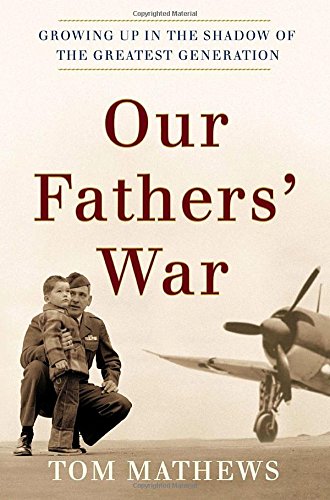
Addresses the dramatic effects of World War II on the relationship between the men who fought war and their sons and grandsons, drawing his own and other father-son tales of veterans to reveal how their experiences on the battlefield shaped their lives as fathers. 30,000 first printing.
Die Inhaltsangabe kann sich auf eine andere Ausgabe dieses Titels beziehen.
Über die Autorin bzw. den Autor
TOM MATTHEWS worked for three decades for Newsweek, where he served as New York Bureau Chief, Senior Writer for National Affairs, Foreign Editor, Culture Editor, and Senior Editor for Special Projects, and won a National Magazine Award. For the past ten years he has written fiction and nonfiction works about soldiers and war:Standing Fast, a New York Times Notable Book; with Col. David Hackworth, the novelThe Price of Honor; Hazardous Duty; and Steel My Soldier’s Hearts. Mathews lives in Sag Harbor, New York.
Auszug. © Genehmigter Nachdruck. Alle Rechte vorbehalten.
Chapter 1
The Beretta in the Nightstand
My father hated war stories. He was a soldier with a code, a brave man who wouldn't talk about World War II. For a long time after the war, he could bring himself to tell only one story, and that one happened to him on the day he got home. He was crossing the Rockies in a troop train, safely out of the Apennines, glad to be alive. When his train reached Helper, Utah, it stopped to pick up a booster locomotive for the steep haul over the mountains to Salt Lake City. The sun was just coming up, and hundreds of soldiers were still dozing in their seats. Suddenly, just beyond the windows, the dawn erupted in rifle shots, shotgun blasts, and pistol fire. The Japanese had surrendered, and every man in Helper was shooting up the sky.
No one had bothered to tell the soldiers. Aboard the train, every man in uniform hit the floor. If you were a civilian, you might actually believe that World War II was over; if you had seen combat, it would never be over: You would carry it for the rest of your life, wired into your soul and central nervous system. Within Lt. Thomas Richard Mathews, every synapse was still sparking that day as a Union Pacific Challenger coupled itself to the troop train and started to roll, shoving its load of stouthearted men up the last grade and over Soldier Summit, delivering them home to be fathers.
Now, on this hot August day in 1945, it's a few hours later.
On the far side of the mountains, Thomas Richard Mathews Jr. is getting ready for inspection. It's the afternoon before my second birthday. Dressed for a double celebration in clean white shirt, short pants, and scuffed Buster Brown shoes, I am perched on the roof of a garage behind a small brick house on Mill Creek, the safe holding lie where my mother and I have spent the final months of the war. The idea is to get a good look at my father without getting too close too soon. My observation post isn't really a garage, but I don't know that yet. Topping out at about three feet tall, I'm still short on inches and nouns: To me, if a building has a front door and it isn't a house, it must be a garage. I'm also a little vague about the nature of this inspection, not quite sure which of us is on display. All I know is that the war, whatever that is, has ended; a uniform, whatever one looks like, will be on my father; and my father, whatever a father might be, is just about to appear.
"Today's the day, Tommy Two! Today's the day!"
Just a few minutes earlier, my mother had sung her small fanfare as she picked me up and waltzed me across the kitchen of our dark basement apartment. Her joy made me frown. My father and I both have the same name; we are both first sons, alphas to the max; and although I'm still working on my milk teeth, sharing my mother with anyone bigger than me isn't part of my master plan. None of this I can put into words, of course, but what I am feeling obviously shows on my face.
"Don't you worry, Tee-Two," my mother says gaily, kissing my forehead. "You are my golden-haired boy."
I don't know what she's talking about--my hair is not blond; it's dark brown--and now, more than a little suspicious, I'm on top of the garage waiting to get a good look at her soldier. I don't remember anything about the young rock climber and skier who shipped out with the 10th Mountain Division to fight the Germans in northern Italy. He left a few months after my first birthday. I never think about him. To tell the truth, the only thing that piques my curiosity now is his uniform.
From the roof, I have a commanding view of our weedy backyard. Suddenly the door to our subterranean apartment flies open and my father steps out, blinking in the bright August sun. My first impression is this: He is huge. My second impression is that he is a man without a stomach, quite different from my grandfather, whose web suspenders strain against his friendly girth when he hauls himself into his Chrysler. My father is flat and hard where my grandfather is round and soft, and he is moving toward me at a very fast clip. Pulling up in front of the garage, he opens his arms.
"Jump."
I hesitate, study the distance between us. It is transcontinental. The drop to the ground appears to be fifteen hundred feet. Bottom of the Grand Canyon. Certain death.
"Jump."
Not possible. No, no, no, no, no.
"I said jump." The voice is harder now. But then, for just an instant, he appears to soften.
"It's okay, Tommy," he says. "I'm your father."
Am I supposed to fly? Does he think I'm a bird? Recoiling, I freeze to the roof.
The tanned face flushes. Then the soldier wheels abruptly and storms across the yard, plunging into the basement. For the rest of my life I will hear the screen door's sharp bang and the last thing he said before he turned his back and walked away.
"No son of mine is a coward."
In memory, this first scene always plays out in the present tense, arriving through an odd quantum leap that makes the collision from the past and its impact today coincide in time. I wanted my father's love, he longed for mine; but from the day he came home, the kinetic energy of World War II struck at our center of gravity. To what might otherwise have been the normal, primordial course of battle between fathers and sons, the war added its own peculiar convolutions. In our case, from that first day, my father thought--not without reason--that he was looking at a soft little pain in the neck, and I thought, on balance, that my life would be off to a better start if only the Germans had killed him.
The issue between us wasn't a simple one of who was boss. It was more a question of who was who. I could never quite figure out where he left off and I began. World War II may have been the last war where young men actually sang as they were bound for combat: in their barracks, on the troopship, in the trucks moving them up to the front line. The 10th Mountain Division had a ballad called "Ninety Pounds of Rucksack" about a barmaid who jumped into a skier's bed to keep him warm and wound up with "a bastard in the mountain infantry." The chorus was "Ninety pounds of rucksack, a pound of grub or two. He'll schuss the mountains like his daddy used to do." The big bastard was my father, and the little bastard was me. When I was a small boy, we both thought it was my destiny and duty to follow his smooth, shining track on the hill.
The problem was that the tracks were clear only in light powder snow. The war and what came after made him a hard man to understand. He had grown up during the Great Depression feeling like a boy with empty pockets standing outside a candy store window. After the war, you could never be sure how he felt. My sister once sent me his photograph from Officer Candidate School. In this formal portrait, shot in a studio somewhere near Fort Sill, Oklahoma, he is twenty-one years old. Sewn to his shoulder is a 10th Mountain Division patch: two red bayonets crossed on a field of blue. The stitches on the patch are large, as if he has done the sewing himself. Mercifully, someone with an airbrush has erased the acne that scarred his adolescence. For the first time, he is actually good-looking: hair dark and brushed up in an unmilitary wave, a faint smile, lady-killer eyes.
Before the war swept him into the United States Army, he was a climber on Mount Olympus, Lone Peak, Timpanogos, and Mount Nebo, the craggiest summits of the Wasatch Range. He scrambled aloft from the University of Utah, the first man in his family to go to college and rise so high. Long before the days of Gore-Tex and chairlifts, he was recklessly at ease on rock faces and avalanche slopes, spending his winters on skis and the...
„Über diesen Titel“ kann sich auf eine andere Ausgabe dieses Titels beziehen.
Suchergebnisse für Our Fathers' War: Growing Up in the Shadow of the...

Beispielbild für diese ISBN
Our Fathers' War: Growing Up in the Shadow of the Greatest Generation
Anbieter: World of Books (was SecondSale), Montgomery, IL, USA
Verkäuferbewertung 5 von 5 Sternen

Zustand: Very Good. Item in very good condition! Textbooks may not include supplemental items i.e. CDs, access codes etc. Artikel-Nr. 00104511174
Gebraucht kaufen
EUR 5,31
Versand gratis
Versand innerhalb von USA
Versand innerhalb von USA
Anzahl: 1 verfügbar
Beispielbild für diese ISBN
Our Fathers' War: Growing Up in the Shadow of the Greatest Generation
Verlag:
Broadway Books (edition First Edition), 2005
ISBN 10: 0767914201
ISBN 13: 9780767914208
Gebraucht
Hardcover
Erstausgabe
Anbieter: BooksRun, Philadelphia, PA, USA
Verkäuferbewertung 5 von 5 Sternen
Hardcover. Zustand: Very Good. First Edition. With dust jacket. It's a well-cared-for item that has seen limited use. The item may show minor signs of wear. All the text is legible, with all pages included. It may have slight markings and/or highlighting. Artikel-Nr. 0767914201-8-1-29
Gebraucht kaufen
EUR 5,32
Versand gratis
Versand innerhalb von USA
Versand innerhalb von USA
Anzahl: 1 verfügbar
Beispielbild für diese ISBN
Our Fathers' War: Growing Up in the Shadow of the Greatest Generation
Anbieter: ThriftBooks-Atlanta, AUSTELL, GA, USA
Verkäuferbewertung 5 von 5 Sternen
Hardcover. Zustand: Good. No Jacket. Pages can have notes/highlighting. Spine may show signs of wear. ~ ThriftBooks: Read More, Spend Less. Artikel-Nr. G0767914201I3N00
Gebraucht kaufen
EUR 6,28
Versand gratis
Versand innerhalb von USA
Versand innerhalb von USA
Anzahl: 1 verfügbar
Beispielbild für diese ISBN
Our Father's War : Growing up in the Shadow of the Greatest Generation
Anbieter: Better World Books, Mishawaka, IN, USA
Verkäuferbewertung 5 von 5 Sternen
Zustand: Very Good. Former library copy. Pages intact with possible writing/highlighting. Binding strong with minor wear. Dust jackets/supplements may not be included. Includes library markings. Stock photo provided. Product includes identifying sticker. Better World Books: Buy Books. Do Good. Artikel-Nr. 5715063-6
Gebraucht kaufen
EUR 6,64
Versand gratis
Versand innerhalb von USA
Versand innerhalb von USA
Anzahl: 1 verfügbar
Beispielbild für diese ISBN
Our Fathers' War: Growing Up in the Shadow of the Greatest Generation
Anbieter: WorldofBooks, Goring-By-Sea, WS, Vereinigtes Königreich
Verkäuferbewertung 5 von 5 Sternen
Paperback. Zustand: Very Good. The book has been read, but is in excellent condition. Pages are intact and not marred by notes or highlighting. The spine remains undamaged. Artikel-Nr. GOR004407866
Gebraucht kaufen
EUR 5,06
EUR 6,51 Versand
Versand von Vereinigtes Königreich nach USA
Versand von Vereinigtes Königreich nach USA
Anzahl: 1 verfügbar
Beispielbild für diese ISBN
Our Fathers' War: Growing Up in the Shadow of the Greatest Generation
Verlag:
Broadway Books, 2005
ISBN 10: 0767914201
ISBN 13: 9780767914208
Gebraucht
Hardcover
Erstausgabe
Anbieter: These Old Books LLC, Isle, MN, USA
Verkäuferbewertung 5 von 5 Sternen
Hardcover. Zustand: Near Fine. Zustand des Schutzumschlags: Very Good. 1st Edition. The dust jacket is clean and bright; the previous owner's name is inscribed on the front free paper, the pages are clean, and the book is tight. Artikel-Nr. ABE-1767294031186
Gebraucht kaufen
EUR 7,23
EUR 10,53 Versand
Versand innerhalb von USA
Versand innerhalb von USA
Anzahl: 1 verfügbar
Foto des Verkäufers
Our Fathers' War: Growing Up in the Shadow of the Greatest Generation
Verlag:
Broadway Books, 2005
ISBN 10: 0767914201
ISBN 13: 9780767914208
Gebraucht
Hardcover
Erstausgabe
Signiert
Anbieter: Southampton Books, Sag Harbor, NY, USA
Verkäuferbewertung 5 von 5 Sternen
Hardcover. Zustand: Like New. Zustand des Schutzumschlags: Like New. First Edition. First Edition, First Printing (Full Number Line). Not price-clipped ($24.95 price intact). Published by Broadway Books, 2005. Octavo. Blue cloth over blue boards stamped in gold. Flat signed on title page. Book is like new; clean with no writing or names. Sharp corners and spine straight. Binding tight and pages crisp. Dust jacket is like new with very light shelf wear and price sticker to back cover. 292 pages. ISBN: 9780767914208. 100% positive feedback. 30 day money back guarantee. NEXT DAY SHIPPING! Excellent customer service. Please email with any questions or if you would like a photo. All books packed carefully and ship with free delivery confirmation/tracking. All books come with free bookmarks. Ships from Southampton, New York. We Buy Books! Individual titles, libraries, collections. Message us if you have books to sell! Artikel-Nr. 105485
Gebraucht kaufen
EUR 22,61
EUR 4,38 Versand
Versand innerhalb von USA
Versand innerhalb von USA
Anzahl: 1 verfügbar
Foto des Verkäufers
Our Fathers' War: Growing Up in the Shadow of the Greatest Generation
Verlag:
Broadway Books, 2005
ISBN 10: 0767914201
ISBN 13: 9780767914208
Gebraucht
Hardcover
Erstausgabe
Signiert
Anbieter: Southampton Books, Sag Harbor, NY, USA
Verkäuferbewertung 5 von 5 Sternen
Hardcover. Zustand: Like New. First Edition. First Edition, First Printing. Not price-clipped. Published by Broadway Books, 2005. Octavo. Hardcover. Book is like new with signature on title page. Dust jacket is like new.100% positive feedback. 30 day money back guarantee. NEXT DAY SHIPPING! Excellent customer service. Please email with any questions. All books packed carefully and ship with free delivery confirmation/tracking. All books come with free bookmarks. Ships from Sag Harbor, New York. Artikel-Nr. 455312
Gebraucht kaufen
EUR 22,61
EUR 4,38 Versand
Versand innerhalb von USA
Versand innerhalb von USA
Anzahl: 1 verfügbar
Foto des Verkäufers
Our Fathers' War: Growing Up in the Shadow of the Greatest Generation
Verlag:
Broadway Books, New York, 2005,, 2005
ISBN 10: 0767914201
ISBN 13: 9780767914208
Gebraucht
Hardcover
Erstausgabe
Anbieter: BRIMSTONES, Lewes, Vereinigtes Königreich
Verkäuferbewertung 5 von 5 Sternen
Hardcover. Zustand: Very Good. Dust Jacket Included. 1st Edition. 1st edition, hardback, large 8vo, 202pp, clean and tight, no inscriptions, Very Good / Very Good dustwrapper, not price-clipped. ISBN: 0767914201. Artikel-Nr. 459791
Gebraucht kaufen
EUR 5,99
EUR 23,26 Versand
Versand von Vereinigtes Königreich nach USA
Versand von Vereinigtes Königreich nach USA
Anzahl: 1 verfügbar
Beispielbild für diese ISBN
Our Fathers' War: Growing Up in the Shadow of the Greatest Generation
Anbieter: Revaluation Books, Exeter, Vereinigtes Königreich
Verkäuferbewertung 5 von 5 Sternen
Hardcover. Zustand: Brand New. 304 pages. 9.50x6.50x1.25 inches. In Stock. Artikel-Nr. 0767914201
Neu kaufen
EUR 52,36
EUR 14,53 Versand
Versand von Vereinigtes Königreich nach USA
Versand von Vereinigtes Königreich nach USA
Anzahl: 1 verfügbar