
Verwandte Artikel zu Who's Looking Out for You?
Inhaltsangabe
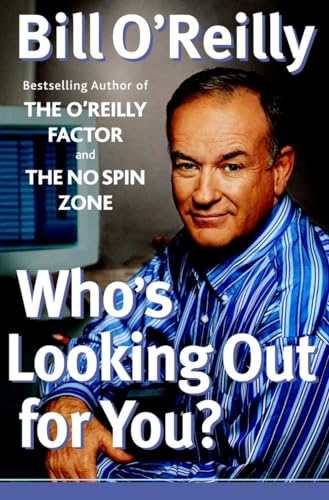
From the mega-bestselling author of The O'Reilly Factor and The No Spin Zone, a no-holds-barred exposé of the people and institutions who are letting Americans down – and what we should do about it.
Bill O’Reilly is mad as hell – and he’s not going to let you take it anymore. In his most powerful and personal book yet, this media powerhouse and unstoppable truth-teller takes on those individuals and institutions in American life who are failing in their duties – big-time. In his inimitable style, mixing wit, pugnacity, and plain common sense, O’Reilly kicks butt and takes (and also names) names – from crooked corporate weasels to venal politicians to lazy and/or politically correct bureaucrats to sexually predatory priests and the Church hierarchy that protects them to a media establishment rife with political bias and economically hooked on violence and smut. At the same time that he calls the famous and powerful to account, he dares to get personal, questioning just how much our closest friends, families, and lovers do look out for us, and delivering a powerful message about personal responsibility and self-reliance in an uncertain world. He forces us to ask just how much genuine altruism is left in a society that thrives on self-indulgence and ruthless competition.
Who’s Looking Out for You? is a book that boldly confronts our worst fears and biggest problems in a post-9/11, post-corporate-meltdown world. Its sage, candid advice on regaining control and trust in these troubled times will resonate with the millions of readers and viewers who have come to believe in Bill O’Reilly as the man who speaks for them.
Die Inhaltsangabe kann sich auf eine andere Ausgabe dieses Titels beziehen.
Über die Autorin bzw. den Autor
BILL O’REILLY, a two-time Emmy Award-winner for excellence in reporting, served as national correspondent for ABC News and as anchor of the nationally syndicated news magazine program Inside Edition before becoming executive producer and anchor of Fox News's wildly popular The O'Reilly Factor. Also the author of the novel Those Who Trespass, he holds master’s degrees from Harvard’s Kennedy School of Government and Boston University.
Auszug. © Genehmigter Nachdruck. Alle Rechte vorbehalten.
Chapter One
Folk Music
Papa don't preach
I'm in trouble deep
But I've made up my mind,
I'm keeping my baby.
—Madonna, "Papa Don't Preach"
It is brutally unfair to the children involved, but there are almost 12 million one-parent families in the U.S.A.
Single mothers run the majority of those families, and most of those mothers are poor. According to the U.S. census, about 70 percent of all African-American babies are born out of wedlock, as opposed to 27 percent for whites. So do the math and face the result: Millions of American kids are getting hosed from day one.
And there is little any of us can do about it. We live in a free society. If irresponsible people have kids, there is nothing any American authority can do to stop it. In China they kill babies. In some Islamic countries they'll kill a woman who gets pregnant without a husband, or even has sex outside of marriage. These policies, of course, are barbaric and constitute major human rights violations because, believe it or not, women and babies are human beings too.
Here in the good old U.S.A. our Constitution gives careless, foolish citizens all the leeway in the world to bring children into the world and then not care for them. Millions of fathers abandon their kids--and it is rare that any of them sees a day in jail. We all know people who are absolutely awful to their children, just as we all know heroic parents, single and otherwise, who raise successful, happy children despite heavy odds.
There is no question that our society has now embraced the casual approach when it comes to having children. Columnist Kathleen Parker nailed it. "Today having a baby is like swinging through McDonald's for a burger. One baby all the way, hold the dad."
And the damage is incalculable. Over the next two years, about 40 percent of American babies will be born out of wedlock. One million teenagers are likely to have a child this year, and only three in ten will be married. Half of all the mothers who have kids in their teens will be poor the rest of their lives. The government spits out these stats like baseball players spit out sunflower seed shells. The politicians use these poor children as pawns in the never-ending game of government entitlements. Society recognizes the problem but can't solve it. Almost all of our social ills can be traced back to chaotic homes.
Luckily, most of us are born into a home with two parents. And thanks to Norman Rockwell and Walt Disney, there is an ideal embedded in many of our minds. Two loving parents, clean clothes, nice toys, a picket fence around the yard, and a dog named Barney.
Does that sound like your household?
My home was a mixture of tradition and chaos. My father wasn't Ozzie Nelson, the TV ideal dad in the '50s and '60s, but he wasn't Ozzy Osbourne either. I wrote about my late father in The O'Reilly Factor, the book, and I think it is safe to say that I had a rough-hewn upbringing. Simply put: There was plenty of tension in my house. Along with a lot of yelling and martial arts. My father was the Kung and I was the Fu. The perceptive writer James Ellroy, writing in GQ magazine, had an interesting take on my upbringing.
[O'Reilly's] old man died of melanoma. He was a rough-edged guy. Fear ran him. He peaked in World War II. He was a naval officer. He did important work in the Jap Occupation. He settled in Levittown, New York. He raised his son and daughter strict. He worked as an accountant. He hated said work. He stuck with it. Fear made him stick. He lived through the Depression. He fed off pix of hobo shantytowns and bean lines. He stayed spartan middle class. He was class bound by fear. He bought the implicit American line. Stick where you are and wish your kids more.
O'Reilly pere held his mud. O'Reilly pere cracked a bit on his deathbed. He told his son that he never fulfilled his promise. Bill O'Reilly vowed to do it for him.
The old man gave him some tools. His strict legacy served more than hindered. The old man was a moral exemplar. His preachings were sound. He erred only in this rigid enforcement. The old man ruled by fear. O'Reilly hated it as a kid. O'Reilly gained respect for it years on. The old man emerged as a teacher. He taught by positive and negative example. He was responsible for his own failures. He was complicit in sustaining the American class system.
Ellroy understood my dad's basic resume but left out one important item: Despite his ordinary life he was an extremely perceptive man. My father was Abe Lincoln: honest and also knew instinctively who could be trusted and who was auditioning for the role of Judas. But this knowledge did him little good because he was afraid to act on it.
The upside in my house was this: There were standards. There was no binge drinking, no drugs, no cursing, no weird displays of inexplicable behavior (except by me). My folks were like their folks before them--reactors. If I acted like a jerk, the reaction was Allen Iverson quick. My parents did not spare the rod, they brooked no disrespect, and they had no concerns at all about my "self-esteem."
There were times when I hated my father. I admit it. He knew it. The punishment that descended upon me was mostly uncalled-for and born of the frustration of his life. But even in my teens I realized that my parents wanted me to do well and succeed. As dim as I was, I knew that there was love in the house.
So now when I see children at risk, it makes me furious. Take four-year-old Rilya Wilson, for example. I told her story on The Factor and it is heartbreaking. She was born in East Cleveland, Ohio, and her father split soon after her birth. Her mother was a drug addict and lost parental rights. So little Rilya went to live with her "godmother," Geralyn Graham, in south Florida, a situation that was paid for and supposedly supervised by the state of Florida.
Trouble is, the caseworker assigned to Rilya, Deborah Muskelly, did not make the state-ordered mandatory visits, although, in the state files, she falsely recorded that she had. When Rilya turned up missing from her "home" in early 2001, nobody seemed to care. It took sixteen months for the state of Florida even to find out about it.
Now, you would think the authorities would be all over the case once the facts came to light. A defenseless four-year-old missing and possibly murdered! You would think everyone in power would rally to see justice done.
On television I asked Florida Governor Jeb Bush to get directly involved in the case. He would not. I asked for the resignation of the head of the children's services department. She stayed on for almost a year until the pressure finally forced Bush to sack her.
I asked for the caseworker, Muskelly, to be immediately arrested. She was not, and neither Bush nor anyone else offered an explanation. To say the situation was disgraceful is insult-light.
Finally, just before the election of 2002, Governor Bush had to act because he was slipping big in the polls. Both the caseworker and the "godmother" were finally charged. But the hard truth is that nobody in the world cared for little Rilya Wilson. Nobody looked out for her even though a number of adults were being paid to do that. And so she's still missing and most likely dead. Next time you have parental issues, think about Rilya.
Poverty is an enormous problem for children, but even having money often doesn't solve the parental dilemma. Let's take a look at Julio and Enrique Iglesias, the father and son singers. These guys are fabulously wealthy, so it is hard to believe that with all their talent and fame, a smooth relationship did not evolve. But according to Parade magazine, the two are now rivals in the world of pop music. Enrique Iglesias is quoted as saying this about his famous father: "It's...
„Über diesen Titel“ kann sich auf eine andere Ausgabe dieses Titels beziehen.
Suchergebnisse für Who's Looking Out for You?

Beispielbild für diese ISBN
Who's Looking Out for You?
Anbieter: World of Books (was SecondSale), Montgomery, IL, USA
Verkäuferbewertung 5 von 5 Sternen

Zustand: Good. Item in good condition. Textbooks may not include supplemental items i.e. CDs, access codes etc. Artikel-Nr. 00023925448
Gebraucht kaufen
EUR 3,82
Versand gratis
Versand innerhalb von USA
Versand innerhalb von USA
Anzahl: Mehr als 20 verfügbar
Beispielbild für diese ISBN
Who's Looking Out for You?
Anbieter: Wonder Book, Frederick, MD, USA
Verkäuferbewertung 5 von 5 Sternen
Zustand: As New. Very Good dust jacket. Artikel-Nr. SA12C-00478
Gebraucht kaufen
EUR 4,79
Versand gratis
Versand innerhalb von USA
Versand innerhalb von USA
Anzahl: 2 verfügbar
Beispielbild für diese ISBN
Who's Looking Out for You?
Verlag:
Crown Archetype (edition First Edition), 2003
ISBN 10: 0767913795
ISBN 13: 9780767913799
Gebraucht
Hardcover
Erstausgabe
Anbieter: BooksRun, Philadelphia, PA, USA
Verkäuferbewertung 5 von 5 Sternen
Hardcover. Zustand: Fair. First Edition. With dust jacket. The item might be beaten up but readable. May contain markings or highlighting, as well as stains, bent corners, or any other major defect, but the text is not obscured in any way. Artikel-Nr. 0767913795-7-1-29
Gebraucht kaufen
EUR 4,97
Versand gratis
Versand innerhalb von USA
Versand innerhalb von USA
Anzahl: 1 verfügbar
Beispielbild für diese ISBN
Who's Looking Out for You?
Verlag:
Crown Archetype (edition First Edition), 2003
ISBN 10: 0767913795
ISBN 13: 9780767913799
Gebraucht
Hardcover
Erstausgabe
Anbieter: BooksRun, Philadelphia, PA, USA
Verkäuferbewertung 5 von 5 Sternen
Hardcover. Zustand: Very Good. First Edition. It's a well-cared-for item that has seen limited use. The item may show minor signs of wear. All the text is legible, with all pages included. It may have slight markings and/or highlighting. Artikel-Nr. 0767913795-11-1
Gebraucht kaufen
EUR 5,24
Versand gratis
Versand innerhalb von USA
Versand innerhalb von USA
Anzahl: 1 verfügbar
Beispielbild für diese ISBN
Who's Looking Out for You?
Anbieter: Jadewalky Book Company, HANOVER PARK, IL, USA
Verkäuferbewertung 1 von 5 Sternen

Zustand: Used - Very Good. From the mega-bestselling author of The O'Reilly Factor and The No Spin Zone, a no-holds-barred exposé of the people and institutions who are letting Americans down - and what we should do about it.Bill O'Reilly is mad as hell - and he's not going to let you take it anymore. In his most powerful and personal book yet, this media powerhouse and unstoppable truth-teller takes on those individuals and institutions in American life who are failing in their duties - big-time. In his inimitable style, mixing wit, pugnacity, and plain common sense, O'Reilly kicks butt and takes (and also names) names - from crooked corporate weasels to venal politicians to lazy and/or politically correct bureaucrats to sexually predatory priests and the Church hierarchy that protects them to a media establishment rife with political bias and economically hooked on violence and smut. At the same time that he calls the famous and powerful to account, he dares to get personal, questioning just how much our closest friends, families, and lovers do look out for us, and delivering a powerful message about personal responsibility and self-reliance in an uncertain world. He forces us to ask just how much genuine altruism is left in a society that thrives on self-indulgence and ruthless competition.Who's Looking Out for You? is a book that boldly confronts our worst fears and biggest problems in a post-9/11, post-corporate-meltdown world. Its sage, candid advice on regaining control and trust in these troubled times will resonate with the millions of readers and viewers who have come to believe in Bill O'Reilly as the man who speaks for them. Artikel-Nr. 8Q-RSI5-Z50W
Gebraucht kaufen
EUR 1,80
EUR 3,52 Versand
Versand innerhalb von USA
Versand innerhalb von USA
Anzahl: 1 verfügbar
Beispielbild für diese ISBN
Who's Looking Out for You?
Verlag:
Crown Archetype (edition First Edition), 2003
ISBN 10: 0767913795
ISBN 13: 9780767913799
Gebraucht
Hardcover
Erstausgabe
Anbieter: BooksRun, Philadelphia, PA, USA
Verkäuferbewertung 5 von 5 Sternen
Hardcover. Zustand: Very Good. First Edition. With dust jacket. It's a well-cared-for item that has seen limited use. The item may show minor signs of wear. All the text is legible, with all pages included. It may have slight markings and/or highlighting. Artikel-Nr. 0767913795-11-1-29
Gebraucht kaufen
EUR 5,37
Versand gratis
Versand innerhalb von USA
Versand innerhalb von USA
Anzahl: 1 verfügbar
Beispielbild für diese ISBN
Who's Looking Out for You?
Anbieter: ThriftBooks-Phoenix, Phoenix, AZ, USA
Verkäuferbewertung 5 von 5 Sternen
Hardcover. Zustand: As New. No Jacket. Pages are clean and are not marred by notes or folds of any kind. ~ ThriftBooks: Read More, Spend Less. Artikel-Nr. G0767913795I2N00
Gebraucht kaufen
EUR 5,87
Versand gratis
Versand innerhalb von USA
Versand innerhalb von USA
Anzahl: 1 verfügbar
Beispielbild für diese ISBN
Who's Looking Out for You?
Anbieter: ThriftBooks-Atlanta, AUSTELL, GA, USA
Verkäuferbewertung 5 von 5 Sternen
Hardcover. Zustand: As New. No Jacket. Pages are clean and are not marred by notes or folds of any kind. ~ ThriftBooks: Read More, Spend Less. Artikel-Nr. G0767913795I2N00
Gebraucht kaufen
EUR 5,87
Versand gratis
Versand innerhalb von USA
Versand innerhalb von USA
Anzahl: 1 verfügbar
Beispielbild für diese ISBN
Who's Looking Out for You?
Anbieter: Better World Books, Mishawaka, IN, USA
Verkäuferbewertung 5 von 5 Sternen
Zustand: Good. Former library copy. Pages intact with minimal writing/highlighting. The binding may be loose and creased. Dust jackets/supplements are not included. Includes library markings. Stock photo provided. Product includes identifying sticker. Better World Books: Buy Books. Do Good. Artikel-Nr. 863641-6
Gebraucht kaufen
EUR 6,09
Versand gratis
Versand innerhalb von USA
Versand innerhalb von USA
Anzahl: 5 verfügbar
Beispielbild für diese ISBN
Who's Looking Out for You?
Anbieter: Better World Books, Mishawaka, IN, USA
Verkäuferbewertung 5 von 5 Sternen
Zustand: Very Good. Former library copy. Pages intact with possible writing/highlighting. Binding strong with minor wear. Dust jackets/supplements may not be included. Includes library markings. Stock photo provided. Product includes identifying sticker. Better World Books: Buy Books. Do Good. Artikel-Nr. GRP61966827
Gebraucht kaufen
EUR 6,09
Versand gratis
Versand innerhalb von USA
Versand innerhalb von USA
Anzahl: 3 verfügbar