
Verwandte Artikel zu Power Failure: The Inside Story of the Collapse of...
Inhaltsangabe
“They’re still trying to hide the weenie,” thought Sherron Watkins as she read a newspaper clipping about Enron two weeks before Christmas, 2001. . . It quoted [CFO] Jeff McMahon addressing the company’s creditors and cautioning them against a rash judgment. “Don’t assume that there is a smoking gun.”
Sherron knew Enron well enough to know that the company was in extreme spin mode…
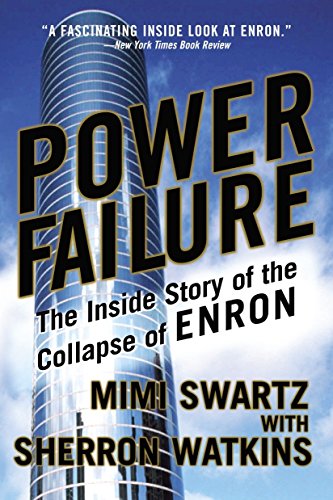
Power Failure is the electrifying behind-the-scenes story of the collapse of Enron, the high-flying gas and energy company touted as the poster child of the New Economy that, in its hubris, had aspired to be “The World’s Leading Company,” and had briefly been the seventh largest corporation in America.
Written by prizewinning journalist Mimi Swartz, and substantially based on the never-before-published revelations of former Enron vice-president Sherron Watkins, as well as hundreds of other interviews, Power Failure shows the human face beyond the greed, arrogance, and raw ambition that fueled the company’s meteoric rise in the late 1990s. At the dawn of the new century, Ken Lay’s and Jeff Skilling's faces graced the covers of business magazines, and Enron’s money oiled the political machinery behind George W. Bush’s election campaign. But as Wall Street analysts sang Enron’s praises, and its stock spiraled dizzyingly into the stratosphere, the company’s leaders were madly scrambling to manufacture illusory profits, hide its ballooning debt, and bully Wall Street into buying its fictional accounting and off-balance-sheet investment vehicles. The story of Enron’s fall is a morality tale writ large, performed on a stage with an unforgettable array of props and side plots, from parking lots overflowing with Boxsters and BMWs to hot-house office affairs and executive tantrums.
Among the cast of characters Mimi Swartz and Sherron Watkins observe with shrewd Texas eyes and an insider’s perspective are: CEO Ken Lay, Enron’s “outside face,” who was more interested in playing diplomat and paving the road to a political career than in managing Enron’s high-testosterone, anything-goes culture; Jeff Skilling, the mastermind behind Enron’s mercenary trading culture, who transformed himself from a nerdy executive into the personification of millennial cool; Rebecca Mark, the savvy and seductive head of Enron’s international division, who was Skilling’s sole rival to take over the company; and Andy Fastow, whose childish pranks early in his career gave way to something far more destructive. Desperate to be a player in Enron’s deal-making, trader-oriented culture, Fastow transformed Enron’s finance department into a “profit center,” creating a honeycomb of financial entities to bolster Enron’s “profits,” while diverting tens of millions of dollars into his own pockets
An unprecedented chronicle of Enron’s shocking collapse, Power Failure should take its place alongside the classics of previous decades – Barbarians at the Gate and Liar’s Poker – as one of the cautionary tales of our times.
Die Inhaltsangabe kann sich auf eine andere Ausgabe dieses Titels beziehen.
Über die Autorin bzw. den Autor
MIMI SWARTZ is an executive editor at Texas Monthly and won a National Magazine Award in the public interest category in 1996. She has been a staff writer for The New Yorker and Talk, and has written for the New York Times, Vanity Fair, and Esquire. She lives in Houston with her husband and son.
SHERRON WATKINS is a former Arthur Andersen accountant who joined Enron in 1993, working for the man who later became CFO, Andy Fastow. She worked in Enron’s finance group, its International company, and its Broadband division, before returning to work for Fastow as a vice president in corporate development. As a result of her memos to Ken Lay urging the company to change its accounting practices and restate its earnings, she has become known to the world as the Enron whistleblower. She testified before both the House and the Senate in hearings investigating Enron’s business practices in February 2002, and was named along with two others as one of Time magazine’s 2002 Persons of the Year.
Von der hinteren Coverseite
""They're still trying to hide the weenie," thought Sherron Watkins as she read a newspaper clipping about Enron two weeks before Christmas, 2001. . . It quoted [CFO] Jeff McMahon addressing the company's creditors and cautioning them against a rash judgment. "Don't assume that there is a smoking gun."
Sherron knew Enron well enough to know that the company was in extreme spin mode...
Power Failure is the electrifying behind-the-scenes story of the collapse of Enron, the high-flying gas and energy company touted as the poster child of the New Economy that, in its hubris, had aspired to be "The World's Leading Company," and had briefly been the seventh largest corporation in America.
Written by prizewinning journalist Mimi Swartz, and substantially based on the never-before-published revelations of former Enron vice-president Sherron Watkins, as well as hundreds of other interviews, "Power Failure shows the human face beyond the greed, arrogance, and raw ambition that fueled the company's meteoric rise in the late 1990s. At the dawn of the new century, Ken Lay's and Jeff Skilling's faces graced the covers of business magazines, and Enron's money oiled the political machinery behind George W. Bush's election campaign. But as Wall Street analysts sang Enron's praises, and its stock spiraled dizzyingly into the stratosphere, the company's leaders were madly scrambling to manufacture illusory profits, hide its ballooning debt, and bully Wall Street into buying its fictional accounting and off-balance-sheet investment vehicles. The story of Enron's fall is a morality tale writ large, performed on a stage with an unforgettable array of props and side plots, from parking lotsoverflowing with Boxsters and BMWs to hot-house office affairs and executive tantrums.
Among the cast of characters Mimi Swartz and Sherron Watkins observe with shrewd Texas eyes and an insider's perspective are: CEO Ken Lay, Enron's "outside face," who was more interested in playing diplomat and paving the road to a political career than in managing Enron's high-testosterone, anything-goes culture; Jeff Skilling, the mastermind behind Enron's mercenary trading culture, who transformed himself from a nerdy executive into the personification of millennial cool; Rebecca Mark, the savvy and seductive head of Enron's international division, who was Skilling's sole rival to take over the company; and Andy Fastow, whose childish pranks early in his career gave way to something far more destructive. Desperate to be a player in Enron's deal-making, trader-oriented culture, Fastow transformed Enron's finance department into a "profit center," creating a honeycomb of financial entities to bolster Enron's "profits," while diverting tens of millions of dollars into his own pockets
An unprecedented chronicle of Enron's shocking collapse, "Power Failure should take its place alongside the classics of previous decades - "Barbarians at the Gate and "Liar's Poker - as one of the cautionary tales of our times.
"From the Hardcover edition.
Auszug. © Genehmigter Nachdruck. Alle Rechte vorbehalten.
1
Winners and Losers
SHERRON Watkins went to the Enron Corporation’s November management conference for the year 2000 determined she wouldn’t be taken for a loser. The year before, at her first such meeting after being promoted to vice president, she had blown it. Booked into the Hill Country Hyatt and Resort for three days of corporate team building, she had opted, in the recreational hours, for the company-sponsored salsa-making class. At affairs such as these, where Enron took over the entire hotel and offered an array of afternoon networking and socializing activities, it was important to pick one that advanced your career. A smart, ambitious employee would never sign up for the afternoon of fly-fishing, for instance, because you couldn’t lose the smell of fish in time for the evening cocktail party, and because you could wind up wasting your afternoon with guys who worked in the once crucial but now irrelevant pipeline division. That left, as career-building activities, skeet shooting, the Road Rally, tennis, golf, facials, pedicures, outlet shopping, and antiquing in a nearby Hill Country town.
To understand the loaded nature of the choices, you had to understand the loaded nature of life at Enron. Salsa making, for instance, had turned out to be a disaster. One of the small hotel conference rooms had been converted into a kitchen for the occasion; Sherron had entered straight from her facial, without makeup, without combing her hair, and she was chopping jalapenos with three pipeline guys—middle-aged men shaped like bumpy Bosc pears—when the then COO, soon to be CEO, Jeff Skilling, had walked in. Or, rather, he’d poked his head into the room, narrowed his eyes, and raised his peaked nose, as if to test the air. It had not pleased him. At just that moment, he’d caught sight of her. “Uh, hi, Sherron,” Skilling had said, and then, whoosh, he was gone. In his wake, Sherron found herself enveloped in that uniquely Enronian sense of dread: She knew she’d been caught with a bunch of losers, far, far away from Skilling’s winning team.
Once, the pipeline guys had mattered, but that was long ago. In the 1980s, Enron was one of the largest pipeline companies in North America, moving natural gas from the Gulf Coast to the East Coast, the West Coast, the Midwest, and beyond. But as Jeff Skilling’s influence over CEO Ken Lay grew, Enron changed identities several times. It always positioned itself as the company of Vision, but it supplemented its base. In the late eighties and early nineties, Enron revolutionized the way natural gas was bought and sold by operating more like a finance company than a gas company. In the mid-nineties, Enron started selling and trading power, battling across the country to deregulate entrenched electric utilities.
Lately, with the boom in dot-com and high-tech companies, Enron was vigorously morphing into an Internet/telecommunications conglomerate. Enron Online, the company’s online trading platform, was already the largest e-commerce site in the world, and now “Broadband” was the new buzzword inside the company. Enron was gearing up to trade space available on high-speed telephone lines in order to deliver movies and more into private homes over its Enron Intelligent Network, a new and improved Internet. It was poised to dominate AT&T and all the other behemoths. This corporate shape shifting made Enron seem, to Wall Street, less like an IBM or an Exxon and more like the poster child for the New Economy, a business so fast-paced, so protean, and so forward-looking that it could change its stripes, virtually overnight, to suit the zeitgeist. So if you wanted to get ahead at Enron, you had to be able to change, too.
Sherron, for instance, had successfully engineered herself into the hottest sector of the company, Broadband. Broadband was the reason Wall Street analysts were deliriously touting Enron—after the company rolled out its telecom plans at an analysts’ meeting in January, Enron’s stock moved thirteen points in one day. Broadband proved yet again that Enron’s employees were the smartest, the shrewdest, the most dedicated and ambitious on the planet.
They were purveyors not of products but of ideas, of what Jeff Skilling called “intellectual capital.” A company didn’t need bricks and mortar to triumph in the new age. It needed smarts—smarts that, as Skilling liked to claim, would propel Enron from its old role as the World’s Leading Energy company to its destiny as the World’s Leading Company. So far, Enron’s numbers were on track to do just that: to land Enron in the top ten of the Fortune 500. Third-quarter revenues had grown over 150 percent from the prior year’s corresponding quarter to $30 billion, bringing total revenues for the first nine months of 2000 to $60 billion—up $20 billion from 1999. The company’s stock had quadrupled in value since January 1998 to almost $90 a share. In just five years, Enron grew to rival 1990s tech giants like Cisco and Microsoft, and behemoths like GE. It was a media darling: Fortune magazine hailed Enron as the country’s most innovative company for five years in a row, and included Enron in the top quarter of its list of the “Best 100 Companies to Work for in America.” Skilling was widely regarded as the most brilliant corporate leader in the country, a Jack Welch for the new millennium. CEO Ken Lay had laid the groundwork for Enron’s global reach: He could get virtually any world leader from China to Costa Rica to return his phone calls in an instant; he counted among his closest friends powerful state legislators, entrenched members of the U.S. Congress, current and former presidents. Everywhere Sherron Watkins looked, there were bright young people who had made revolutionary changes and made incomprehensible fortunes in return—and all before getting close to their fortieth birthdays.
Enron was, in short, a company of winners. At the dawn of the twenty-first century, those who were bright, young, and fiscally ambitious were reassessing their career choices. They could slave away in some fusty commercial bank or corporation for years at a salary in the high five figures. Or they could join a Wall Street investment bank, where they could make a lot of money but never really create anything of value. Silicon Valley was great, but it was overrun. And then there was Enron. Those who packed their bags and raced to Houston were the ones who wanted to run their own show right away—by the time they were twenty-five, salary commensurate with their genius.
Certainly Enron had worked for Sherron Watkins. She grew up northwest of Houston, in the small town of Tomball, which had its moment in the sun during the oil boom of the 1920s. There were drilling rigs inside the city limits when Sherron was a girl, sharing a small two-bedroom house with her divorced mother and younger sister. Her mother, Shirley, taught business at a nearby high school, and encouraged Sherron to go into accounting. It was secure, something she could build a career on. Sherron took her advice, graduating from the University of Texas with honors, and getting a master’s in accounting in 1982. Arthur Andersen had recruited her, promoted her to audit manager within five years, and, at her request, shipped her off to the New York office in 1987. From Andersen, Sherron worked briefly in a Manhattan commodity finance boutique, then in 1993 followed the well-trod path from the offices of Andersen to those of its biggest client, Enron.
She could hardly believe her luck when she was hired—the trips on the corporate jet to schmooze California investors, ski jaunts with bankers in Colorado, sales trips to the UK, South...
„Über diesen Titel“ kann sich auf eine andere Ausgabe dieses Titels beziehen.
Suchergebnisse für Power Failure: The Inside Story of the Collapse of...

Beispielbild für diese ISBN
Power Failure: The Inside Story of the Collapse of Enron
Verlag:
Crown Publishing Group (NY), 2004
ISBN 10: 076791368X
ISBN 13: 9780767913683
Gebraucht
Paperback
Anbieter: World of Books (was SecondSale), Montgomery, IL, USA
Verkäuferbewertung 5 von 5 Sternen

Paperback. Zustand: Good. "They're still trying to hide the weenie," thought Sherron Watkins as she read a newspaper clipping about Enron two weeks before Christmas, 2001. . . It quoted [CFO] Jeff McMahon addressing the company's creditors and cautioning them against a rash judgment. "Don't assume that there is a smoking gun." Sherron knew Enron well enough to know that the company was in extreme spin mode. Power Failure is the electrifying behind-the-scenes story of the collapse of Enron, the high-flying gas and energy company touted as the poster child of the New Economy that, in its hubris, had aspired to be "The World's Leading Company," and had briefly been the seventh largest corporation in America. Written by prizewinning journalist Mimi Swartz, and substantially based on the never-before-published revelations of former Enron vice-president Sherron Watkins, as well as hundreds of other interviews, Power Failure shows the human face beyond the greed, arrogance, and raw ambition that fueled the company's meteoric rise in the late 1990s. At the dawn of the new century, Ken Lay's and Jeff Skilling's faces graced the covers of business magazines, and Enron's money oiled the political machinery behind George W. Bush's election campaign. But as Wall Street analysts sang Enron's praises, and its stock spiraled dizzyingly into the stratosphere, the company's leaders were madly scrambling to manufacture illusory profits, hide its ballooning debt, and bully Wall Street into buying its fictional accounting and off-balance-sheet investment vehicles. The story of Enron's fall is a morality tale writ large, performed on a stage with an unforgettable array of props and side plots, from parking lots overflowing with Boxsters and BMWs to hot-house office affairs and executive tantrums. Among the cast of characters Mimi Swartz and Sherron Watkins observe with shrewd Texas eyes and an insider's perspective are: CEO Ken Lay, Enron's "outside face," who was more interested in playing diplomat and paving the road to a political career than in managing Enron's high-testosterone, anything-goes culture; Jeff Skilling, the mastermind behind Enron's mercenary trading culture, who transformed himself from a nerdy executive into the personification of millennial cool; Rebecca Mark, the savvy and seductive head of Enron's international division, who was Skilling's sole rival to take over the company; and Andy Fastow, whose childish pranks early in his career gave way to something far more destructive. Desperate to be a player in Enron's deal-making, trader-oriented culture, Fastow transformed Enron's finance department into a "profit center," creating a honeycomb of financial entities to bolster Enron's "profits," while diverting tens of millions of dollars into his own pockets An unprecedented chronicle of Enron's shocking collapse, Power Failure should take its place alongside the classics of previous decades - Barbarians at the Gate and Liar's Poker - as one of the cautionary tales of our times. Artikel-Nr. 00101222736
Gebraucht kaufen
EUR 4,05
Versand gratis
Versand innerhalb von USA
Versand innerhalb von USA
Anzahl: 3 verfügbar
Beispielbild für diese ISBN
Power Failure: The Inside Story of the Collapse of Enron
Verlag:
Crown Currency (edition Reprint), 2004
ISBN 10: 076791368X
ISBN 13: 9780767913683
Gebraucht
Paperback
Anbieter: BooksRun, Philadelphia, PA, USA
Verkäuferbewertung 5 von 5 Sternen
Paperback. Zustand: Very Good. Reprint. It's a well-cared-for item that has seen limited use. The item may show minor signs of wear. All the text is legible, with all pages included. It may have slight markings and/or highlighting. Artikel-Nr. 076791368X-11-18
Gebraucht kaufen
EUR 5,27
Versand gratis
Versand innerhalb von USA
Versand innerhalb von USA
Anzahl: 1 verfügbar
Beispielbild für diese ISBN
Power Failure: The Inside Story of the Collapse of Enron
Verlag:
Crown Publishing Group (NY), 2004
ISBN 10: 076791368X
ISBN 13: 9780767913683
Gebraucht
Paperback
Anbieter: ThriftBooks-Atlanta, AUSTELL, GA, USA
Verkäuferbewertung 5 von 5 Sternen
Paperback. Zustand: Good. No Jacket. Former library book; Pages can have notes/highlighting. Spine may show signs of wear. ~ ThriftBooks: Read More, Spend Less. Artikel-Nr. G076791368XI3N10
Gebraucht kaufen
EUR 6,33
Versand gratis
Versand innerhalb von USA
Versand innerhalb von USA
Anzahl: 1 verfügbar
Beispielbild für diese ISBN
Power Failure: The Inside Story of the Collapse of Enron
Verlag:
Crown Publishing Group (NY), 2004
ISBN 10: 076791368X
ISBN 13: 9780767913683
Gebraucht
Paperback
Anbieter: ThriftBooks-Dallas, Dallas, TX, USA
Verkäuferbewertung 5 von 5 Sternen
Paperback. Zustand: Very Good. No Jacket. Former library book; May have limited writing in cover pages. Pages are unmarked. ~ ThriftBooks: Read More, Spend Less. Artikel-Nr. G076791368XI4N10
Gebraucht kaufen
EUR 6,33
Versand gratis
Versand innerhalb von USA
Versand innerhalb von USA
Anzahl: 1 verfügbar
Beispielbild für diese ISBN
Power Failure: The Inside Story of the Collapse of Enron
Verlag:
Crown Publishing Group (NY), 2004
ISBN 10: 076791368X
ISBN 13: 9780767913683
Gebraucht
Paperback
Anbieter: ThriftBooks-Dallas, Dallas, TX, USA
Verkäuferbewertung 5 von 5 Sternen
Paperback. Zustand: Good. No Jacket. Pages can have notes/highlighting. Spine may show signs of wear. ~ ThriftBooks: Read More, Spend Less. Artikel-Nr. G076791368XI3N00
Gebraucht kaufen
EUR 6,33
Versand gratis
Versand innerhalb von USA
Versand innerhalb von USA
Anzahl: 1 verfügbar
Beispielbild für diese ISBN
Power Failure: The Inside Story of the Collapse of Enron
Verlag:
Crown Publishing Group (NY), 2004
ISBN 10: 076791368X
ISBN 13: 9780767913683
Gebraucht
Paperback
Anbieter: ThriftBooks-Atlanta, AUSTELL, GA, USA
Verkäuferbewertung 5 von 5 Sternen
Paperback. Zustand: Good. No Jacket. Pages can have notes/highlighting. Spine may show signs of wear. ~ ThriftBooks: Read More, Spend Less. Artikel-Nr. G076791368XI3N00
Gebraucht kaufen
EUR 6,33
Versand gratis
Versand innerhalb von USA
Versand innerhalb von USA
Anzahl: 1 verfügbar
Beispielbild für diese ISBN
Power Failure: The Inside Story of the Collapse of Enron
Verlag:
Crown Publishing Group (NY), 2004
ISBN 10: 076791368X
ISBN 13: 9780767913683
Gebraucht
Paperback
Anbieter: ThriftBooks-Reno, Reno, NV, USA
Verkäuferbewertung 5 von 5 Sternen
Paperback. Zustand: Good. No Jacket. Pages can have notes/highlighting. Spine may show signs of wear. ~ ThriftBooks: Read More, Spend Less. Artikel-Nr. G076791368XI3N00
Gebraucht kaufen
EUR 6,33
Versand gratis
Versand innerhalb von USA
Versand innerhalb von USA
Anzahl: 1 verfügbar
Beispielbild für diese ISBN
Power Failure: The Inside Story of the Collapse of Enron
Verlag:
Crown Publishing Group (NY), 2004
ISBN 10: 076791368X
ISBN 13: 9780767913683
Gebraucht
Paperback
Anbieter: ThriftBooks-Phoenix, Phoenix, AZ, USA
Verkäuferbewertung 5 von 5 Sternen
Paperback. Zustand: Very Good. No Jacket. May have limited writing in cover pages. Pages are unmarked. ~ ThriftBooks: Read More, Spend Less. Artikel-Nr. G076791368XI4N00
Gebraucht kaufen
EUR 6,33
Versand gratis
Versand innerhalb von USA
Versand innerhalb von USA
Anzahl: 1 verfügbar
Beispielbild für diese ISBN
Power Failure: The Inside Story of the Collapse of Enron
Verlag:
Crown Publishing Group (NY), 2004
ISBN 10: 076791368X
ISBN 13: 9780767913683
Gebraucht
Paperback
Anbieter: ThriftBooks-Dallas, Dallas, TX, USA
Verkäuferbewertung 5 von 5 Sternen
Paperback. Zustand: Very Good. No Jacket. May have limited writing in cover pages. Pages are unmarked. ~ ThriftBooks: Read More, Spend Less. Artikel-Nr. G076791368XI4N00
Gebraucht kaufen
EUR 6,33
Versand gratis
Versand innerhalb von USA
Versand innerhalb von USA
Anzahl: 1 verfügbar
Beispielbild für diese ISBN
Power Failure : The Inside Story of the Collapse of Enron
Verlag:
Crown Publishing Group, The, 2004
ISBN 10: 076791368X
ISBN 13: 9780767913683
Gebraucht
Softcover
Anbieter: Better World Books: West, Reno, NV, USA
Verkäuferbewertung 5 von 5 Sternen
Zustand: Good. Pages intact with minimal writing/highlighting. The binding may be loose and creased. Dust jackets/supplements are not included. Stock photo provided. Product includes identifying sticker. Better World Books: Buy Books. Do Good. Artikel-Nr. 3459358-6
Gebraucht kaufen
EUR 6,35
Versand gratis
Versand innerhalb von USA
Versand innerhalb von USA
Anzahl: 1 verfügbar