
Verwandte Artikel zu Playing for Keeps: Michael Jordan and the World He...
Inhaltsangabe
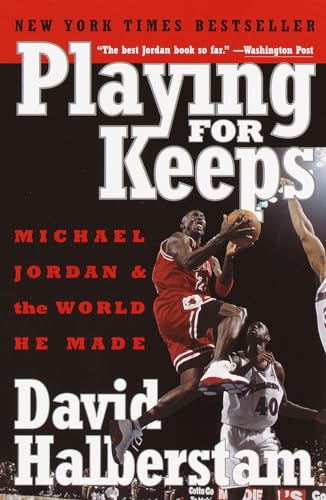
NEW YORK TIMES BESTSELLER • From a Pulitzer Prize–winning journalist comes “the best Jordan book so far” (The Washington Post), the story of Michael Jordan’s legendary years with the Chicago Bulls, capped by the 1998 NBA Finals and the team’s second three-peat.
From The Breaks of the Game to Summer of ’49, David Halberstam has brought the perspective of a great historian, the insider knowledge of a dogged sportswriter, and the love of a fan to bear on some of the most mythic players and teams in the annals of American sports. With Michael Jordan and the Chicago Bulls he has given himself the greatest challenge and produced his greatest triumph.
In Playing for Keeps, Halberstam takes the first full measure of Michael Jordan’s epic career, one of the great American stories of our time. A narrative of astonishing power and human drama, brimming with revealing anecdotes and penetrating insights, the book chronicles the forces in Jordan’s life that have shaped him in to history’s greatest basketball player and the larger forces that have converged to make him the most famous living human being in the world.
Die Inhaltsangabe kann sich auf eine andere Ausgabe dieses Titels beziehen.
Über die Autorin bzw. den Autor
David Halberstam is the author of fifteen books, including The Best and the Brightest, The Powers That Be, The Reckoning, The Breaks of the Game, Summer of '49, October 1964, and The Amateurs. He has received every major journalistic award, including the Pulitzer Prize, and is a member of the Society of American Historians.
Von der hinteren Coverseite
From The Breaks of the Game to Summer of '49, David Halberstam has brought the perspective of a great historian, the inside knowledge of a dogged sportswriter, and the love of a fan to bear on some of the most mythic players and teams in the annals of American sport. With Michael Jordan and the Chicago Bulls he has given himself his greatest challenge and produced his greatest triumph. In Playing for Keeps, David Halberstam takes the first full measure of Michael Jordan's epic career, one of the great American stories of our time. A narrative of astonishing power and human drama, brimming with revealing anecdotes and penetrating insights, the book chronicles the forces in Jordan's life that have shaped him into history's greatest basketball player and the larger forces that have converged to make him the most famous living human being in the world.
Aus dem Klappentext
From The Breaks of the Game to Summer of '49, David Halberstam has brought the perspective of a great historian, the inside knowledge of a dogged sportswriter, and the love of a fan to bear on some of the most mythic players and teams in the annals of American sport. With Michael Jordan and the Chicago Bulls he has given himself his greatest challenge and produced his greatest triumph. In Playing for Keeps, David Halberstam takes the first full measure of Michael Jordan's epic career, one of the great American stories of our time. A narrative of astonishing power and human drama, brimming with revealing anecdotes and penetrating insights, the book chronicles the forces in Jordan's life that have shaped him into history's greatest basketball player and the larger forces that have converged to make him the most famous living human being in the world.
Auszug. © Genehmigter Nachdruck. Alle Rechte vorbehalten.
In the fourteen years that Michael Jordan played in the NBA, no one other than a handful of players benefited more from the league's rising affluence and the shift in power from owners to players than David Falk. A relatively junior sports agent in the beginning of the era, Falk was by 1998 not merely the most affluent agent ever to represent basketball players but one of the two or three most influential men in the sport of basketball, a man whose power was said to rival that of David Stern himself. If the legal, economic, and technological changes that took place in the eighties and nineties had been good for players, they were arguably even better for agents. Since he first surfaced as an agent, he had split twice with partners: Early on, even before he was part of Jordan's team, he and Donald Dell split from Frank Craighill and Lee Fentress, and eventually he split off from Dell in what was considered a rather bitter professional divorce. In 1998 he sold his company to a larger firm, one that specialized in producing live entertainment in arenas around the country. The price was an estimated $100 million, and as part of the deal, Falk stayed on to run his part of the company. A press release announcing the sale noted that Falk's old company, FAME (Falk Associates Management Enterprises), "represented an unprecedented 6 first-round draft picks in the NBA, negotiated over $400 million in contracts for its free-agent clients, and negotiated four of the five largest contracts in team sports history."
No one doubted David Falk's ability and intelligence, but if there was one thing that bothered people who cared about the league and the game in the broadest sense, it was whether he had any sense of a larger good, a belief that the greater good and health of the game was still something of an issue. Some felt that there was a danger that the size of some players' contracts exploited the vulnerability of varying franchises and threatened the long-range stability of the league. Falk seemed to enjoy his power as much as his wealth, the ability not to return calls and to make other people, particularly owners, feel vulnerable to him. "Be wary of David, and be particularly careful when he starts telling you how much he respects you," an owner once noted. "That's when you're going to either lose your wallet or your franchise player--it's his way of telling you he's more powerful than you are."
In the summer of 1998, as the league and the players' union prepared for a major battle over contract rules and the owners prepared for a lockout of the players, a number of Falk clients, including Patrick Ewing, Dikembe Mutombo, and Alonzo Mourning, had risen (hardly by chance) to positions of leadership in the union. That did not mean that it was simply Falk against the owners, for there were a number of other agents equally active on the players' side, but the issues, particularly the question of a soft or hard salary cap, seemed more about the contract freedoms enjoyed by the elite of the league than the earning power of most players. Certainly a number of people knowledgeable about the NBA saw the lockout as something of a struggle between Stern and Falk, and certainly when David Falk spoke to reporters that fall, he implied that Michael Jordan might be willing to come back for one more season--if David Stern did not block the way. As the lockout continued, it became increasingly clear that Falk was a critically important figure on the union side and that the issues seemed to affect his handful of elite clients more than they did most of the players. In an unusually scathing column the influential New York Daily News columnist Mike Lupica wrote, "There may be worse phonies in sports than David Falk, but it is hard to come up with one today." Falk was, Lupica wrote, "a Rasputin coming off the bench" in these negotiations, the rare person who could make a writer root for a sports owner.
As for David Stern, in the late summer of 1998, as labor tensions escalated and a lockout became ever more likely, he seemed to some of his friends to be significantly sadder, if not actually melancholy. It was as if he was lamenting the loss of a once-vital human connection to the league's players, what he thought of as a special partnership with them. He grew a beard, which he vowed he would not shave until a new labor agreement was worked out. At the same time, ever a world-class marketer, he opened a giant new NBA store on Fifth Avenue in New York City, filled with almost any kind of clothing and trinket that could carry an NBA logo. Soon to come are NBA restaurants in a large number of cities.
Stern was very much aware that his longtime critics, people who hated the way the game had evolved in recent years--with its Dream Team conquest of lesser mortals at the Olympic competition, its affluent corporate-sponsorship deals, its big television contracts, its fancy new arenas with their luxury boxes and mandatory deafening noise, its growing separation of players from the media--thought he was being hoisted with his own petard. They believed that the league, with Stern as its master image maker had become too marketing-oriented in its struggle for parity with other major sports. Worst of all, in the process of gaining such stunning success, it had inevitably helped create the attitude among altogether too many players that they were beyond traditional norms of accountability, economically and socially outside the reach and control of society, and that the NBA's phenomenal (and unlikely) growth of the eighties and nineties was not some benign technological and societal fluke but nothing less than their just due. As their salaries had grown at such a remarkable rate in the past decade, so had their separation from reality.
Stern sometimes joked privately with friends that he could be arrested for operating under false pretenses in having for so long minimized the warts and maximized the artistry of the players and the game and above all for having tried to diminish the idea that modern athletes were, well . . . greedy. He liked to talk nostalgically about his early days as a league executive, when he worked with an earlier generation of labor leaders and players, men who felt a sense of partnership and shared objectives. Everyone was learning the hard way that a shared partnership was a good deal more difficult in flush times than in hard times. What bothered him now, Stern told some associates, was that players' and agents' memories were so short--almost no one seemed to remember how recently the league could not get itself on prime time for playoff games.
What made Stern's sadness particularly poignant was the fact that he had never been simply the owners' man, as was so often the case in big-time sports. He loved the players and the game itself and was committed to both, and he always had a broad sense of the larger health of the sport, a health that he believed began and ended with the public's respect and emotional investment in the players. In the words of Bob Ryan, "In that critical period when the NBA was just beginning to become successful, and a critical ingredient of it was the labor agreements which the league worked out with the union, I could as easily have envisioned David Stern heading the union and Larry Fleisher [the head of the union] being the commissioner--because there was no real difference in their love of the game, and the vision they both had of what they wanted to happen."
That was certainly no longer true. It all changed under the weight of so much prosperity. Revenue and salaries had gone up in staggering increments in recent years, tearing asunder all kinds of partnerships. When Stern came into the league as a relatively junior executive in 1978, the total of all players' salaries was around $40 million; only twenty years later, Michael...
„Über diesen Titel“ kann sich auf eine andere Ausgabe dieses Titels beziehen.
Suchergebnisse für Playing for Keeps: Michael Jordan and the World He...

Beispielbild für diese ISBN
Playing for Keeps: Michael Jordan and the World He Made
ISBN 10: 0767904443
ISBN 13: 9780767904445
Gebraucht
Paperback
Anbieter: World of Books (was SecondSale), Montgomery, IL, USA
Verkäuferbewertung 5 von 5 Sternen

Paperback. Zustand: Fair. NEW YORK TIMES BESTSELLER * From a Pulitzer Prize-winning journalist comes "the best Jordan book so far" (The Washington Post), the story of Michael Jordan's legendary years with the Chicago Bulls, capped by the 1998 NBA Finals and the team's second three-peat. From The Breaks of the Game to Summer of '49, David Halberstam has brought the perspective of a great historian, the insider knowledge of a dogged sportswriter, and the love of a fan to bear on some of the most mythic players and teams in the annals of American sports. With Michael Jordan and the Chicago Bulls he has given himself the greatest challenge and produced his greatest triumph. In Playing for Keeps, Halberstam takes the first full measure of Michael Jordan's epic career, one of the great American stories of our time. A narrative of astonishing power and human drama, brimming with revealing anecdotes and penetrating insights, the book chronicles the forces in Jordan's life that have shaped him in to history's greatest basketball player and the larger forces that have converged to make him the most famous living human being in the world. Artikel-Nr. 00095144159
Gebraucht kaufen
EUR 3,78
Versand gratis
Versand innerhalb von USA
Versand innerhalb von USA
Anzahl: 6 verfügbar
Beispielbild für diese ISBN
Playing for Keeps: Michael Jordan and the World He Made
ISBN 10: 0767904443
ISBN 13: 9780767904445
Gebraucht
Paperback
Anbieter: World of Books (was SecondSale), Montgomery, IL, USA
Verkäuferbewertung 5 von 5 Sternen
Paperback. Zustand: Very Good. NEW YORK TIMES BESTSELLER * From a Pulitzer Prize-winning journalist comes "the best Jordan book so far" (The Washington Post), the story of Michael Jordan's legendary years with the Chicago Bulls, capped by the 1998 NBA Finals and the team's second three-peat. From The Breaks of the Game to Summer of '49, David Halberstam has brought the perspective of a great historian, the insider knowledge of a dogged sportswriter, and the love of a fan to bear on some of the most mythic players and teams in the annals of American sports. With Michael Jordan and the Chicago Bulls he has given himself the greatest challenge and produced his greatest triumph. In Playing for Keeps, Halberstam takes the first full measure of Michael Jordan's epic career, one of the great American stories of our time. A narrative of astonishing power and human drama, brimming with revealing anecdotes and penetrating insights, the book chronicles the forces in Jordan's life that have shaped him in to history's greatest basketball player and the larger forces that have converged to make him the most famous living human being in the world. Artikel-Nr. 00109037406
Gebraucht kaufen
EUR 3,78
Versand gratis
Versand innerhalb von USA
Versand innerhalb von USA
Anzahl: 2 verfügbar
Beispielbild für diese ISBN
Playing for Keeps: Michael Jordan and the World He Made
ISBN 10: 0767904443
ISBN 13: 9780767904445
Gebraucht
Paperback
Anbieter: World of Books (was SecondSale), Montgomery, IL, USA
Verkäuferbewertung 5 von 5 Sternen
Paperback. Zustand: Good. NEW YORK TIMES BESTSELLER * From a Pulitzer Prize-winning journalist comes "the best Jordan book so far" (The Washington Post), the story of Michael Jordan's legendary years with the Chicago Bulls, capped by the 1998 NBA Finals and the team's second three-peat. From The Breaks of the Game to Summer of '49, David Halberstam has brought the perspective of a great historian, the insider knowledge of a dogged sportswriter, and the love of a fan to bear on some of the most mythic players and teams in the annals of American sports. With Michael Jordan and the Chicago Bulls he has given himself the greatest challenge and produced his greatest triumph. In Playing for Keeps, Halberstam takes the first full measure of Michael Jordan's epic career, one of the great American stories of our time. A narrative of astonishing power and human drama, brimming with revealing anecdotes and penetrating insights, the book chronicles the forces in Jordan's life that have shaped him in to history's greatest basketball player and the larger forces that have converged to make him the most famous living human being in the world. Artikel-Nr. 00099186433
Gebraucht kaufen
EUR 3,78
Versand gratis
Versand innerhalb von USA
Versand innerhalb von USA
Anzahl: 15 verfügbar
Foto des Verkäufers
Playing for Keeps: Michael Jordan and the World He Made
Anbieter: Dream Books Co., Denver, CO, USA
Verkäuferbewertung 5 von 5 Sternen
Zustand: good. Gently used with minimal wear on the corners and cover. A few pages may contain light highlighting or writing, but the text remains fully legible. Dust jacket may be missing, and supplemental materials like CDs or codes may not be included. May be ex-library with library markings. Ships promptly! Artikel-Nr. DBV.0767904443.G
Gebraucht kaufen
EUR 3,79
Versand gratis
Versand innerhalb von USA
Versand innerhalb von USA
Anzahl: 2 verfügbar
Beispielbild für diese ISBN
Playing for Keeps : Michael Jordan and the World He Made
Verlag:
Crown Publishing Group, The, 2000
ISBN 10: 0767904443
ISBN 13: 9780767904445
Gebraucht
Softcover
Anbieter: Better World Books, Mishawaka, IN, USA
Verkäuferbewertung 5 von 5 Sternen
Zustand: Good. Former library copy. Pages intact with minimal writing/highlighting. The binding may be loose and creased. Dust jackets/supplements are not included. Includes library markings. Stock photo provided. Product includes identifying sticker. Better World Books: Buy Books. Do Good. Artikel-Nr. GRP9406678
Gebraucht kaufen
EUR 6,16
Versand gratis
Versand innerhalb von USA
Versand innerhalb von USA
Anzahl: 3 verfügbar
Beispielbild für diese ISBN
Playing for Keeps : Michael Jordan and the World He Made
Verlag:
Crown Publishing Group, The, 2000
ISBN 10: 0767904443
ISBN 13: 9780767904445
Gebraucht
Softcover
Anbieter: Better World Books, Mishawaka, IN, USA
Verkäuferbewertung 5 von 5 Sternen
Zustand: Good. Pages intact with minimal writing/highlighting. The binding may be loose and creased. Dust jackets/supplements are not included. Stock photo provided. Product includes identifying sticker. Better World Books: Buy Books. Do Good. Artikel-Nr. GRP98023923
Gebraucht kaufen
EUR 6,16
Versand gratis
Versand innerhalb von USA
Versand innerhalb von USA
Anzahl: 1 verfügbar
Beispielbild für diese ISBN
Playing for Keeps: Michael Jordan and the World He Made
Verlag:
Crown Publishing Group (NY), 2000
ISBN 10: 0767904443
ISBN 13: 9780767904445
Gebraucht
Paperback
Anbieter: ThriftBooks-Atlanta, AUSTELL, GA, USA
Verkäuferbewertung 5 von 5 Sternen
Paperback. Zustand: Fair. No Jacket. Readable copy. Pages may have considerable notes/highlighting. ~ ThriftBooks: Read More, Spend Less. Artikel-Nr. G0767904443I5N00
Gebraucht kaufen
EUR 6,43
Versand gratis
Versand innerhalb von USA
Versand innerhalb von USA
Anzahl: 1 verfügbar
Foto des Verkäufers
Playing for Keeps: Michael Jordan and the World He Made
Anbieter: Dream Books Co., Denver, CO, USA
Verkäuferbewertung 5 von 5 Sternen
Zustand: acceptable. This copy has clearly been enjoyedâ"expect noticeable shelf wear and some minor creases to the cover. Binding is strong, and all pages are legible. May contain previous library markings or stamps. Artikel-Nr. DBV.0767904443.A
Gebraucht kaufen
EUR 6,44
Versand gratis
Versand innerhalb von USA
Versand innerhalb von USA
Anzahl: 1 verfügbar
Beispielbild für diese ISBN
Playing for Keeps: Michael Jordan and the World He Made
Verlag:
Crown (edition 1st Broadway Books trade pbk. ed), 2000
ISBN 10: 0767904443
ISBN 13: 9780767904445
Gebraucht
Paperback
Anbieter: BooksRun, Philadelphia, PA, USA
Verkäuferbewertung 5 von 5 Sternen
Paperback. Zustand: Very Good. 1st Broadway Books trade pbk. ed. It's a well-cared-for item that has seen limited use. The item may show minor signs of wear. All the text is legible, with all pages included. It may have slight markings and/or highlighting. Artikel-Nr. 0767904443-11-1
Gebraucht kaufen
EUR 7,04
Versand gratis
Versand innerhalb von USA
Versand innerhalb von USA
Anzahl: 1 verfügbar
Beispielbild für diese ISBN
Playing for Keeps: Michael Jordan and the World He Made
Anbieter: Wonder Book, Frederick, MD, USA
Verkäuferbewertung 5 von 5 Sternen
Zustand: Good. Good condition. A copy that has been read but remains intact. May contain markings such as bookplates, stamps, limited notes and highlighting, or a few light stains. Artikel-Nr. W06L-01380
Gebraucht kaufen
EUR 7,12
Versand gratis
Versand innerhalb von USA
Versand innerhalb von USA
Anzahl: 1 verfügbar