
Verwandte Artikel zu Afterparty
Inhaltsangabe
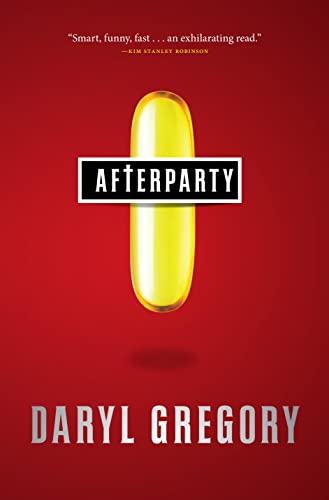
<p>It begins in Toronto, in the years after the smart drug revolution. Any high school student with a chemjet and internet connection can download recipes and print drugs, or invent them. A seventeen-year-old street girl finds God through a new brain-altering drug called Numinous, used as a sacrament by a new Church that preys on the underclass. But she is arrested and put into detention, and without the drug, commits suicide.<br><br>Lyda Rose, another patient in that detention facility, has a dark secret: she was one of the original scientists who developed the drug. With the help of an ex-government agent and an imaginary, drug-induced doctor, Lyda sets out to find the other three survivors of the five who made the Numinous in a quest to set things right.<br><br>A mind-bending and violent chase across Canada and the US, Daryl Gregory's <i>Afterparty </i>is a last chance to save civilization, or die trying.</p>
Die Inhaltsangabe kann sich auf eine andere Ausgabe dieses Titels beziehen.
Über die Autorin bzw. den Autor
<p>Daryl Gregory was the 2009 winner of IAFA William L. Crawford Fantasy Award for his first novel <i>Pandemonium</i>. His second novel, <i>The Devil's Alphabet</i>, was nominated for the Philip K. Dick Award and was named one of the best books of 2009 by <i>Publishers Weekly</i>. His short fiction has appeared in <i>The Magazine of Fantasy and Science Fiction, Asimov's Science Fiction Magazine,</i> and<i> The Year's Best SF. </i>He has also written comics for BOOM! Studios and IDW.</p>
Auszug. © Genehmigter Nachdruck. Alle Rechte vorbehalten.
Afterparty
By Daryl GregoryTom Doherty Associates
Copyright © 2015 Daryl Gregory
All rights reserved.
ISBN: 978-0-7653-3693-4All rights reserved.
CHAPTER ONE
“So you want to leave us, Lyda?” Counselor Todd asked.
“It’s been eight months,” I said. “I think it’s about time, don’t you?”
Dr. Gloria shook her head, then made a note on her clipboard.
The three of us—Todd, Dr. Gloria, and I—sat in Todd’s closet-sized office in the NAT ward. Three chairs, a pressed wood coffee table, and no windows. Todd leaned back in his chair, flicking his smart pen: snick and the screen opened like a fan; clack and it rolled up again. The file on the screen appeared and disappeared too fast to read, but I could guess what document it was.
Todd liked to portray himself as a man of the people. A white man who favored work shirts that had never seen a day of work and work boots that had never touched mud. This in contrast to Dr. Gloria, who occupied the seat to his right. She believed in the traditional uniform of doctors: white coat, charcoal pencil skirt, femme heels that weren’t so high as to be impractical. Her nondigital clipboard and Hot Librarian glasses were signature props. I did not want her in this meeting, but neither Todd nor I had the power to keep her out.
“Lyda,” Todd said in a knowing tone. “Does your desire to leave now have anything to do with Francine’s death?”
Francine was the girl who had killed herself with Todd’s mug. I presented my I’m-not-quite-following-you frown.
“The transfer request was placed two weeks ago, on the day after she died,” Todd said. “You seemed upset by her death.”
“I barely knew her.”
“You broke furniture,” he said.
“It was a plastic chair,” I said. “It already had a crack in it.”
“Don’t quibble,” Dr. Gloria said. “It’s the display of anger he’s worried about.”
“I was mad at you doctors,” I said. “I told you to put her on antidepressants—”
“Which we did,” Todd said.
“Too Goddamn late. Jesus, her symptoms were obvious. I couldn’t believe no one had taken steps. Her parents should be suing the hospital’s ass off right now.”
“We haven’t been able to find them,” he said.
“Perfect. Homeless orphans can’t sue either.”
Dr. Gloria put down her clipboard. “Insulting everyone who works here isn’t going to help you.”
“I’m sorry,” I said. “It’s just—she was so young.”
“I know,” Counselor Todd said. He sounded suddenly tired. “I tried to talk to her.”
Todd could be an idiot, but he did care about the patients. And as the only full-time counselor on the ward, he worked essentially alone. The neuro-atypical ward was a lab for the hardcore cog-sci docs, the neuropsych researchers. They didn’t much care for talk therapy, or for talking therapists like Todd.
So as Todd became more isolated, he couldn’t help but grow attached to the people he spent the most time with: The patients had become, without him realizing it, his cohort, his troop. I knew that my degrees intimidated him. He suspected that because of my résumé I was more aligned with the neuropsych folks—which was true. But my highfalutin background also made him secretly desire my approval. Sometimes I used my power to get the lab to do the right thing for the patients, but I wasn’t above using it to get myself out of here.
Todd did his best to pull himself back to counselor mode. “Were you disturbed by Francine’s symptoms?”
“How so?”
“They were so similar to your own. The religious nature of her hallucinations—”
“A lot of schizos have religious delusions.”
“She wasn’t schizophrenic, at least not naturally. We believe she’d been taking a designer drug.”
“Which one?”
“We haven’t figured that out yet. But I was struck by the way she talked about God as a physical presence. That was how you used to speak about your angel.”
Dr. Gloria looked at me over her glasses. This was her favorite topic. I stopped myself from glaring at her.
“I’ve been symptom free for months,” I said to Todd. “No angels. No voices in my head. I didn’t think the antipsychotics you prescribed would work, honestly. My hallucination’s been so persistent, so long, that…” I shrugged. “But you were right, and I was wrong. I’m not too proud to admit that.”
“I thought they were worth a try,” he said. “When you showed up here, you were in a pretty bad place. Not just your injuries.”
“Oh no,” I said, agreeing with him. “It was everything. I was fucked up.” I’d been sentenced to the NAT after creating my own drive-thru at a convenience store. I swerved off the road at 60 KPH and plowed through the wall at three in the afternoon. My front bumper crushed a woman’s leg and sent another man flying, but nobody was killed. The owner told a reporter that “somebody up there was watching out for them.”
God gets the easiest performance reviews.
I said, “I feel like I’ve finally gotten a handle on my problems.”
I glanced up. I’d delivered this statement with all the sincerity I could muster. Todd seemed to be taking it in. Then he said, “Have you been thinking about your wife?”
A question as subtle as a crowbar. Counselor Todd trying to pop me open.
Dr. G said, “He noticed that you’re touching your ring.”
I glanced down. The wedding band was polished brass, six-sided on the outside. A friend of ours had forged a matching pair for us.
I placed my hands on the arms of my chair. “I think of her every day,” I said. “But not obsessively. She’s my wife. I miss her.”
Perhaps this struck him as an odd thing to say about a woman who had tried to kill me. Instead he said, “It’s interesting that you use the present tense.”
“She has been dead almost ten years,” Dr. Gloria said.
“I don’t believe that there’s a time limit on love or grief,” I said. A paraphrase of something Counselor Todd had told me very earnestly in my first month on the ward. I was detoxing then, vulnerable and wide open, sucking in Todd’s bromides as if they were profound truths. When you can’t get the heroin, take the methadone.
“And your child?” he asked.
I sat back, my heart suddenly beating hard. “Are you working through a checklist there?”
“You’re sounding angry again,” Dr. Gloria said.
Todd said, “You mentioned her only once in our therapy sessions, but according to your file…”
If he flicked open that damn pen I was going to leap across the table at him.
“I don’t have a child,” I said.
Dr. Gloria looked over her glasses at me, the Medical Professional version of an eye roll.
“Anymore,” I said.
Todd pursed his lips, signaling disappointment. “I’m sorry, Lyda, I just can’t sign off on this. I think you’re trying to get out of here so you can score, and you still haven’t addressed some key issues...
“So you want to leave us, Lyda?” Counselor Todd asked.
“It’s been eight months,” I said. “I think it’s about time, don’t you?”
Dr. Gloria shook her head, then made a note on her clipboard.
The three of us—Todd, Dr. Gloria, and I—sat in Todd’s closet-sized office in the NAT ward. Three chairs, a pressed wood coffee table, and no windows. Todd leaned back in his chair, flicking his smart pen: snick and the screen opened like a fan; clack and it rolled up again. The file on the screen appeared and disappeared too fast to read, but I could guess what document it was.
Todd liked to portray himself as a man of the people. A white man who favored work shirts that had never seen a day of work and work boots that had never touched mud. This in contrast to Dr. Gloria, who occupied the seat to his right. She believed in the traditional uniform of doctors: white coat, charcoal pencil skirt, femme heels that weren’t so high as to be impractical. Her nondigital clipboard and Hot Librarian glasses were signature props. I did not want her in this meeting, but neither Todd nor I had the power to keep her out.
“Lyda,” Todd said in a knowing tone. “Does your desire to leave now have anything to do with Francine’s death?”
Francine was the girl who had killed herself with Todd’s mug. I presented my I’m-not-quite-following-you frown.
“The transfer request was placed two weeks ago, on the day after she died,” Todd said. “You seemed upset by her death.”
“I barely knew her.”
“You broke furniture,” he said.
“It was a plastic chair,” I said. “It already had a crack in it.”
“Don’t quibble,” Dr. Gloria said. “It’s the display of anger he’s worried about.”
“I was mad at you doctors,” I said. “I told you to put her on antidepressants—”
“Which we did,” Todd said.
“Too Goddamn late. Jesus, her symptoms were obvious. I couldn’t believe no one had taken steps. Her parents should be suing the hospital’s ass off right now.”
“We haven’t been able to find them,” he said.
“Perfect. Homeless orphans can’t sue either.”
Dr. Gloria put down her clipboard. “Insulting everyone who works here isn’t going to help you.”
“I’m sorry,” I said. “It’s just—she was so young.”
“I know,” Counselor Todd said. He sounded suddenly tired. “I tried to talk to her.”
Todd could be an idiot, but he did care about the patients. And as the only full-time counselor on the ward, he worked essentially alone. The neuro-atypical ward was a lab for the hardcore cog-sci docs, the neuropsych researchers. They didn’t much care for talk therapy, or for talking therapists like Todd.
So as Todd became more isolated, he couldn’t help but grow attached to the people he spent the most time with: The patients had become, without him realizing it, his cohort, his troop. I knew that my degrees intimidated him. He suspected that because of my résumé I was more aligned with the neuropsych folks—which was true. But my highfalutin background also made him secretly desire my approval. Sometimes I used my power to get the lab to do the right thing for the patients, but I wasn’t above using it to get myself out of here.
Todd did his best to pull himself back to counselor mode. “Were you disturbed by Francine’s symptoms?”
“How so?”
“They were so similar to your own. The religious nature of her hallucinations—”
“A lot of schizos have religious delusions.”
“She wasn’t schizophrenic, at least not naturally. We believe she’d been taking a designer drug.”
“Which one?”
“We haven’t figured that out yet. But I was struck by the way she talked about God as a physical presence. That was how you used to speak about your angel.”
Dr. Gloria looked at me over her glasses. This was her favorite topic. I stopped myself from glaring at her.
“I’ve been symptom free for months,” I said to Todd. “No angels. No voices in my head. I didn’t think the antipsychotics you prescribed would work, honestly. My hallucination’s been so persistent, so long, that…” I shrugged. “But you were right, and I was wrong. I’m not too proud to admit that.”
“I thought they were worth a try,” he said. “When you showed up here, you were in a pretty bad place. Not just your injuries.”
“Oh no,” I said, agreeing with him. “It was everything. I was fucked up.” I’d been sentenced to the NAT after creating my own drive-thru at a convenience store. I swerved off the road at 60 KPH and plowed through the wall at three in the afternoon. My front bumper crushed a woman’s leg and sent another man flying, but nobody was killed. The owner told a reporter that “somebody up there was watching out for them.”
God gets the easiest performance reviews.
I said, “I feel like I’ve finally gotten a handle on my problems.”
I glanced up. I’d delivered this statement with all the sincerity I could muster. Todd seemed to be taking it in. Then he said, “Have you been thinking about your wife?”
A question as subtle as a crowbar. Counselor Todd trying to pop me open.
Dr. G said, “He noticed that you’re touching your ring.”
I glanced down. The wedding band was polished brass, six-sided on the outside. A friend of ours had forged a matching pair for us.
I placed my hands on the arms of my chair. “I think of her every day,” I said. “But not obsessively. She’s my wife. I miss her.”
Perhaps this struck him as an odd thing to say about a woman who had tried to kill me. Instead he said, “It’s interesting that you use the present tense.”
“She has been dead almost ten years,” Dr. Gloria said.
“I don’t believe that there’s a time limit on love or grief,” I said. A paraphrase of something Counselor Todd had told me very earnestly in my first month on the ward. I was detoxing then, vulnerable and wide open, sucking in Todd’s bromides as if they were profound truths. When you can’t get the heroin, take the methadone.
“And your child?” he asked.
I sat back, my heart suddenly beating hard. “Are you working through a checklist there?”
“You’re sounding angry again,” Dr. Gloria said.
Todd said, “You mentioned her only once in our therapy sessions, but according to your file…”
If he flicked open that damn pen I was going to leap across the table at him.
“I don’t have a child,” I said.
Dr. Gloria looked over her glasses at me, the Medical Professional version of an eye roll.
“Anymore,” I said.
Todd pursed his lips, signaling disappointment. “I’m sorry, Lyda, I just can’t sign off on this. I think you’re trying to get out of here so you can score, and you still haven’t addressed some key issues...
„Über diesen Titel“ kann sich auf eine andere Ausgabe dieses Titels beziehen.
Suchergebnisse für Afterparty

Beispielbild für diese ISBN
Afterparty
Anbieter: World of Books (was SecondSale), Montgomery, IL, USA
Verkäuferbewertung 5 von 5 Sternen

Paperback. Zustand: Good. 'Had it not been for my weakness, someone who is now dead could still be alive. That is what I believed and consequently lived with every day in prison.' It is the summer of 1938 and Phyllis Forrester has returned to England after years abroad. Moving into her sister's grand country house, she soon finds herself entangled in a new world of idealistic beliefs and seemingly innocent friendships. Fevered talk of another war infiltrates their small, privileged circle, giving way to a thrilling solution: a great and charismatic leader, who will restore England to its former glory. At a party hosted by her new friends, Phyllis lets down her guard for a single moment, with devastating consequences. Years later, Phyllis, alone and embittered, recounts the dramatic events which led to her imprisonment and changed the course of her life forever. Powerful, poignant, and exquisitely observed, After the Party is an illuminating portrait of a dark period of British history which we are yet to fully acknowledge. Artikel-Nr. 00106591423
Gebraucht kaufen
EUR 7,39
Versand gratis
Versand innerhalb von USA
Versand innerhalb von USA
Anzahl: 1 verfügbar
Beispielbild für diese ISBN
Afterparty
Anbieter: World of Books (was SecondSale), Montgomery, IL, USA
Verkäuferbewertung 5 von 5 Sternen
Paperback. Zustand: Fair. 'Had it not been for my weakness, someone who is now dead could still be alive. That is what I believed and consequently lived with every day in prison.' It is the summer of 1938 and Phyllis Forrester has returned to England after years abroad. Moving into her sister's grand country house, she soon finds herself entangled in a new world of idealistic beliefs and seemingly innocent friendships. Fevered talk of another war infiltrates their small, privileged circle, giving way to a thrilling solution: a great and charismatic leader, who will restore England to its former glory. At a party hosted by her new friends, Phyllis lets down her guard for a single moment, with devastating consequences. Years later, Phyllis, alone and embittered, recounts the dramatic events which led to her imprisonment and changed the course of her life forever. Powerful, poignant, and exquisitely observed, After the Party is an illuminating portrait of a dark period of British history which we are yet to fully acknowledge. Artikel-Nr. 00103053757
Gebraucht kaufen
EUR 7,39
Versand gratis
Versand innerhalb von USA
Versand innerhalb von USA
Anzahl: 1 verfügbar
Beispielbild für diese ISBN
Afterparty
Anbieter: ThriftBooks-Dallas, Dallas, TX, USA
Verkäuferbewertung 5 von 5 Sternen
Paperback. Zustand: Good. No Jacket. Pages can have notes/highlighting. Spine may show signs of wear. ~ ThriftBooks: Read More, Spend Less. Artikel-Nr. G0765336936I3N00
Gebraucht kaufen
EUR 7,62
Versand gratis
Versand innerhalb von USA
Versand innerhalb von USA
Anzahl: 1 verfügbar
Beispielbild für diese ISBN
Afterparty
Anbieter: Revaluation Books, Exeter, Vereinigtes Königreich
Verkäuferbewertung 5 von 5 Sternen
Paperback. Zustand: Brand New. reprint edition. 302 pages. 9.25x6.00x1.25 inches. In Stock. Artikel-Nr. 0765336936
Neu kaufen
EUR 66,09
EUR 11,84 Versand
Versand von Vereinigtes Königreich nach USA
Versand von Vereinigtes Königreich nach USA
Anzahl: 1 verfügbar