
Verwandte Artikel zu Is it hot in Here? Or is it Me?: The Complete Guide...
Inhaltsangabe
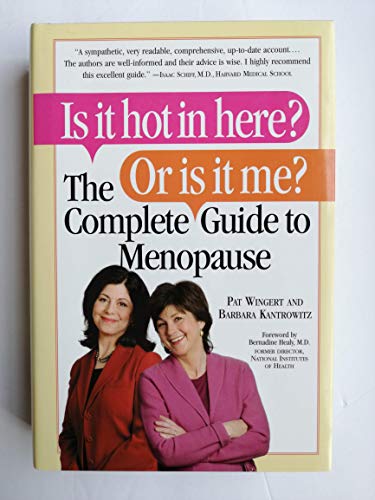
It’s not your mother’s menopause. Some women live through it and never miss a beat. Others suffer so many symptoms— severe hot flashes, sleeplessness, mood swings—that they have trouble functioning. But what all women have in common is a need to know what to expect and how to understand this phase for its inherent promise: as a grand beginning to the second half of life.
By poring over the latest research, interviewing doctors and scientists, attending conferences, and talking to other women, Pat Wingert and Barbara Kantrowitz offer the everything-you-need-to-know guide to menopause. IS IT HOT IN HERE? OR IS IT ME? is accessible, comprehensive, practical, reassuring, scientific, and written in the lively, smart voice of friends helping friends.
First comes the overview: the beginnings of menopause, including why knowing if you’re actually in menopause can be so tricky; the stages of menopause and their typical duration; the role of hormones and the viability of hormone therapy; when and why to seek treatment, the risks involved, and a primer on pills, creams, patches, shots, and bioidenticals.
Then, at the heart of the book, two essential sections: “What You’re Feeling Now,” which offers the relief of solid information on the symptoms of your menopausal life—hot flashes, insomnia, mood swings, bleeding, memory loss, and those inexplicable glitches in thinking that make you feel like a kid with ADD—plus the comfort of advice on what to do. And “Staying Healthy Forever,” a jam-packed guide to caring for your changing body: It begins by trusting your knowledge of yourself, then learning the things to do to ensure a long and healthy future, one in which you look your best and feel your best.
No matter what your path through menopause, the experience is one of great change: and now for this great change, great help.
By poring over the latest research, interviewing doctors and scientists, attending conferences, and talking to other women, Pat Wingert and Barbara Kantrowitz offer the everything-you-need-to-know guide to menopause. IS IT HOT IN HERE? OR IS IT ME? is accessible, comprehensive, practical, reassuring, scientific, and written in the lively, smart voice of friends helping friends.
First comes the overview: the beginnings of menopause, including why knowing if you’re actually in menopause can be so tricky; the stages of menopause and their typical duration; the role of hormones and the viability of hormone therapy; when and why to seek treatment, the risks involved, and a primer on pills, creams, patches, shots, and bioidenticals.
Then, at the heart of the book, two essential sections: “What You’re Feeling Now,” which offers the relief of solid information on the symptoms of your menopausal life—hot flashes, insomnia, mood swings, bleeding, memory loss, and those inexplicable glitches in thinking that make you feel like a kid with ADD—plus the comfort of advice on what to do. And “Staying Healthy Forever,” a jam-packed guide to caring for your changing body: It begins by trusting your knowledge of yourself, then learning the things to do to ensure a long and healthy future, one in which you look your best and feel your best.
No matter what your path through menopause, the experience is one of great change: and now for this great change, great help.
Die Inhaltsangabe kann sich auf eine andere Ausgabe dieses Titels beziehen.
Von der hinteren Coverseite
It’s not your mother’s menopause. Some women live through it and never miss a beat. Others suffer so many symptoms— severe hot flashes, sleeplessness, mood swings—that they have trouble functioning. But what all women have in common is a need to know what to expect and how to understand this phase for its inherent promise: as a grand beginning to the second half of life.
By poring over the latest research, interviewing doctors and scientists, attending conferences, and talking to other women, Pat Wingert and Barbara Kantrowitz offer the everything-you-need-to-know guide to menopause. IS IT HOT IN HERE? OR IS IT ME? is accessible, comprehensive, practical, reassuring, scientific, and written in the lively, smart voice of friends helping friends.
First comes the overview: the beginnings of menopause, including why knowing if you’re actually in menopause can be so tricky; the stages of menopause and their typical duration; the role of hormones and the viability of hormone therapy; when and why to seek treatment, the risks involved, and a primer on pills, creams, patches, shots, and bioidenticals.
Then, at the heart of the book, two essential sections: “What You’re Feeling Now,” which offers the relief of solid information on the symptoms of your menopausal life—hot flashes, insomnia, mood swings, bleeding, memory loss, and those inexplicable glitches in thinking that make you feel like a kid with ADD—plus the comfort of advice on what to do. And “Staying Healthy Forever,” a jam-packed guide to caring for your changing body: It begins by trusting your knowledge of yourself, then learning the things to do to ensure a long and healthy future, one in which you look your best and feel your best.
No matter what your path through menopause, the experience is one of great change: and now for this great change, great help.
Aus dem Klappentext
It s not your mother s menopause. Some women live through it and never miss a beat. Others suffer so many symptoms severe hot flashes, sleeplessness, mood swings that they have trouble functioning. But what all women have in common is a need to know what to expect and how to understand this phase for its inherent promise: as a grand beginning to the second half of life.
By poring over the latest research, interviewing doctors and scientists, attending conferences, and talking to other women, Pat Wingert and Barbara Kantrowitz offer the everything-you-need-to-know guide to menopause. IS IT HOT IN HERE? OR IS IT ME? is accessible, comprehensive, practical, reassuring, scientific, and written in the lively, smart voice of friends helping friends.
First comes the overview: the beginnings of menopause, including why knowing if you re actually in menopause can be so tricky; the stages of menopause and their typical duration; the role of hormones and the viability of hormone therapy; when and why to seek treatment, the risks involved, and a primer on pills, creams, patches, shots, and bioidenticals.
Then, at the heart of the book, two essential sections: What You re Feeling Now, which offers the relief of solid information on the symptoms of your menopausal life hot flashes, insomnia, mood swings, bleeding, memory loss, and those inexplicable glitches in thinking that make you feel like a kid with ADD plus the comfort of advice on what to do. And Staying Healthy Forever, a jam-packed guide to caring for your changing body: It begins by trusting your knowledge of yourself, then learning the things to do to ensure a long and healthy future, one in which you look your best and feel your best.
No matter what your path through menopause, the experience is one of great change: and now for this great change, great help.
Auszug. © Genehmigter Nachdruck. Alle Rechte vorbehalten.
What’s Happening?
Your last period was shorter than usual. Or maybe it was longer. Somehow, the flow seemed a little different. It could be nothing— or it could be the first sign that you’ve entered perimenopause, the years before your last menstrual period. A few lucky women have regular periods to the end and then, almost overnight, no more tampons. But for most of us the transition takes four to six years. The journey may be marked by subtle changes that only the most attuned woman would notice, or it can be a bumpy ride. If it’s the latter, you may struggle with a variety of symptoms: irregular bleeding, hot flashes, sleep problems, moodiness. You may wonder if you’ll ever feel like your old self again. Understanding what’s going on with your body is the first step toward being back in control.
WHAT YOU NEED TO KNOW
Remember when you were 13 and your girlfriends shared their complaints of menstrual aches and pains with you? Around that time, you probably realized that not everyone’s periods were the same. After the initial shock of menstruating passed, some of your girlfriends hardly noticed a thing. Some got on a regular schedule pretty quickly, while others were so erratic they never knew when their “friend” would surprise them. Others were constantly popping aspirin for cramps, while a few of your pals were really troubled by premenstrual syndrome and were difficult to live with for about a week each month. Lots of other girls fell somewhere in between. In some respects, menopause is back to the future, because it often includes many of the same experiences in as wide a variation as menstruation. Just look at the chart on the facing page, and you’ll see how little difference there is between the cycles of early menstruation and those of the menopause transition.
Natural menopause starts without your intervention; that’s why it’s sometimes described as “spontaneous.” You might detect the first subtle hints of what’s coming (slight changes in menstrual duration and flow) 10 or more years before your periods stop. As you get closer to the end of your reproductive years, the timing may become more unpredictable and the level of flow may be unusually heavy or almost nothing at all. Some women experience problems like hot flashes (overwhelming waves of heat), night sweats, sleeplessness, less lubrication when sexually aroused, and moodiness as their hormone levels become increasingly erratic. All of these experiences are considered normal. You won’t know for sure that you’ve reached menopause until you go a full year without a period. This can happen at any age from 40 to 58, although the average age is 51.4 years. A few women don’t reach menopause until they’re in their 60s.
Induced menopause, which can occur at any time after puberty, describes what happens to a woman whose periods have stopped because of some outside intervention such as chemotherapy, pelvic radiation, or the removal of both ovaries (sometimes as part of a hysterectomy). With chemotherapy and radiation, the perimenopausal transition can last for months. Sometimes fertility ends immediately. The most common type of induced menopause is surgical menopause, which occurs when both ovaries are removed. As a result, your body’s main source of natural estrogen disappears immediately. This abrupt drop in hormones increases the likelihood that you’ll experience menopausal symptoms such as hot flashes and verbal memory problems.
Premature (or early) menopause refers to any type of menopause (natural or induced) that occurs before age 40. While rare, premature menopause puts women at greater risk for bone loss.
TIMING IS EVERYTHING
Q. I was surprised to learn that natural menopause typically occurs between the ages of 40 and 58. That seems like a really wide time span. What determines whether it happens early or late?
A. How many follicles (egg sacs) you were born with and the rate at which they deteriorate play a role. So does your lifestyle. Heavy smokers, longtime smokers, and current smokers reach menopause approximately a year and a half earlier than average. The same is true for women who have been treated for depression, epilepsy, or childhood cancer (specifically with pelvic radiation and certain anticancer drugs called alkylating agents) or who have been exposed to certain viruses or toxic chemicals. According to a few studies, heavier women and women with higher childhood cognitive test scores may reach menopause later than the average age. Women who have used supplemental estrogen (in oral contraceptives, for example) in the previous five years also tend to reach menopause later. The length of your menstrual cycles may give you a hint of what’s coming. Women between the ages of 20 and 25 whose cycles are completed in 26 days or less tend to have an earlier menopause than those whose cycles last 33 days or more. If you’ve been pregnant more than once, you may have a slightly later menopause. If you’ve never been pregnant, you may have an earlier menopause. Here are some things that don’t appear to affect the timing of your last period: the age when you started menstruating, race, marital status, and socioeconomic status.
ENDING EARLY
Q. Are premature menopause and premature ovarian failure the same thing?
A. Premature ovarian failure refers to the cessation of periods over several months or years, well before the typical age of menopause. It may be temporary if it’s caused by drastic weight loss, an eating disorder, excessive exercise, or stress; once the aggravating cause is eliminated or reduced, menstrual periods may resume. It can be a permanent condition if it’s related to genetic abnormalities or certain autoimmune diseases. In the latter case, it’s synonymous with premature menopause.
AGE AND MENOPAUSE
Q. I know that the average age of puberty is lower in girls today. Does menopause come earlier, too?
A. Even though women are living longer than ever, the average age of menopause hasn’t budged. As far as scientists can tell, it has always occurred around age 51. It’s likely, however, that you’ll live more of your life after menopause than your great-grandmother did.
NATURAL MENOPAUSE
Natural menopause is not a disease or a hormone deficiency disorder, although historically it has been treated as both. These days, many women want to “de-medicalize” this life transition and embrace it as normal. It’s probably safe to say that most get through it with little difficulty and have no need for any medication. You could well be part of that group.
But there’s a reason that menopause has a bad rep and is a regular butt of jokes. A significant minority of women have a rough time. A few have a very rough time. Doctors think these women may be extra sensitive to hormonal changes or may have more rambunctious hormones. It’s not always easy to figure out what to blame on menopause and what to blame on midlife, when you’re more likely to have high blood pressure, obesity, diabetes, and thyroid problems. Some symptoms appear to be related to fluctuating estrogen: hot flashes, night sweats, heavy bleeding, vaginal dryness, decreasing bone density, breast tenderness, and headaches. Others appear to be indirectly related: sleeplessness, moodiness, and urinary tract and vaginal infections, as well as verbal memory and reading problems. Some are related to a drop in estrogen or an imbalance of estrogen and androgens: dry eyes, a low libido, abdominal weight gain, hair loss (or too much in the wrong places), wrinkles, and hearing...
Your last period was shorter than usual. Or maybe it was longer. Somehow, the flow seemed a little different. It could be nothing— or it could be the first sign that you’ve entered perimenopause, the years before your last menstrual period. A few lucky women have regular periods to the end and then, almost overnight, no more tampons. But for most of us the transition takes four to six years. The journey may be marked by subtle changes that only the most attuned woman would notice, or it can be a bumpy ride. If it’s the latter, you may struggle with a variety of symptoms: irregular bleeding, hot flashes, sleep problems, moodiness. You may wonder if you’ll ever feel like your old self again. Understanding what’s going on with your body is the first step toward being back in control.
WHAT YOU NEED TO KNOW
Remember when you were 13 and your girlfriends shared their complaints of menstrual aches and pains with you? Around that time, you probably realized that not everyone’s periods were the same. After the initial shock of menstruating passed, some of your girlfriends hardly noticed a thing. Some got on a regular schedule pretty quickly, while others were so erratic they never knew when their “friend” would surprise them. Others were constantly popping aspirin for cramps, while a few of your pals were really troubled by premenstrual syndrome and were difficult to live with for about a week each month. Lots of other girls fell somewhere in between. In some respects, menopause is back to the future, because it often includes many of the same experiences in as wide a variation as menstruation. Just look at the chart on the facing page, and you’ll see how little difference there is between the cycles of early menstruation and those of the menopause transition.
Natural menopause starts without your intervention; that’s why it’s sometimes described as “spontaneous.” You might detect the first subtle hints of what’s coming (slight changes in menstrual duration and flow) 10 or more years before your periods stop. As you get closer to the end of your reproductive years, the timing may become more unpredictable and the level of flow may be unusually heavy or almost nothing at all. Some women experience problems like hot flashes (overwhelming waves of heat), night sweats, sleeplessness, less lubrication when sexually aroused, and moodiness as their hormone levels become increasingly erratic. All of these experiences are considered normal. You won’t know for sure that you’ve reached menopause until you go a full year without a period. This can happen at any age from 40 to 58, although the average age is 51.4 years. A few women don’t reach menopause until they’re in their 60s.
Induced menopause, which can occur at any time after puberty, describes what happens to a woman whose periods have stopped because of some outside intervention such as chemotherapy, pelvic radiation, or the removal of both ovaries (sometimes as part of a hysterectomy). With chemotherapy and radiation, the perimenopausal transition can last for months. Sometimes fertility ends immediately. The most common type of induced menopause is surgical menopause, which occurs when both ovaries are removed. As a result, your body’s main source of natural estrogen disappears immediately. This abrupt drop in hormones increases the likelihood that you’ll experience menopausal symptoms such as hot flashes and verbal memory problems.
Premature (or early) menopause refers to any type of menopause (natural or induced) that occurs before age 40. While rare, premature menopause puts women at greater risk for bone loss.
TIMING IS EVERYTHING
Q. I was surprised to learn that natural menopause typically occurs between the ages of 40 and 58. That seems like a really wide time span. What determines whether it happens early or late?
A. How many follicles (egg sacs) you were born with and the rate at which they deteriorate play a role. So does your lifestyle. Heavy smokers, longtime smokers, and current smokers reach menopause approximately a year and a half earlier than average. The same is true for women who have been treated for depression, epilepsy, or childhood cancer (specifically with pelvic radiation and certain anticancer drugs called alkylating agents) or who have been exposed to certain viruses or toxic chemicals. According to a few studies, heavier women and women with higher childhood cognitive test scores may reach menopause later than the average age. Women who have used supplemental estrogen (in oral contraceptives, for example) in the previous five years also tend to reach menopause later. The length of your menstrual cycles may give you a hint of what’s coming. Women between the ages of 20 and 25 whose cycles are completed in 26 days or less tend to have an earlier menopause than those whose cycles last 33 days or more. If you’ve been pregnant more than once, you may have a slightly later menopause. If you’ve never been pregnant, you may have an earlier menopause. Here are some things that don’t appear to affect the timing of your last period: the age when you started menstruating, race, marital status, and socioeconomic status.
ENDING EARLY
Q. Are premature menopause and premature ovarian failure the same thing?
A. Premature ovarian failure refers to the cessation of periods over several months or years, well before the typical age of menopause. It may be temporary if it’s caused by drastic weight loss, an eating disorder, excessive exercise, or stress; once the aggravating cause is eliminated or reduced, menstrual periods may resume. It can be a permanent condition if it’s related to genetic abnormalities or certain autoimmune diseases. In the latter case, it’s synonymous with premature menopause.
AGE AND MENOPAUSE
Q. I know that the average age of puberty is lower in girls today. Does menopause come earlier, too?
A. Even though women are living longer than ever, the average age of menopause hasn’t budged. As far as scientists can tell, it has always occurred around age 51. It’s likely, however, that you’ll live more of your life after menopause than your great-grandmother did.
NATURAL MENOPAUSE
Natural menopause is not a disease or a hormone deficiency disorder, although historically it has been treated as both. These days, many women want to “de-medicalize” this life transition and embrace it as normal. It’s probably safe to say that most get through it with little difficulty and have no need for any medication. You could well be part of that group.
But there’s a reason that menopause has a bad rep and is a regular butt of jokes. A significant minority of women have a rough time. A few have a very rough time. Doctors think these women may be extra sensitive to hormonal changes or may have more rambunctious hormones. It’s not always easy to figure out what to blame on menopause and what to blame on midlife, when you’re more likely to have high blood pressure, obesity, diabetes, and thyroid problems. Some symptoms appear to be related to fluctuating estrogen: hot flashes, night sweats, heavy bleeding, vaginal dryness, decreasing bone density, breast tenderness, and headaches. Others appear to be indirectly related: sleeplessness, moodiness, and urinary tract and vaginal infections, as well as verbal memory and reading problems. Some are related to a drop in estrogen or an imbalance of estrogen and androgens: dry eyes, a low libido, abdominal weight gain, hair loss (or too much in the wrong places), wrinkles, and hearing...
„Über diesen Titel“ kann sich auf eine andere Ausgabe dieses Titels beziehen.
Suchergebnisse für Is it hot in Here? Or is it Me?: The Complete Guide...

Beispielbild für diese ISBN
Is It Hot in Here? or Is It Me? the Complete Guide to Menopause
Anbieter: World of Books (was SecondSale), Montgomery, IL, USA
Verkäuferbewertung 5 von 5 Sternen

Hardback. Zustand: Very Good. Artikel-Nr. 00081025435
Gebraucht kaufen
EUR 6,24
Versand gratis
Versand innerhalb von USA
Versand innerhalb von USA
Anzahl: 2 verfügbar
Beispielbild für diese ISBN
Is It Hot in Here? or Is It Me? the Complete Guide to Menopause
Anbieter: World of Books (was SecondSale), Montgomery, IL, USA
Verkäuferbewertung 5 von 5 Sternen
Hardback. Zustand: Good. Artikel-Nr. 00094843309
Gebraucht kaufen
EUR 6,24
Versand gratis
Versand innerhalb von USA
Versand innerhalb von USA
Anzahl: 1 verfügbar
Beispielbild für diese ISBN
Is it hot in Here? Or is it Me?: The Complete Guide to Menopause
Anbieter: ThriftBooks-Atlanta, AUSTELL, GA, USA
Verkäuferbewertung 5 von 5 Sternen
Hardcover. Zustand: As New. No Jacket. Pages are clean and are not marred by notes or folds of any kind. ~ ThriftBooks: Read More, Spend Less. Artikel-Nr. G076114370XI2N00
Gebraucht kaufen
EUR 6,25
Versand gratis
Versand innerhalb von USA
Versand innerhalb von USA
Anzahl: 1 verfügbar
Beispielbild für diese ISBN
Is It Hot in Here? Or Is It Me? : The Complete Guide to Menopause
Verlag:
Workman Publishing Company, Incorporated, 2006
ISBN 10: 076114370X
ISBN 13: 9780761143703
Gebraucht
Hardcover
Erstausgabe
Anbieter: Better World Books, Mishawaka, IN, USA
Verkäuferbewertung 5 von 5 Sternen
Zustand: Very Good. 1st Edition. Former library copy. Pages intact with possible writing/highlighting. Binding strong with minor wear. Dust jackets/supplements may not be included. Includes library markings. Stock photo provided. Product includes identifying sticker. Better World Books: Buy Books. Do Good. Artikel-Nr. 841075-6
Gebraucht kaufen
EUR 6,68
Versand gratis
Versand innerhalb von USA
Versand innerhalb von USA
Anzahl: 1 verfügbar
Beispielbild für diese ISBN
Is It Hot in Here? Or Is It Me? : The Complete Guide to Menopause
Verlag:
Workman Publishing Company, Incorporated, 2006
ISBN 10: 076114370X
ISBN 13: 9780761143703
Gebraucht
Hardcover
Erstausgabe
Anbieter: Better World Books, Mishawaka, IN, USA
Verkäuferbewertung 5 von 5 Sternen
Zustand: Good. 1st Edition. Former library copy. Pages intact with minimal writing/highlighting. The binding may be loose and creased. Dust jackets/supplements are not included. Includes library markings. Stock photo provided. Product includes identifying sticker. Better World Books: Buy Books. Do Good. Artikel-Nr. GRP92319727
Gebraucht kaufen
EUR 6,68
Versand gratis
Versand innerhalb von USA
Versand innerhalb von USA
Anzahl: 1 verfügbar
Beispielbild für diese ISBN
Is It Hot in Here? or Is It Me? the Complete Guide to Menopause
Anbieter: medimops, Berlin, Deutschland
Verkäuferbewertung 5 von 5 Sternen
Zustand: very good. Gut/Very good: Buch bzw. Schutzumschlag mit wenigen Gebrauchsspuren an Einband, Schutzumschlag oder Seiten. / Describes a book or dust jacket that does show some signs of wear on either the binding, dust jacket or pages. Artikel-Nr. M0076114370X-V
Gebraucht kaufen
EUR 4,37
EUR 10,00 Versand
Versand von Deutschland nach USA
Versand von Deutschland nach USA
Anzahl: 1 verfügbar