
Verwandte Artikel zu Transit States: Labour, Migration and Citizenship in...
Inhaltsangabe
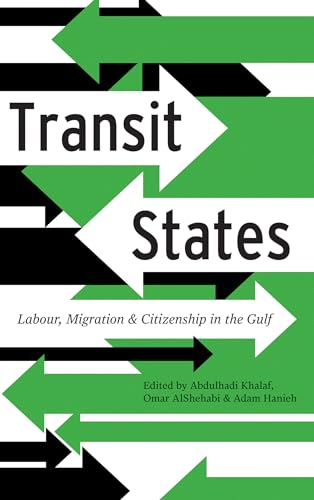
The states of the Gulf Cooperation Council (Saudi Arabia, Kuwait, Bahrain, United Arab Emirates, Oman and Qatar) form the largest destination for labour migration in the global South. In all of these states, however, the majority of the working population is composed of temporary, migrant workers with no citizenship rights. The cheap and transitory labour power these workers provide has created the prodigious and extraordinary development boom across the region, and neighbouring countries are almost fully dependent on the labour markets of the Gulf to employ their working populations. For these reasons, the Gulf takes a central place in contemporary debates around migration and labour in the global economy. This book attempts to bring together and explore these issues. The relationship between ‘citizen’ and ‘non-citizen’ holds immense significance for understanding the construction of class, gender, city and state in the Gulf, however too often these questions are occluded in too scholarly or overly-popular accounts of the region. Bringing together experts on the Gulf, Transit States confronts the precarious working conditions of migrants in a accessible, yet in-depth manner.
Die Inhaltsangabe kann sich auf eine andere Ausgabe dieses Titels beziehen.
Über die Autorin bzw. den Autor
Abdulhadi Khalaf is a senior lecturer in the Sociology department at Lund University. He is regarded as a specialist in the politics of the Gulf Arab States.
Adam Hanieh is Senior Lecturer in Development Studies at the School of Oriental and African Studies, University of London. He is author of Capitalism and Class in the Gulf Arab States (2011) and Lineages of Revolt: Issues of Contemporary Capitalism in the Middle East (2013).
Omar AlShehabi writes from Bahrain and is director of the Gulf Centre for Development Policies. He has previously worked at the World Bank and the IMF as well as McKinsey & Co.
Auszug. © Genehmigter Nachdruck. Alle Rechte vorbehalten.
Transit States
Labour, Migration and Citizenship in the Gulf
By Abdulhadi Khalaf, Omar AlShehabi, Adam HaniehPluto Press
Copyright © 2015 Abdulhadi Khalaf, Omar AlShehabi and Adam Hanieh
All rights reserved.
ISBN: 978-0-7453-3520-9All rights reserved.
Contents
List of Illustrations, vii,
Preface, viii,
Part I Introduction,
1 Histories of Migration to the Gulf Omar AlShehabi, 3,
2 The Politics of Migration Abdulhadi Khalaf, 39,
3 Overcoming Methodological Nationalism: Spatial Perspectives on Migration to the Gulf Arab States Adam Hanieh, 57,
Part II Dimensions of Gulf Migration: Law, Urban Space, Gender,
4 Kafala: Foundations of Migrant Exclusion in GCC Labour Markets Mohammed Dito, 79,
5 Rootless Hubs: Migration, Urban Commodification and the 'Right to the City' in the GCC Omar AlShehabi, 101,
6 Construction Work, 'Bachelor' Builders and the Intersectional Politics of Urbanisation in Dubai Michelle Buckley, 132,
Part III Gulf Migrants: Broadening Perspectives,
7 Bahrain's Migrant Security Apparatus K. T. Abdulhameed, 153,
8 Expat/Expert Camps: Redefining 'Labour' Within Gulf Migration Neha Vora, 170,
9 In and Out Moves of the Bahraini Opposition: How Years of Political Exile Led to the Opening of an International Front During the 2011 Crisis in Bahrain Claire Beaugrand, 198,
Part IV Conclusion,
10 Migrant Rights in the Gulf: Charting the Way Forward Adam Hanieh, 223,
Biographies, 233,
References, 235,
Index, 256,
CHAPTER 1
Histories of Migration to the Gulf
Omar AlShehabi
Understanding Gulf Migration
This introductory chapter discusses the historical roots and evolution of the extreme reliance on temporary migrant workers in the six states of the Gulf Cooperation Council (GCC). It focuses, in detail, on the most important changes that the region's population structure has experienced from the start of the oil era up to the first decade of the twenty-first century. Hence, this chapter aims to lay out the historical backdrop that underpins much of the analysis covered in subsequent chapters. Particular attention is given to areas of similarity within the individual experiences of each of the GCC states. The intention is to present a broad framework for understanding the rise of a demographic system between citizen and non-citizen populations that could be best summarised as 'restricted citizenship with unrestricted migration', and to shed light on the most important factors that contributed to its development.
The main focus will be on detailing the mutually constitutive relationship that exists between the GCC's modern population structure and the oil revolution that took place in the Gulf. Indeed, the economic and political system that accompanied the oil revolution formed the very foundations of the demographic dynamics we find in the region today. The chapter's main thesis is that the demographic structure was the result of two often overlapping but sometimes conflicting projects: the construction of a 'petro-modernist state' in each of the GCC countries, combined with the establishment of capitalism as the dominant (but not the only) economic mode of production. Both of these projects were to be driven by rising oil revenues and migrant labour flowing into the region.
The GCC economies are firmly embedded within the global economy, based primarily on the region boasting the largest and cheapest proven global reservoir of crude oil. Ever since commercial exportation of Gulf oil took off in the latter half of the twentieth century, the region has received the highest windfall of petrodollars of any oil producers in the world. This centrality to the global economy is mirrored domestically by the dominant role the state plays within the national economies of the GCC. The state, and particularly influential members of the ruling families, has large control over how the oil revenue is to be spent domestically. This is complemented with an elite class of investors, often also members of the royal families, who control the main economic opportunities that arose from the windfall of petrodollars.
The GCC's demographic profile came to reflect the internal and external aspects of this resultant economic and political structure, which, by opening the doors to unrestricted migration while restricting citizenship, segmented the population into groups of 'citizens' and 'expatriates', and used the region's population to service this political-economic configuration. From the perspective of citizens of the GCC countries, this post-oil historical period has been characterised by a decline in their political influence and their participation in economic production. This has reached a point where, by the start of the twenty-first century, nationals represented less than half of the workforce in any of the GCC countries, and their productive roles were primarily confined to employment in the public sector or financial services. However, the upside of this situation was that citizens, and only citizens, were provided with the benefits of an increasingly generous welfare state, providing free or subsidised services, opportunities for mass consumerism, as well as the ability to establish small and medium enterprises. These benefits were obtained through a notion of citizenship founded on loyalty to the state, which came to be largely identified with the ruling families, by now firmly embedded as the apex of the local political system.
In tandem, regional capital's growing need for labour was fulfilled by facilitating the entry of foreign workers. The GCC's doors were opened wide to migrant workers who not only became the central pillar of the region's workforce, but also came to form the majority of the population within most Gulf States. Strict measures, however, were put in place to control expatriate integration and to reduce their power in the region's economic and political activities. These measures served to prevent them, as non-citizens, from settling permanently, from forming trade unions, and from capital ownership. Thus, the population structure was formed by, and in service to, the demands of an economic and political structure that evolved in tandem with the discovery of oil in the region. This demographic restructuring continued until the region began to resemble what some scholars have called a collection of scattered 'labour camps', rather than a set of cohesive and integrated societies (Al Kuwari, 2004a).
The First Oil Boom, 1931–1973
The population in what came to constitute the GCC was estimated at the start of the twentieth century to be approximately two million, of which about 900,000 were concentrated on the western shores of the Gulf and Oman (Seccombe and Lawless, 1987: 4). The cultural, historical and geographical scope of the region sits within an Arab and Islamic identity, but within this overarching framework it is considered one of the most culturally, ethnically and historically diverse parts of the globe, encompassing three continents that formed the ancient world. By virtue of this hyper-connectivity to the rest of the world, the Gulf's economies developed predominantly around commercial and entrepôt trade posts. The region is also distinguished as an important religious centre, being the birthplace and containing the two holy sites of Islam. As an historic point of convergence between different cultures and civilizations, most of the region's settled communities developed based on exchanges with the wider world, which naturally...
„Über diesen Titel“ kann sich auf eine andere Ausgabe dieses Titels beziehen.
Suchergebnisse für Transit States: Labour, Migration and Citizenship in...

Beispielbild für diese ISBN
Transit States
Anbieter: PBShop.store UK, Fairford, GLOS, Vereinigtes Königreich
Verkäuferbewertung 5 von 5 Sternen

PAP. Zustand: New. New Book. Shipped from UK. Established seller since 2000. Artikel-Nr. FW-9780745335209
Neu kaufen
EUR 32,86
EUR 4,85 Versand
Versand von Vereinigtes Königreich nach USA
Versand von Vereinigtes Königreich nach USA
Anzahl: 15 verfügbar
Beispielbild für diese ISBN
Transit States: Labour, Migration and Citizenship in the Gulf [Paperback] Khalaf, Abdulhadi; AlShehabi, Omar and Hanieh, Adam
Anbieter: Hay-on-Wye Booksellers, Hay-on-Wye, HEREF, Vereinigtes Königreich
Verkäuferbewertung 4 von 5 Sternen

Zustand: As New. Artikel-Nr. 113444-6
Gebraucht kaufen
EUR 15,98
EUR 29,15 Versand
Versand von Vereinigtes Königreich nach USA
Versand von Vereinigtes Königreich nach USA
Anzahl: 1 verfügbar
Beispielbild für diese ISBN
Transit States: Labour, Migration and Citizenship in the Gulf
Anbieter: Sell Books, Elland, YORKS, Vereinigtes Königreich
Verkäuferbewertung 5 von 5 Sternen
paperback. Zustand: Acceptable. Stains to cover, page edges, and/or pages inside. Please see the condition note after this for details, if this is missing please consider Acceptable to mean poor quality that could include major staining, water damage, writing, missing dustjacket, etc etc. Our books are dispatched from a Yorkshire former cotton mill. We list via barcode/ISBN so please note that the images are stock images and may not be the exact copy you receive, furthermore the details about edition and year might not be accurate as many publishers reuse the same ISBN for multiple editions and as we simply scan a barcode or enter an ISBN we do not check the validity of the edition data when listing. If you're looking for an exact edition please don't order (at least not without checking with us first, although we don't always have time to check). We aim to dispatch prompty, the service used will depend on order value and book size. We can ship to most countries, see our shipping policies. Payment is via Abe only. Artikel-Nr. mon0000067457
Gebraucht kaufen
EUR 34,30
EUR 14,17 Versand
Versand von Vereinigtes Königreich nach USA
Versand von Vereinigtes Königreich nach USA
Anzahl: 1 verfügbar
Beispielbild für diese ISBN
Transit States
Anbieter: Majestic Books, Hounslow, Vereinigtes Königreich
Verkäuferbewertung 4 von 5 Sternen
Zustand: New. pp. 272 9 Figures 2 Maps. Artikel-Nr. 322586285
Neu kaufen
EUR 48,18
EUR 7,58 Versand
Versand von Vereinigtes Königreich nach USA
Versand von Vereinigtes Königreich nach USA
Anzahl: 3 verfügbar
Beispielbild für diese ISBN
Transit States: Labour, Migration and Citizenship in the Gulf
Anbieter: Ria Christie Collections, Uxbridge, Vereinigtes Königreich
Verkäuferbewertung 5 von 5 Sternen
Zustand: New. In English. Artikel-Nr. ria9780745335209_new
Neu kaufen
EUR 45,05
EUR 10,93 Versand
Versand von Vereinigtes Königreich nach USA
Versand von Vereinigtes Königreich nach USA
Anzahl: Mehr als 20 verfügbar
Beispielbild für diese ISBN
Transit States: Labour, Migration and Citizenship in the Gulf
Anbieter: Kennys Bookstore, Olney, MD, USA
Verkäuferbewertung 5 von 5 Sternen
Zustand: New. The exploitation of migrant workers in the Gulf is explored in this accessible yet in-depth analysis by scholars from the region. Editor(s): Khalaf, Abdulhadi; Shehabi, Omar Al; Hanieh, Adam. Num Pages: 272 pages. BIC Classification: 1FBX; JFFN; JHBL; KCF. Category: (P) Professional & Vocational. Dimension: 137 x 215 x 16. Weight in Grams: 346. . 2014. Paperback. . . . . Books ship from the US and Ireland. Artikel-Nr. V9780745335209
Neu kaufen
EUR 59,66
EUR 9,14 Versand
Versand innerhalb von USA
Versand innerhalb von USA
Anzahl: Mehr als 20 verfügbar