
Verwandte Artikel zu Getting the Love You Want Workbook: The New Couples'...
Inhaltsangabe
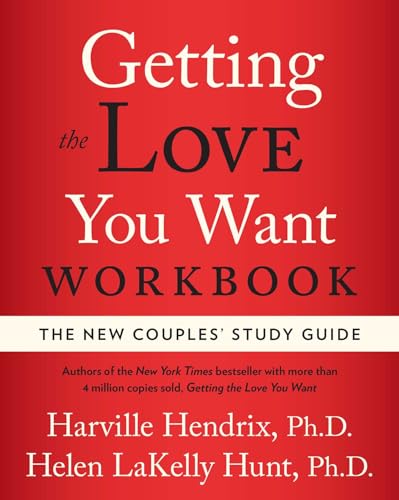
This newly revised and updated companion study guide to the 2019 edition of the New York Times bestseller Getting the Love You Want.
In 1988, Harville Hendrix, in partnership with his wife, Helen LaKelly Hunt, published a terrifically successful relationship guide called Getting the Love You Want. The book introduced thousands to their Imago Relationship Therapy, a unique healing process for couples, prospective couples, and parents, and developed into an overnight sensation. For their part, Doctors Hendrix and Hunt managed to aid scores of couples in their plight for more loving, supportive, and deeply satisfying relationships. Now, more than a decade later, this companion book picks up where its predecessor left off, delving further into relationship therapy to help transform relationships into lasting sources of love and companionship.
The Getting the Love You Want Workbook is designed for the hundreds of thousands of couples who have attended Imago workshops since Getting the Love You Want hit bookstands, as well as new and curious ones seeking a practical route back to intimacy and passionate friendship. The workbook contains a unique twelve-week course (The New Couples’ Study Guide) designed to help work through the exercises published in Part III of Getting the Love You Want.
For those of us struggling to maintain our most precious relationships, the Getting the Love You Want Workbook helps us grow aware of our individual, unconscious agenda while steering us towards a more harmonious link with our loved ones that will satisfy our deepest needs.
Die Inhaltsangabe kann sich auf eine andere Ausgabe dieses Titels beziehen.
Über die Autorinnen und Autoren
Harville Hendrix, Ph.D., a clinical pastoral counselor and co-creator of Imago Relationship Therapy, has more than thirty-five years' experience as an educator, public lecturer, and couples' therapist.
Helen LaKelly Hunt, Ph.D. used her education in psychology to help develop the Imago process, as well as to support gender equity, for which she was inducted into the National Women's Hall of Fame.
Von der hinteren Coverseite
This is the companion workbook to the "New York Times" bestselling relationship classic, "Getting the Love You Want."
Auszug. © Genehmigter Nachdruck. Alle Rechte vorbehalten.
Getting the Love You Want Workbook
The New Couples' Study GuideBy Harville HendrixAtria Books
Copyright © 2003 Harville HendrixAll right reserved.
ISBN: 9780743483674
Introduction
In today's society, you are encouraged to view marriage as a box. First you choose a mate. Then you climb into a box. Once you've had a chance to settle in, you take your first close look at your boxmate. If you like what you see, you stay put. If you don't, you climb out of the box and scout around for another mate. In other words, marriage is viewed as an unchanging state, and whether or not it works depends upon your ability to attract a good partner. The common solution to an unhappy marriage, the one chosen by nearly fifty percent of all couples, is to divorce and start all over again with a new and, it is hoped, better mate.
The problem with this solution is that there is a lot of pain involved in switching boxes. There is the agony of dividing up children and possessions and putting aside treasured dreams. There is the reluctance to risk intimacy again, fearing that the next relationship, too, might fail. And there is the emotional damage to the other inhabitants of the box—the children—who grow up feeling responsible for the divorce and wonder if they will ever experience lasting love.
Unfortunately, the only alternative many people see to divorce is to stay in the box, tighten the lid, and put up with a disappointing relationship for the rest of their lives. They learn to cope with an empty marriage by filling themselves up with food, alcohol, drugs, activities, work, television, and romantic fantasies, resigned to the belief that their longing for an intimate love will never be realized.
In this book I propose a more hopeful and, I believe, more accurate view of love relationships. Marriage is not a static state between two unchanging people. Marriage is a psychological and spiritual journey that begins in the ecstasy of attraction, meanders through a rocky stretch of self-discovery, and culminates in the creation of an intimate, joyful, lifelong union. Whether or not you realize the full potential of this vision depends not on your ability to attract the perfect mate, but on your willingness to acquire knowledge about hidden parts of yourself.
Personal History
When I began my career as a therapist, I counseled both individuals and couples. My preference was to work with one person at a time. My training was geared toward individuals, and when I saw clients singly, I felt competent and effective. Not so when a couple walked into my office. A marriage relationship introduced a complex set of variables that I was not trained to deal with. I ended up doing what most therapists did—problem-oriented, contractual marriage counseling. When this approach didn't work, I'd split up the couple and assign them to separate groups or counsel them individually.
In 1967 my confusion about the psychology of love relationships was compounded when I began to have problems with my own marriage. My wife and I were deeply committed to our relationship and had two young children, so we gave our marriage eight years of intensive examination, working with numerous therapists. Nothing seemed to help, and in 1975 we decided to divorce.
As I sat in the divorce court waiting my turn to see the judge, I felt like a double failure, a failure as a husband and as a therapist. That very afternoon I was scheduled to teach a course on marriage and the family, and the next day, as usual, I had several couples to counsel. Despite my professional training, I felt just as confused and defeated as the other men and women who were sitting beside me, waiting for their names to be called.
In the year following my divorce, I woke up each morning with an acute sense of loss. When I went to bed at night, I stared at the ceiling, trying to find some explanation for our failed marriage. Sure, both my wife and I had our ten reasons for divorcing, just as everyone else did. I didn't like this about her; she didn't like that about me; we had different interests; we had different goals. But beneath our litany of complaints, I could sense that there was a central disappointment, an underlying cause of our unhappiness, that had eluded eight years of probing.
Time passed, and my despair turned into a compelling desire to make sense out of my dilemma; I was not going to walk away from the ruins of my marriage without gaining some insight. I began to focus my efforts exclusively on learning what I could about relationship therapy. As I researched the professional books and journals, I was surprised to find few meaningful discussions of marriage, and the material that I did find was invariably slanted toward the psychology of the individual and the family. There seemed to be no comprehensive theory to explain the intricacies of the male-female relationship. No satisfactory explanation of the powerful emotions that can destroy a marriage. And there was nothing that explained what I found so painfully missing in my first marriage.
To fill in the gaps, I worked with hundreds of couples in private practice and thousands more in workshops and seminars. Out of my research and clinical observations, I gradually developed a theory of marital therapy called Imago (ih-MAH-go) Relationship Therapy. My approach was eclectic. I brought together depth psychology, the behavioral sciences, the Western spiritual tradition, and added some elements of Transactional Analysis, Gestalt psychology, systems theory, and cognitive therapy. In my view, each of these schools of thought made a unique and important contribution to the understanding of the psychology of the individual, but it was only when they were all brought together in a new synthesis that they illuminated the mystery of love relationships.
When I began implementing my ideas, my work with couples became immensely rewarding. The divorce rate in my practice sharply declined, and the couples who stayed together reported a much deeper satisfaction in their marriages. As my work became more visible, I began to lecture to both singles and couples. Eventually I developed an introductory workshop for couples, called Staying Together. In 1981 I began a training course for professionals. To date, more than thirty thousand people have been exposed to my ideas through counseling, workshops, and seminars.
About This Book
My purpose in writing this book is twofold: to share with you what I have learned about the psychology of love relationships, and to help you transform your relationship into a lasting source of love and companionship. In short, it's a book about the theory and practice of becoming passionate friends.
The book is divided into three parts. In Part I, I chronicle the fate of most relationships: attraction, romantic love, and the power struggle. As I describe the familiar details of married life, I invite you to see them as an emerging psychological drama. I call this drama "The Unconscious Marriage," and by that I mean a marriage that includes all the hidden desires and automatic behaviors that are left over from childhood and that inexorably lead couples into conflict.
In Part II, I explore a radically different kind of marriage, "The Conscious Marriage," a marriage that helps you satisfy your unmet childhood needs in positive ways. First, I will explain a proven technique for rekindling romantic love. This process restores a spirit of cooperation and gives you the motivation to work on your underlying problems. Next I will show you how to replace...
„Über diesen Titel“ kann sich auf eine andere Ausgabe dieses Titels beziehen.
Suchergebnisse für Getting the Love You Want Workbook: The New Couples'...

Beispielbild für diese ISBN
Getting the Love You Want Work
Anbieter: World of Books (was SecondSale), Montgomery, IL, USA
Verkäuferbewertung 5 von 5 Sternen

Zustand: Very Good. Item in very good condition! Textbooks may not include supplemental items i.e. CDs, access codes etc. Artikel-Nr. 00107139321
Gebraucht kaufen
EUR 3,67
Versand gratis
Versand innerhalb von USA
Versand innerhalb von USA
Anzahl: 7 verfügbar
Beispielbild für diese ISBN
Getting the Love You Want Work
Anbieter: World of Books (was SecondSale), Montgomery, IL, USA
Verkäuferbewertung 5 von 5 Sternen
Zustand: Good. Item in good condition. Textbooks may not include supplemental items i.e. CDs, access codes etc. Artikel-Nr. 00102733812
Gebraucht kaufen
EUR 3,67
Versand gratis
Versand innerhalb von USA
Versand innerhalb von USA
Anzahl: Mehr als 20 verfügbar
Beispielbild für diese ISBN
Getting the Love You Want Work
Anbieter: World of Books (was SecondSale), Montgomery, IL, USA
Verkäuferbewertung 5 von 5 Sternen
Zustand: Acceptable. Item in acceptable condition! Textbooks may not include supplemental items i.e. CDs, access codes etc. Artikel-Nr. 00101283156
Gebraucht kaufen
EUR 3,67
Versand gratis
Versand innerhalb von USA
Versand innerhalb von USA
Anzahl: 6 verfügbar
Foto des Verkäufers
Getting the Love You Want Workbook: The New Couples' Study Guide
Anbieter: Dream Books Co., Denver, CO, USA
Verkäuferbewertung 5 von 5 Sternen
Zustand: acceptable. This copy has clearly been enjoyedâ"expect noticeable shelf wear and some minor creases to the cover. Binding is strong, and all pages are legible. May contain previous library markings or stamps. Artikel-Nr. DBV.0743483677.A
Gebraucht kaufen
EUR 3,67
Versand gratis
Versand innerhalb von USA
Versand innerhalb von USA
Anzahl: 3 verfügbar
Foto des Verkäufers
Getting the Love You Want Workbook: The New Couples' Study Guide
Anbieter: Dream Books Co., Denver, CO, USA
Verkäuferbewertung 5 von 5 Sternen
Zustand: good. Gently used with minimal wear on the corners and cover. A few pages may contain light highlighting or writing, but the text remains fully legible. Dust jacket may be missing, and supplemental materials like CDs or codes may not be included. May be ex-library with library markings. Ships promptly! Artikel-Nr. 4EKGU900C6QJ_ns
Gebraucht kaufen
EUR 3,86
Versand gratis
Versand innerhalb von USA
Versand innerhalb von USA
Anzahl: 3 verfügbar
Beispielbild für diese ISBN
Getting the Love You Want Workbook: The New Couples' Study Guide
Verlag:
Atria Books (edition Original ed.), 2003
ISBN 10: 0743483677
ISBN 13: 9780743483674
Gebraucht
Paperback
Anbieter: BooksRun, Philadelphia, PA, USA
Verkäuferbewertung 5 von 5 Sternen
Paperback. Zustand: Very Good. Original ed. It's a well-cared-for item that has seen limited use. The item may show minor signs of wear. All the text is legible, with all pages included. It may have slight markings and/or highlighting. Artikel-Nr. 0743483677-11-1
Gebraucht kaufen
EUR 5,76
Versand gratis
Versand innerhalb von USA
Versand innerhalb von USA
Anzahl: 1 verfügbar
Beispielbild für diese ISBN
Getting the Love You Want Workbook: The New Couples' Study Guide
Anbieter: ThriftBooks-Atlanta, AUSTELL, GA, USA
Verkäuferbewertung 5 von 5 Sternen
Paperback. Zustand: Good. No Jacket. Pages can have notes/highlighting. Spine may show signs of wear. ~ ThriftBooks: Read More, Spend Less. Artikel-Nr. G0743483677I3N00
Gebraucht kaufen
EUR 5,76
Versand gratis
Versand innerhalb von USA
Versand innerhalb von USA
Anzahl: 7 verfügbar
Beispielbild für diese ISBN
Getting the Love You Want Workbook: The New Couples' Study Guide
Anbieter: ThriftBooks-Phoenix, Phoenix, AZ, USA
Verkäuferbewertung 5 von 5 Sternen
Paperback. Zustand: Fair. No Jacket. Readable copy. Pages may have considerable notes/highlighting. ~ ThriftBooks: Read More, Spend Less. Artikel-Nr. G0743483677I5N00
Gebraucht kaufen
EUR 5,76
Versand gratis
Versand innerhalb von USA
Versand innerhalb von USA
Anzahl: 1 verfügbar
Beispielbild für diese ISBN
Getting the Love You Want Workbook: The New Couples' Study Guide
Anbieter: ThriftBooks-Phoenix, Phoenix, AZ, USA
Verkäuferbewertung 5 von 5 Sternen
Paperback. Zustand: Good. No Jacket. Pages can have notes/highlighting. Spine may show signs of wear. ~ ThriftBooks: Read More, Spend Less. Artikel-Nr. G0743483677I3N00
Gebraucht kaufen
EUR 5,76
Versand gratis
Versand innerhalb von USA
Versand innerhalb von USA
Anzahl: 7 verfügbar
Beispielbild für diese ISBN
Getting the Love You Want Workbook: The New Couples' Study Guide
Anbieter: ThriftBooks-Dallas, Dallas, TX, USA
Verkäuferbewertung 5 von 5 Sternen
Paperback. Zustand: Fair. No Jacket. Former library book; Readable copy. Pages may have considerable notes/highlighting. ~ ThriftBooks: Read More, Spend Less. Artikel-Nr. G0743483677I5N10
Gebraucht kaufen
EUR 5,76
Versand gratis
Versand innerhalb von USA
Versand innerhalb von USA
Anzahl: 1 verfügbar