
Verwandte Artikel zu Mercy: A Novel
Inhaltsangabe
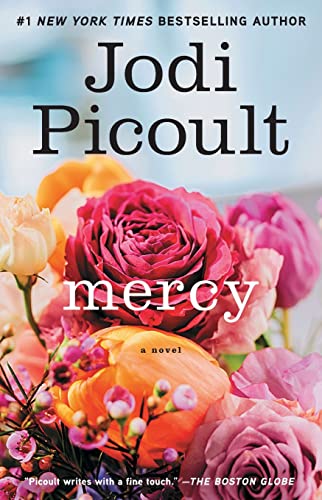
Police chief of a small Massachusetts town, Cameron McDonald makes the toughest arrest of his life when his own cousin Jamie comes to him and confesses outright that he has killed his terminally ill wife out of mercy.
Now, a heated murder trial plunges the town into upheaval, and drives a wedge into a contented marriage: Cameron, aiding the prosecution in their case against Jamie, is suddenly at odds with his devoted wife, Allie -- seduced by the idea of a man so in love with his wife that he'd grant all her wishes, even her wish to end her life. And when an inexplicable attraction leads to a shocking betrayal, Allie faces the hardest questions of the heart: when does love cross the line of moral obligation? And what does it mean to truly love another?
Praised for her "personal, detail-rich style" (Glamour), Jodi Picoult infuses this page-turning novel with heart, warmth, and startling candor, taking readers on an unforgettable emotional journey.
Die Inhaltsangabe kann sich auf eine andere Ausgabe dieses Titels beziehen.
Über die Autorin bzw. den Autor
Jodi Picoult received an AB in creative writing from Princeton and a master’s degree in education from Harvard. The recipient of the 2003 New England Book Award for her entire body of work, she is the author of twenty-seven novels, including the #1 New York Times bestsellers House Rules, Handle With Care, Change of Heart, and My Sister’s Keeper, for which she received the American Library Association’s Margaret A. Edwards Award. She lives in New Hampshire with her husband and three children. Visit her website at JodiPicoult.com.
Auszug. © Genehmigter Nachdruck. Alle Rechte vorbehalten.
Chapter One
In the moments before, she laid a hand on his arm. "No matter what," she said, giving him a look, "you cannot stop."
He turned away. "I'm not sure I can even start."
She brought his hand to her lips, kissed each finger. "If you don't do it," she said simply, "who will?"
For a long while they sat side by side, staring out a streaked window at a town neither of them knew very well. He watched her breathing pattern in the reflection of the glass, and tried to slow his own heart until they were equally matched. The quiet dulled his senses, so that he became fixated on the clock beside the bed. He would not blink, he told himself, until the next minute bled into the last.
With a fury that surprised him, he turned his face into the bow of her neck, trying to commit to memory this softness and this smell. "I love you."
She smiled, that crooked little curving of her mouth. "Now," she said, "don't you think I know that?"
In the end, she had struggled. He wore the scratches like a brand. But he had held the pillow to her face; calmed her by whispering in her ear. My love, he had said, I'll be with you as soon as I can. At the words her arms had fallen away; then it was over. He had buried his face in her shirt, and started himself the very slow process of dying.
For the hundredth time that day, Cameron MacDonald, Chief of Police in Wheelock, Massachusetts, closed his eyes and dreamed of the Bay of Biscay. If he got it just right -- the thrum of silence in the station, the afternoon light dancing over the corner of his scarred desk -- he could make himself believe. There was no Smith and Wesson jabbing into his side; there was no mountain pass outside the window; hell, maybe he wasn't even Cameron MacDonald anymore. He opened his mind as wide as he could, and let himself tumble into the beautiful blue of it.
He blinked his eyes, expecting the bobbing shoreline of Prest, or the sweet scent of the Loire Valley that you could carry in your pocket when you were within a reasonable distance, but he found himself staring at the pale, pasty face of Hannah, the secretary at the police station. "Here's the file," she said. "He was indicted." She turned to leave, but stopped for a moment with her hand on the door. "You sure you're not coming down with something, Chief?"
Cam shook his head, as much to clear it as to convince Hannah. He smiled at her, because if he didn't, he knew she'd be on the phone with Allie and within a half hour, his wife would have him drinking a tea made of nettle roots and feverfew.
He put the file down, glancing longingly at Gall's Buying Guide catalog for public safety equipment, inside which he'd stuffed a Travel magazine. Hannah was right -- there was something wrong with him. It was the same thing that happened every year since he'd returned to Wheelock, as was expected, to become police chief after his father's death. He was suffering from wanderlust, complicated by the tension of knowing that he was rooted to this town by something as simple as his name.
Wheelock looked like other small western Massachusetts towns: the center consisted of a simple white church and a lending library, a joint building for fire and police, the local coffee shop, and a dotting of old men who sat on stone benches and watched their lives slouch by. But what made Wheelock different from Hancock and Dalton and Williamstown was the fact that had it not been for a twist of fate, nearly every family in Wheelock would still be living in Scotland.
At first you wouldn't notice. But then you'd see that the town restaurant served its specials on "ashets," not plates; that its serviceable stocky white china was decorated with the fat square rose of Bonnie Prince Charlie. You'd attend a marriage at St. Margaret's, and realize that the ceremony still ended with a blood vow. You'd drive through the winding side streets and see the name MACDONALD painted on an alarming number of mailboxes.
And if you happened to travel to the Scottish Highlands, you'd notice that a small town called Carrymuir on the banks of Loch Leven was an uncanny twin to Wheelock, Massachusetts.
In the 1700s, the Clan MacDonald was the largest and most powerful clan in Scotland, spread from the western isles through the main Highlands. One particular sect of the clan lived in Carrymuir, a small town north of Glencoe which was nestled between two jagged crags of mountains. In spite of the rampant clan warfare in Scotland, Carrymuir had never been defeated, built as it was in a natural, easily defended fortress.
Clann was the Scottish Gaelic word for children, and a clan was made up of relatives, some more distant than others, who happened to live on a given piece of land. The clan chief, or laird, had the power of life and death over his tenants and tacksmen, but the authority wasn't quite as one-sided as a king's. After all, the chief's subjects were his brothers and nephews and cousins, and the trust and respect they offered up to him came at the price of his protection and his promise to care for them.
Cameron MacDonald of Wheelock, Massachusetts, had been named for his great-great-great-great-great-grandfather, a legendary soldier who had fought in the battle of Culloden, where the English routed the Highlanders. Cameron had heard the story over and over as a boy: When his namesake realized that Bonnie Prince Charlie's Highland army didn't stand a chance against the English soldiers, he tried to save his clansmen from being killed in battle. He secured their honorable discharges by promising, in exchange, his own remarkable skill in a fight to the death against the British. But he hadn't died, as he had expected. And after Culloden, when the victorious English came through Scotland burning towns and slaughtering livestock and raping village women, the first Cameron MacDonald realized he had to again save his clan.
So while he went to jail as a Jacobite prisoner, he arranged for the families of Carrymuir to leave, one by one, on packets bound for the American colonies. Which explained why, when most Scots were being hanged or sold as indentured servants to the West Indies, this small sect of Clan MacDonald remained intact and resettled in the wilderness of Massachusetts.
They found a spot that looked like home, with a brace of rolling mountains and a narrow body of water that was more of a pond than a lake, and sent word back to Scotland about this place. Wee loch, they wrote. It's set by a wee loch.
And eventually, the laird and his family came over too, leaving a trusted uncle to watch over the land in Scotland. They traded the comfortable kilt for trousers; they proudly flew the Stars and Stripes; they accepted the Americanized name of the town. And as a natural extension of inbred responsibility, the man who was the figurehead of the Clan MacDonald also became Wheelock's police chief.
In 1995, that position belonged to Cameron MacDonald II, having been handed down from his great-grandfather to his grandfather to his father, passing along the same line of succession as the honorary title of clan chief. He'd be the first to tell you that things had changed. Obviously, although he was considered the chief of a clan and duly noted in the Scottish records, he was no longer directly responsible for the welfare of the townspeople. At least three-quarters of the town had never even seen the lands in Scotland that technically belonged to them. Hardly anyone spoke with a burr; fewer still knew more than a smattering of Gaelic.
On the other hand, old habits died hard. There was no tarnished silver bowl or royal edict that proved that Wheelock was MacDonald land, but it was theirs just the same, in the way that their ancestors had laid claim to that narrow pass in the...
„Über diesen Titel“ kann sich auf eine andere Ausgabe dieses Titels beziehen.
Suchergebnisse für Mercy: A Novel

Beispielbild für diese ISBN
Mercy
Verlag:
Washington Square Press, 2001
ISBN 10: 0743422449
ISBN 13: 9780743422444
Gebraucht
Paperback
Anbieter: World of Books (was SecondSale), Montgomery, IL, USA
Verkäuferbewertung 5 von 5 Sternen

Paperback. Zustand: Good. Police chief of a small Massachusetts town, Cameron McDonald makes the toughest arrest of his life when his own cousin Jamie comes to him and confesses outright that he has killed his terminally ill wife out of mercy. Now, a heated murder trial plunges the town into upheaval, and drives a wedge into a contented marriage: Cameron, aiding the prosecution in their case against Jamie, is suddenly at odds with his devoted wife, Allie -- seduced by the idea of a man so in love with his wife that he'd grant all her wishes, even her wish to end her life. And when an inexplicable attraction leads to a shocking betrayal, Allie faces the hardest questions of the heart: when does love cross the line of moral obligation? And what does it mean to truly love another? Praised for her "personal, detail-rich style" (Glamour), Jodi Picoult infuses this page-turning novel with heart, warmth, and startling candor, taking readers on an unforgettable emotional journey. Artikel-Nr. 00103180091
Gebraucht kaufen
EUR 3,68
Versand gratis
Versand innerhalb von USA
Versand innerhalb von USA
Anzahl: Mehr als 20 verfügbar
Beispielbild für diese ISBN
Mercy
Verlag:
Washington Square Press, 2001
ISBN 10: 0743422449
ISBN 13: 9780743422444
Gebraucht
Paperback
Anbieter: World of Books (was SecondSale), Montgomery, IL, USA
Verkäuferbewertung 5 von 5 Sternen
Paperback. Zustand: Fair. Police chief of a small Massachusetts town, Cameron McDonald makes the toughest arrest of his life when his own cousin Jamie comes to him and confesses outright that he has killed his terminally ill wife out of mercy. Now, a heated murder trial plunges the town into upheaval, and drives a wedge into a contented marriage: Cameron, aiding the prosecution in their case against Jamie, is suddenly at odds with his devoted wife, Allie -- seduced by the idea of a man so in love with his wife that he'd grant all her wishes, even her wish to end her life. And when an inexplicable attraction leads to a shocking betrayal, Allie faces the hardest questions of the heart: when does love cross the line of moral obligation? And what does it mean to truly love another? Praised for her "personal, detail-rich style" (Glamour), Jodi Picoult infuses this page-turning novel with heart, warmth, and startling candor, taking readers on an unforgettable emotional journey. Artikel-Nr. 00082806347
Gebraucht kaufen
EUR 3,68
Versand gratis
Versand innerhalb von USA
Versand innerhalb von USA
Anzahl: Mehr als 20 verfügbar
Beispielbild für diese ISBN
Mercy
Verlag:
Washington Square Press, 2001
ISBN 10: 0743422449
ISBN 13: 9780743422444
Gebraucht
Paperback
Anbieter: World of Books (was SecondSale), Montgomery, IL, USA
Verkäuferbewertung 5 von 5 Sternen
Paperback. Zustand: Very Good. Police chief of a small Massachusetts town, Cameron McDonald makes the toughest arrest of his life when his own cousin Jamie comes to him and confesses outright that he has killed his terminally ill wife out of mercy. Now, a heated murder trial plunges the town into upheaval, and drives a wedge into a contented marriage: Cameron, aiding the prosecution in their case against Jamie, is suddenly at odds with his devoted wife, Allie -- seduced by the idea of a man so in love with his wife that he'd grant all her wishes, even her wish to end her life. And when an inexplicable attraction leads to a shocking betrayal, Allie faces the hardest questions of the heart: when does love cross the line of moral obligation? And what does it mean to truly love another? Praised for her "personal, detail-rich style" (Glamour), Jodi Picoult infuses this page-turning novel with heart, warmth, and startling candor, taking readers on an unforgettable emotional journey. Artikel-Nr. 00104202872
Gebraucht kaufen
EUR 3,68
Versand gratis
Versand innerhalb von USA
Versand innerhalb von USA
Anzahl: Mehr als 20 verfügbar
Beispielbild für diese ISBN
Mercy (A Novel)
Verlag:
Atria/Emily Bestler Books (edition 1), 2001
ISBN 10: 0743422449
ISBN 13: 9780743422444
Gebraucht
Paperback
Anbieter: BooksRun, Philadelphia, PA, USA
Verkäuferbewertung 5 von 5 Sternen
Paperback. Zustand: Very Good. 1. It's a well-cared-for item that has seen limited use. The item may show minor signs of wear. All the text is legible, with all pages included. It may have slight markings and/or highlighting. Artikel-Nr. 0743422449-11-1
Gebraucht kaufen
EUR 4,53
Versand gratis
Versand innerhalb von USA
Versand innerhalb von USA
Anzahl: 2 verfügbar
Beispielbild für diese ISBN
Mercy (A Novel)
Verlag:
Atria/Emily Bestler Books (edition 1), 2001
ISBN 10: 0743422449
ISBN 13: 9780743422444
Gebraucht
Paperback
Anbieter: BooksRun, Philadelphia, PA, USA
Verkäuferbewertung 5 von 5 Sternen
Paperback. Zustand: Fair. 1. The item might be beaten up but readable. May contain markings or highlighting, as well as stains, bent corners, or any other major defect, but the text is not obscured in any way. Artikel-Nr. 0743422449-7-1-13
Gebraucht kaufen
EUR 4,81
Versand gratis
Versand innerhalb von USA
Versand innerhalb von USA
Anzahl: 1 verfügbar
Beispielbild für diese ISBN
Mercy: A Novel
Verlag:
Atria/Emily Bestler Books (edition 1), 2001
ISBN 10: 0743422449
ISBN 13: 9780743422444
Gebraucht
Paperback
Anbieter: BooksRun, Philadelphia, PA, USA
Verkäuferbewertung 5 von 5 Sternen
Paperback. Zustand: Fair. 1. The item might be beaten up but readable. May contain markings or highlighting, as well as stains, bent corners, or any other major defect, but the text is not obscured in any way. Artikel-Nr. 0743422449-7-18-13
Gebraucht kaufen
EUR 4,93
Versand gratis
Versand innerhalb von USA
Versand innerhalb von USA
Anzahl: 1 verfügbar
Beispielbild für diese ISBN
Mercy (A Novel)
Verlag:
Atria/Emily Bestler Books (edition 1), 2001
ISBN 10: 0743422449
ISBN 13: 9780743422444
Gebraucht
Paperback
Anbieter: BooksRun, Philadelphia, PA, USA
Verkäuferbewertung 5 von 5 Sternen
Paperback. Zustand: Very Good. 1. It's a well-cared-for item that has seen limited use. The item may show minor signs of wear. All the text is legible, with all pages included. It may have slight markings and/or highlighting. Artikel-Nr. 0743422449-11-6
Gebraucht kaufen
EUR 5,15
Versand gratis
Versand innerhalb von USA
Versand innerhalb von USA
Anzahl: 1 verfügbar
Beispielbild für diese ISBN
Mercy
Anbieter: ThriftBooks-Atlanta, AUSTELL, GA, USA
Verkäuferbewertung 5 von 5 Sternen
Paperback. Zustand: Very Good. No Jacket. Former library book; May have limited writing in cover pages. Pages are unmarked. ~ ThriftBooks: Read More, Spend Less. Artikel-Nr. G0743422449I4N10
Gebraucht kaufen
EUR 5,89
Versand gratis
Versand innerhalb von USA
Versand innerhalb von USA
Anzahl: 1 verfügbar
Beispielbild für diese ISBN
Mercy
Anbieter: ThriftBooks-Dallas, Dallas, TX, USA
Verkäuferbewertung 5 von 5 Sternen
Paperback. Zustand: Very Good. No Jacket. Former library book; May have limited writing in cover pages. Pages are unmarked. ~ ThriftBooks: Read More, Spend Less. Artikel-Nr. G0743422449I4N10
Gebraucht kaufen
EUR 5,89
Versand gratis
Versand innerhalb von USA
Versand innerhalb von USA
Anzahl: 1 verfügbar
Beispielbild für diese ISBN
Mercy
Anbieter: ThriftBooks-Atlanta, AUSTELL, GA, USA
Verkäuferbewertung 5 von 5 Sternen
Paperback. Zustand: Fair. No Jacket. Readable copy. Pages may have considerable notes/highlighting. ~ ThriftBooks: Read More, Spend Less. Artikel-Nr. G0743422449I5N00
Gebraucht kaufen
EUR 5,89
Versand gratis
Versand innerhalb von USA
Versand innerhalb von USA
Anzahl: 1 verfügbar