
Verwandte Artikel zu Dr. Spock's the First Two Years: The Emotional...
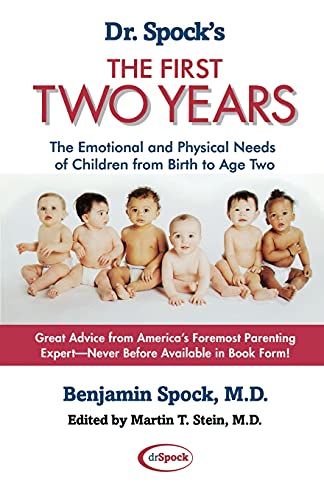
Dr. Spock's the First Two Years: The Emotional and Physical Needs of Children from Birth to Age Two: The Emotional and Physical Needs of Children from Birth to Age 2 - Softcover
Inhaltsangabe
America's favorite pediatrician, Dr. Benjamin Spock has helped two generations of parents raise their kids with his timeless bestseller, Dr. Spock's Baby and Child Care. Now, today's parents can rejoice: a new compilation of Dr. Spock's timeless advice is here!
This first-time collection of essays brings together Dr. Spock's insightful writings on connecting with your child's inner life during the all-important early years. Dr. Spock's The First Two Years covers such topics as:
- understanding your baby's different cries
- helping your little one cope with separation anxiety
- communicating with your baby
- teaching your child about giving and sharing
- the easiest way ever to toilet-train
- dealing with the impact a newborn can have on siblings
- treating the most common ailments
With Dr. Spock's The First Two Years, new parents everywhere will return again and again to Dr. Spock for all of their child-rearing questions.
Die Inhaltsangabe kann sich auf eine andere Ausgabe dieses Titels beziehen.
Über die Autorin bzw. den Autor
Dr. Benjamin Spock was the most trusted and most famous pediatrician worldwide; his reassuring and commonsense advice shaped parenting practices for half a century. The author of eleven books, he was a political activist for causes that vitally affect children: disarmament, day care, schooling, housing, and medical care for all. Dr. Spock’s Baby and Child Care has been translated into thirty-nine languages and has sold more than fifty million copies worldwide since its first publication in 1946. Please visit DrSpock.com for more information.
Von der hinteren Coverseite
America's favorite pediatrician, Dr. Benjamin Spock has helped two generations of parents raise their kids with his timeless bestseller, Dr. Spock's Baby and Child Care. Now, today's parents can rejoice: a new compilation of Dr. Spock's timeless advice is here! This first-time collection of essays brings together Dr. Spock's insightful writings on connecting with your child's inner life during the all-important early years. Dr. Spock's The First Two Years covers such topics as: * understanding your baby's different cries * helping your little one cope with separation anxiety * communicating with your baby * teaching your child about giving and sharing * the easiest way ever to toilet-train * dealing with the impact a newborn can have on siblings * treating the most common ailments With Dr. Spock's The First Two Years, new parents everywhere will return again and again to Dr. Spock for all of their child-rearing questions.
Auszug. © Genehmigter Nachdruck. Alle Rechte vorbehalten.
Chapter One: Communicating with Your Baby:
READING YOUR BABY'S CUES
Babies can express their feelings and needs in many ways. Learning to read your baby is very important, especially for parents who want to respond to their baby's needs appropriately. Crying is a major source of communication that the newborn baby has. So in one way, it's a very healthy sign that your baby can cry and let you know that he needs you. The bond between the parent and baby may be deepened if parents are sensitive to their baby's cries, gestures, and behavior in general.
I feel that it is very important to learn to listen to your children. You can learn to listen to your baby even at its very early age. Listening means focusing your attention, not in a worried way, but in an observing manner. You want to learn what your baby wants and needs. You can read books and articles but the main way you will learn about your baby is to be observant in a meaningful way. That means spending time looking and listening to your baby, not just feeding and cleaning him, and putting him to sleep, but also keenly focusing your undivided attention to him. And then trusting yourself. Because you do know more than you think you do.
Crying: An Early Form of Communication with Parents
The first signal you'll get from your baby may be a cry. In the early weeks this will probably come when the baby is hungry and later will include not only being hungry, but also being wet, or uncomfortable. If your baby cries during the first few weeks, then you can respond by feeding her without a fear of spoiling her. She may be hungry before her feeding time, but that's okay. In the early weeks, the baby will need to feed often and may or may not go by any set schedule. Let your baby be the guide as to how often she needs to feed.
She may also cry if she is uncomfortable and needs to burp after a feeding. You can gently pat her on her back as you put her over your shoulder to see if she can burp up any air she may have swallowed during feeding. You should trust your own instincts, and watch for a pattern in the baby's crying. You will soon learn to "read" your baby's cry, and distinguish a cry of hunger from a cry of pain.
Some babies cry more during the day, others at night, and some cry without regard for the time of the day or night. Patterns of crying among individual babies often reflect the baby's own "temperament" -- her emotional reaction to a new situation, her activity level, and attention to people and things around her. Many of her emotional responses are a reflection of the way her unique brain has been "wired" to respond to different situations. I have found that many parents learn to respond to their baby with greater comfort when they know about different patterns of crying.
Baby Colic
When a baby cries regularly in the late afternoon, or evening, and cries about the same time everyday, we call it colic. Most colicky babies cry for over three hours in each twenty-four hour period. The colicky baby appears to be in pain with a distended tummy and gas. Colic usually starts at about two to four weeks of age and will last during the first three months, then will go away. The crying in some colicky babies begins after the feeding when they may have been either overfed or underfed. Extended crying before the feeding is seen with a hungry baby. A baby with colic gains weight at the expected rate and has a normal examination. Colic can occur in both breast-fed and bottle-fed babies.
Most parents feel very guilty and think they are doing something wrong. When your baby's clinician has examined your colicky infant and found nothing abnormal, you can be assured that your baby is healthy.
Changing the formula rarely helps. Use of caffeine drinks or lots of chocolate by a nursing mother may cause excessive crying; eliminating these foods decreases the crying. Occasionally, the colic may be a sensitivity to proteins from cow's milk consumed by a nursing mother; before eliminating milk in their diet, nursing mothers should consult their baby's clinician. In many cases, offering a pacifier will be helpful. And you may find that the baby is more comfortable on her stomach. Other colicky babies seem to be comfortable being picked up, held, rocked calmly and quietly, or being placed in a crib with a light blanket wrapped comfortably around the body. Some babies are colicky as a result of too much stimulation in the home. Less noise, quiet soothing music and being careful not to overstimulate your baby will be helpful. The soothing noise of a hair dryer or vacuum cleaner placed near the baby's crib will settle some colicky babies.
Remember, you don't have to be afraid of spoiling the baby by picking her up at this age. An older child may become demanding at a later age, and use crying as a way to manipulate his parents to get what he wants. But a young baby during the first three months of age is not spoiled when he cries. He is crying because he needs something, not because he wants to control his parents. (That comes at a later age.) You can take a baby's early cries as a genuine cry of distress and discomfort, and respond without any fear that you might be spoiling him.
Periodic Irritable Baby
A baby who regularly cries at a certain time of day (usually late afternoon or evening), and is not distended (as is the colicky baby), is called a periodic irritable baby. Usually this crying will correct itself after three months of age. The baby does not seem to be in pain, and her cries are usually less painful than with colic, but still at a regular time.
You may find that the periodic irritable baby can benefit from being held, or walked, or rocked. She may be comforted by another feeding. Or simply a pacifier in her mouth will give her comfort.
Fretful Baby
A fretful baby is one which is fussy off and on during the day or night. She doesn't cry at any regular hour, she doesn't seem to be in pain, and usually her tummy is not distended. Your fretful baby may have a harder time adjusting to a schedule. Usually they fuss the first three months, but soon become adjusted to the outside world and calm down later. It seems their nervous system as well as young digestive system have a period of adjustment the first three months.
* * *
Cries of Hunger
Hunger is the most common cause of crying in the early months. The baby has no other way to communicate his needs to eat except to cry. He may be hungry if he nursed at only one breast or took only half of his formula during the last feeding. He may wake up crying if he has outgrown his formula or his mother's milk and needs more to eat as he grows. He may want to be fed more often during certain hours.
You may be on a regular four-hour schedule or you may be feeding according to his desires. In any case, you should not try to feed the baby every time he cries. Try to wait a few minutes, or use a pacifier, if it's just two hours or less since the last feeding. If it's been longer than two hours, or if the last feeding was incomplete, then you may want to feed sooner.
Hypertonic Baby
A hypertonic baby is very jumpy and doesn't relax well. This baby is bothered by sudden movements, loud noises, and sometimes is very uncomfortable in a tub bath. She may also have symptoms of colic or periodic irritable crying. If you suspect your baby is a hypertonic one, then she may be comforted by swaddling her in a receiving blanket. She will enjoy a sponge bath more than a tub bath. And you will want to keep the noise down. And have few visitors and the least amount of sudden movement for her.
Crying Associated with Diaper Rash and Teething
Some babies with more sensitive skin will cry when they are wet, especially if they have a sore bottom or...
„Über diesen Titel“ kann sich auf eine andere Ausgabe dieses Titels beziehen.
Suchergebnisse für Dr. Spock's the First Two Years: The Emotional...

Beispielbild für diese ISBN
Dr Spocks the First Two Years
Anbieter: World of Books (was SecondSale), Montgomery, IL, USA
Verkäuferbewertung 5 von 5 Sternen

Zustand: Very Good. Item in very good condition! Textbooks may not include supplemental items i.e. CDs, access codes etc. Artikel-Nr. 00101295780
Gebraucht kaufen
EUR 4,43
Versand gratis
Versand innerhalb von USA
Versand innerhalb von USA
Anzahl: 2 verfügbar
Beispielbild für diese ISBN
Dr Spocks the First Two Years
Anbieter: World of Books (was SecondSale), Montgomery, IL, USA
Verkäuferbewertung 5 von 5 Sternen
Zustand: Good. Item in good condition. Textbooks may not include supplemental items i.e. CDs, access codes etc. Artikel-Nr. 00101512364
Gebraucht kaufen
EUR 4,43
Versand gratis
Versand innerhalb von USA
Versand innerhalb von USA
Anzahl: 3 verfügbar
Beispielbild für diese ISBN
Dr. Spock's The First Two Years: The Emotional and Physical Needs of Children from Birth to Age 2
Verlag:
Gallery Books (edition ), 2001
ISBN 10: 0743411226
ISBN 13: 9780743411226
Gebraucht
Paperback
Anbieter: BooksRun, Philadelphia, PA, USA
Verkäuferbewertung 5 von 5 Sternen
Paperback. Zustand: Very Good. It's a well-cared-for item that has seen limited use. The item may show minor signs of wear. All the text is legible, with all pages included. It may have slight markings and/or highlighting. Artikel-Nr. 0743411226-8-1
Gebraucht kaufen
EUR 4,44
Versand gratis
Versand innerhalb von USA
Versand innerhalb von USA
Anzahl: 1 verfügbar
Beispielbild für diese ISBN
Dr. Spock's the First Two Years : The Emotional and Physical Needs of Children from Birth to Age 2
Anbieter: Better World Books, Mishawaka, IN, USA
Verkäuferbewertung 5 von 5 Sternen
Zustand: Very Good. Former library copy. Pages intact with possible writing/highlighting. Binding strong with minor wear. Dust jackets/supplements may not be included. Includes library markings. Stock photo provided. Product includes identifying sticker. Better World Books: Buy Books. Do Good. Artikel-Nr. 10897227-6
Gebraucht kaufen
EUR 6,09
Versand gratis
Versand innerhalb von USA
Versand innerhalb von USA
Anzahl: 2 verfügbar
Beispielbild für diese ISBN
Dr. Spock's the First Two Years: The Emotional and Physical Needs of Children from Birth to Age 2
Anbieter: ThriftBooks-Dallas, Dallas, TX, USA
Verkäuferbewertung 5 von 5 Sternen
Paperback. Zustand: Good. No Jacket. Pages can have notes/highlighting. Spine may show signs of wear. ~ ThriftBooks: Read More, Spend Less. Artikel-Nr. G0743411226I3N00
Gebraucht kaufen
EUR 6,11
Versand gratis
Versand innerhalb von USA
Versand innerhalb von USA
Anzahl: 1 verfügbar
Beispielbild für diese ISBN
Dr. Spock's the First Two Years: The Emotional and Physical Needs of Children from Birth to Age 2
Anbieter: ThriftBooks-Atlanta, AUSTELL, GA, USA
Verkäuferbewertung 5 von 5 Sternen
Paperback. Zustand: Very Good. No Jacket. Former library book; May have limited writing in cover pages. Pages are unmarked. ~ ThriftBooks: Read More, Spend Less. Artikel-Nr. G0743411226I4N10
Gebraucht kaufen
EUR 6,11
Versand gratis
Versand innerhalb von USA
Versand innerhalb von USA
Anzahl: 1 verfügbar
Beispielbild für diese ISBN
Dr. Spock's the First Two Years: The Emotional and Physical Needs of Children from Birth to Age 2
Anbieter: ThriftBooks-Atlanta, AUSTELL, GA, USA
Verkäuferbewertung 5 von 5 Sternen
Paperback. Zustand: Good. No Jacket. Pages can have notes/highlighting. Spine may show signs of wear. ~ ThriftBooks: Read More, Spend Less. Artikel-Nr. G0743411226I3N00
Gebraucht kaufen
EUR 6,11
Versand gratis
Versand innerhalb von USA
Versand innerhalb von USA
Anzahl: 1 verfügbar
Beispielbild für diese ISBN
Dr. Spock's the First Two Years: The Emotional and Physical Needs of Children from Birth to Age 2
Anbieter: ThriftBooks-Atlanta, AUSTELL, GA, USA
Verkäuferbewertung 5 von 5 Sternen
Paperback. Zustand: As New. No Jacket. Pages are clean and are not marred by notes or folds of any kind. ~ ThriftBooks: Read More, Spend Less. Artikel-Nr. G0743411226I2N00
Gebraucht kaufen
EUR 6,11
Versand gratis
Versand innerhalb von USA
Versand innerhalb von USA
Anzahl: 1 verfügbar
Beispielbild für diese ISBN
Dr. Spock's the First Two Years: The Emotional and Physical Needs of Children from Birth to Age Two
Anbieter: medimops, Berlin, Deutschland
Verkäuferbewertung 5 von 5 Sternen
Zustand: good. Befriedigend/Good: Durchschnittlich erhaltenes Buch bzw. Schutzumschlag mit Gebrauchsspuren, aber vollständigen Seiten. / Describes the average WORN book or dust jacket that has all the pages present. Artikel-Nr. M00743411226-G
Gebraucht kaufen
EUR 3,34
EUR 10,00 Versand
Versand von Deutschland nach USA
Versand von Deutschland nach USA
Anzahl: 2 verfügbar
Beispielbild für diese ISBN
Dr. Spock's the First Two Years: The Emotional and Physical Needs of Children from Birth to Age Two
Anbieter: WorldofBooks, Goring-By-Sea, WS, Vereinigtes Königreich
Verkäuferbewertung 5 von 5 Sternen
Paperback. Zustand: Very Good. The book has been read, but is in excellent condition. Pages are intact and not marred by notes or highlighting. The spine remains undamaged. Artikel-Nr. GOR003598468
Gebraucht kaufen
EUR 11,17
EUR 6,50 Versand
Versand von Vereinigtes Königreich nach USA
Versand von Vereinigtes Königreich nach USA
Anzahl: 1 verfügbar