
Verwandte Artikel zu The Good Earth
Inhaltsangabe
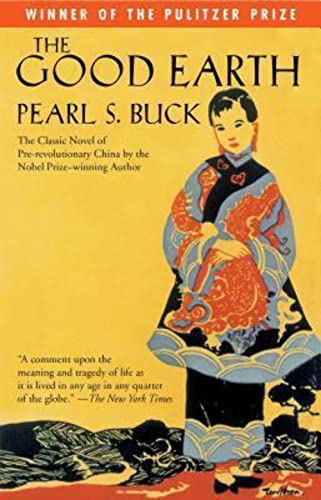
Nobel Laureate Pearl S. Buck’s epic Pulitzer Prize-winning novel and Oprah Book Club selection about a vanished China and one family’s shifting fortunes.
Though more than seventy years have passed since this remarkable novel won the Pulitzer Prize, it has retained its popularity and become one of the great modern classics. In The Good Earth Pearl S. Buck paints an indelible portrait of China in the 1920s, when the last emperor reigned and the vast political and social upheavals of the twentieth century were but distant rumblings. This moving, classic story of the honest farmer Wang Lung and his selfless wife O-Lan is must reading for those who would fully appreciate the sweeping changes that have occurred in the lives of the Chinese people during the last century.
Nobel Prize winner Pearl S. Buck traces the whole cycle of life: its terrors, its passions, its ambitions and rewards. Her brilliant novel—beloved by millions of readers—is a universal tale of an ordinary family caught in the tide of history.
Die Inhaltsangabe kann sich auf eine andere Ausgabe dieses Titels beziehen.
Über die Autorin bzw. den Autor
Pearl S. Buck was born on June 26, 1892, in Hillsboro, West Virginia. Pearl began to publish stories and essays in the 1920s, in magazines such as The Nation, The Chinese Recorder, Asia, and The Atlantic Monthly. Her first novel, East Wind, West Wind, was published by the John Day Company in 1930. In 1931, John Day published Pearl’s second novel, The Good Earth. This became the bestselling book of both 1931 and 1932, won the Pulitzer Prize and the Howells Medal in 1935, and would be adapted as a major MGM film in 1937. In 1938, less than a decade after her first book had appeared, Pearl won the Nobel Prize in literature, the first American woman to do so. By the time of her death in 1973, Pearl had published more than seventy books: novels, collections of stories, biography and autobiography, poetry, drama, children’s literature, and translations from the Chinese. She is buried at Green Hills Farm in Bucks County, Pennsylvania.
Auszug. © Genehmigter Nachdruck. Alle Rechte vorbehalten.
Chapter One
It was Wang Lung's marriage day. At first,
opening his eyes in the blackness of the
curtains about his bed, he could not think why
the dawn seemed different from any other. The
house was still except for the faint, gasping
cough of his old father, whose room was opposite
to his own across the middle room. Every morning
the old man's cough was the first sound to be
heard. Wang Lung usually lay listening to it and
moved only when he heard it approaching nearer
and when he heard the door of his father's room
squeak upon its wooden hinges.
But this morning he did not wait. He sprang
up and pushed aside the curtains of his bed. It
was a dark, ruddy dawn, and through a small
square hole of a window, where the tattered
paper fluttered, a glimpse of bronze sky
gleamed. He went to the hole and tore the paper
away.
"It is spring and I do not need this," he
muttered.
He was ashamed to say aloud that he wished
the house to look neat on this day. The hole was
barely large enough to admit his hand and he
thrust it out to feel of the air. A small soft
wind blew gently from the east, a wind mild and
murmurous and full of rain. It was a good omen.
The fields needed rain for fruition. There would
be no rain this day, but within a few days, if
this wind continued, there would be water. It
was good. Yesterday he had said to his father
that if this brazen, glittering sunshine
continued, the wheat could not fill in the ear.
Now it was as if Heaven had chosen this day to
wish him well. Earth would bear fruit.
He hurried out into the middle room, drawing
on his blue outer trousers as he went, and
knotting about the fullness at his waist his
girdle of blue cotton cloth. He left his upper
body bare until he had heated water to bathe
himself. He went into the shed which was the
kitchen, leaning against the house, and out of
its dusk an ox twisted its head from behind the
corner next the door and lowed at him deeply.
The kitchen was made of earthen bricks as the
house was, great squares of earth dug from their
own fields, and thatched with straw from their
own wheat. Out of their own earth had his
grandfather in his youth fashioned also the
oven, baked and black with many years of meal
preparing. On top of this earthen structure
stood a deep, round, iron cauldron.
This cauldron he filled partly full of water,
dipping it with a half gourd from an earthen jar
that stood near, but he dipped cautiously, for
water was precious. Then, after a hesitation, he
suddenly lifted the jar and emptied all the
water into the cauldron. This day he would bathe
his whole body. Not since he was a child upon
his mother's knee had anyone looked upon his
body. Today one would, and he would have it
clean.
He went around the oven to the rear, and
selecting a handful of the dry grass and stalks
standing in the corner of the kitchen, he
arranged it delicately in the mouth of the oven,
making the most of every leaf. Then from an old
flint and iron he caught a flame and thrust it
into the straw and there was a blaze.
This was the last morning he would have to
light the fire. He had lit it every morning
since his mother died six years before. He had
lit the fire, boiled water, and poured the water
into a bowl and taken it into the room where his
father sat upon his bed, coughing and fumbling
for his shoes upon the floor. Every morning for
these six years the old man had waited for his
son to bring in hot water to ease him of his
morning coughing. Now father and son could rest.
fi0There was a woman coming to the house. Never
again would Wang Lung have to rise summer and
winter at dawn to light the fire. He could lie
in his bed and wait, and he also would have a
bowl of water brought to him, and if the earth
were fruitful there would be tea leaves in the
water. Once in some years it was so.
And if the woman wearied, there would be her
children to light the fire, the many children
she would bear to Wang Lung. Wang Lung stopped,
struck by the thought of children running in and
out of their three rooms. Three rooms had always
seemed much to them, a house half empty since
his mother died. They were always having to
resist relatives who were more crowded -- his
uncle, with his endless brood of children,
coaxing.
"Now, how can two lone men need so much room?
Cannot father and son sleep together? The warmth
of the young one's body will comfort the old
one's cough."
But the father always replied, "I am saving
my bed for my grandson. He will warm my bones in
my age."
Now the grandsons were coming, grandsons upon
grandsons! They would have to put beds along the
walls and in the middle room. The house would be
full of beds. The blaze in the oven died down
while Wang Lung thought of all the beds there
would be in the half empty house, and the water
began to chill in the cauldron. The shadowy
figure of the old man appeared in the doorway,
holding his unbuttoned garments about him. He
was coughing and spitting and he gasped.
"How is it that there is not water yet to
heat my lungs?"
Wang Lung stared and recalled himself and was
ashamed.
"This fuel is damp," he muttered from behind
the stove.
"The damp wind -- "
The old man continued to cough perseveringly
and would not cease until the water boiled. Wang
Lung dipped some into a bowl, and then, after a
moment, he opened a glazed jar that stood upon a
ledge of the stove and took from it a dozen or
so of the curled dried leaves and sprinkled them
upon the surface of the water. The old man's
eyes opened greedily and immediately he began to
complain.
"Why are you wasteful? Tea is like eating
silver."
"It is the day," replied Wang Lung with a
short laugh. "Eat and be comforted."
The old man grasped the bowl in his
shriveled, knotty fingers, muttering, uttering
little grunts. He watched the leaves uncurl and
spread upon the surface of the water, unable to
bear drinking the precious stuff.
"It will be cold," said Wang Lung.
"True -- true -- " said the old man in alarm,
and he began to take great gulps of the hot tea.
He passed into an animal satisfaction, like a
child fixed upon its feeding. But he was not too
forgetful to see Wang Lung dipping the water
recklessly from the cauldron into a deep wooden
tub. He lifted his head and stared at his son.
"Now there is water enough to bring a crop to
fruit," he said suddenly.
Wang Lung continued to dip the water to the
last drop. He did not answer.
"Now then!" cried his father loudly.
"I have not washed my body all at once since
the New Year," said Wang Lung in a low voice.
He was ashamed to say to his father that he
wished his body to be clean for a woman to see.
He hurried out, carrying the tub to his own
room. The door was hung loosely upon a warped
wooden frame and it did not shut closely, and
the old man tottered into the middle room and
put his mouth to the opening and bawled,
"It will be ill if we start the woman like
this -- tea in the morning water and all this
washing!"
"It is only one day," shouted Wang Lung. And
then he added, "I will throw the water on the
earth when I am finished and it is not all
waste."
The old man was silent at this, and Wang Lung
unfastened his girdle and stepped out of his
clothing. In the...
„Über diesen Titel“ kann sich auf eine andere Ausgabe dieses Titels beziehen.
Weitere beliebte Ausgaben desselben Titels

Suchergebnisse für The Good Earth

Beispielbild für diese ISBN
Good Earth
Verlag:
Washington Square Press, 2004
ISBN 10: 0743272935
ISBN 13: 9780743272933
Gebraucht
Softcover
Anbieter: World of Books (was SecondSale), Montgomery, IL, USA
Verkäuferbewertung 5 von 5 Sternen

Zustand: Good. Item in good condition. Textbooks may not include supplemental items i.e. CDs, access codes etc. Artikel-Nr. 00106356071
Gebraucht kaufen
EUR 3,60
Versand gratis
Versand innerhalb von USA
Versand innerhalb von USA
Anzahl: Mehr als 20 verfügbar
Beispielbild für diese ISBN
Good Earth
Verlag:
Washington Square Press, 2004
ISBN 10: 0743272935
ISBN 13: 9780743272933
Gebraucht
Softcover
Anbieter: World of Books (was SecondSale), Montgomery, IL, USA
Verkäuferbewertung 5 von 5 Sternen
Zustand: Acceptable. Item in acceptable condition! Textbooks may not include supplemental items i.e. CDs, access codes etc. Artikel-Nr. 00082729478
Gebraucht kaufen
EUR 3,60
Versand gratis
Versand innerhalb von USA
Versand innerhalb von USA
Anzahl: Mehr als 20 verfügbar
Foto des Verkäufers
The Good Earth (Oprah's Book Club)
Verlag:
Washington Square Press, 2004
ISBN 10: 0743272935
ISBN 13: 9780743272933
Gebraucht
Softcover
Anbieter: Dream Books Co., Denver, CO, USA
Verkäuferbewertung 5 von 5 Sternen
Zustand: acceptable. This copy has clearly been enjoyedâ"expect noticeable shelf wear and some minor creases to the cover. Binding is strong, and all pages are legible. May contain previous library markings or stamps. Artikel-Nr. DBV.0743272935.A
Gebraucht kaufen
EUR 4,41
Versand gratis
Versand innerhalb von USA
Versand innerhalb von USA
Anzahl: 1 verfügbar
Beispielbild für diese ISBN
The Good Earth (Oprah's Book Club)
Verlag:
Washington Square Press (edition 4th ptg.), 2004
ISBN 10: 0743272935
ISBN 13: 9780743272933
Gebraucht
Paperback
Anbieter: BooksRun, Philadelphia, PA, USA
Verkäuferbewertung 5 von 5 Sternen
Paperback. Zustand: Very Good. 4th ptg. It's a well-cared-for item that has seen limited use. The item may show minor signs of wear. All the text is legible, with all pages included. It may have slight markings and/or highlighting. Artikel-Nr. 0743272935-11-1
Gebraucht kaufen
EUR 5,03
Versand gratis
Versand innerhalb von USA
Versand innerhalb von USA
Anzahl: 1 verfügbar
Beispielbild für diese ISBN
The Good Earth
Verlag:
Washington Square Press, 2004
ISBN 10: 0743272935
ISBN 13: 9780743272933
Gebraucht
Paperback
Anbieter: ThriftBooks-Atlanta, AUSTELL, GA, USA
Verkäuferbewertung 5 von 5 Sternen
Paperback. Zustand: Fair. No Jacket. Readable copy. Pages may have considerable notes/highlighting. ~ ThriftBooks: Read More, Spend Less. Artikel-Nr. G0743272935I5N00
Gebraucht kaufen
EUR 5,79
Versand gratis
Versand innerhalb von USA
Versand innerhalb von USA
Anzahl: 5 verfügbar
Beispielbild für diese ISBN
The Good Earth
Verlag:
Washington Square Press, 2004
ISBN 10: 0743272935
ISBN 13: 9780743272933
Gebraucht
Paperback
Anbieter: ThriftBooks-Dallas, Dallas, TX, USA
Verkäuferbewertung 5 von 5 Sternen
Paperback. Zustand: Fair. No Jacket. Readable copy. Pages may have considerable notes/highlighting. ~ ThriftBooks: Read More, Spend Less. Artikel-Nr. G0743272935I5N00
Gebraucht kaufen
EUR 5,79
Versand gratis
Versand innerhalb von USA
Versand innerhalb von USA
Anzahl: 5 verfügbar
Beispielbild für diese ISBN
The Good Earth
Verlag:
Washington Square Press, 2004
ISBN 10: 0743272935
ISBN 13: 9780743272933
Gebraucht
Paperback
Anbieter: ThriftBooks-Phoenix, Phoenix, AZ, USA
Verkäuferbewertung 5 von 5 Sternen
Paperback. Zustand: Fair. No Jacket. Readable copy. Pages may have considerable notes/highlighting. ~ ThriftBooks: Read More, Spend Less. Artikel-Nr. G0743272935I5N00
Gebraucht kaufen
EUR 5,79
Versand gratis
Versand innerhalb von USA
Versand innerhalb von USA
Anzahl: 4 verfügbar
Beispielbild für diese ISBN
The Good Earth
Verlag:
Washington Square Press, 2004
ISBN 10: 0743272935
ISBN 13: 9780743272933
Gebraucht
Paperback
Anbieter: ThriftBooks-Reno, Reno, NV, USA
Verkäuferbewertung 5 von 5 Sternen
Paperback. Zustand: Fair. No Jacket. Readable copy. Pages may have considerable notes/highlighting. ~ ThriftBooks: Read More, Spend Less. Artikel-Nr. G0743272935I5N00
Gebraucht kaufen
EUR 5,79
Versand gratis
Versand innerhalb von USA
Versand innerhalb von USA
Anzahl: 4 verfügbar
Beispielbild für diese ISBN
The Good Earth
Verlag:
Washington Square Press, 2004
ISBN 10: 0743272935
ISBN 13: 9780743272933
Gebraucht
Paperback
Anbieter: ThriftBooks-Atlanta, AUSTELL, GA, USA
Verkäuferbewertung 5 von 5 Sternen
Paperback. Zustand: Good. No Jacket. Former library book; Pages can have notes/highlighting. Spine may show signs of wear. ~ ThriftBooks: Read More, Spend Less. Artikel-Nr. G0743272935I3N10
Gebraucht kaufen
EUR 5,79
Versand gratis
Versand innerhalb von USA
Versand innerhalb von USA
Anzahl: 1 verfügbar
Beispielbild für diese ISBN
The Good Earth
Verlag:
Washington Square Press, 2004
ISBN 10: 0743272935
ISBN 13: 9780743272933
Gebraucht
Softcover
Anbieter: Better World Books: West, Reno, NV, USA
Verkäuferbewertung 5 von 5 Sternen
Zustand: Good. Washington Square Press Trade Pbk. Ed. Pages intact with minimal writing/highlighting. The binding may be loose and creased. Dust jackets/supplements are not included. Stock photo provided. Product includes identifying sticker. Better World Books: Buy Books. Do Good. Artikel-Nr. GRP64868355
Gebraucht kaufen
EUR 6,00
Versand gratis
Versand innerhalb von USA
Versand innerhalb von USA
Anzahl: 1 verfügbar