
Verwandte Artikel zu Brothers: The Hidden History of the Kennedy Years
Inhaltsangabe
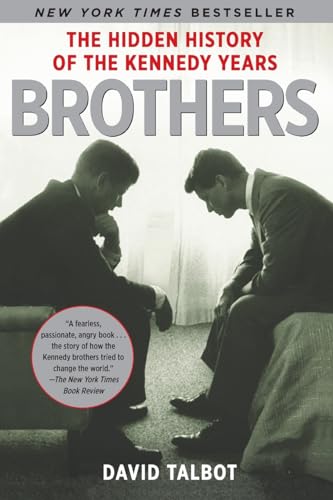
From acclaimed journalist David Talbot comes a groundbreaking narrative account of one of the most tumultuous periods in our history: the Kennedy Administration and its dramatic aftermath.
Though countless books have been written about the Kennedy men and their brief, tumultuous time in the White House, few have offered as many explosive revelations as this one. David Talbot describes a JFK administration more besieged by domestic enemies than has been previously realized, from within the Pentagon, the CIA, the FBI, and the mob. It is against this dark backdrop that he charts the emotionally charged journey of Robert Kennedy, whose soul-scouring quest to find the origins of his brother’s murder led him, to his horror, back to the dark corners of American power that had been part of his portfolio: U.S. intelligence, Cuba, and organized crime.
From the Kennedy “band of brothers” to RFK’s hope of using executive power to solve Jack’s death once and for all, this probing work of history draws on more than 150 exclusive interviews to produce a bold look at power and vengeance. A topic of perennial interest, Brothers is a multilayered, complex tale of gut-wrenching history.
Die Inhaltsangabe kann sich auf eine andere Ausgabe dieses Titels beziehen.
Über die Autorin bzw. den Autor
David Talbot, author of the New York Times bestseller Brothers: The Hidden History of the Kennedy Years, is the founder and CEO of Salon. He lives in San Francisco.
Von der hinteren Coverseite
Acclaimed journalist Talbot tells in a riveting, well-researched narrative just how explosively alienated the Kennedy administration had been from its own national security apparatus, and reveals that Robert Kennedy had planned to open an investigation into his brother's assassination.
Auszug. © Genehmigter Nachdruck. Alle Rechte vorbehalten.
Brothers
The Hidden History of the Kennedy YearsBy David TalbotFree Press
Copyright © 2008 David TalbotAll right reserved.
ISBN: 9780743269193
1
NOVEMBER 22, 1963
Like all Americans who lived through that day, Robert F. Kennedy never forgot how he heard his brother had been shot. The attorney general, who had just turned thirty- eight, was eating lunch -- clam chowder and tuna sandwiches -- with United States Attorney Robert Morgenthau and his assistant by the pool at Hickory Hill, his Civil War-era mansion in McLean, Virginia, outside the capital. It was a perfect fall day -- the kind of bright, crisp Friday afternoon that makes a weekend seem full of promise -- and the grounds of the rolling green estate were afl ame with gold and red leaves from the shedding hickories, maples, and oaks that stood sentry over the property. Kennedy had just emerged from a mid- day swim, and as he talked and ate with the visiting lawmen, his trunks were still dripping.
Around 1:45 p.m., the phone extension at the other end of the pool rang. Kennedy's wife, Ethel, picked it up -- she held the receiver out to him. J. Edgar Hoover was calling. Bobby knew immediately something unusual had happened. The FBI director never phoned him at home. The two men regarded each other with a taut wariness that they both knew would only be broken when one of them left office. Each represented to the other what was wrong about America. "I have news for you," Hoover said. "The president's been shot." Hoover's voice was blunt and matter of fact. Kennedy would always remember not just the FBI chief 's words, but his chilling tone.
"History cracked open" for America on November 22, 1963, as playwright Tony Kushner observed years later. But the abyss that opened for Bobby Kennedy at that moment was the deepest of all. And it was Hoover, of all people, who brought him news of the apocalypse. "I think he told me with pleasure," Kennedy would recall.
Twenty minutes later, Hoover phoned again to deliver the final blow: "The president's dead," he said and promptly hung up. Again, Kennedy would remember, his voice was oddly flat -- "not quite as excited as if he were reporting the fact that he had found a Communist on the faculty of Howard University."
Hoover's curt phone calls confirmed that the "perfect communion" between the two brothers, as the New York Times' Anthony Lewis described the bond between President John Kennedy and Robert Kennedy -- a fraternal relationship unprecedented in presidential history -- was over. But they also clearly conveyed that Bobby had suffered a death of a different kind. His own power as attorney general instantly started to fade, already to a point where the director of the FBI no longer felt compelled to show deference, or even common human grace, to his superior in the Justice Department.
For the rest of the day and night, Bobby Kennedy would wrestle with his howling grief -- crying, or fighting against crying since that was the Kennedy way -- while using whatever power was still left him, before the new administration settled firmly into place, to figure out what had really happened in Dallas. He worked the phones at Hickory Hill; he met with a succession of people while waiting for Air Force One to return with the body of his brother, his brother's widow, and the new president; he accompanied his brother's remains to the autopsy at Bethesda Naval Hospital; and he stayed coiled and awake in the White House until early the next morning. Lit up with the clarity of shock, the electricity of adrenaline, he constructed the outlines of the crime.
From his phone calls and conversations that day -- and into the following week -- it's possible to trace the paths that Robert Kennedy pursued as he tried to unveil the mystery. "With that amazing computer brain of his, he put it all together on the afternoon of November 22," his friend, journalist Jack Newfi eld, remarked.
RFK's search for the truth about the crime of the century has long been an untold story. But it is deeply loaded with historic significance. Kennedy's investigative odyssey -- which began with a frantic zeal immediately after his brother's assassination, and then secretly continued in fitful bursts until his own murder less than five years later -- did not succeed in bringing the case to court. But Robert Kennedy was a central figure in the drama -- not only as his brother's attorney general and the second most powerful official in the Kennedy administration, but as JFK's principal emissary to the dark side of American power. And his hunt for the truth sheds a cold, bright light on the forces that he suspected were behind the murder of his brother. Bobby Kennedy was America's fi rst assassination conspiracy theorist.
Predictably, the first phone call that Bobby made on November 22 after his initial conversation with Hoover was to Kenny O'Donnell. JFK's chief of staff had accompanied the president to Dallas and was with him at Parkland Memorial Hospital when he was pronounced dead at 2:00 p.m. Tough, taciturn, Boston Irish, O'Donnell was second only to Bobby himself in his political guardianship of the president. A close friend since they roomed together at Harvard and played on the college football team, O'Donnell was the man Bobby would have wanted at the scene of a crisis if he couldn't be there himself. As a B-17 bombardier, he had fl own thirty missions against Nazi Germany, was shot down and then escaped from enemy prison. In his final, legendary game as quarterback at Harvard, he ran for the winning touchdown against archrival Yale on a broken leg.
Bobby ran upstairs to phone O'Donnell from his bedroom, while Morgenthau and his assistant were led to a TV set in the drawing room at Hickory Hill. Not finding O'Donnell at the hospital, Kennedy spoke instead to Secret Service agent Clint Hill, the only offi cer who had performed heroically on the president's behalf that afternoon. Images of Hill rushing to leap onto the back of JFK's moving limousine would forever become part of the iconography of that eerie day.
It's not known precisely what Bobby learned that afternoon from the Secret Service man. But there was a darkness that immediately began growing in Hill and O'Donnell about what they'd seen and heard in Dallas. Neither man would ever be the same after November 22.
O'Donnell was riding immediately behind Kennedy's limousine in the Dallas motorcade, just ten feet away, along with fellow Boston Irishman Dave Powers, the White House aide and court jester. They were front row witnesses to the assassination. Powers would later say it felt as if they were "riding into an ambush." O'Donnell and more than one Secret Service man would tell Bobby the same thing that day: They were caught in a crossfire. It was a conspiracy.
Bobby Kennedy came to the same conclusion that afternoon. It was not a "he" who had killed his brother -- it was a "they." This is how he put it to his friend, Justice Department press spokesman Edwin Guthman. The former Pulitzer Prize-winning Seattle Times reporter had become close friends with Kennedy during the 1950s when they both put themselves on the line to investigate corruption and thuggery in the Teamsters' union. Guthman was one of Bobby's "band of brothers," as the attorney general years later inscribed a picture of his young, idealistic Justice Department team. The battle cry from Shakespeare's Henry V appealed to Bobby's sense of heroic mission: "We few, we happy few, we band of brothers / For he to-day that sheds his blood with me / Shall be my brother.../ And gentlemen...now a- bed / Shall...
„Über diesen Titel“ kann sich auf eine andere Ausgabe dieses Titels beziehen.
Suchergebnisse für Brothers: The Hidden History of the Kennedy Years

Beispielbild für diese ISBN
Brothers: The Hidden History of the Kennedy Years
Anbieter: World of Books (was SecondSale), Montgomery, IL, USA
Verkäuferbewertung 5 von 5 Sternen

Paperback. Zustand: Fair. From acclaimed journalist David Talbot comes a groundbreaking narrative account of one of the most tumultuous periods in our history: the Kennedy Administration and its dramatic aftermath.Though countless books have been written about the Kennedy men and their brief, tumultuous time in the White House, few have offered as many explosive revelations as this one. David Talbot describes a JFK administration more besieged by domestic enemies than has been previously realized, from within the Pentagon, the CIA, the FBI, and the mob. It is against this dark backdrop that he charts the emotionally charged journey of Robert Kennedy, whose soul-scouring quest to find the origins of his brother's murder led him, to his horror, back to the dark corners of American power that had been part of his portfolio: U.S. intelligence, Cuba, and organized crime. From the Kennedy band of brothers to RFK's hope of using executive power to solve Jack's death once and for all, this probing work of history draws on more than 150 exclusive interviews to produce a bold look at power and vengeance. A topic of perennial interest, Brothers is a multilayered, complex tale of gut-wrenching history. Artikel-Nr. 00096797171
Gebraucht kaufen
EUR 4,00
Versand gratis
Versand innerhalb von USA
Versand innerhalb von USA
Anzahl: 3 verfügbar
Beispielbild für diese ISBN
Brothers: The Hidden History of the Kennedy Years
Anbieter: World of Books (was SecondSale), Montgomery, IL, USA
Verkäuferbewertung 5 von 5 Sternen
Paperback. Zustand: Good. From acclaimed journalist David Talbot comes a groundbreaking narrative account of one of the most tumultuous periods in our history: the Kennedy Administration and its dramatic aftermath.Though countless books have been written about the Kennedy men and their brief, tumultuous time in the White House, few have offered as many explosive revelations as this one. David Talbot describes a JFK administration more besieged by domestic enemies than has been previously realized, from within the Pentagon, the CIA, the FBI, and the mob. It is against this dark backdrop that he charts the emotionally charged journey of Robert Kennedy, whose soul-scouring quest to find the origins of his brother's murder led him, to his horror, back to the dark corners of American power that had been part of his portfolio: U.S. intelligence, Cuba, and organized crime. From the Kennedy band of brothers to RFK's hope of using executive power to solve Jack's death once and for all, this probing work of history draws on more than 150 exclusive interviews to produce a bold look at power and vengeance. A topic of perennial interest, Brothers is a multilayered, complex tale of gut-wrenching history. Artikel-Nr. 00095975799
Gebraucht kaufen
EUR 4,00
Versand gratis
Versand innerhalb von USA
Versand innerhalb von USA
Anzahl: Mehr als 20 verfügbar
Beispielbild für diese ISBN
Brothers: The Hidden History of the Kennedy Years
Anbieter: ThriftBooks-Reno, Reno, NV, USA
Verkäuferbewertung 5 von 5 Sternen
Paperback. Zustand: Good. No Jacket. Pages can have notes/highlighting. Spine may show signs of wear. ~ ThriftBooks: Read More, Spend Less. Artikel-Nr. G0743269195I3N00
Gebraucht kaufen
EUR 5,99
Versand gratis
Versand innerhalb von USA
Versand innerhalb von USA
Anzahl: 2 verfügbar
Beispielbild für diese ISBN
Brothers: The Hidden History of the Kennedy Years
Anbieter: ThriftBooks-Dallas, Dallas, TX, USA
Verkäuferbewertung 5 von 5 Sternen
Paperback. Zustand: Good. No Jacket. Pages can have notes/highlighting. Spine may show signs of wear. ~ ThriftBooks: Read More, Spend Less. Artikel-Nr. G0743269195I3N00
Gebraucht kaufen
EUR 5,99
Versand gratis
Versand innerhalb von USA
Versand innerhalb von USA
Anzahl: 2 verfügbar
Beispielbild für diese ISBN
Brothers: The Hidden History of the Kennedy Years
Anbieter: ThriftBooks-Atlanta, AUSTELL, GA, USA
Verkäuferbewertung 5 von 5 Sternen
Paperback. Zustand: Very Good. No Jacket. Former library book; May have limited writing in cover pages. Pages are unmarked. ~ ThriftBooks: Read More, Spend Less. Artikel-Nr. G0743269195I4N10
Gebraucht kaufen
EUR 5,99
Versand gratis
Versand innerhalb von USA
Versand innerhalb von USA
Anzahl: 1 verfügbar
Beispielbild für diese ISBN
Brothers: The Hidden History of the Kennedy Years
Anbieter: ThriftBooks-Dallas, Dallas, TX, USA
Verkäuferbewertung 5 von 5 Sternen
Paperback. Zustand: Fair. No Jacket. Readable copy. Pages may have considerable notes/highlighting. ~ ThriftBooks: Read More, Spend Less. Artikel-Nr. G0743269195I5N00
Gebraucht kaufen
EUR 5,99
Versand gratis
Versand innerhalb von USA
Versand innerhalb von USA
Anzahl: 1 verfügbar
Beispielbild für diese ISBN
Brothers: The Hidden History of the Kennedy Years
Anbieter: ThriftBooks-Atlanta, AUSTELL, GA, USA
Verkäuferbewertung 5 von 5 Sternen
Paperback. Zustand: Good. No Jacket. Pages can have notes/highlighting. Spine may show signs of wear. ~ ThriftBooks: Read More, Spend Less. Artikel-Nr. G0743269195I3N00
Gebraucht kaufen
EUR 5,99
Versand gratis
Versand innerhalb von USA
Versand innerhalb von USA
Anzahl: 2 verfügbar
Beispielbild für diese ISBN
Brothers: The Hidden History of the Kennedy Years
Anbieter: ThriftBooks-Phoenix, Phoenix, AZ, USA
Verkäuferbewertung 5 von 5 Sternen
Paperback. Zustand: Good. No Jacket. Pages can have notes/highlighting. Spine may show signs of wear. ~ ThriftBooks: Read More, Spend Less. Artikel-Nr. G0743269195I3N00
Gebraucht kaufen
EUR 5,99
Versand gratis
Versand innerhalb von USA
Versand innerhalb von USA
Anzahl: 2 verfügbar
Beispielbild für diese ISBN
Brothers : The Hidden History of the Kennedy Years
Anbieter: Better World Books, Mishawaka, IN, USA
Verkäuferbewertung 5 von 5 Sternen
Zustand: Very Good. Reprint. Pages intact with possible writing/highlighting. Binding strong with minor wear. Dust jackets/supplements may not be included. Stock photo provided. Product includes identifying sticker. Better World Books: Buy Books. Do Good. Artikel-Nr. 3431939-75
Gebraucht kaufen
EUR 6,38
Versand gratis
Versand innerhalb von USA
Versand innerhalb von USA
Anzahl: 1 verfügbar
Beispielbild für diese ISBN
Brothers : The Hidden History of the Kennedy Years
Anbieter: Better World Books, Mishawaka, IN, USA
Verkäuferbewertung 5 von 5 Sternen
Zustand: Good. Reprint. Pages intact with minimal writing/highlighting. The binding may be loose and creased. Dust jackets/supplements are not included. Stock photo provided. Product includes identifying sticker. Better World Books: Buy Books. Do Good. Artikel-Nr. GRP102312961
Gebraucht kaufen
EUR 6,38
Versand gratis
Versand innerhalb von USA
Versand innerhalb von USA
Anzahl: 4 verfügbar