
Verwandte Artikel zu An Alchemy of Mind: The Marvel and Mystery of the Brain
Inhaltsangabe
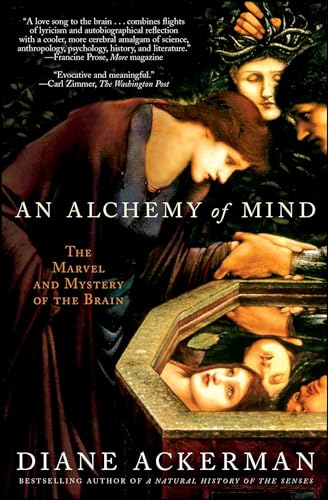
From the New York Times bestselling author of The Zookeeper's Wife, an ambitious and enlightening work that combines an artist's eye with a scientist's erudition to illuminate, as never before, the magic and mysteries of the human mind.
Long treasured by literary readers for her uncommon ability to bridge the gap between art and science, celebrated scholar-artist Diane Ackerman returns with the book she was born to write. Her dazzling new work, An Alchemy of Mind, offers an unprecedented exploration and celebration of the mental fantasia in which we spend our days—and does for the human mind what the bestselling A Natural History of the Senses did for the physical senses.
Bringing a valuable female perspective to the topic, Diane Ackerman discusses the science of the brain as only she can: with gorgeous, immediate language and imagery that paint an unusually lucid and vibrant picture for the reader. And in addition to explaining memory, thought, emotion, dreams, and language acquisition, she reports on the latest discoveries in neuroscience and addresses controversial subjects like the effects of trauma and male versus female brains. In prose that is not simply accessible but also beautiful and electric, Ackerman distills the hard, objective truths of science in order to yield vivid, heavily anecdotal explanations about a range of existential questions regarding consciousness, human thought, memory, and the nature of identity.
Die Inhaltsangabe kann sich auf eine andere Ausgabe dieses Titels beziehen.
Über die Autorin bzw. den Autor
Diane Ackerman is a naturalist and poet and the author of ten books of literary nonfiction, including A Natural History of the Senses, A Natural History of Love, and Cultivating Delight. Also the author of six volumes of poetry and several nonfiction children's books, she contributes to The New York Times, Discover, National Geographic, Parade, and many other publications. Ackerman lives in Ithaca, New York.
Auszug. © Genehmigter Nachdruck. Alle Rechte vorbehalten.
An Alchemy of Mind
The Marvel and Mystery of the BrainBy Diane AckermanScribner Book Company
Copyright ©2005 Diane AckermanAll right reserved.
ISBN: 9780743246743
Chapter One
What Is a Memory?What sort of future is coming up from behind I don't really know. But the past, spread out ahead, dominates everything in sight. - Robert M. Pirsig Zen and the Art of Motorcycle Maintenance
Like tiny islands on the horizon, they canvanish in rough seas. Even in calm weather,their coral gradually erodes, pickled by saltand heat. Yet they form the shoals of a life.Some offer safe lagoons and murmuring trees.Others crawl with pirates and reptiles.Together, they connect a self with the mainlandand society. Plot their trail and a mercurialpast becomes visible.
Memories feel geological in their repose, solidand true, the bedrock of consciousness. They mayinclude knowing that it's hard to lead a cowdown steps, or how the indri-indri of Madagascargot its name, or the time you accidentallygrabbed a strange man's hand in a crowd(thinking it was your friend's), or how you felthitting a home run in Little League, or yourfirst car (a used VW that rattled like an olddinette set), or a grisly murder you just readabout that made you rethink capital punishment,or an unconscious detailed operating guide tothe body that manages each cell's tiny factory.
Memories inform our actions, keep us company,and give us our noisy, ever-chattering sense ofself. Because we're moody giants, every day wesubtly revise who we think we are. Part of theandroid's tragedy in the Ridley Scott film BladeRunner is that he possesses a long,self-defining chain of memories. Though ruthlessand lacking empathy, and technically not aperson, he can remember. Played by Rutger Hauer,he contains a self who witnessed marvels onEarth and Mars and fears losing his uniquemental jazz in death.
Without memories we wouldn't know who we are,how we once were, who we'd like to be in thememorable future. We are the sum of ourmemories. They provide a continuous privatesense of one's self. Change your memory and youchange your identity. Then shouldn't we try tobank good memories, ones that will define us aswe wish to be? I'm surprised by how many peopledo just that. Even tour companies advertise:"Bring home wonderful memories." Here we are, ahappy family taking a Disney cruise, documentedon film. But memory isn't like a camcorder,computer, or storage bin. It's more restless,more creative, and it's not one of anything.Each memory is a plural event, an ensemble ofsynchronized neurons, some side by side, othersrelatively far apart.
Everyone will always remember where they were onSeptember 11, 2001, or when men first walked onthe moon. Shared memories bind us to loved ones,neighbors, our contemporaries. The sort ofmemory I'm talking about now isn't essential forsurvival, and yet it pleases us, it enricheseveryday life. So couples relive romanticmemories, families watch home movies, andfriends "catch up" with each other, as ifthey've lagged behind on a trail. Sifting memoryfor saliences to report, they reveal how vitalpieces of their identity have changed. Aging, wetailor memories to fit our evolving silhouette,and as life's vocabulary changes, memorieschange to fathom the new order. Lose yourmemory, and you may drift in an alien world.
Mind you, memories are kidnappable. Radio,television, and the print media purvey sharednational memories that can usurp a personalpast. All the why's can change. A world ofartificial memory, as the British neuroscientistSteven Rose points out, "means that whereas allliving species have a past, only humans have ahistory." And, at that, it tends to be thehistory of the well to do. Thanks to thecompound eye of the media, millions of peopleare spoon-fed the same images, slogans, history,myths. What happens to individual memories then?Some rebels refuse that programming, or theyprefer their own group's ideologies. But mostpeople do adopt values and interpretations ofevents from the media, their neighbors, or afavorite tyrant. Official history changes witheach era's values, which can sometimes beperverse, what Jung described as a large-scalepsychic ailment. "An epoch," he said, in ModernMan in Search of a Soul, "is like an individual;it has its own limitations of conscious outlook,and therefore requires a compensatoryadjustment ... that which everyone blindly cravesand expects - whether this attainment resultsin good or evil, the healing of an epoch or itsdestruction." Still, though no one is an island,most are peninsulas. Our lives wouldn't makesense without personal memories pinned likebutterflies against the velvet backdrop ofsocial history.
Scientists sometimes talk about "flashbulb"memories so intense they instantly brand themind. Photography provided something different:push-button memories that revolutionized oursense of self and family, which we oftenremember in eye-gulps, as snapshots. WaltWhitman, in his journals, jotted down the nameof each of his lovers and sometimes what theydid for a living, as though he might one dayforget his moments of loving and being loved.But I think he would have preferred photographsof those dear ones to help recall the liquidmosaic of each face.
Picture yourself younger, and what image forms?Most likely it's a static image, a snapshotsomeone took. Memories can pile up and becomemind clutter; it's easier to store them inalbums. We remember our poses. Each photographis a magic lamp rubbed by the mind. When we'rein the mood, we can savor a photograph whilesensations burst free. Right now, for example,I'm holding a photograph of a pungent kingpenguin rookery in Antarctica, and I rememberthe noisy clamor like a combination of harmonicaand oncoming train. I remember how inhalingglacial cold felt like pulling a scarf throughmy nostrils. I remember that, in such thin air,glare became a color.
Whenever we look at a photo, we add nuances, andthat inevitably edits it. It may pale. It mayacquire a thick lacquer of emotion. The nextsentence may sound a little bizarre becauseEnglish grammar isn't congenial to time mirages,however: photographs tell us who we now think weonce were. Photography, like most art, storesmoments of heightened emotion and awareness likesmall pieces of neutron star. Years later, amemory's color-rodeo may have faded, or mayremain vivid enough to make the pulse buckagain. Each response adds another layer untilthe memory is encrusted with new feelings, belowwhich the original event evaporates. Imagine ajeweled knife. First you change the handle, thenyou change the blade. Is it the same knife?
We tend to think of memories as monuments weonce forged and may find intact beneath theweedy growth of years. But, in a real sense,memories are tied to and describe the present.Formed in an idiosyncratic way when theyhappened, they're also true to the moment ofrecall, including how you feel, all you'veexperienced, and new values, passions, andvulnerability. One never steps into the samestream of consciousness twice. All the mischiefand mayhem of a life influences how one restylesa memory.
A memory is more atmospheric than accurate, morean evolving fiction than a sacred text. Andthank heavens. If rude, shameful, or brutalmemories can't be expunged, they can at least bediluted. So is nothing permanent and fixed inlife? By definition life is a fickle noun, anevent in progress. Still, we cling tophilosophical railings, religious icons, pillarsof belief. We forget on purpose that Earth isrolling at 1,000 miles an hour, and, at the sametime, falling elliptically around our sun, whilethe sun is swinging through...
„Über diesen Titel“ kann sich auf eine andere Ausgabe dieses Titels beziehen.
Suchergebnisse für An Alchemy of Mind: The Marvel and Mystery of the Brain

Beispielbild für diese ISBN
An Alchemy of Mind
Anbieter: World of Books (was SecondSale), Montgomery, IL, USA
Verkäuferbewertung 5 von 5 Sternen

Paperback. Zustand: Good. From the New York Times bestselling author of The Zookeeper's Wife, an ambitious and enlightening work that combines an artist's eye with a scientist's erudition to illuminate, as never before, the magic and mysteries of the human mind. Long treasured by literary readers for her uncommon ability to bridge the gap between art and science, celebrated scholar-artist Diane Ackerman returns with the book she was born to write. Her dazzling new work, An Alchemy of Mind, offers an unprecedented exploration and celebration of the mental fantasia in which we spend our days--and does for the human mind what the bestselling A Natural History of the Senses did for the physical senses. Bringing a valuable female perspective to the topic, Diane Ackerman discusses the science of the brain as only she can: with gorgeous, immediate language and imagery that paint an unusually lucid and vibrant picture for the reader. And in addition to explaining memory, thought, emotion, dreams, and language acquisition, she reports on the latest discoveries in neuroscience and addresses controversial subjects like the effects of trauma and male versus female brains. In prose that is not simply accessible but also beautiful and electric, Ackerman distills the hard, objective truths of science in order to yield vivid, heavily anecdotal explanations about a range of existential questions regarding consciousness, human thought, memory, and the nature of identity. Artikel-Nr. 00096473972
Gebraucht kaufen
EUR 4,05
Versand gratis
Versand innerhalb von USA
Versand innerhalb von USA
Anzahl: 7 verfügbar
Beispielbild für diese ISBN
An Alchemy of Mind
Anbieter: World of Books (was SecondSale), Montgomery, IL, USA
Verkäuferbewertung 5 von 5 Sternen
Paperback. Zustand: Fair. From the New York Times bestselling author of The Zookeeper's Wife, an ambitious and enlightening work that combines an artist's eye with a scientist's erudition to illuminate, as never before, the magic and mysteries of the human mind. Long treasured by literary readers for her uncommon ability to bridge the gap between art and science, celebrated scholar-artist Diane Ackerman returns with the book she was born to write. Her dazzling new work, An Alchemy of Mind, offers an unprecedented exploration and celebration of the mental fantasia in which we spend our days--and does for the human mind what the bestselling A Natural History of the Senses did for the physical senses. Bringing a valuable female perspective to the topic, Diane Ackerman discusses the science of the brain as only she can: with gorgeous, immediate language and imagery that paint an unusually lucid and vibrant picture for the reader. And in addition to explaining memory, thought, emotion, dreams, and language acquisition, she reports on the latest discoveries in neuroscience and addresses controversial subjects like the effects of trauma and male versus female brains. In prose that is not simply accessible but also beautiful and electric, Ackerman distills the hard, objective truths of science in order to yield vivid, heavily anecdotal explanations about a range of existential questions regarding consciousness, human thought, memory, and the nature of identity. Artikel-Nr. 00102114679
Gebraucht kaufen
EUR 4,05
Versand gratis
Versand innerhalb von USA
Versand innerhalb von USA
Anzahl: 3 verfügbar
Beispielbild für diese ISBN
An Alchemy of Mind: The Marvel and Mystery of the Brain
Verlag:
Scribner (edition Reprint), 2005
ISBN 10: 0743246748
ISBN 13: 9780743246743
Gebraucht
Paperback
Anbieter: BooksRun, Philadelphia, PA, USA
Verkäuferbewertung 5 von 5 Sternen
Paperback. Zustand: Very Good. Reprint. It's a well-cared-for item that has seen limited use. The item may show minor signs of wear. All the text is legible, with all pages included. It may have slight markings and/or highlighting. Artikel-Nr. 0743246748-11-22
Gebraucht kaufen
EUR 5,08
Versand gratis
Versand innerhalb von USA
Versand innerhalb von USA
Anzahl: 1 verfügbar
Beispielbild für diese ISBN
An Alchemy of Mind: The Marvel and Mystery of the Brain
Anbieter: ThriftBooks-Atlanta, AUSTELL, GA, USA
Verkäuferbewertung 5 von 5 Sternen
Paperback. Zustand: Fair. No Jacket. Readable copy. Pages may have considerable notes/highlighting. ~ ThriftBooks: Read More, Spend Less. Artikel-Nr. G0743246748I5N00
Gebraucht kaufen
EUR 6,24
Versand gratis
Versand innerhalb von USA
Versand innerhalb von USA
Anzahl: 1 verfügbar
Beispielbild für diese ISBN
An Alchemy of Mind: The Marvel and Mystery of the Brain
Anbieter: ThriftBooks-Dallas, Dallas, TX, USA
Verkäuferbewertung 5 von 5 Sternen
Paperback. Zustand: Very Good. No Jacket. May have limited writing in cover pages. Pages are unmarked. ~ ThriftBooks: Read More, Spend Less. Artikel-Nr. G0743246748I4N00
Gebraucht kaufen
EUR 6,24
Versand gratis
Versand innerhalb von USA
Versand innerhalb von USA
Anzahl: 1 verfügbar
Beispielbild für diese ISBN
An Alchemy of Mind: The Marvel and Mystery of the Brain
Anbieter: ThriftBooks-Dallas, Dallas, TX, USA
Verkäuferbewertung 5 von 5 Sternen
Paperback. Zustand: Fair. No Jacket. Readable copy. Pages may have considerable notes/highlighting. ~ ThriftBooks: Read More, Spend Less. Artikel-Nr. G0743246748I5N00
Gebraucht kaufen
EUR 6,24
Versand gratis
Versand innerhalb von USA
Versand innerhalb von USA
Anzahl: 1 verfügbar
Beispielbild für diese ISBN
An Alchemy of Mind: The Marvel and Mystery of the Brain
Anbieter: ThriftBooks-Dallas, Dallas, TX, USA
Verkäuferbewertung 5 von 5 Sternen
Paperback. Zustand: Good. No Jacket. Pages can have notes/highlighting. Spine may show signs of wear. ~ ThriftBooks: Read More, Spend Less. Artikel-Nr. G0743246748I3N00
Gebraucht kaufen
EUR 6,24
Versand gratis
Versand innerhalb von USA
Versand innerhalb von USA
Anzahl: 1 verfügbar
Beispielbild für diese ISBN
An Alchemy of Mind: The Marvel and Mystery of the Brain
Anbieter: ThriftBooks-Atlanta, AUSTELL, GA, USA
Verkäuferbewertung 5 von 5 Sternen
Paperback. Zustand: Good. No Jacket. Pages can have notes/highlighting. Spine may show signs of wear. ~ ThriftBooks: Read More, Spend Less. Artikel-Nr. G0743246748I3N00
Gebraucht kaufen
EUR 6,24
Versand gratis
Versand innerhalb von USA
Versand innerhalb von USA
Anzahl: 1 verfügbar
Beispielbild für diese ISBN
An Alchemy of Mind: The Marvel and Mystery of the Brain
Anbieter: ThriftBooks-Reno, Reno, NV, USA
Verkäuferbewertung 5 von 5 Sternen
Paperback. Zustand: Fair. No Jacket. Readable copy. Pages may have considerable notes/highlighting. ~ ThriftBooks: Read More, Spend Less. Artikel-Nr. G0743246748I5N00
Gebraucht kaufen
EUR 6,24
Versand gratis
Versand innerhalb von USA
Versand innerhalb von USA
Anzahl: 1 verfügbar
Beispielbild für diese ISBN
An Alchemy of Mind: The Marvel and Mystery of the Brain
Anbieter: Wonder Book, Frederick, MD, USA
Verkäuferbewertung 5 von 5 Sternen
Zustand: Good. Good condition. A copy that has been read but remains intact. May contain markings such as bookplates, stamps, limited notes and highlighting, or a few light stains. Bundled media such as CDs, DVDs, floppy disks or access codes may not be included. Artikel-Nr. O08C-01963
Gebraucht kaufen
EUR 6,43
Versand gratis
Versand innerhalb von USA
Versand innerhalb von USA
Anzahl: 1 verfügbar