
Verwandte Artikel zu Mind Your Heart: A Mind/Body Approach to Stress Management,...
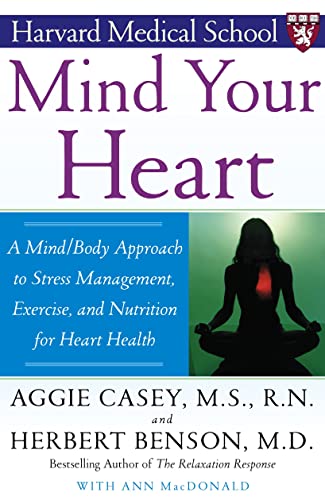
Mind Your Heart: A Mind/Body Approach to Stress Management, Exercise, and Nutrition for Heart Health - Softcover
Inhaltsangabe
Prevent, Control, and Manage Heart Disease with This Personalized Mind/Body Program.
Based on the innovative Cardiac Wellness Program at the world-renowned Mind/Body Medical Institute, founded by pioneering physician and researcher Herbert Benson, M.D., Mind Your Heart offers a balanced and holistic approach to heart health that combines lifestyle changes with cutting-edge medical procedures. With this program, you can lower your blood pressure and cholesterol, lose weight, increase physical fitness, and help prevent and manage heart disease.
Die Inhaltsangabe kann sich auf eine andere Ausgabe dieses Titels beziehen.
Über die Autorinnen und Autoren
Herbert Benson, MD, is the Mind Body Medical Institute Associate Professor of Medicine, Harvard Medical School. He is the author of the mega-bestselling book, The Relaxation Response, as well as ten other trade books. His groundbreaking work established the modern field of mind body medicine. Dr. Benson is the Director Emeritus of the Benson-Henry Institute for Mind Body Medicine at Massachusetts General Hospital.
Aggie Casey, M.S., R.N., is the Director and Clinical Nurse Specialist for the Cardiac Wellness Program. She is also a Researcher and the Clinical Director of Affiliate Cardiac Programs at the Mind/Body Medical Institute and an Associate in Medicine, Harvard Medical School.
Auszug. © Genehmigter Nachdruck. Alle Rechte vorbehalten.
Chapter 1: Mind Your Heart
If you have heart disease, you are not alone. An astounding one in five people in this country has already suffered a heart attack or stroke, or has high blood pressure. One in two men, and one in three women, can expect to develop heart disease after age forty.
Fortunately, heart disease is largely preventable. By changing certain behaviors, you can significantly reduce your risk of developing heart disease or improve your chance of recovery if you've already had a heart attack. The game plan is deceptively simple: stop smoking, eat better, exercise regularly, and reduce stress. By following these steps, you will counter the major factors that put you at risk in the first place. And it's never too late -- or too early -- to start. No matter what your age, adopting healthy habits can significantly improve the health of your heart.
Of course, changing behaviors and habits -- and then maintaining that change -- is notoriously difficult. That is why our goal is to help you become more mindful of situations and behaviors that put you at risk, and then help you develop your own individual strategy for healthy change.
The advice we offer in this book should supplement any advice you receive from your primary care physician and other health care providers. Our intent is not to provide an alternative approach but one that complements traditional medicine. Although we encourage you to use the quizzes and exercises in this book to help you play a more active role in your health care, we also expect that you will continue to see your health care providers on a regular basis for medical care and checkups.
• The Three-Legged Stool
The advice we offer in this book is the same as what we provide to patients in our Cardiac Wellness Program. Like all the programs we offer through the Mind/Body Medical Institute, the Cardiac Wellness Program is based on the philosophy that optimal health care resembles a three-legged stool. One leg of the stool consists of medication. A second represents surgical intervention. The third signifies self-care, the strategies you employ to enhance your own natural capacity to heal. This third leg includes many of the techniques we'll discuss later on: the relaxation response, exercise, nutrition, and cognitive approaches (changing the way you think). Though all three legs of the stool have been validated through scientific research, all too often patients and physicians ignore the self-care leg. Disregarding self-care can result in a health care approach that is as wobbly and off-balance as, well, a two-legged stool.
Our goal in this book is to offer a more balanced approach. Not only will we address the physical aspects of your illness -- in this case, heart disease -- but we also hope to change the types of attitudes and behaviors that may be contributing to your symptoms. In the pages that follow, you will learn more about the various factors that increase your risk for heart disease and how to reduce that risk. Some, such as high blood pressure and cholesterol, will sound familiar. We'll discuss the latest research findings and describe current medical and surgical treatments. But we'll spend most of our time discussing risk factors for heart disease, such as stress, depression, anger, hostility, decreased social support, physical inactivity, and poor nutrition.
We'll provide strategies to help you reduce stress and elicit the healing relaxation response. You will learn how to exercise to improve your heart health and how to prepare more nutritious meals. We also hope to help you discover how to become more mindful of the world around you and to view life in a more positive way.
These strategies are all based on the premise that mind and body are inextricably linked. You probably know about the mind/
body connection instinctively. Have you ever been embarrassed by something and felt your face flush? Have you ever found yourself stuck in traffic and become so angry that your heart beats fast and you breathe in short, quick bursts? Have you ever looked at a big piece of chocolate cake and felt your mouth water? Or felt your mood improve after taking a brisk walk on a sunny day? These are all examples of the mind/body connection at work.
• The Mind/Body Link
Mind/body medicine got its start in the late 1960s when researchers (including one of us, Dr. Herbert Benson) provided the first convincing evidence that it was possible to calm the body simply by quieting the mind. At the time, Dr. Benson was working with colleagues at Harvard Medical School to determine the causes and effects of high blood pressure. The researchers were conducting biofeedback experiments in monkeys to see if various rewards would raise or lower blood pressure and if punishment (which increased stress on the monkeys) would raise it. Several practitioners of transcendental meditation learned of Dr. Benson's work on stress and hypertension and visited him. They claimed that they could lower their own blood pressure by meditating.
The concept intrigued Dr. Benson, but he knew most of his Harvard colleagues would be skeptical. At the time, few believed that a link existed between stress and high blood pressure. But the meditation practitioners persisted, visiting Dr. Benson repeatedly. He finally agreed to take a series of physiological measurements to determine the effects of meditation on the body. As it happened, a separate team in California, led by Drs. Robert Keith Wallace and Archie F. Wilson, were simultaneously conducting related experiments. Both teams of researchers reached similar conclusions based on the physiological readings, and these findings have been confirmed and expanded in subsequent research: Meditation slows heart rate and breathing, reduces metabolism, lowers blood pressure, and even generates the type of brain waves associated with feeling peaceful and calm.
This state of deep relaxation counters the fight-or-flight response. When we are stressed, our heart rate and blood pressure increase dramatically, and adrenaline and other hormones surge through the body. This readies the body to either fight or flee in a situation where our survival depends on one response or the other. Though in the modern world most of us don't face truly life-threatening situations, even minor threats will trigger that same hormonal rush. What's more, even thinking about or recalling a stressful or threatening event can trigger the same chemical cascade. Over time all those chemicals and hormones build up, contributing to what may feel, physically, like a never-ending cycle of stress reactions.
Fortunately, the relaxation response is the physiological antithesis of the fight-or-flight response. This innate response decreases metabolism, heart rate, blood pressure, breathing rate, and muscle tension. You'll learn more about the relaxation response, and how to elicit it, in Chapter 3.
The findings about meditation and the relaxation response were just the first in a series of exciting insights into how the mind affects the body and vice versa. And while the field of mind/body medicine has evolved significantly in the last forty years, its basic premise remains straightforward: Maintaining good health requires that you attend to your mind as well as your body. Negative thoughts and moods can affect you physically, just as pain, stiff joints, and muscles can affect you emotionally. Quiet the mind, and you can calm the body; quiet the body, and you can calm the mind.
According to this philosophy, your health depends on the interplay of a number of factors. Maintaining your heart health means you have to consider blood pressure, cholesterol levels, and family history. But diet, physical activity, stress levels, and social interactions are also important.
• Assess Your Own Mind/Body...
„Über diesen Titel“ kann sich auf eine andere Ausgabe dieses Titels beziehen.
Suchergebnisse für Mind Your Heart: A Mind/Body Approach to Stress Management,...

Beispielbild für diese ISBN
Mind Your Heart: A Mind/Body Approach to Stress Management, Exercise, and Nutrition for Heart Health
Anbieter: World of Books (was SecondSale), Montgomery, IL, USA
Verkäuferbewertung 5 von 5 Sternen

Zustand: Good. Item in good condition. Textbooks may not include supplemental items i.e. CDs, access codes etc. Artikel-Nr. 00097237798
Gebraucht kaufen
EUR 3,59
Versand gratis
Versand innerhalb von USA
Versand innerhalb von USA
Anzahl: 1 verfügbar
Beispielbild für diese ISBN
Mind Your Heart: A Mind/Body Approach to Stress Management, Exercise, and Nutrition for Heart Health
Anbieter: BooksRun, Philadelphia, PA, USA
Verkäuferbewertung 5 von 5 Sternen
Paperback. Zustand: Very Good. 1. It's a well-cared-for item that has seen limited use. The item may show minor signs of wear. All the text is legible, with all pages included. It may have slight markings and/or highlighting. Artikel-Nr. 0743237021-11-1
Gebraucht kaufen
EUR 4,86
Versand gratis
Versand innerhalb von USA
Versand innerhalb von USA
Anzahl: 1 verfügbar
Beispielbild für diese ISBN
Mind Your Heart: A Mind/Body Approach to Stress Management, Exercise, and Nutrition for Heart Health
Anbieter: ThriftBooks-Dallas, Dallas, TX, USA
Verkäuferbewertung 5 von 5 Sternen
Paperback. Zustand: As New. No Jacket. Pages are clean and are not marred by notes or folds of any kind. ~ ThriftBooks: Read More, Spend Less. Artikel-Nr. G0743237021I2N00
Gebraucht kaufen
EUR 6,22
Versand gratis
Versand innerhalb von USA
Versand innerhalb von USA
Anzahl: 1 verfügbar
Beispielbild für diese ISBN
Mind Your Heart: A Mind/Body Approach to Stress Management, Exercise, and Nutrition for Heart Health
Anbieter: ThriftBooks-Atlanta, AUSTELL, GA, USA
Verkäuferbewertung 5 von 5 Sternen
Paperback. Zustand: Fair. No Jacket. Readable copy. Pages may have considerable notes/highlighting. ~ ThriftBooks: Read More, Spend Less. Artikel-Nr. G0743237021I5N00
Gebraucht kaufen
EUR 6,22
Versand gratis
Versand innerhalb von USA
Versand innerhalb von USA
Anzahl: 1 verfügbar
Beispielbild für diese ISBN
Mind Your Heart : A Mind/Body Approach to Stress Management, Exercise, and Nutrition for Heart Health
Anbieter: Better World Books, Mishawaka, IN, USA
Verkäuferbewertung 5 von 5 Sternen
Zustand: Very Good. Original. Former library copy. Pages intact with possible writing/highlighting. Binding strong with minor wear. Dust jackets/supplements may not be included. Includes library markings. Stock photo provided. Product includes identifying sticker. Better World Books: Buy Books. Do Good. Artikel-Nr. 14049167-6
Gebraucht kaufen
EUR 6,35
Versand gratis
Versand innerhalb von USA
Versand innerhalb von USA
Anzahl: 1 verfügbar
Beispielbild für diese ISBN
Mind Your Heart : A Mind/Body Approach to Stress Management, Exercise, and Nutrition for Heart Health
Anbieter: Better World Books, Mishawaka, IN, USA
Verkäuferbewertung 5 von 5 Sternen
Zustand: Good. Original. Former library copy. Pages intact with minimal writing/highlighting. The binding may be loose and creased. Dust jackets/supplements are not included. Includes library markings. Stock photo provided. Product includes identifying sticker. Better World Books: Buy Books. Do Good. Artikel-Nr. GRP17038709
Gebraucht kaufen
EUR 6,35
Versand gratis
Versand innerhalb von USA
Versand innerhalb von USA
Anzahl: 1 verfügbar
Beispielbild für diese ISBN
Mind Your Heart: A Mind/Body Approach to Stress Management, Exercise, and Nutrition for Heart Health
Anbieter: Foggypaws, Sonoma, CA, USA
Verkäuferbewertung 4 von 5 Sternen

Paperback. Zustand: Very Good. Paperback in very good condition. All inside pages are in great shape. Minor shelf wear to the cover. Artikel-Nr. mon0000049335
Gebraucht kaufen
EUR 2,66
EUR 6,89 Versand
Versand innerhalb von USA
Versand innerhalb von USA
Anzahl: 1 verfügbar