
Inhaltsangabe
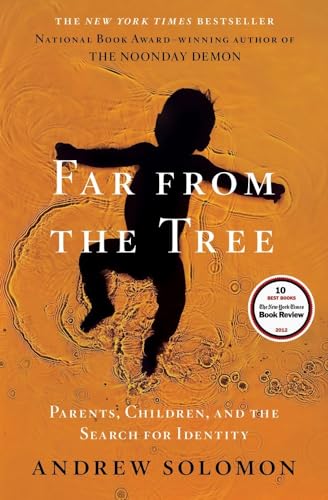
Winner of the National Book Critics Circle Award, a Books for a Better Life Award, and one of The New York Times Book Review’s Ten Best Books of 2012, this masterpiece by the National Book Award–winning author of The Noonday Demon features stories of parents who not only learn to deal with their exceptional children, but also find profound meaning in doing so—“a brave, beautiful book that will expand your humanity” (People).
Solomon’s startling proposition in Far from the Tree is that being exceptional is at the core of the human condition—that difference is what unites us. He writes about families coping with deafness, dwarfism, Down syndrome, autism, schizophrenia, or multiple severe disabilities; with children who are prodigies, who are conceived in rape, who become criminals, who are transgender. While each of these characteristics is potentially isolating, the experience of difference within families is universal, and Solomon documents triumphs of love over prejudice in every chapter.
All parenting turns on a crucial question: to what extent should parents accept their children for who they are, and to what extent they should help them become their best selves. Drawing on ten years of research and interviews with more than three hundred families, Solomon mines the eloquence of ordinary people facing extreme challenges.
Elegantly reported by a spectacularly original and compassionate thinker, Far from the Tree explores how people who love each other must struggle to accept each other—a theme in every family’s life.
Die Inhaltsangabe kann sich auf eine andere Ausgabe dieses Titels beziehen.
Über die Autorin bzw. den Autor
Andrew Solomon is a professor of psychology at Columbia University, president of PEN American Center, and a regular contributor to The New Yorker, NPR, and The New York Times Magazine. A lecturer and activist, he is the author of Far and Away: Essays from the Brink of Change: Seven Continents, Twenty-Five Years; the National Book Critics Circle Award-winner Far from the Tree: Parents, Children, and the Search for Identity, which has won thirty additional national awards; and The Noonday Demon; An Atlas of Depression, which won the 2001 National Book Award, was a finalist for the Pulitzer Prize, and has been published in twenty-four languages. He has also written a novel, A Stone Boat, which was a finalist for the Los Angeles Times First Fiction Award and The Irony Tower: Soviet Artists in a Time of Glasnost. His TED talks have been viewed over ten million times. He lives in New York and London and is a dual national. For more information, visit the author’s website at AndrewSolomon.com.
Auszug. © Genehmigter Nachdruck. Alle Rechte vorbehalten.
Far From the Tree
III
Dwarfs
Until I attended my first dwarf convention—the 2003 Little People of America (LPA) meeting in Danvers, Massachusetts—I had no clue how many kinds of dwarfism there are, nor how many varieties of appearance are collected under the category. Dwarfism is a low-incidence condition, usually occurring because of a random genetic mutation. Since most dwarfs are born to average-height parents, they do not have vertical community. There has been occasional talk about building a town for little people (LPs); there are metropolises where activist LPs have settled; there are high concentrations of otherwise rare dwarfing conditions among the Amish; but there has never been a significant geographic concentration of people of short stature. This means that the national LPA gatherings are not simply occasions to attend lectures and consult medical experts; for some participants, they are the annual exception to a certain kind of loneliness. The gatherings are emotionally intense; one dwarf I met told me she was “happy for one week a year,” although others emphasized that they love both of their lives—the one in the larger world, and the one among their LPA friends. More than 10 percent of Americans of short stature belong to LPA, and the organization has a role in the LP community that is greater than that of similar groups for comparable populations.
Arriving at the Sheraton Ferncroft Resort, where the convention was taking place, I was struck by how the concentration of LPs changed my perception of them. Instead of seeing, primarily, short stature, I saw that one was exceptionally beautiful, that one was unusually short even for a dwarf, that one laughed uproariously and often, that one had an especially intelligent face—and so I began to recognize how generically I had responded to little people until then. I understood what a relief it had to be for them that no one was focused on their height. Of course, the LPA convention was all about stature, but it was also the place where stature became blessedly irrelevant.
It would be difficult for an outsider to acknowledge this particularizing view of, for example, Latinos or Muslims. To say that a person’s ethnicity or religion had overwhelmed, even temporarily, one’s ability to appreciate his other personal characteristics would seem bigoted. But dwarfism has been the exception to these social rules. According to Betty Adelson, author of The Lives of Dwarfs and Dwarfism, “The only permissible prejudice in PC America is against dwarfs.” Mary D’Alton, chair of Columbia University’s Department of Obstetrics and Gynecology and a leader in the field of high-risk pregnancy, told me that dwarfism is the most difficult diagnosis to communicate to expectant parents. “You say that the baby has a hole in his heart,” she said, “and they say, ‘But you can fix that, right?’ But when I tell someone that they will be having a dwarf, they often seem disgusted by the idea.”
Many of the attendees I met my first day at LPA could identify instantly conditions that I had never heard of or imagined and had certainly never seen. When I went down to the conference disco the first night, I saw a brother and sister who had primordial dwarfism; they were full-grown, perfectly proportioned, and only about twenty-nine inches high. Their parents stood with them to make sure they weren’t trampled—a danger even at the dwarf convention. I learned that the girl played percussion in her high school band; she had a classmate who pushed her tiny wheelchair, and she held the drum in her lap—looking, in the words of a dwarf who was herself just three foot eight, “like a marionette.” The conference featured athletic competitions; a marathon-length talent show, including acts from Christian music to break dancing; and a fashion show, which revealed a broad range of dressy and casual styles, all tailored to little bodies. The conference also provided an eagerly awaited opportunity for dating. A dwarf comedian cracked, “You know you’re a teenager at LPA if you’ve had more boyfriends this week than you’ve had in the last year.”
• • •
When I met Mary Boggs on my second day at LPA, she told me that the organization had changed her life. When her daughter Sam was born in 1988, the obstetrician initially assumed that the baby’s diminutive size was a result of her premature arrival. A month later, while she was still in the neonatal intensive care unit, he diagnosed her with achondroplasia. “We would have rather had a child that was deaf or blind,” Mary told me. “Just anything besides a dwarf would have been better. When you’re thinking about what could go wrong with a pregnancy, this doesn’t cross your mind. We were thinking, ‘Why did we have another child at all?’”
Sam came home to her parents’ house in the suburbs of Washington, DC, on oxygen and a monitor. After six months, when Sam was declared physically healthy, Mary took her to her first local LPA meeting. When Sam was a year and a half old, she had a shunt inserted in her head to relieve her hydrocephalus (the accumulation of cerebrospinal fluid in the head); fortunately, she did not have the skeletal problems that in later life afflict so many people with achondroplasia. Mary and her husband got step stools and put them all over the house; they purchased light-switch extenders; they moved the faucet on the kitchen sink. These adjustments at home were easier to control than the challenges outside. “We’ve had people chase us down the grocery aisle to ask questions,” Mary said. “We learned to stare back. It frightens them off. I’d watch Sam not playing with the other kids because she’s too small to do what they do. You just feel sad.”
Before Sam set off for kindergarten, her parents told her that other kids would call her names; they reviewed what some of those names might be and taught her appropriate responses. Mary went to the school and explained Sam’s special needs, giving the teacher a book about dwarfs that she could read aloud to the class. The school lowered the sink and water fountain and installed a grab bar so Sam could pull herself up on the toilet. The kids in her class learned her story, but each year it was new to an incoming kindergarten class, and some would call her names. So Sam decided to make a presentation to each incoming class. She would explain, “I’m little, but I’m eight years old. I’m in third grade. I’m a dwarf, and I’m just like you all, but just short.” She did that every year through elementary school, and the teasing stopped.
When Sam was five, the Boggs family attended their first national LPA convention. “We walked in and saw a thousand dwarfs,” Mary said. “Sam was in shock. I thought my other daughter, who is average height, was going to cry. It took two or three days for us to take it in.” Over the years that followed, the Boggs family persuaded extended family and friends to come to meetings, so that they would know dwarfs other than Sam. “The grandparents could see adult dwarfs and realize, ‘Okay, this is what Sam’s going to look like,’” Mary said. She considered for a minute. “We went for Sam, but also so we could be comfortable with her. To make it easier for us to love her right.”
Middle school was more difficult than elementary school. “People who had been friends for years were suddenly not wanting to hang out with her anymore,” Mary said. “She was not called to go roller skating or go to the movies on Friday night. They pretended...
„Über diesen Titel“ kann sich auf eine andere Ausgabe dieses Titels beziehen.
Weitere beliebte Ausgaben desselben Titels

Suchergebnisse für Far From the Tree: Parents, Children and the Search...

Beispielbild für diese ISBN
Far from the Tree: Parents, Ch
Anbieter: World of Books (was SecondSale), Montgomery, IL, USA
Verkäuferbewertung 5 von 5 Sternen

Zustand: Good. Item in good condition. Textbooks may not include supplemental items i.e. CDs, access codes etc. Artikel-Nr. 00097226542
Gebraucht kaufen
EUR 4,42
Versand gratis
Versand innerhalb von USA
Versand innerhalb von USA
Anzahl: Mehr als 20 verfügbar
Beispielbild für diese ISBN
Far from the Tree: Parents, Ch
Anbieter: World of Books (was SecondSale), Montgomery, IL, USA
Verkäuferbewertung 5 von 5 Sternen
Zustand: Acceptable. Item in acceptable condition! Textbooks may not include supplemental items i.e. CDs, access codes etc. Artikel-Nr. 00101359813
Gebraucht kaufen
EUR 4,42
Versand gratis
Versand innerhalb von USA
Versand innerhalb von USA
Anzahl: 9 verfügbar
Beispielbild für diese ISBN
Far from the Tree: Parents, Children, and the Search for Identity
Anbieter: ThriftBooks-Atlanta, AUSTELL, GA, USA
Verkäuferbewertung 5 von 5 Sternen
Hardcover. Zustand: Good. No Jacket. Pages can have notes/highlighting. Spine may show signs of wear. ~ ThriftBooks: Read More, Spend Less. Artikel-Nr. G0743236718I3N00
Gebraucht kaufen
EUR 6,18
Versand gratis
Versand innerhalb von USA
Versand innerhalb von USA
Anzahl: 2 verfügbar
Beispielbild für diese ISBN
Far from the Tree: Parents, Children, and the Search for Identity
Anbieter: ThriftBooks-Dallas, Dallas, TX, USA
Verkäuferbewertung 5 von 5 Sternen
Hardcover. Zustand: Good. No Jacket. Missing dust jacket; Pages can have notes/highlighting. Spine may show signs of wear. ~ ThriftBooks: Read More, Spend Less. Artikel-Nr. G0743236718I3N01
Gebraucht kaufen
EUR 6,18
Versand gratis
Versand innerhalb von USA
Versand innerhalb von USA
Anzahl: 1 verfügbar
Beispielbild für diese ISBN
Far from the Tree: Parents, Children, and the Search for Identity
Anbieter: ThriftBooks-Phoenix, Phoenix, AZ, USA
Verkäuferbewertung 5 von 5 Sternen
Hardcover. Zustand: Good. No Jacket. Pages can have notes/highlighting. Spine may show signs of wear. ~ ThriftBooks: Read More, Spend Less. Artikel-Nr. G0743236718I3N00
Gebraucht kaufen
EUR 6,18
Versand gratis
Versand innerhalb von USA
Versand innerhalb von USA
Anzahl: 1 verfügbar
Beispielbild für diese ISBN
Far from the Tree: Parents, Children, and the Search for Identity
Anbieter: ThriftBooks-Reno, Reno, NV, USA
Verkäuferbewertung 5 von 5 Sternen
Hardcover. Zustand: Good. No Jacket. Pages can have notes/highlighting. Spine may show signs of wear. ~ ThriftBooks: Read More, Spend Less. Artikel-Nr. G0743236718I3N00
Gebraucht kaufen
EUR 6,18
Versand gratis
Versand innerhalb von USA
Versand innerhalb von USA
Anzahl: 2 verfügbar
Beispielbild für diese ISBN
Far from the Tree: Parents, Children, and the Search for Identity
Anbieter: ThriftBooks-Dallas, Dallas, TX, USA
Verkäuferbewertung 5 von 5 Sternen
Hardcover. Zustand: Very Good. No Jacket. May have limited writing in cover pages. Pages are unmarked. ~ ThriftBooks: Read More, Spend Less. Artikel-Nr. G0743236718I4N00
Gebraucht kaufen
EUR 6,18
Versand gratis
Versand innerhalb von USA
Versand innerhalb von USA
Anzahl: 1 verfügbar
Beispielbild für diese ISBN
Far from the Tree: Parents, Children, and the Search for Identity
Anbieter: ThriftBooks-Dallas, Dallas, TX, USA
Verkäuferbewertung 5 von 5 Sternen
Hardcover. Zustand: Good. No Jacket. Pages can have notes/highlighting. Spine may show signs of wear. ~ ThriftBooks: Read More, Spend Less. Artikel-Nr. G0743236718I3N00
Gebraucht kaufen
EUR 6,18
Versand gratis
Versand innerhalb von USA
Versand innerhalb von USA
Anzahl: 2 verfügbar
Beispielbild für diese ISBN
Far from the Tree: Parents, Children, and the Search for Identity
Anbieter: ThriftBooks-Atlanta, AUSTELL, GA, USA
Verkäuferbewertung 5 von 5 Sternen
Hardcover. Zustand: Good. No Jacket. Former library book; Pages can have notes/highlighting. Spine may show signs of wear. ~ ThriftBooks: Read More, Spend Less. Artikel-Nr. G0743236718I3N10
Gebraucht kaufen
EUR 6,18
Versand gratis
Versand innerhalb von USA
Versand innerhalb von USA
Anzahl: 1 verfügbar
Beispielbild für diese ISBN
Far from the Tree : Parents, Children and the Search for Identity
Anbieter: Better World Books, Mishawaka, IN, USA
Verkäuferbewertung 5 von 5 Sternen
Zustand: Good. First Edition. Pages intact with minimal writing/highlighting. The binding may be loose and creased. Dust jackets/supplements are not included. Stock photo provided. Product includes identifying sticker. Better World Books: Buy Books. Do Good. Artikel-Nr. 4773768-6
Gebraucht kaufen
EUR 6,36
Versand gratis
Versand innerhalb von USA
Versand innerhalb von USA
Anzahl: 7 verfügbar