
Verwandte Artikel zu The Creative Habit: Learn It and Use It for Life
Inhaltsangabe
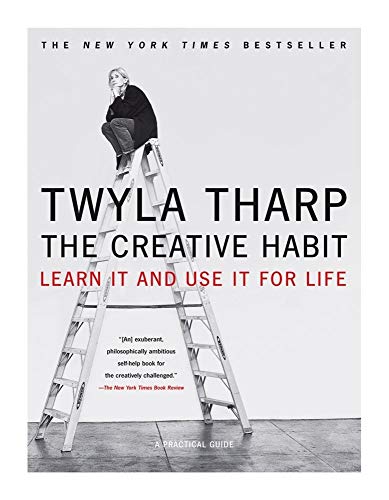
One of the world’s leading creative artists, choreographers, and creator of the smash-hit Broadway show, Movin’ Out, shares her secrets for developing and honing your creative talents—at once prescriptive and inspirational, a book to stand alongside The Artist’s Way and Bird by Bird.
All it takes to make creativity a part of your life is the willingness to make it a habit. It is the product of preparation and effort, and it is within reach of everyone. Whether you are a painter, musician, businessperson, or simply an individual yearning to put your creativity to use, The Creative Habit provides you with thirty-two practical exercises based on the lessons Twyla Tharp has learned in her remarkable thirty-five-year career.
In “Where's Your Pencil?” Tharp reminds you to observe the world—and get it down on paper. In “Coins and Chaos,” she gives you an easy way to restore order and peace. In “Do a Verb,” she turns your mind and body into coworkers. In “Build a Bridge to the Next Day,” she shows you how to clean the clutter from your mind overnight.
Tharp leads you through the painful first steps of scratching for ideas, finding the spine of your work, and getting out of ruts and into productive grooves. The wide-open realm of possibilities can be energizing, and Twyla Tharp explains how to take a deep breath and begin.
Die Inhaltsangabe kann sich auf eine andere Ausgabe dieses Titels beziehen.
Über die Autorin bzw. den Autor
Twyla Tharp, one of America’s greatest choreographers began her career in 1965, and has created more than 130 dances for her company as well as for the Joffrey Ballet, the New York City Ballet, the Paris Opera Ballet, London’s Royal Ballet, Denmark’s Royal Ballet, and American Ballet Theatre. She has won two Emmy Awards for television’s Baryshnikov by Tharp, and a Tony Award for the Broadway musical Movin’ Out. The recipient of a MacArthur Fellowship, she was inducted into the American Academy of Arts & Sciences in 1993 and was made an honorary member of the American Academy of Arts and Letters in 1997. She holds nineteen honorary degrees, most recently from Harvard University. She lives and works in New York City.
Von der hinteren Coverseite
One of the world’s leading creative artists, choreographers, and creator of the smash-hit Broadway show, Movin’ Out, shares her secrets for developing and honing your creative talents―at once prescriptive and inspirational, a book to stand alongside The Artist’s Way and Bird by Bird.
All it takes to make creativity a part of your life is the willingness to make it a habit. It is the product of preparation and effort, and it is within reach of everyone. Whether you are a painter, musician, businessperson, or simply an individual yearning to put your creativity to use, The Creative Habit provides you with thirty-two practical exercises based on the lessons Twyla Tharp has learned in her remarkable thirty-five-year career.
In “Where's Your Pencil?” Tharp reminds you to observe the world―and get it down on paper. In “Coins and Chaos,” she gives you an easy way to restore order and peace. In “Do a Verb,” she turns your mind and body into coworkers. In “Build a Bridge to the Next Day,” she shows you how to clean the clutter from your mind overnight.
Tharp leads you through the painful first steps of scratching for ideas, finding the spine of your work, and getting out of ruts and into productive grooves. The wide-open realm of possibilities can be energizing, and Twyla Tharp explains how to take a deep breath and begin.
Auszug. © Genehmigter Nachdruck. Alle Rechte vorbehalten.
The Creative Habit
Learn It and Use It for LifeBy Twyla TharpSimon & Schuster
Copyright ©2005 Twyla TharpAll right reserved.
ISBN: 9780743235273
Chapter One: I Walk into a White Room
I walk into a large white room. It's a dance studio in midtown Manhattan. I'm wearing a sweatshirt, faded jeans, and Nike cross-trainers. The room is lined with eight-foot-high mirrors. There's a boom box in the corner. The floor is clean, virtually spotless if you don't count the thousands of skid marks and footprints left there by dancers rehearsing. Other than the mirrors, the boom box, the skid marks, and me, the room is empty.
In five weeks I'm flying to Los Angeles with a troupe of six dancers to perform a dance program for eight consecutive evenings in front of twelve hundred people every night. It's my troupe. I'm the choreographer. I have half of the program in hand -- a fifty-minute ballet for all six dancers set to Beethoven's twenty-ninth piano sonata, the "Hammerklavier." I created the piece more than a year ago on many of these same dancers, and I've spent the past few weeks rehearsing it with the company.
The other half of the program is a mystery. I don't know what music I'll be using. I don't know which dancers I'll be working with. I have no idea what the costumes will look like, or the lighting, or who will be performing the music. I have no idea of the length of the piece, although it has to be long enough to fill the second half of a full program to give the paying audience its money's worth.
The length of the piece will dictate how much rehearsal time I need. This, in turn, means getting on the phone to dancers, scheduling studio time, and getting the ball rolling -- all on the premise that something wonderful will come out of what I fashion in the next few weeks in this empty white room.
My dancers expect me to deliver because my choreography represents their livelihood. The presenters in Los Angeles expect the same because they've sold a lot of tickets to people with the promise that they'll see something new and interesting from me. The theater owner (without really thinking about it) expects it as well; if I don't show up, his theater will be empty for a week. That's a lot of people, many of whom I've never met, counting on me to be creative.
But right now I'm not thinking about any of this. I'm in a room with the obligation to create a major dance piece. The dancers will be here in a few minutes. What are we going to do?
To some people, this empty room symbolizes something profound, mysterious, and terrifying: the task of starting with nothing and working your way toward creating something whole and beautiful and satisfying. It's no different for a writer rolling a fresh sheet of paper into his typewriter (or more likely firing up the blank screen on his computer), or a painter confronting a virginal canvas, a sculptor staring at a raw chunk of stone, a composer at the piano with his fingers hovering just above the keys. Some people find this moment -- the moment before creativity begins -- so painful that they simply cannot deal with it. They get up and walk away from the computer, the canvas, the keyboard; they take a nap or go shopping or fix lunch or do chores around the house. They procrastinate. In its most extreme form, this terror totally paralyzes people.
The blank space can be humbling. But I've faced it my whole professional life. It's my job. It's also my calling. Bottom line: Filling this empty space constitutes my identity.
I'm a dancer and choreographer. Over the last 35 years, I've created 130 dances and ballets. Some of them are good, some less good (that's an understatement -- some were public humiliations). I've worked with dancers in almost every space and environment you can imagine. I've rehearsed in cow pastures. I've rehearsed in hundreds of studios, some luxurious in their austerity and expansiveness, others filthy and gritty, with rodents literally racing around the edges of the room. I've spent eight months on a film set in Prague, choreographing the dances and directing the opera sequences for Milos Forman's Amadeus. I've staged sequences for horses in New York City's Central Park for the film Hair. I've worked with dancers in the opera houses of London, Paris, Stockholm, Sydney, and Berlin. I've run my own company for three decades. I've created and directed a hit show on Broadway. I've worked long enough and produced with sufficient consistency that by now I find not only challenge and trepidation but peace as well as promise in the empty white room. It has become my home.
After so many years, I've learned that being creative is a full-time job with its own daily patterns. That's why writers, for example, like to establish routines for themselves. The most productive ones get started early in the morning, when the world is quiet, the phones aren't ringing, and their minds are rested, alert, and not yet polluted by other people's words. They might set a goal for themselves -- write fifteen hundred words, or stay at their desk until noon -- but the real secret is that they do this every day. In other words, they are disciplined. Over time, as the daily routines become second nature, discipline morphs into habit.
It's the same for any creative individual, whether it's a painter finding his way each morning to the easel, or a medical researcher returning daily to the laboratory. The routine is as much a part of the creative process as the lightning bolt of inspiration, maybe more. And this routine is available to everyone.
Creativity is not just for artists. It's for businesspeople looking for a new way to close a sale; it's for engineers trying to solve a problem; it's for parents who want their children to see the world in more than one way. Over the past four decades, I have been engaged in one creative pursuit or another every day, in both my professional and my personal life. I've thought a great deal about what it means to be creative, and how to go about it efficiently. I've also learned from the painful experience of going about it in the worst possible way. I'll tell you about both. And I'll give you exercises that will challenge some of your creative assumptions -- to make you stretch, get stronger, last longer. After all, you stretch before you jog, you loosen up before you work out, you practice before you play. It's no different for your mind.
I will keep stressing the point about creativity being augmented by routine and habit. Get used to it. In these pages a philosophical tug of war will periodically rear its head. It is the perennial debate, born in the Romantic era, between the beliefs that all creative acts are born of (a) some transcendent, inexplicable Dionysian act of inspiration, a kiss from God on your brow that allows you to give the world The Magic Flute, or (b) hard work.
If it isn't obvious already, I come down on the side of hard work. That's why this book is called The Creative Habit. Creativity is a habit, and the best creativity is a result of good work habits. That's it in a nutshell.
The film Amadeus (and the play by Peter Shaffer on which it's based) dramatizes and romanticizes the divine origins of creative genius. Antonio Salieri, representing the talented hack, is cursed to live in the time of Mozart, the gifted and undisciplined genius who writes as though touched by the hand of God. Salieri recognizes the depth of Mozart's genius, and is tortured that God has chosen someone so unworthy to be His divine creative vessel.
Of course, this is hogwash. There are no...
„Über diesen Titel“ kann sich auf eine andere Ausgabe dieses Titels beziehen.
Suchergebnisse für The Creative Habit: Learn It and Use It for Life

Beispielbild für diese ISBN
The Creative Habit: Learn it and Use I for Life
Anbieter: World of Books (was SecondSale), Montgomery, IL, USA
Verkäuferbewertung 5 von 5 Sternen

Paperback. Zustand: Good. What makes someone creative? How does someone face the empty page, the empty stage and making something where nothing existed before? Not just a dilemma for the artist, it is something everyone faces everyday. What will I cook that isn't boring? How can I make that memo persuasive? What sales pitch will increase the order, get me the job, lock in that bonus? These too, are creative acts, and they all share a common need: proper preparation. For Twyla Tharp, creativity is no mystery; it's the product of hard work and preparation, of knowing one's aims and one's subject, of learning from approaches taken in the past. It's a process undertaken every day. It's a habit. The Creative Habit is not merely a look inside the mind of a remarkable woman with remarkable skills, but a programmatic, inspiring, encouraging guide to help each of us achieve our fullest creative potential. Artikel-Nr. 00106580025
Gebraucht kaufen
EUR 4,78
Versand gratis
Versand innerhalb von USA
Versand innerhalb von USA
Anzahl: Mehr als 20 verfügbar
Foto des Verkäufers
The Creative Habit: Learn It and Use It for Life
Anbieter: Dream Books Co., Denver, CO, USA
Verkäuferbewertung 5 von 5 Sternen
Zustand: good. Gently used with minimal wear on the corners and cover. A few pages may contain light highlighting or writing, but the text remains fully legible. Dust jacket may be missing, and supplemental materials like CDs or codes may not be included. May be ex-library with library markings. Ships promptly! Artikel-Nr. DBV.0743235274.G
Gebraucht kaufen
EUR 5,37
Versand gratis
Versand innerhalb von USA
Versand innerhalb von USA
Anzahl: 4 verfügbar
Foto des Verkäufers
The Creative Habit: Learn It and Use It for Life
Anbieter: Dream Books Co., Denver, CO, USA
Verkäuferbewertung 5 von 5 Sternen
Zustand: very_good. Pages are clean with no markings. May show minor signs of wear or cosmetic defects marks, cuts, bends, or scuffs on the cover, spine, pages, or dust jacket. May have remainder marks on edges. Artikel-Nr. DBV.0743235274.VG
Gebraucht kaufen
EUR 5,37
Versand gratis
Versand innerhalb von USA
Versand innerhalb von USA
Anzahl: 1 verfügbar
Beispielbild für diese ISBN
The Creative Habit: Learn It and Use It for Life
Verlag:
Simon & Schuster (edition Reprint), 2006
ISBN 10: 0743235274
ISBN 13: 9780743235273
Gebraucht
Paperback
Anbieter: BooksRun, Philadelphia, PA, USA
Verkäuferbewertung 5 von 5 Sternen
Paperback. Zustand: Very Good. Reprint. It's a well-cared-for item that has seen limited use. The item may show minor signs of wear. All the text is legible, with all pages included. It may have slight markings and/or highlighting. Artikel-Nr. 0743235274-8-1
Gebraucht kaufen
EUR 5,57
Versand gratis
Versand innerhalb von USA
Versand innerhalb von USA
Anzahl: 1 verfügbar
Foto des Verkäufers
The Creative Habit: Learn It and Use It for Life
Anbieter: Dream Books Co., Denver, CO, USA
Verkäuferbewertung 5 von 5 Sternen
Zustand: acceptable. This copy has clearly been enjoyedâ"expect noticeable shelf wear and some minor creases to the cover. Binding is strong, and all pages are legible. May contain previous library markings or stamps. Artikel-Nr. DBV.0743235274.A
Gebraucht kaufen
EUR 5,64
Versand gratis
Versand innerhalb von USA
Versand innerhalb von USA
Anzahl: 2 verfügbar
Beispielbild für diese ISBN
The Creative Habit: Learn It and Use It for Life
Anbieter: ThriftBooks-Dallas, Dallas, TX, USA
Verkäuferbewertung 5 von 5 Sternen
Paperback. Zustand: Very Good. No Jacket. May have limited writing in cover pages. Pages are unmarked. ~ ThriftBooks: Read More, Spend Less. Artikel-Nr. G0743235274I4N00
Gebraucht kaufen
EUR 5,96
Versand gratis
Versand innerhalb von USA
Versand innerhalb von USA
Anzahl: 2 verfügbar
Beispielbild für diese ISBN
The Creative Habit: Learn It and Use It for Life
Anbieter: ThriftBooks-Phoenix, Phoenix, AZ, USA
Verkäuferbewertung 5 von 5 Sternen
Paperback. Zustand: Good. No Jacket. Pages can have notes/highlighting. Spine may show signs of wear. ~ ThriftBooks: Read More, Spend Less. Artikel-Nr. G0743235274I3N00
Gebraucht kaufen
EUR 5,96
Versand gratis
Versand innerhalb von USA
Versand innerhalb von USA
Anzahl: 14 verfügbar
Beispielbild für diese ISBN
The Creative Habit: Learn It and Use It for Life
Anbieter: ThriftBooks-Reno, Reno, NV, USA
Verkäuferbewertung 5 von 5 Sternen
Paperback. Zustand: Very Good. No Jacket. May have limited writing in cover pages. Pages are unmarked. ~ ThriftBooks: Read More, Spend Less. Artikel-Nr. G0743235274I4N00
Gebraucht kaufen
EUR 5,96
Versand gratis
Versand innerhalb von USA
Versand innerhalb von USA
Anzahl: 1 verfügbar
Beispielbild für diese ISBN
The Creative Habit: Learn It and Use It for Life
Anbieter: ThriftBooks-Dallas, Dallas, TX, USA
Verkäuferbewertung 5 von 5 Sternen
Paperback. Zustand: Fair. No Jacket. Readable copy. Pages may have considerable notes/highlighting. ~ ThriftBooks: Read More, Spend Less. Artikel-Nr. G0743235274I5N00
Gebraucht kaufen
EUR 5,96
Versand gratis
Versand innerhalb von USA
Versand innerhalb von USA
Anzahl: 5 verfügbar
Beispielbild für diese ISBN
The Creative Habit: Learn It and Use It for Life
Anbieter: ThriftBooks-Atlanta, AUSTELL, GA, USA
Verkäuferbewertung 5 von 5 Sternen
Paperback. Zustand: Good. No Jacket. Pages can have notes/highlighting. Spine may show signs of wear. ~ ThriftBooks: Read More, Spend Less. Artikel-Nr. G0743235274I3N00
Gebraucht kaufen
EUR 5,96
Versand gratis
Versand innerhalb von USA
Versand innerhalb von USA
Anzahl: 15 verfügbar