
Verwandte Artikel zu The Book Of Massage: The Complete Stepbystep Guide...
The Book Of Massage: The Complete Stepbystep Guide To Eastern And Western Technique (A Handbook for Healing) - Softcover
Inhaltsangabe
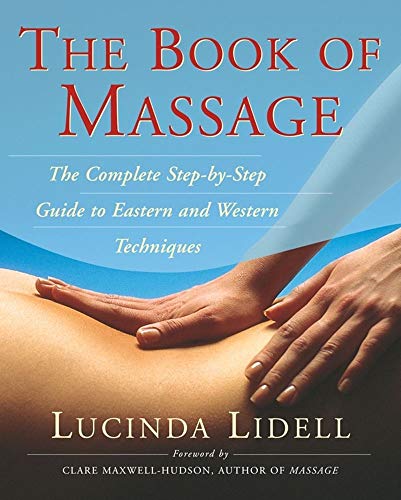
A beautifully illustrated introductory guide to the healing powers of a massage, from traditional massage to shiatsu and reflexology.
The Book of Massage is the classic guide to the relaxing and healing skills of the hands. Featuring both Eastern and Western methods, it presents step-by-step, beautifully illustrated instructions on everything from traditional massage to shiatsu and reflexology. The Book of Massage offers easy-to-follow techniques for giving the perfect massage, including advice on creating the right setting and suggestions for using aromatic oils and lotions. Now revised and updated with fresh color photos and drawings throughout, The Book of Massage is a simple and comprehensive handbook that reveals how you can experience the myriad benefits of giving and receiving a soothing massage.
Die Inhaltsangabe kann sich auf eine andere Ausgabe dieses Titels beziehen.
Über die Autorin bzw. den Autor
Lucinda Lidell is a well-known healer and professional masseuse. She has contributed to many books on massage and natural healing, as well as the original Sivananda Companion to Yoga and The Sensual Body. She lives in London.
Von der hinteren Coverseite
A beautifully illustrated introductory guide to the healing powers of a massage, from traditional massage to shiatsu and reflexology.
The Book of Massage is the classic guide to the relaxing and healing skills of the hands. Featuring both Eastern and Western methods, it presents step-by-step, beautifully illustrated instructions on everything from traditional massage to shiatsu and reflexology. The Book of Massage offers easy-to-follow techniques for giving the perfect massage, including advice on creating the right setting and suggestions for using aromatic oils and lotions. Now revised and updated with fresh color photos and drawings throughout, The Book of Massage is a simple and comprehensive handbook that reveals how you can experience the myriad benefits of giving and receiving a soothing massage.
Auszug. © Genehmigter Nachdruck. Alle Rechte vorbehalten.
Chapter 1
Beginning
Care and sensitivity, a little time and energy, and a good pair of hands -- this is all that's needed to begin practising massage. But no matter which of the touch therapies you choose to learn, there are certain important guidelines for treatment that apply to all three.
Firstly, it is worth taking the trouble to set the scene in advance, so that you are well-prepared for the session before you begin -- with the room already warm and snug, cushions, blankets and towels available, and any oil or powder you may need at hand. You will break the flow of the treatment if you have to stop to go in search of another heater, or more oil. And you will defeat the whole object of the exercise if your partner cannot relax because he or she is chilly or uncomfortable. Think about what you will need for your own comfort, too. To give good massage or shiatsu you must be able to move freely, so it is essential to wear loose-fitting clothes. And each time you change position within a treatment session, you must make sure that you feel relaxed, not strained, before carrying on with the treatment. Never make do with a slightly awkward position, thinking that the discomfort will disappear. It won't, and your tension will be transmitted to your partner.
As the giver, your comfort is closely linked to your posture and breathing. Whether you are sitting, kneeling or standing, your body should feel balanced and relaxed. To allow the healing energy to flow freely, keep your back straight rather than stooping or bending, and move from your belly and pelvis, using your whole body to apply pressure, not just your hands or shoulders. If you can breathe fully and let your body "dance" as you move, you will avoid getting tense or tired and will end a treatment with as much energy as when you started.
Central to the success of any touch therapy is your state of mind and attitude to your partner. You should regard each session as a new experience and bring to each one a feeling of genuine caring, consideration and respect. Before giving a treatment, talk to the receiver about what you are going to do and find out if there are any special problems. Encourage your partner to interrupt you during the session if he or she is uncomfortable or if your pressure is too light or too strong. But in general discourage chatting -- you will only dilute the concentration and return from the communication of touch to the overused language of every day. Never attempt to give a treatment if you are upset, angry, or unwell -- for not only will your energy be depleted, but your mood will affect your partner.
It will help you to maintain the right attitude if you can stay "centred" and give your partner your full attention. Many of us spend much of our lives thinking of the past or idly worrying about the future, and miss what is going on in the present moment. For all touch therapies it is essential that you keep your attention on the "here and now", for the healing energy transmitted through your hands will be weakened or deflected by an absent mind. When you are centred, you are guided by your intuition and will more readily sense where the sources of tension or energy imbalance lie in your partner. You will be able to find the right touch for each part of the body, and to differentiate between a "good hurt" and excessive pressure. But if your thoughts do start to drift while you are working, simply bring them gently back and quieten your mind by concentrating on your breathing. Working with your eyes closed may help you to stay in touch with what you are doing and keep your attention in your hands.
Creating a Relaxed Environment
Relaxation is central to any form of massage, and the more you can do to provide a calm, comfortable setting, the more effective your treatment will be. Whatever your home is like, it takes only a little care and preparation to transform part of it into a peaceful massage area. Probably the two most essential requirements are heat and quiet. The room you choose should be draught-free and very warm -- particularly for an oil massage, when the receiver will be naked. You should have a rug or towel available, too, to cover your partner at the end of a session, or during it if he or she feels chilly. And before you start, make sure you have a few small cushions or pillows at hand, to use as padding for your partner or yourself. Choose a time for giving massage when you and your partner can be quiet and undisturbed, so that your concentration remains unbroken. Some people like to play relaxing music in the background, others may find music of any kind intrusive. The lighting in the room should be soft and subdued, as bright lights prevent the eyes relaxing completely. The gentle glow of candlelight is ideal. As a final touch, you can use flowers or incense to add fragrance to the atmosphere.
Working Surfaces
Of the three touch techniques taught in this book, shiatsu is always given on the floor, holistic massage on the floor or on a massage table, and reflexology is given with the receiver sitting or lying back in a chair (see p. 136). For shiatsu, you need more space than for massage -- at least 8 by 6 feet. If your floor is well-carpeted, you need only spread out a folded blanket or sleeping bag for the receiver, covered by a sheet or towel if you are giving an oil massage. But if the floor is hard, you will need extra padding. A large 1- or 2-inch thick foam mattress is best, but if you don't have one, use additional layers of blankets or sleeping bags. Make sure that the padding extends well beyond the receiver's body, to save your own knees as you move around. If you intend to do a lot of massage, it is worth investing in a massage table. Working on a table is less tiring, for you can easily reach all parts of the body without bending and can move around, without accidentally jogging your partner and interrupting the flow. Don't use a bed or spring mattress -- any pressure you apply will be absorbed by the mattress.
Giving and Receiving
Massage is a two-way flow of touch and response, a mutual exchange of energy. The hands, which both give and receive, and the skin -- these are the instruments of communication. Through your hands you perceive and discover the uniqueness of the person you are touching; through their skin they receive the gift of your touch, the caring contact and movement. In a sense the terms "giver" and "receiver" are deceptive, since any form of touch therapy is a matter of sharing. For the healing power of touch to come through, both partners need to understand their roles in the exchange, both need to give and to be receptive -- the receiver by giving his trust, by surrendering to the giver; the giver by being open and sensitive to the receiver's needs. At its highest level, massage can be a form of meditation, with both participants present in the moment, both focused on the point of contact between them. Practising the exercise below will allow you to experience touch given with focused awareness rather than mechanically.
Focusing Your Awareness
Practising this exercise helps you to understand the experience of both giving and receiving simultaneously. It involves centering your awareness in the different parts of your hands, while you stroke down the legs. You begin by focusing your mind, then let your hands float gently down to make contact with one thigh. Now you press the heels of your hands briefly into your leg, then glide your hands slowly down the leg. Let your awareness remain solely in the heels, but keep your whole hands in touch with the skin. After a few minutes, pause, then repeat the process, transferring your awareness first to the palms of your hands, then to the thumbs, and finally to the fingers. Each...
„Über diesen Titel“ kann sich auf eine andere Ausgabe dieses Titels beziehen.
Suchergebnisse für The Book Of Massage: The Complete Stepbystep Guide...

Beispielbild für diese ISBN
The Book of Massage: The Compl
Anbieter: World of Books (was SecondSale), Montgomery, IL, USA
Verkäuferbewertung 5 von 5 Sternen

Zustand: Acceptable. Item in acceptable condition! Textbooks may not include supplemental items i.e. CDs, access codes etc. Artikel-Nr. 00107856101
Gebraucht kaufen
EUR 3,78
Versand gratis
Versand innerhalb von USA
Versand innerhalb von USA
Anzahl: 1 verfügbar
Beispielbild für diese ISBN
The Book of Massage: The Complete Step-by-Step Guide to Eastern and Western Techniques
Anbieter: World of Books (was SecondSale), Montgomery, IL, USA
Verkäuferbewertung 5 von 5 Sternen
Paperback. Zustand: Good. An updated edition of the classic guide to massage features detailed step-by-step instruction in basic holistic massage techniques, including Eastern and Western methods ranging from traditional massage to shiatsu and reflexology, all complemented by full-color photography and line drawings. Origin. Artikel-Nr. 00098871971
Gebraucht kaufen
EUR 3,78
Versand gratis
Versand innerhalb von USA
Versand innerhalb von USA
Anzahl: Mehr als 20 verfügbar
Beispielbild für diese ISBN
The Book of Massage: The Complete Step-by-Step Guide to Eastern and Western Technique
Verlag:
Atria Books (edition 2nd), 2001
ISBN 10: 0743203909
ISBN 13: 9780743203906
Gebraucht
Paperback
Anbieter: BooksRun, Philadelphia, PA, USA
Verkäuferbewertung 5 von 5 Sternen
Paperback. Zustand: Very Good. 2nd. It's a well-cared-for item that has seen limited use. The item may show minor signs of wear. All the text is legible, with all pages included. It may have slight markings and/or highlighting. Artikel-Nr. 0743203909-8-18
Gebraucht kaufen
EUR 5,76
Versand gratis
Versand innerhalb von USA
Versand innerhalb von USA
Anzahl: 1 verfügbar
Beispielbild für diese ISBN
The Book of Massage: The Complete Stepbystep Guide to Eastern and Western Technique
Anbieter: ThriftBooks-Dallas, Dallas, TX, USA
Verkäuferbewertung 5 von 5 Sternen
Paperback. Zustand: Very Good. No Jacket. May have limited writing in cover pages. Pages are unmarked. ~ ThriftBooks: Read More, Spend Less. Artikel-Nr. G0743203909I4N00
Gebraucht kaufen
EUR 5,87
Versand gratis
Versand innerhalb von USA
Versand innerhalb von USA
Anzahl: 1 verfügbar
Beispielbild für diese ISBN
The Book of Massage: The Complete Stepbystep Guide to Eastern and Western Technique
Anbieter: ThriftBooks-Atlanta, AUSTELL, GA, USA
Verkäuferbewertung 5 von 5 Sternen
Paperback. Zustand: As New. No Jacket. Pages are clean and are not marred by notes or folds of any kind. ~ ThriftBooks: Read More, Spend Less. Artikel-Nr. G0743203909I2N00
Gebraucht kaufen
EUR 5,87
Versand gratis
Versand innerhalb von USA
Versand innerhalb von USA
Anzahl: 1 verfügbar
Beispielbild für diese ISBN
The Book of Massage: The Complete Stepbystep Guide to Eastern and Western Technique
Anbieter: ThriftBooks-Reno, Reno, NV, USA
Verkäuferbewertung 5 von 5 Sternen
Paperback. Zustand: Good. No Jacket. Pages can have notes/highlighting. Spine may show signs of wear. ~ ThriftBooks: Read More, Spend Less. Artikel-Nr. G0743203909I3N00
Gebraucht kaufen
EUR 5,87
Versand gratis
Versand innerhalb von USA
Versand innerhalb von USA
Anzahl: 1 verfügbar
Beispielbild für diese ISBN
The Book of Massage: The Complete Stepbystep Guide to Eastern and Western Technique
Anbieter: ThriftBooks-Phoenix, Phoenix, AZ, USA
Verkäuferbewertung 5 von 5 Sternen
Paperback. Zustand: Good. No Jacket. Pages can have notes/highlighting. Spine may show signs of wear. ~ ThriftBooks: Read More, Spend Less. Artikel-Nr. G0743203909I3N00
Gebraucht kaufen
EUR 5,87
Versand gratis
Versand innerhalb von USA
Versand innerhalb von USA
Anzahl: 1 verfügbar
Beispielbild für diese ISBN
The Book of Massage: The Complete Stepbystep Guide to Eastern and Western Technique
Anbieter: ThriftBooks-Dallas, Dallas, TX, USA
Verkäuferbewertung 5 von 5 Sternen
Paperback. Zustand: Good. No Jacket. Pages can have notes/highlighting. Spine may show signs of wear. ~ ThriftBooks: Read More, Spend Less. Artikel-Nr. G0743203909I3N00
Gebraucht kaufen
EUR 5,87
Versand gratis
Versand innerhalb von USA
Versand innerhalb von USA
Anzahl: 1 verfügbar
Beispielbild für diese ISBN
The Book of Massage: The Complete Stepbystep Guide to Eastern and Western Technique
Anbieter: ThriftBooks-Atlanta, AUSTELL, GA, USA
Verkäuferbewertung 5 von 5 Sternen
Paperback. Zustand: Good. No Jacket. Pages can have notes/highlighting. Spine may show signs of wear. ~ ThriftBooks: Read More, Spend Less. Artikel-Nr. G0743203909I3N00
Gebraucht kaufen
EUR 5,87
Versand gratis
Versand innerhalb von USA
Versand innerhalb von USA
Anzahl: 1 verfügbar
Beispielbild für diese ISBN
The Book of Massage: The Complete Step-by-Step Guide to Eastern and Western Technique
Verlag:
Atria Books (edition 2nd), 2001
ISBN 10: 0743203909
ISBN 13: 9780743203906
Gebraucht
Paperback
Anbieter: BooksRun, Philadelphia, PA, USA
Verkäuferbewertung 5 von 5 Sternen
Paperback. Zustand: Very Good. 2nd. It's a well-cared-for item that has seen limited use. The item may show minor signs of wear. All the text is legible, with all pages included. It may have slight markings and/or highlighting. Artikel-Nr. 0743203909-11-6
Gebraucht kaufen
EUR 5,91
Versand gratis
Versand innerhalb von USA
Versand innerhalb von USA
Anzahl: 1 verfügbar