
Verwandte Artikel zu Running with Mindfulness: Dynamic Running Therapy (Drt)...
Running with Mindfulness: Dynamic Running Therapy (Drt) to Improve Low-Mood, Anxiety, Stress, and Depression - Softcover
Inhaltsangabe
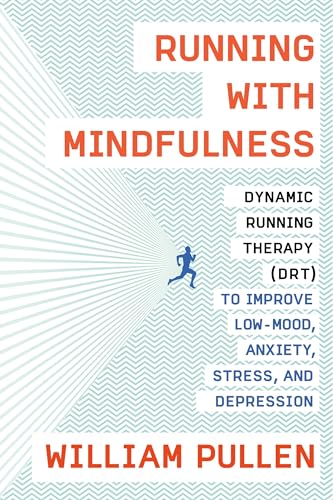
This perfect gift for runners delves into the positive effect of running therapy, including anxiety relief and reduced stress by focusing on the meditative nature of exercise. This running workbook allows you to practice mindfulness in your everyday routine, whether you prefer an afternoon stroll or a morning jog.
Movement is medicine. Letting your mind wander as you take a long walk, a slow jog, or a brisk run can give you a powerful, uplifting feeling. Some call it a runner’s high, others attribute it to endorphins. In this interactive workbook, psychotherapist William Pullen teaches you how to channel that exhilarating energy and use it to make positive change in your life.
This radical new approach to obtaining the benefits of mindfulness originates in the body itself. Using a combination of mindfulness, focused questions, and exercise, Dynamic Running Therapy (DRT) has proven to be a simple, intuitive, effective, and therapeutic method for managing stress, trauma, anxiety, anger, depression, and other conditions.
With carefully tailored thought exercises to be implemented while on a run or walk, DRT brings the mind into perfect harmony with the body through the healing experience of mindful running.
Die Inhaltsangabe kann sich auf eine andere Ausgabe dieses Titels beziehen.
Über die Autorin bzw. den Autor
William Pullen is a psychotherapist registered with the British Association for Counselling and Psychotherapy. He practices Integrative therapy and specializes in the treatment of depression, anxiety, problems of self-esteem and confidence, and substance abuse. He has been featured in publications such as Vogue, The Independent, and GQ.
Auszug. © Genehmigter Nachdruck. Alle Rechte vorbehalten.
The Journey
If you can see your path laid out in front of you step by step, you know it's not your path. Your own path you make with every step you take. That's why it's your path.
Joseph Campbell
One Step at a Time
Dynamic Running Therapy is not complicated or particularly challenging-it's more about learning a couple of simple but very powerful techniques and embarking on an exploration of who you are. Like most journeys, the important thing is to keep putting one foot in front of the other. Try to practice being mindful of your journey as you continue to move forward-this means being aware of how you experience yourself as you go along. By being aware of your progression on the journey you allow yourself the opportunity to cultivate a more compassionate, gentle and accepting relationship with yourself. Remember, you are not actively changing anything-merely noticing the tone of your inner dialog and meeting whatever you find there with acceptance and patience, letting it pass on by naturally.
Often in this busy, overstimulated world of ours, we treat the relationship we have with ourselves as a secondary concern, an afterthought that can be dealt with at some later date. Often we tell ourselves that we will find time to slow down tomorrow, change our diet next week, or work on our self-respect next month. As a result, our relationships suffer as we grow less connected with the world and those around us. When we become aware of who we are we can better reach out to others and enjoy the world more.
It sounds simple. It is simple. But it takes a little discipline and a little commitment. In her TED talk, the author Elizabeth Gilbert says of her relationship with her creative inspiration: "I am not the pipeline, I am a mule." She is sharing an understanding that creativity comes from hard work and determination, not by simply making ourselves available. Forming a relationship with yourself is a creative act that requires playfulness, experimentation and, perhaps above all, commitment and hard work. We cannot sit back and expect the world to present itself at our door each morning carrying a divine plan for the day. To embrace life fully and achieve our goals we must take those proactive steps toward them. Sometimes our experiments will fail, but that is all part of the learning process-it is important to fail so that you know you have tried.
Sometimes you will hit a dead-end, be it physically, mentally or emotionally, but that's OK; stick with the journey and you will get to where you need to go. It might not end where you thought it would, and it might take longer than you thought it would to get there, but persistence will pay off.
If until now you have struggled to face your troubles and insecurities head-on, you are not alone. The very nature of life is that it is a constant stream of change, of victory and loss, of love and betrayal, of birth and death. DRT will help you to engage with and cherish your struggles and triumphs by giving you the space and time to reacquaint yourself with who you truly are.
This process does not offer peace and everlasting life-it offers a way to learn to be more accepting of who you are inside and of the things that have already happened to you and will happen to you in the future. It helps you to value what is real in the here and now, not the stories that you tell yourself. It helps you to stop thinking about what has happened in the past or what might happen in the future and instead appreciate what is happening now.
Self-acceptance improves with practice-it's something you get good at by doing it over and over again. One client I had lost his business, his wife and his mother in the same year. He experienced this as confirmation that nothing that he touched or loved could last, and he believed that the vulnerability he felt inside as a result was as clear to others as it was to him. In time, through our work together and his commitment, he came to see that constant neglect by this same mother during childhood was the root of his own self-neglect. It was a light-bulb moment that illuminated his own responsibility for self-care.
It takes courage to wake up to ourselves. Not being truly at peace with who you are can lead to a lifetime of anxiety; once you stop deceiving yourself, what you find will be refreshing. If your "truth" is fantasy, such avoidance will not lead to safety or happiness. You can tell yourself that you are happy in your current relationship or that your "dream job" you worked for many years to achieve is going well, but if those tales are false you will corrode your sense of well-being from the inside out. The real world in front of you is often actually a much simpler place to inhabit than the one in your jumbled mind.
If you are going to embark on the DRT journey then the best advice I can give you is to immerse yourself in the experience as wholeheartedly as you can. Commit yourself to the path ahead. Get moving and keep moving. If at first the steps are small, just keep making them until you're taking long, confident strides forward. Be a kind and gentle mentor to yourself. If you falter, take time to regroup, but keep going. Imagine you are coaching a good friend or a loved one and treat yourself as you would treat them in your situation. The best coaches are patient, understanding, forgiving and inspiring. Be your own champion, give yourself that prematch pep talk and cheer yourself on from the sidelines.
A good coach also teaches the importance of discipline and learning. DRT asks you to learn from yourself as you go along-to register and record your journey, including your imperfect moments. Learning how to coach yourself well means catching yourself when you fall. Try to see each moment of self-criticism as a chance to grow. Value these moments for what they are-frequent opportunities to get better at being kind to and accepting of yourself. It's not very complicated and becomes second nature quite quickly if practiced often. Each time you replace self-recrimination with self-acceptance and stay with your practice is a victory. It becomes a celebration of who you are, warts and all. You will also notice how much easier on you it is-it takes much less effort to notice and let go than it does to analyze and chastise.
DRT really is about the journey and not the destination, so be patient and keep moving. Each step you take is your step. It belongs to you and no one else. It is your relationship with each moment that fills a lifetime with meaning, not where the path eventually leads.
Bear in mind the words of the celebrated Buddhist teacher Pema Chšdršn, as quoted from the Bodhicitta slogans of Atisha:
Don't try to be the fastest. Abandon any hope of fruition. Don't expect applause.
Finally, be prepared to struggle a bit. DRT has a way of bringing to the surface really difficult truths about ourselves-the very same truths that can set us free. Along the way fear and shame may emerge. Often they go hand in hand with the most difficult parts of ourselves, the bits we have spent a lifetime trying to disown. Try not to let either get the better of you. This is no easy task. Acknowledge and own them as part of your journey and keep on moving. Fear and shame are a kind of "stuckness"-a getting bogged down in a particular and narrow idea...
„Über diesen Titel“ kann sich auf eine andere Ausgabe dieses Titels beziehen.
Suchergebnisse für Running with Mindfulness: Dynamic Running Therapy (Drt)...

Beispielbild für diese ISBN
Running with Mindfulness: Dynamic Running Therapy (DRT) to Improve Low-mood, Anxiety, Stress, and Depression
Anbieter: World of Books (was SecondSale), Montgomery, IL, USA
Verkäuferbewertung 5 von 5 Sternen

Paperback. Zustand: Good. This perfect gift for runners delves into the positive effect of running therapy, including anxiety relief and reduced stress by focusing on the meditative nature of exercise. This running workbook allows you to practice mindfulness in your everyday routine, whether you prefer an afternoon stroll or a morning jog. Movement is medicine. Letting your mind wander as you take a long walk, a slow jog, or a brisk run can give you a powerful, uplifting feeling. Some call it a runner's high, others attribute it to endorphins. In this interactive workbook, psychotherapist William Pullen teaches you how to channel that exhilarating energy and use it to make positive change in your life. This radical new approach to obtaining the benefits of mindfulness originates in the body itself. Using a combination of mindfulness, focused questions, and exercise, Dynamic Running Therapy (DRT) has proven to be a simple, intuitive, effective, and therapeutic method for managing stress, trauma, anxiety, anger, depression, and other conditions. With carefully tailored thought exercises to be implemented while on a run or walk, DRT brings the mind into perfect harmony with the body through the healing experience of mindful running. Artikel-Nr. 00101442878
Gebraucht kaufen
EUR 4,39
Versand gratis
Versand innerhalb von USA
Versand innerhalb von USA
Anzahl: 1 verfügbar
Beispielbild für diese ISBN
Running with Mindfulness: Dynamic Running Therapy (DRT) to Improve Low-mood, Anxiety, Stress, and Depression
Anbieter: BooksRun, Philadelphia, PA, USA
Verkäuferbewertung 5 von 5 Sternen
Paperback. Zustand: Very Good. It's a well-cared-for item that has seen limited use. The item may show minor signs of wear. All the text is legible, with all pages included. It may have slight markings and/or highlighting. Artikel-Nr. 0735219796-8-1
Gebraucht kaufen
EUR 4,90
Versand gratis
Versand innerhalb von USA
Versand innerhalb von USA
Anzahl: 1 verfügbar
Beispielbild für diese ISBN
Running with Mindfulness: Dynamic Running Therapy (Drt) to Improve Low-Mood, Anxiety, Stress, and Depression
Anbieter: ThriftBooks-Phoenix, Phoenix, AZ, USA
Verkäuferbewertung 5 von 5 Sternen
Paperback. Zustand: Very Good. No Jacket. May have limited writing in cover pages. Pages are unmarked. ~ ThriftBooks: Read More, Spend Less. Artikel-Nr. G0735219796I4N00
Gebraucht kaufen
EUR 6,38
Versand gratis
Versand innerhalb von USA
Versand innerhalb von USA
Anzahl: 1 verfügbar
Beispielbild für diese ISBN
Running with Mindfulness: Dynamic Running Therapy (Drt) to Improve Low-Mood, Anxiety, Stress, and Depression
Anbieter: ThriftBooks-Atlanta, AUSTELL, GA, USA
Verkäuferbewertung 5 von 5 Sternen
Paperback. Zustand: Very Good. No Jacket. May have limited writing in cover pages. Pages are unmarked. ~ ThriftBooks: Read More, Spend Less. Artikel-Nr. G0735219796I4N00
Gebraucht kaufen
EUR 6,40
Versand gratis
Versand innerhalb von USA
Versand innerhalb von USA
Anzahl: 1 verfügbar
Beispielbild für diese ISBN
Running with Mindfulness: Dynamic Running Therapy (Drt) to Improve Low-Mood, Anxiety, Stress, and Depression
Anbieter: ThriftBooks-Dallas, Dallas, TX, USA
Verkäuferbewertung 5 von 5 Sternen
Paperback. Zustand: Very Good. No Jacket. May have limited writing in cover pages. Pages are unmarked. ~ ThriftBooks: Read More, Spend Less. Artikel-Nr. G0735219796I4N00
Gebraucht kaufen
EUR 6,40
Versand gratis
Versand innerhalb von USA
Versand innerhalb von USA
Anzahl: 1 verfügbar
Beispielbild für diese ISBN
Running with Mindfulness: Dynamic Running Therapy (DRT) to Improve Low-mood, Anxiety, Stress, and Depression
Anbieter: Wonder Book, Frederick, MD, USA
Verkäuferbewertung 5 von 5 Sternen
Zustand: Good. Good condition. A copy that has been read but remains intact. May contain markings such as bookplates, stamps, limited notes and highlighting, or a few light stains. Artikel-Nr. R01K-02397
Gebraucht kaufen
EUR 6,42
Versand gratis
Versand innerhalb von USA
Versand innerhalb von USA
Anzahl: 1 verfügbar
Beispielbild für diese ISBN
Running with Mindfulness : Dynamic Running Therapy (DRT) to Improve Low-Mood, Anxiety, Stress, and Depression
Verlag:
Penguin Publishing Group, 2017
ISBN 10: 0735219796
ISBN 13: 9780735219793
Gebraucht
Softcover
Anbieter: Better World Books, Mishawaka, IN, USA
Verkäuferbewertung 5 von 5 Sternen
Zustand: Very Good. Former library copy. Pages intact with possible writing/highlighting. Binding strong with minor wear. Dust jackets/supplements may not be included. Includes library markings. Stock photo provided. Product includes identifying sticker. Better World Books: Buy Books. Do Good. Artikel-Nr. 18165610-75
Gebraucht kaufen
EUR 10,10
Versand gratis
Versand innerhalb von USA
Versand innerhalb von USA
Anzahl: 1 verfügbar
Beispielbild für diese ISBN
Running with Mindfulness: Dynamic Running Therapy (DRT) to Improve Low-mood, Anxiety, Stress, and Depression
Anbieter: Kennys Bookstore, Olney, MD, USA
Verkäuferbewertung 5 von 5 Sternen
Zustand: New. 2017. Paperback. . . . . . Books ship from the US and Ireland. Artikel-Nr. V9780735219793
Neu kaufen
EUR 23,05
EUR 9,36 Versand
Versand innerhalb von USA
Versand innerhalb von USA
Anzahl: 15 verfügbar
Foto des Verkäufers
Running with Mindfulness : Dynamic Running Therapy (Drt) to Improve Low-Mood, Anxiety, Stress, and Depression
Verlag:
Penguin Publishing Group Sep 2017, 2017
ISBN 10: 0735219796
ISBN 13: 9780735219793
Neu
Taschenbuch
Anbieter: AHA-BUCH GmbH, Einbeck, Deutschland
Verkäuferbewertung 5 von 5 Sternen
Taschenbuch. Zustand: Neu. Neuware - This perfect gift for runners delves into the positive effect of running therapy, including anxiety relief and reduced stress by focusing on the meditative nature of exercise. This running workbook allows you to practice mindfulness in your everyday routine, whether you prefer an afternoon stroll or a morning jog. Movement is medicine. Letting your mind wander as you take a long walk, a slow jog, or a brisk run can give you a powerful, uplifting feeling. Some call it a runner's high, others attribute it to endorphins. In this interactive workbook, psychotherapist William Pullen teaches you how to channel that exhilarating energy and use it to make positive change in your life. This radical new approach to obtaining the benefits of mindfulness originates in the body itself. Using a combination of mindfulness, focused questions, and exercise, Dynamic Running Therapy (DRT) has proven to be a simple, intuitive, effective, and therapeutic method for managing stress, trauma, anxiety, anger, depression, and other conditions. With carefully tailored thought exercises to be implemented while on a run or walk, DRT brings the mind into perfect harmony with the body through the healing experience of mindful running. Artikel-Nr. 9780735219793
Neu kaufen
EUR 26,18
EUR 35,00 Versand
Versand von Deutschland nach USA
Versand von Deutschland nach USA
Anzahl: 2 verfügbar
Foto des Verkäufers
Running with Mindfulness: Dynamic Running Therapy (Drt) to Improve Low-Mood, Anxiety, Stress, and Depression
Anbieter: moluna, Greven, Deutschland
Verkäuferbewertung 5 von 5 Sternen
Zustand: New. Über den AutorWilliam Pullen is a psychotherapist registered with the British Association for Counselling and Psychotherapy. He practices Integrative therapy and specializes in the treatment of depression, anxiety, problems o. Artikel-Nr. 898520031
Neu kaufen
EUR 19,45
EUR 48,99 Versand
Versand von Deutschland nach USA
Versand von Deutschland nach USA
Anzahl: Mehr als 20 verfügbar