
Verwandte Artikel zu The Balance Within: The Science Connecting Health and...
Inhaltsangabe
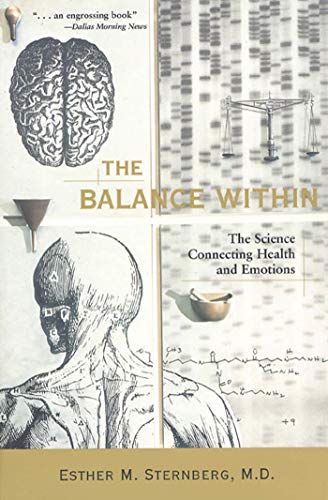
A thrilling scientific detective story, The Balance Within tells how researchers finally uncovered the elusive mind-body connection and what it means for our health.
Since ancient times humans have felt intuitively that emotions and health are linked, and recently there has been much popular speculation about this notion. But until now, without compelling evidence, it has been impossible to say for sure that such a connection really exists and especially how it works.
Now, that evidence has been discovered.
In this beautifully written book, Dr. Esther Sternberg, whose discoveries were pivotal in helping to solve this mystery, provides first hand accounts of the breakthrough experiments that revealed the physical mechanisms-the nerves, cells, and hormones-used by the brain and immune system to communicate with each other. She describes just how stress can make us more susceptible to all types of illnesses, and how the immune system can alter our moods. Finally, she explains how our understanding of these connections in scientific terms is helping to answer such crucial questions as "Does stress make you sick?" "Is a positive outlook the key to better health?" and "How do our personal relationships, work, and other aspects of our lives affect our health?"
A fascinating, elegantly written portrait of this rapidly emerging field with enormous potential for finding new ways to treat disease and cope with stress, The Balance Within is essential reading for anyone interested in making their body and mind whole again.
Die Inhaltsangabe kann sich auf eine andere Ausgabe dieses Titels beziehen.
Über die Autorin bzw. den Autor
Esther M. Sternberg, M.D., is Director, Integrative Neural Immune Program, National Institute of Mental Health, National Institutes of Health. She was trained in rheumatology at McGill University and practiced medicine in Montreal before returning to a research career and teaching at Washington University in St. Louis. The winner of the Public Health Service Superior Service Award and President of the International Society for Neuroimmunomodulation, Dr. Sternberg has written over one hundred scientific papers, reviews, and book chapters on the subject of brain-immune connections. She lectures nationally and internationally on emotions, health and disease.
Auszug. © Genehmigter Nachdruck. Alle Rechte vorbehalten.
The Balance Within
CHAPTER · 1 ·
Emotions and Disease
Molecules and Ancient Myths
Nestled at the top of a brown stony hill above the modern Cretan village of Lentas, at the intermingling of cool sage mountain air and warm salt sea breezes, are the ruins of an ancient temple to Asclepius, the Greek god of healing. The temple's two remaining pillars stand like sentinels marking north and south, forming the narrow end of a once oblong colonnade, built in exact alignment with the sun's path. It is a few meters above what was once the source of a natural spring; ancient priests used these waters, and prayer, music, sleep, and dreams to cure the sick. The warm white marble columns still reflect the early morning sun against the blue Mediterranean below. On a flat terrace, just beyond the temple, a mythical animal with the head of a horse and body of a fish, patterned out of smooth, round, white and black pebbles, hides the floor of the priests' coffers of this once rich sanctuary. And the village people, who still live as one with the rhythms of the sea and sun, know, as their ancestors knew, that emotions and health are one.
As the wind and sun eroded that first ancient shrine, and dried its healing source, something also happened to the world beyond the village. Our faith in the healing power of the spirit also waned; and the god of science and medicine became a much harder, more impersonal god than the fatherly Asclepius. When did we modern scientists and physicians lose the knowledge that was so much a part ofthese ancient teachings of medicine? And why has the road back to acceptance of this wholeness taken so many centuries to travel?
The temple and the ancient town below, once a busy crossroads port called Leban, first stopping point between Egypt and Greece, flourished around 400 B.C. This was about the time that the great Greek physician Hippocrates, whose oath still underlies the principles of modern medicine, taught that health lay in a balance. And Asclepius, the Greek god of healing, with his daughters, Hygeia and Panacea, symbolized all that was essential in this balance--healthy diet, pure waters, exercise, and support of friends and family. The concept has survived to this day: "hygiene," or cleanliness, is still the first step in preventive medicine, and "panacea" still means heal-all. But essential, too, were the emotions, as well as soothing activities that calmed them--sleep, music, and prayer. So integral to the healing of the body was the mind that the god of medicine carried a staff with the symbols of both intertwined: Asclepius carried in his left hand the caduceus, a wooden staff with a serpent curled around it, an ancient symbol of body and soul, and today the universally recognized symbol of medicine.
Facing east, with your back to the pillars of the ancient temple, squinting into the already hot morning sun, you can see a tiny stone church just 100 meters away. Amidst the scrub and stones and fallen pillars, a lone gardener lovingly tends the shrine. To reach it, scramble over the loose rocky soil, down the steep terraced ridges of the temple, past where the ancient source used to run. Climb up an embankment, through lavender and prickly bramble, and you are there. It sits atop its own little hill, amidst another pile of ruins--also the remains of a place of worship, built later than the temple but before the newer church. Here the gardener pulls the weeds from between the cracks and crevices of the flat square stones paving the earth, stones that must have formed the floor of the Byzantine basilica that stood here more than 1200 years ago.
The newer church, itself nearly 100 years old, is not much larger than a small room and not much taller than a man. Bending low to enter the single doorway, you find the impact of the cool air within to be an immediate relief from the unrelenting sun that beats downupon the hillside. As your eyes acclimatize to the darkness, you realize that you are surrounded by a surprising array of brightly painted red, gold, silver, black, and brown icons--faces of the Virgin Mary and the baby Jesus. The flicker of votive candles left by the devout villagers lights the pictures, large and small. The villagers come alone to pray or throng here in large numbers whenever a priest passes through the tiny village on his rounds. Old and young alike scramble up the steep, well-worn footpath, bending almost horizontally to grasp at branches, steady their gait, and keep from sliding backward as the stony soil gives way.
But now, you are alone. The gardener has left. Only swallows remain, flitting in and out from shaded eaves under the church's red-tiled barrel roof. Peering through the narrow door toward the shining sea and village far below, you glimpse the sun, almost straight above. It must be close to noon--too hot for any mortal being.
Clambering down the hillside, past riotously bright red, pink, and fuchsia bougainvillea attached to white stucco walls, you reach the village square. The villagers are all asleep. Closer to the sea, the salty and faintly fishy smell mingles with the eucalyptus whose branches provide the first shade over the steepening lane. At the last row of houses, a flight of narrow, uneven stucco steps twist like a pile of children's blocks to the pebbly beach below. Finally, in the narrow spaces between the sharp white walls, is the sea--a blue so intense, so azure, so deep, that it seems unreal.
Here, along the cove, the fishermen live in balance with the elements. The rhythms of their lives are set by the rhythms of the day and of the seasons. They watch for signs of storm, and tide, to know when to tie their boats closer in and tighter to the shore. And they watch the changing seasons, to know when to retreat to a town high up in the mountains behind the village, when the rainy season comes. They watch the stars and know, just as their forbears knew, the names of all the constellations and of our galaxy. For here, by the shore in the dark, dark night, you can see the Milky Way as clearly as did the ancient Greeks, who named this faint spill of white that stains the night skygalaxias, from galactos, the milk that it resembles.
Today, the villagers have adapted, but only somewhat, to the trickling tourist trade--the few brave souls who have trekked over the daunting mountains that hem this tiny village up against the sea. Each house along the pebbled cove sports a porch with brightly colored tables and chairs, painted blue or red or green. Here villagers and tourists wile away the day sipping thick Greek coffee and lemonade made with water from what is left of the source. They nibble at Greek salads, creamed eggplant, cucumber yogurt "tzatzikis," or grapeleaf-wrapped dolmades, and watch the sea. The old men, long since unable to gain a living from their boats, sit at their favorite tables, playing backgammon, and time and again beat the younger men, stronger than they, but with yet much to learn about the game. There is a richness to the social fabric of this place: children run free, but are watched by a dozen mothers' eyes; gnarled old men and women,though walking with canes, are still able to climb the steep slopes daily to visit neighbors and to pray at the shrine above the town. What happened to our modern world, where isolation has replaced social support, where technology has broken the bond between doctor and patient in healing, where the role of emotions in health and disease has been too often cast aside?
Perhaps it was the discoveries of twentieth-century physicists--the ever-smaller particles that make up the physical universe--that turned our...
„Über diesen Titel“ kann sich auf eine andere Ausgabe dieses Titels beziehen.
Suchergebnisse für The Balance Within: The Science Connecting Health and...

Beispielbild für diese ISBN
The Balance Within: The Science Connecting Health and Emotions
Anbieter: World of Books (was SecondSale), Montgomery, IL, USA
Verkäuferbewertung 5 von 5 Sternen

Zustand: Good. Item in good condition. Textbooks may not include supplemental items i.e. CDs, access codes etc. Artikel-Nr. 00097631777
Gebraucht kaufen
EUR 3,83
Versand gratis
Versand innerhalb von USA
Versand innerhalb von USA
Anzahl: 10 verfügbar
Beispielbild für diese ISBN
The Balance Within: The Science Connecting Health and Emotions
Anbieter: World of Books (was SecondSale), Montgomery, IL, USA
Verkäuferbewertung 5 von 5 Sternen
Zustand: Very Good. Item in very good condition! Textbooks may not include supplemental items i.e. CDs, access codes etc. Artikel-Nr. 00104857571
Gebraucht kaufen
EUR 3,83
Versand gratis
Versand innerhalb von USA
Versand innerhalb von USA
Anzahl: 1 verfügbar
Beispielbild für diese ISBN
The Balance Within: The Science Connecting Health and Emotions
Anbieter: ThriftBooks-Atlanta, AUSTELL, GA, USA
Verkäuferbewertung 5 von 5 Sternen
Paperback. Zustand: As New. No Jacket. Pages are clean and are not marred by notes or folds of any kind. ~ ThriftBooks: Read More, Spend Less. Artikel-Nr. G0716744457I2N00
Gebraucht kaufen
EUR 5,82
Versand gratis
Versand innerhalb von USA
Versand innerhalb von USA
Anzahl: 1 verfügbar
Beispielbild für diese ISBN
The Balance Within: The Science Connecting Health and Emotions
Anbieter: ThriftBooks-Dallas, Dallas, TX, USA
Verkäuferbewertung 5 von 5 Sternen
Paperback. Zustand: Very Good. No Jacket. May have limited writing in cover pages. Pages are unmarked. ~ ThriftBooks: Read More, Spend Less. Artikel-Nr. G0716744457I4N00
Gebraucht kaufen
EUR 5,82
Versand gratis
Versand innerhalb von USA
Versand innerhalb von USA
Anzahl: 1 verfügbar
Beispielbild für diese ISBN
The Balance Within: The Science Connecting Health and Emotions
Verlag:
W. H. Freeman (edition ), 2001
ISBN 10: 0716744457
ISBN 13: 9780716744450
Gebraucht
Paperback
Anbieter: BooksRun, Philadelphia, PA, USA
Verkäuferbewertung 5 von 5 Sternen
Paperback. Zustand: Very Good. It's a well-cared-for item that has seen limited use. The item may show minor signs of wear. All the text is legible, with all pages included. It may have slight markings and/or highlighting. Artikel-Nr. 0716744457-8-1
Gebraucht kaufen
EUR 5,89
Versand gratis
Versand innerhalb von USA
Versand innerhalb von USA
Anzahl: 1 verfügbar
Beispielbild für diese ISBN
The Balance Within: The Science Connecting Health and Emotions
Anbieter: Wonder Book, Frederick, MD, USA
Verkäuferbewertung 5 von 5 Sternen
Zustand: Very Good. Signed Copy . Signed/Inscribed by author on title page. Artikel-Nr. W00A-02803
Gebraucht kaufen
EUR 6,97
Versand gratis
Versand innerhalb von USA
Versand innerhalb von USA
Anzahl: 1 verfügbar
Beispielbild für diese ISBN
The Balance Within: The Science Connecting Health and Emotions
Anbieter: Wonder Book, Frederick, MD, USA
Verkäuferbewertung 5 von 5 Sternen
Zustand: Good. Good condition. A copy that has been read but remains intact. May contain markings such as bookplates, stamps, limited notes and highlighting, or a few light stains. Artikel-Nr. E08A-03761
Gebraucht kaufen
EUR 6,97
Versand gratis
Versand innerhalb von USA
Versand innerhalb von USA
Anzahl: 3 verfügbar
Beispielbild für diese ISBN
The Balance Within: The Science Connecting Health and Emotions
Anbieter: Wonder Book, Frederick, MD, USA
Verkäuferbewertung 5 von 5 Sternen
Zustand: Good. Good condition. With remainder mark. A copy that has been read but remains intact. May contain markings such as bookplates, stamps, limited notes and highlighting, or a few light stains. Artikel-Nr. D06A-03652
Gebraucht kaufen
EUR 7,30
Versand gratis
Versand innerhalb von USA
Versand innerhalb von USA
Anzahl: 1 verfügbar
Beispielbild für diese ISBN
The Balance Within: The Science Connecting Health and Emotions
Verlag:
W. H. Freeman May 2001, 2001
ISBN 10: 0716744457
ISBN 13: 9780716744450
Gebraucht
Paper Back
Anbieter: Eagle Eye Books, Decatur, GA, USA
Verkäuferbewertung 4 von 5 Sternen

Paper Back. Zustand: Used. Artikel-Nr. 856223
Gebraucht kaufen
EUR 5,37
EUR 3,47 Versand
Versand innerhalb von USA
Versand innerhalb von USA
Anzahl: 1 verfügbar
Beispielbild für diese ISBN
The Balance Within: The Science Connecting Health and Emotions
Anbieter: Roundabout Books, Greenfield, MA, USA
Verkäuferbewertung 4 von 5 Sternen
Paperback. Zustand: Very Good. Condition Notes: Clean, unmarked copy with some edge wear. Good binding. Dust jacket included if issued with one. We ship in recyclable American-made mailers. 100% money-back guarantee on all orders. Artikel-Nr. 1343533
Gebraucht kaufen
EUR 9,38
Versand gratis
Versand innerhalb von USA
Versand innerhalb von USA
Anzahl: 1 verfügbar