
Verwandte Artikel zu Shunga sex and pleasure in Japanese art: The British...
Inhaltsangabe
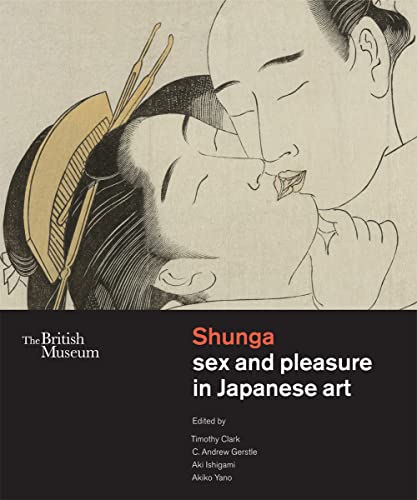
Discover Japanese art like no other. Originally created by the artists of the ukiyo-e 'school of the floating world' to advertise brothels in 17th-century Yoshiwara, these popular 'spring pictures' (shunga) transcended class and gender in Japan for almost 300 years. These tender, humorous and brightly coloured pieces celebrate sexual pleasure in all its forms, culminating in the beautiful, yet graphic, work of iconic artists Utamaro, Hokusai and Kunisada. This catalogue of a major international exhibition aims to answer some key questions about what shunga is and why was it produced. Erotic Japanese art was heavily suppressed in Japan from the 1870s onwards as part of a process of cultural 'modernisation' that imported many contemporary western moral values. Only in the last twenty years or so has it been possible to publish unexpurgated examples in Japan and this ground-breaking publication presents this fascinating art in its historical and cultural context for the first time. Within Japan, shunga has continued to influence modern forms of art, including manga, anime and Japanese tattoo art. Drawing on the latest scholarship and featuring over 400 images of works from major public and private collections, this landmark book sheds new light on this unique art form within Japanese social and cultural history. Shunga: sex and pleasure in Japanese art is published to accompany an exhibition at the British Museum from October 2013 to January 2014.
Die Inhaltsangabe kann sich auf eine andere Ausgabe dieses Titels beziehen.
Über die Autorin bzw. den Autor
Timothy Clark is Head of the Japanese Section in the Department of Asia at the British Museum.
Von der hinteren Coverseite
In early modern Japan thousands of sexually explicit paintings, prints, and illustrated books with texts were produced, euphemistically called spring pictures ( shunga ) . Frequent ly tender, funny and beautiful, shunga were mostly done within the popular school known as pictures of the floating world ( ukiyo - e ), by celebrated artists such as Utamaro and Hokusai. Shunga is in some ways a unique phenomenon in pre - modern world cultu re, in terms of the quantity, the quality and the nature of the art that was produced. This catalogue of a major international exhibition aims to answer some key questions about what is shunga and why it was produced. In particular the social and cultura l contexts for sex art in Japan are explored . Erotic Japanese art was heavily suppressed in Japan from the 1870s onwards as part of a process of cultural modernisation that imported many contemporary western moral values. Only in the last twenty years or so has it been possible to publish unexpurgated examples in Japan and this landmark book places e rotic Japanese art in its historical and cultural context for the first time. Drawing on the latest scholarship and featuring over 400 images of works from major public and private collections, this important book looks at painted and printed erotic images produced in Japan during the Edo period (1600 1868) and early Meiji era (1868 1912). These are related to the wider contexts of literature, the atre, the culture of the pleasure quarters, and urban consumerism; and interpreted in terms of their sensuality, reverence, humour and parody.
„Über diesen Titel“ kann sich auf eine andere Ausgabe dieses Titels beziehen.
Suchergebnisse für Shunga sex and pleasure in Japanese art: The British...

Beispielbild für diese ISBN
Shunga: Sex and Pleasure in Japanese Art
Anbieter: WorldofBooks, Goring-By-Sea, WS, Vereinigtes Königreich
Verkäuferbewertung 5 von 5 Sternen

Paperback. Zustand: Very Good. The book has been read, but is in excellent condition. Pages are intact and not marred by notes or highlighting. The spine remains undamaged. Artikel-Nr. GOR007408873
Gebraucht kaufen
EUR 62,08
EUR 6,62 Versand
Versand von Vereinigtes Königreich nach USA
Versand von Vereinigtes Königreich nach USA
Anzahl: 1 verfügbar
Beispielbild für diese ISBN
Shunga sex and pleasure in Japanese art
Anbieter: PBShop.store UK, Fairford, GLOS, Vereinigtes Königreich
Verkäuferbewertung 5 von 5 Sternen
HRD. Zustand: New. New Book. Shipped from UK. Established seller since 2000. Artikel-Nr. HU-9780714124766
Neu kaufen
EUR 52,59
EUR 17,21 Versand
Versand von Vereinigtes Königreich nach USA
Versand von Vereinigtes Königreich nach USA
Anzahl: 15 verfügbar
Beispielbild für diese ISBN
Shunga: Sex and Pleasure in Japanese Art
Anbieter: Antiquariaat Berger & De Vries, Groningen, Niederlande
Verkäuferbewertung 5 von 5 Sternen
Hardcover, with dust jacket. 29,5x25 cm. Profusely illustrated, in color. 536 p. -(Some shelf-wear to the dust jacket, but otherwise the book is in very good condition.). ISBN 9780714124766. Artikel-Nr. 73127-A-62974
Gebraucht kaufen
EUR 60,00
EUR 20,00 Versand
Versand von Niederlande nach USA
Versand von Niederlande nach USA
Anzahl: 1 verfügbar
Beispielbild für diese ISBN
Shunga
Anbieter: Majestic Books, Hounslow, Vereinigtes Königreich
Verkäuferbewertung 4 von 5 Sternen

Zustand: New. pp. 566 Illus. Artikel-Nr. 96009103
Neu kaufen
EUR 73,36
EUR 7,68 Versand
Versand von Vereinigtes Königreich nach USA
Versand von Vereinigtes Königreich nach USA
Anzahl: 3 verfügbar
Beispielbild für diese ISBN
Shunga: Sex and Pleasure in Japanese Art /anglais
Anbieter: Ria Christie Collections, Uxbridge, Vereinigtes Königreich
Verkäuferbewertung 5 von 5 Sternen
Zustand: New. In English. Artikel-Nr. ria9780714124766_new
Neu kaufen
EUR 72,22
EUR 22,48 Versand
Versand von Vereinigtes Königreich nach USA
Versand von Vereinigtes Königreich nach USA
Anzahl: 8 verfügbar
Beispielbild für diese ISBN
Shunga
Anbieter: Kennys Bookstore, Olney, MD, USA
Verkäuferbewertung 5 von 5 Sternen
Zustand: New. 2013. Hardcover. Originally created by the artists of the ukiyo-e school of the floating world to advertise brothels in 17th-century Yoshiwara, this book includes spring pictures (shunga) that transcended class and gender in Japan the years. This book focuses on this art form within Japanese social and cultural history. Editor(s): Clark, Timothy; Gerstle, C.Andrew; Ishigami, Aki. Num Pages: 566 pages, 420 colour illustrations. BIC Classification: 1FPJ; ACBP; AFC; AFH; AGHX. Category: (G) General (US: Trade). Dimension: 258 x 297 x 41. Weight in Grams: 3076. . . . . . Books ship from the US and Ireland. Artikel-Nr. V9780714124766
Neu kaufen
EUR 90,87
EUR 9,38 Versand
Versand innerhalb von USA
Versand innerhalb von USA
Anzahl: 8 verfügbar
Foto des Verkäufers
Shunga sex and pleasure in Japanese art
Anbieter: moluna, Greven, Deutschland
Verkäuferbewertung 5 von 5 Sternen
Zustand: New. A magnificent book, the catalogue of a landmark exhibition at the British Museum, the most important international exhibition of Shunga to be held to date, from 3 October 2013 to 5 January 2014. nnA magnificent book, the catalogue of a landmark exhibition a. Artikel-Nr. 5949361
Neu kaufen
EUR 57,48
EUR 48,99 Versand
Versand von Deutschland nach USA
Versand von Deutschland nach USA
Anzahl: 2 verfügbar
Beispielbild für diese ISBN
Shunga: Sex And Pleasure In Japanese Art
Anbieter: Revaluation Books, Exeter, Vereinigtes Königreich
Verkäuferbewertung 5 von 5 Sternen
Hardcover. Zustand: Brand New. 566 pages. Italian language. 11.77x10.00x1.57 inches. In Stock. Artikel-Nr. __0714124761
Neu kaufen
EUR 77,63
EUR 29,54 Versand
Versand von Vereinigtes Königreich nach USA
Versand von Vereinigtes Königreich nach USA
Anzahl: 2 verfügbar
Foto des Verkäufers
Shunga sex and pleasure in Japanese art | The British Museum
Anbieter: preigu, Osnabrück, Deutschland
Verkäuferbewertung 5 von 5 Sternen
Buch. Zustand: Neu. Shunga sex and pleasure in Japanese art | The British Museum | Timothy Clark (u. a.) | Buch | Gebunden | Englisch | 2013 | Thames & Hudson | EAN 9780714124766 | Verantwortliche Person für die EU: Libri GmbH, Europaallee 1, 36244 Bad Hersfeld, gpsr[at]libri[dot]de | Anbieter: preigu. Artikel-Nr. 105944121
Neu kaufen
EUR 58,50
EUR 70,00 Versand
Versand von Deutschland nach USA
Versand von Deutschland nach USA
Anzahl: 1 verfügbar
Foto des Verkäufers
Shunga sex and pleasure in Japanese art : The British Museum
Anbieter: AHA-BUCH GmbH, Einbeck, Deutschland
Verkäuferbewertung 5 von 5 Sternen
Buch. Zustand: Neu. Neuware - Discover Japanese art like no other. Originally created by the artists of the ukiyo-e 'school of the floating world' to advertise brothels in 17th-century Yoshiwara, these popular 'spring pictures' (shunga) transcended class and gender in Japan for almost 300 years. These tender, humorous and brightly coloured pieces celebrate sexual pleasure in all its forms, culminating in the beautiful, yet graphic, work of iconic artists Utamaro, Hokusai and Kunisada. This catalogue of a major international exhibition aims to answer some key questions about what shunga is and why was it produced. Erotic Japanese art was heavily suppressed in Japan from the 1870s onwards as part of a process of cultural 'modernisation' that imported many contemporary western moral values. Only in the last twenty years or so has it been possible to publish unexpurgated examples in Japan and this ground-breaking publication presents this fascinating art in its historical and cultural context for the first time. Within Japan, shunga has continued to influence modern forms of art, including manga, anime and Japanese tattoo art. Drawing on the latest scholarship and featuring over 400 images of works from major public and private collections, this landmark book sheds new light on this unique art form within Japanese social and cultural history. Shunga: sex and pleasure in Japanese art is published to accompany an exhibition at the British Museum from October 2013 to January 2014. Artikel-Nr. 9780714124766
Neu kaufen
EUR 77,63
EUR 54,98 Versand
Versand von Deutschland nach USA
Versand von Deutschland nach USA
Anzahl: 1 verfügbar