
Verwandte Artikel zu Follow the Rabbit-Proof Fence
Inhaltsangabe
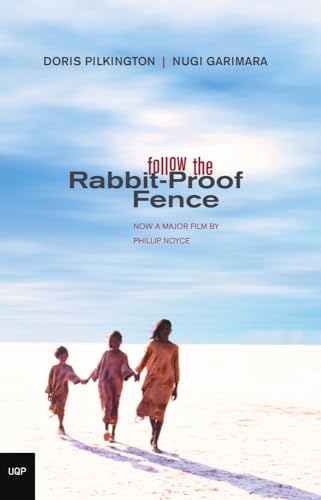
This extraordinary story of courage and faith is based on the actual experiences of three girls who fled from the repressive life of Moore River Native Settlement, following along the rabbit-proof fence back to their homelands. Assimilationist policy dictated that these girls be taken from their kin and their homes in order to be made white. Settlement life was unbearable with its chains and padlocks, barred windows, hard cold beds, and horrible food. Solitary confinement was doled out as regular punishment. The girls were not even allowed to speak their language. Of all the journeys made since white people set foot on Australian soil, the journey made by these girls born of Aboriginal mothers and white fathers speaks something to everyone.
Die Inhaltsangabe kann sich auf eine andere Ausgabe dieses Titels beziehen.
Über die Autorin bzw. den Autor
Doris Pilkington's traditional name is Nugi Garimara. She was born in 1937 on Balfour Downs Station in the homeland of her Mardu ancestors. As a toddler she was removed by authorities from her home at the station and committed to Moore River Native Settlement, from which she escaped. She is the author of Home to Mother and Under the Wintamarra Tree.
Auszug. © Genehmigter Nachdruck. Alle Rechte vorbehalten.
Follow the Rabbit-Proof Fence
By Doris Pilkington, Nugi GarimaraUniversity of Queensland Press
Copyright © 1996 Doris Pilkington/Nugi Garimara
All rights reserved.
ISBN: 978-0-7022-3355-5All rights reserved.
Contents
Title Page,
Acknowledgments,
Introduction,
1: The First Military Post,
2: The Swan River Colony,
3: The Decline of Aboriginal Society,
4: From the Deserts They Came,
5: Jigalong, 1907–1931,
6: The Journey South,
7: The Moore River Native Settlement, 1931,
8: The Escape,
9: What Happened to Them? Where are They Now?,
Glossary of Mardujara words,
References,
Black Australian Writing Series,
Copyright,
CHAPTER 1
The First Military Post
It was still very cool in the early summer morning; the fresh, clean air he breathed into his lungs felt good. He stood up and stretched his arms above his head then dropped them to his side. He was the first to rise. This was not unusual, Kundilla always woke before anyone else and this morning was no different from any other. He looked slowly around at the sleeping forms covered by warm, animal-skin blankets, lying outside their shelters made from branches and slabs of bark. There was no shortage of trees and shrubs around here, that is why this spot was chosen for the winter camp. Kundilla walked silently to perform his early morning rituals, away from the camp, which was situated in a clearing a hundred metres from the river. On his return he stopped along the banks of the river to pull up the fish traps he had set the previous evening. How peaceful it was, with the sounds of birds twittering high above, amid the leafy branches of the giant river gums, and the occasional splash of the fish in the river. Dawn was his favourite time of day. As the sun rose he could meditate and reflect on the events of the past few days but, more importantly, he could plan future activities without interruption and distraction.
Little did he know that soon devastation and desolation would shatter this tranquil environment; that this pristine forest would echo the anguished cries and the ceaseless weeping of thousands of people — his people — as they were tormented by foreigners and driven off their land.
His long, wavy, grey hair and thick white beard heightened his dignified appearance as he approached the camp carrying two fish traps filled with marrons and gilgies for his family's breakfast. He had power and strength which commanded respect.
Kundilla was satisfied with the results of yesterday's annual scrub firing. This was a special time on the seasonal calendar when his family clans from far around would gather on their territory to set fire to areas of dense undergrowth to flush out any game, such as kangaroos and wallabies, that might be sheltering there. All the men waited in strategic places around the scrub as the animals dashed out in panic. Then they either speared or clubbed them to death. The animal pelts were made into warm cloaks as protection against the bitterly cold winter winds of the south west. The smaller skins were made into skin bags with fur lining the inside to be used for carrying babies and as all-purpose bags.
Kundilla had two wives, the senior wife, Ngingana, had already lit the fire to cook the first meal of the day when he returned. She raked the coals and ashes to one side then dropped the marrons and gilgies on them. When they were cooked she pulled them out with a long green stick and laid them on the gum leaves. As she dusted the ashes from the food she called for everyone to come and eat. This meal was washed down with the cool water drawn from the soak under the thick bullrushes that grew along the river bank. Kundilla's second wife Mardina was breastfeeding their youngest child, Jalda.
Her two teenage sons, Wandani and Binmu, would soon be taken away to join several others who would leave the camp as boys to go through the Law and return as men. She glanced proudly at her sons and felt a pang of sadness. To her they were still boys, surely one more summer wouldn't make any difference. She was only their mother, the tribal elders had already made their decision and there was nothing she could do to change it. Mardina wiped the tears from her eyes then raised her head and continued to feed baby Jalda.
Kundilla's three married sons and their families were camped to the right of them. Others camped nearby, forming a semicircle. There were about sixty people in the group and for the hunters and fishermen this was the place to be right now. Some had travelled for many days from outlying areas to join this group while the food supply was plentiful here. Kundilla had planned to move soon to the mouth of the river so that he and his family could feast on crayfish, crabs, seals and shellfish. They all looked forward to this annual trip to the coast.
After breakfast, Kundilla sat under the shade of a large eucalypt away from the camp and began checking his spears and fishing traps in preparation for the coastal trip. Behind him the sounds of normal, everyday camp life continued: mothers and grandmothers yelling orders to their offspring, children playing games, some fighting and squabbling, others delightedly splashing and diving in the pool. As he reached for the sharpening stone to hone a spear, an ominous sound reverberated through the forest. The peace and tranquility was shattered by a loud boom. Alarmed and frightened, the women snatched up their babies and toddlers and ran to the men.
"What was that?" the people asked their leader. Even the flocks of birds were squawking loudly as they sought refuge in the high canopy of the forest.
"I don't know what that noise was or where it came from," Kundilla replied. "But we will go down and find out," he assured them. He called all the adult men to him and they gathered by a tea-tree clump.
"They're back. They've come to take away our women," he said in a voice filled with passion, anxiety and fear.
"Yes, but what can we do to stop them?" asked Bunyun, his eldest son. "You know what happened the last time they came ashore."
The men nodded as they recalled the incident; it happened to Bunyun's Uncle Tumi and other members of his family who usually camped further along the beach, near the cove. They were shot by the white raiders when they tried to stop them from kidnapping the women. The family were still mourning their dead.
Kundilla and his family had heard how their brothers and uncles were killed by ruthless white pirates, desperados and escaped convicts. Those cruel and murderous men came ashore and stole Aboriginal women and kept them on board their ships as sexual slaves, then murdered them and tossed their bodies into the ocean when their services were no longer required. These renegades made up the crews of the American whaling ships who hunted for whales and seals on the southern coast of Western Australia. Although the brave Nyungar warriors fought gallantly and fearlessly, they were no match for the evil white invaders with their muskets, swords and pistols.
When the invaders encountered the Nyungar people of the Great Southern region, they were pleased to find friendly, hospitable people. At first, the Aboriginal men welcomed the sealers and whalers. They were very interested in the boats in which the crew had rowed ashore. Through sign language they managed to indicate that they were impressed with the timber structure and design of the boats. These unsuspecting men were invited to visit the beach camp of the white crew as a gesture of friendship and goodwill; the women...
„Über diesen Titel“ kann sich auf eine andere Ausgabe dieses Titels beziehen.
Suchergebnisse für Follow the Rabbit-Proof Fence

Beispielbild für diese ISBN
Follow the Rabbit Proof Fence
Verlag:
University of Queensland Press, 2002
ISBN 10: 0702233552
ISBN 13: 9780702233555
Gebraucht
Paperback
Anbieter: World of Books (was SecondSale), Montgomery, IL, USA
Verkäuferbewertung 5 von 5 Sternen

Paperback. Zustand: Good. The film Rabbit-Proof Fence is based on this true account of Doris Pilkington's mother Molly, who as a young girl led her two sisters on an extraordinary 1,600 kilometre walk home. Under Western Australia's invidious removal policy of the 1930s, the girls were taken from their Aboriginal families at Jigalong on the edge of the Little Sandy Desert, and transported halfway across the state to the Native Settlement at Moore River, north of Perth. Here Aboriginal children were instructed in the ways of white society and forbidden to speak their native tongue. The three girls - aged 8, 11 and 14 - managed to escape from the settlement's repressive conditions and brutal treatment. Barefoot, without provisions or maps, they set out to find the rabbit-proof fence, knowing it passed near their home in the north. Tracked by Native Police and search planes, they hid in terror, surviving on bush tucker, desperate to return to the world they knew. Artikel-Nr. 00110024164
Gebraucht kaufen
EUR 4,52
Versand gratis
Versand innerhalb von USA
Versand innerhalb von USA
Anzahl: 2 verfügbar
Beispielbild für diese ISBN
Follow the Rabbit Proof Fence
Verlag:
University of Queensland Press, 2002
ISBN 10: 0702233552
ISBN 13: 9780702233555
Gebraucht
Paperback
Anbieter: World of Books (was SecondSale), Montgomery, IL, USA
Verkäuferbewertung 5 von 5 Sternen
Paperback. Zustand: Very Good. The film Rabbit-Proof Fence is based on this true account of Doris Pilkington's mother Molly, who as a young girl led her two sisters on an extraordinary 1,600 kilometre walk home. Under Western Australia's invidious removal policy of the 1930s, the girls were taken from their Aboriginal families at Jigalong on the edge of the Little Sandy Desert, and transported halfway across the state to the Native Settlement at Moore River, north of Perth. Here Aboriginal children were instructed in the ways of white society and forbidden to speak their native tongue. The three girls - aged 8, 11 and 14 - managed to escape from the settlement's repressive conditions and brutal treatment. Barefoot, without provisions or maps, they set out to find the rabbit-proof fence, knowing it passed near their home in the north. Tracked by Native Police and search planes, they hid in terror, surviving on bush tucker, desperate to return to the world they knew. Artikel-Nr. 00108180874
Gebraucht kaufen
EUR 4,52
Versand gratis
Versand innerhalb von USA
Versand innerhalb von USA
Anzahl: 3 verfügbar
Foto des Verkäufers
Follow the Rabbit-Proof Fence
Verlag:
University Of Queensland Press, 2013
ISBN 10: 0702233552
ISBN 13: 9780702233555
Gebraucht
Softcover
Anbieter: Dream Books Co., Denver, CO, USA
Verkäuferbewertung 5 von 5 Sternen
Zustand: acceptable. This copy has clearly been enjoyedâ"expect noticeable shelf wear and some minor creases to the cover. Binding is strong, and all pages are legible. May contain previous library markings or stamps. Artikel-Nr. DBV.0702233552.A
Gebraucht kaufen
EUR 4,65
Versand gratis
Versand innerhalb von USA
Versand innerhalb von USA
Anzahl: 1 verfügbar
Beispielbild für diese ISBN
Follow the Rabbit-Proof Fence
Verlag:
University of Queensland Pr (Australia), 2013
ISBN 10: 0702233552
ISBN 13: 9780702233555
Gebraucht
Paperback
Anbieter: ThriftBooks-Dallas, Dallas, TX, USA
Verkäuferbewertung 5 von 5 Sternen
Paperback. Zustand: Very Good. No Jacket. May have limited writing in cover pages. Pages are unmarked. ~ ThriftBooks: Read More, Spend Less. Artikel-Nr. G0702233552I4N00
Gebraucht kaufen
EUR 6,64
Versand gratis
Versand innerhalb von USA
Versand innerhalb von USA
Anzahl: 1 verfügbar
Beispielbild für diese ISBN
Follow the Rabbit-Proof Fence
Verlag:
University of Queensland Pr (Australia), 2013
ISBN 10: 0702233552
ISBN 13: 9780702233555
Gebraucht
Paperback
Anbieter: ThriftBooks-Atlanta, AUSTELL, GA, USA
Verkäuferbewertung 5 von 5 Sternen
Paperback. Zustand: Very Good. No Jacket. May have limited writing in cover pages. Pages are unmarked. ~ ThriftBooks: Read More, Spend Less. Artikel-Nr. G0702233552I4N00
Gebraucht kaufen
EUR 6,64
Versand gratis
Versand innerhalb von USA
Versand innerhalb von USA
Anzahl: 1 verfügbar
Beispielbild für diese ISBN
Follow the Rabbit-Proof Fence
Verlag:
University of Queensland Pr (Australia), 2013
ISBN 10: 0702233552
ISBN 13: 9780702233555
Gebraucht
Paperback
Anbieter: ThriftBooks-Atlanta, AUSTELL, GA, USA
Verkäuferbewertung 5 von 5 Sternen
Paperback. Zustand: Good. No Jacket. Former library book; Pages can have notes/highlighting. Spine may show signs of wear. ~ ThriftBooks: Read More, Spend Less. Artikel-Nr. G0702233552I3N10
Gebraucht kaufen
EUR 6,64
Versand gratis
Versand innerhalb von USA
Versand innerhalb von USA
Anzahl: 1 verfügbar
Beispielbild für diese ISBN
Follow the Rabbit-Proof Fence
Verlag:
University of Queensland Pr (Australia), 2013
ISBN 10: 0702233552
ISBN 13: 9780702233555
Gebraucht
Paperback
Anbieter: ThriftBooks-Dallas, Dallas, TX, USA
Verkäuferbewertung 5 von 5 Sternen
Paperback. Zustand: Fair. No Jacket. Readable copy. Pages may have considerable notes/highlighting. ~ ThriftBooks: Read More, Spend Less. Artikel-Nr. G0702233552I5N00
Gebraucht kaufen
EUR 6,64
Versand gratis
Versand innerhalb von USA
Versand innerhalb von USA
Anzahl: 1 verfügbar
Beispielbild für diese ISBN
Follow the Rabbit-Proof Fence
Verlag:
University of Queensland Pr (Australia), 2013
ISBN 10: 0702233552
ISBN 13: 9780702233555
Gebraucht
Paperback
Anbieter: ThriftBooks-Dallas, Dallas, TX, USA
Verkäuferbewertung 5 von 5 Sternen
Paperback. Zustand: Good. No Jacket. Pages can have notes/highlighting. Spine may show signs of wear. ~ ThriftBooks: Read More, Spend Less. Artikel-Nr. G0702233552I3N00
Gebraucht kaufen
EUR 6,64
Versand gratis
Versand innerhalb von USA
Versand innerhalb von USA
Anzahl: 1 verfügbar
Beispielbild für diese ISBN
Follow the Rabbit-Proof Fence
Verlag:
University of Queensland Press, 2013
ISBN 10: 0702233552
ISBN 13: 9780702233555
Gebraucht
Softcover
Anbieter: Wonder Book, Frederick, MD, USA
Verkäuferbewertung 5 von 5 Sternen
Zustand: Good. Good condition. A copy that has been read but remains intact. May contain markings such as bookplates, stamps, limited notes and highlighting, or a few light stains. Artikel-Nr. V05M-00687
Gebraucht kaufen
EUR 7,04
Versand gratis
Versand innerhalb von USA
Versand innerhalb von USA
Anzahl: 1 verfügbar
Beispielbild für diese ISBN
Follow the Rabbit-Proof Fence
Verlag:
University of Queensland Press, Australia, St Lucia, 2002
ISBN 10: 0702233552
ISBN 13: 9780702233555
Gebraucht
Paperback
Anbieter: WorldofBooks, Goring-By-Sea, WS, Vereinigtes Königreich
Verkäuferbewertung 5 von 5 Sternen
Paperback. Zustand: Very Good. The book has been read, but is in excellent condition. Pages are intact and not marred by notes or highlighting. The spine remains undamaged. Artikel-Nr. GOR002925162
Gebraucht kaufen
EUR 3,84
EUR 6,51 Versand
Versand von Vereinigtes Königreich nach USA
Versand von Vereinigtes Königreich nach USA
Anzahl: 2 verfügbar