
Verwandte Artikel zu Drawing the Line at the Big Ditch: The Panama Canal...
Inhaltsangabe
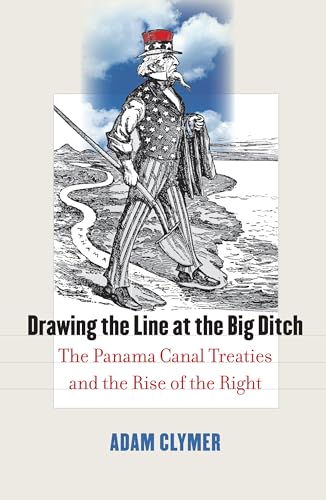
Considered one of America's engineering marvels, the Panama Canal sparked intense debates in the 1970s over the decision to turn it back over to Panama. In this remarkable and revealing tale, noted journalist Adam Clymer shows how the decision to give up this revered monument of the "American century" stirred emotions already rubbed raw by the loss of the Vietnam War and shaped American politics for years.
Jimmy Carter made the Canal his first foreign policy priority and won the battle to ratify the Panama Canal treaties. But, Clymer reveals, the larger war was lost. The issue gave Ronald Reagan a slogan that kept his 1976 candidacy alive and positioned him to win in 1980, helped elect conservative senators who made a Republican majority, and fueled the overall growth of conservatism.
In telling the story of America's reconsideration of the 1903 treaty that gave it control of the Canal "in perpetuity," Clymer focuses on the perspectives of six key players: Presidents Gerald Ford, Jimmy Carter, and Ronald Reagan, Senate Minority Leader Howard Baker, political candidate Gordon Humphrey, and Terry Dolan of the National Conservative Political Action Committee. His narrative illuminates many aspects of American politics during the Ford and Carter years-especially regarding Senate elections-that have been largely overlooked. And his chronicling of the emergence of political action committees on the right reveals their often-awkward relationship with the GOP and the uneasy alliances that helped the Republicans win control of the Senate in 1980.
Clymer explores how the uproar over the Canal episode foreshadowed perennial partisan attacks over intense, emotional issues from abortion to gun control to same-sex marriage. He also shows that people who hated the idea of giving up the canal gave birth to the NCPAC approach of beating up on an incumbent long before an election, often assisted by independent spending and outside advertising.
As Clymer argues, "The Panama Canal no longer divides Panama. But the fissures it opened 30 years ago have widened; they divide the United States." His even-handed account offers new insight into the "Reagan Revolution" and highlights an overlooked turning point in American political history.
Die Inhaltsangabe kann sich auf eine andere Ausgabe dieses Titels beziehen.
Über die Autorin bzw. den Autor
Former chief Washington correspondent for the New York Times, Adam Clymer is author of Edward M. Kennedy: A Biography. His writing has also appeared in the Nation, the New Republic, the Progressive, Washington Monthly, and elsewhere.
Auszug. © Genehmigter Nachdruck. Alle Rechte vorbehalten.
Drawing the Line at the Big Ditch
THE PANAMA CANAL TREATIES AND THE RISE OF THE RIGHT By Adam ClymerUNIVERSITY PRESS OF KANSAS
Copyright © 2008 the University Press of KansasAll right reserved.
ISBN: 978-0-7006-1582-7
Contents
Preface: "Pluck and Luck Conquered All": A Canal for the American Century........................................................................ix1 "In Perpetuity": Years of Dispute and Diplomacy................................................................................................12 "No Constituency to Help": President Ford Negotiates...........................................................................................103 "What a Shot in the Arm!": Ford Upsets Reagan Despite the Canal................................................................................194 "We Bought It. We Built It. It's Ours and We Are Going to Keep It": The Canal Issue Brings Reagan's Recovery...................................255 "Thank God for Those People in 1976 Who Headed Off That Loss of Freedom": Reagan Loses but Wins Republican Hearts..............................336 "Delay Invites Violence": Carter Inherits and Seizes the Issue.................................................................................407 "I Wanted to Treat Panama Fairly": Carter Underestimates American Dismay.......................................................................458 "Conservatives Can't Lose": The Canal Unifies the Right........................................................................................539 "Draw the Line at the Big Ditch": The Anti-Treaty Message......................................................................................6110 "What If They're Right?": Reagan Holding Back.................................................................................................7011 "Why Now? And Why Me?": Howard Baker and the Treaties.........................................................................................7512 "Be Tolerant and Patient in Bringing People Around": Byrd's Advice While in Panama............................................................8213 "A Measure of Our Strength, Not Our Weakness": The Senate Advises and Consents................................................................9014 "Come On and Watch Me Lose My Seat": Gordon Humphrey and the New Right Sink Tom McIntyre......................................................10615 "I Haven't Found Anybody in Iowa That's for the Treaties": Roger Jepsen on the Issue That Made the Difference.................................11716 "We Supported the Tough Conservative, the Business PAC Was Always for the Establishment": The PACmen Come.....................................13017 "A Group Like Ours Could Lie through Its Teeth and the Candidate It Helps Stays Clean": NCPAC Takes on Incumbents.............................14018 "ACU Could Go Out of Business by Election Day": The Canal Cuts Both Ways......................................................................15419 "I Hope That It's Over as an Issue": Reagan on the Canal after Ratification...................................................................16420 "They Never Wanted to See Another Panama Canal Ad": The North Carolina Senate Campaign........................................................17121 "Is Idaho Up for Grabs?": The Canal, NCPAC, and Steve Symms Defeat Frank Church...............................................................18022 "Cold Water on Some of His Supporters": The Canal Finishes a Weakened Talmadge................................................................19023 "A Senate Majority Made All the Difference in the World": Canal-Elected Senators and Baker Give Reagan a Chance to Govern.....................19724 "We've Made a Difference": Reagan Changed the Nation, without the Canal.......................................................................204Notes............................................................................................................................................213An Essay on Sources..............................................................................................................................259Acknowledgments..................................................................................................................................265Index............................................................................................................................................269
Chapter One
"IN PERPETUITY"YEARS OF DISPUTE AND DIPLOMACY
A canal through Panama, connecting the Atlantic and the Pacific oceans and saving thousands of miles compared with journeying around Cape Horn, was an idea with origins in the days of Spanish exploration of the New World. It gained appeal because of the California gold rush of 1849. The French, led by Ferdinand de Lesseps, builder of the Suez Canal, tried from 1882 to 1889, failing physically on the scene and financially in Paris. The United States used the gunboat Nashville to dislodge the restive province of Panama from Colombia in 1903, recognized the new nation two days later, and then essentially imposed a one-sided treaty on Panama to gain the authority to build a canal and maintain control of it and any part of Panama the United States wanted.
In the United States, the history of the Canal was the history of excavation and construction, overcoming repeated mudslides and fabricating locks and dams thousands of miles away that fit perfectly once shipped to Panama, and conquering yellow fever and malaria. The heroic names remembered for that triumph were President Theodore Roosevelt and Colonel George W. Goethals, the engineer who saw the project through, and Colonel William C. Gorgas, who ran the campaigns to exterminate the mosquitoes that spread disease.
But if there was one name that resounded in Panamanian history, and with no heroism attached, it was that of Philippe Bunau-Varilla. An engineer in the failed French effort and a part owner of the rights granted by Colombia to construct the Canal, Bunau-Varilla tried from St. Petersburg to Paris to Washington to find resources to see that the Canal was built. After the Colombian Senate, in August 1903, unanimously rejected a treaty under which the United States would pay $10 million to build a canal, Bunau-Varilla worked with would-be rebels in Panama and with Roosevelt and Secretary of State John Hay to consummate the rebellion as the Nashville and the head of the U.S.-owned Panama Railway kept Colombian troops away from the capital of Panama City. Then, under authority he had demanded from the rebels, the Frenchman negotiated a new treaty, even more favorable to the United States than the failed pact with Colombia.
In fact, some provisions written by Bunau-Varilla were more favorable to the United States than the draft that was prepared by Secretary Hay, who had started by expanding the projected Canal Zone from 10 kilometers (6.2 miles) in width in the pact with Colombia to 10 miles. The Frenchman's version also gave the United States a permanent right to take any lands and waters outside the zone that it needed for the Canal-a provision that led to developing a number of American military bases.
Finally, his version gave the United States "in perpetuity" the near equivalent of sovereignty over the Zone, saying: "The Republic of Panama grants to the United States all the rights, power and authority within the zone mentioned ... which the United States would possess and exercise if it were the sovereign of the territory within which said...
„Über diesen Titel“ kann sich auf eine andere Ausgabe dieses Titels beziehen.
Suchergebnisse für Drawing the Line at the Big Ditch: The Panama Canal...

Beispielbild für diese ISBN
Drawing the Line at the Big Ditch: The Panama Canal Treaties and the Rise of the Right
Verlag:
University Press of Kansas, 2008
ISBN 10: 0700615822
ISBN 13: 9780700615827
Gebraucht
Hardcover
Signiert
Anbieter: Wonder Book, Frederick, MD, USA
Verkäuferbewertung 5 von 5 Sternen

Zustand: Good. Signed Copy . Good dust jacket. Signed by author on half title page. Slightly dampstained. Writing inside. Artikel-Nr. A09OSa-00314
Gebraucht kaufen
EUR 23,20
Versand gratis
Versand innerhalb von USA
Versand innerhalb von USA
Anzahl: 1 verfügbar
Beispielbild für diese ISBN
Drawing the Line at the Big Ditch: The Panama Canal Treaties and the Rise of the Right
Verlag:
University Press of Kansas, 2008
ISBN 10: 0700615822
ISBN 13: 9780700615827
Gebraucht
Hardcover
Anbieter: ThriftBooks-Dallas, Dallas, TX, USA
Verkäuferbewertung 5 von 5 Sternen
Hardcover. Zustand: Very Good. No Jacket. Former library book; May have limited writing in cover pages. Pages are unmarked. ~ ThriftBooks: Read More, Spend Less. Artikel-Nr. G0700615822I4N10
Gebraucht kaufen
EUR 27,50
Versand gratis
Versand innerhalb von USA
Versand innerhalb von USA
Anzahl: 1 verfügbar
Beispielbild für diese ISBN
Drawing the Line at the Big Ditch : The Panama Canal Treaties and the Rise of the Right
Verlag:
University Press of Kansas, 2008
ISBN 10: 0700615822
ISBN 13: 9780700615827
Gebraucht
Hardcover
Erstausgabe
Anbieter: Better World Books, Mishawaka, IN, USA
Verkäuferbewertung 5 von 5 Sternen
Zustand: Good. First Edition. Former library copy. Pages intact with minimal writing/highlighting. The binding may be loose and creased. Dust jackets/supplements are not included. Includes library markings. Stock photo provided. Product includes identifying sticker. Better World Books: Buy Books. Do Good. Artikel-Nr. GRP102344313
Gebraucht kaufen
EUR 31,52
Versand gratis
Versand innerhalb von USA
Versand innerhalb von USA
Anzahl: 1 verfügbar
Beispielbild für diese ISBN
Drawing the Line at the Big Ditch: The Panama Canal Treaties and the Rise of the Right
Verlag:
University Press of Kansas, 2008
ISBN 10: 0700615822
ISBN 13: 9780700615827
Gebraucht
Hardcover
Anbieter: Books From California, Simi Valley, CA, USA
Verkäuferbewertung 4 von 5 Sternen

hardcover. Zustand: Very Good. Artikel-Nr. mon0004171478
Gebraucht kaufen
EUR 44,68
EUR 4,38 Versand
Versand innerhalb von USA
Versand innerhalb von USA
Anzahl: 1 verfügbar
Beispielbild für diese ISBN
Drawing the Line at the Big Ditch
Anbieter: PBShop.store UK, Fairford, GLOS, Vereinigtes Königreich
Verkäuferbewertung 5 von 5 Sternen
HRD. Zustand: New. New Book. Shipped from UK. Established seller since 2000. Artikel-Nr. FW-9780700615827
Neu kaufen
EUR 48,60
EUR 4,84 Versand
Versand von Vereinigtes Königreich nach USA
Versand von Vereinigtes Königreich nach USA
Anzahl: 15 verfügbar
Beispielbild für diese ISBN
Drawing the Line at the Big Ditch: The Panama Canal Treaties and the Rise of the Right
Anbieter: Ria Christie Collections, Uxbridge, Vereinigtes Königreich
Verkäuferbewertung 5 von 5 Sternen
Zustand: New. In English. Artikel-Nr. ria9780700615827_new
Neu kaufen
EUR 54,84
EUR 13,13 Versand
Versand von Vereinigtes Königreich nach USA
Versand von Vereinigtes Königreich nach USA
Anzahl: Mehr als 20 verfügbar
Beispielbild für diese ISBN
Drawing the Line at the Big Ditch
Anbieter: Majestic Books, Hounslow, Vereinigtes Königreich
Verkäuferbewertung 4 von 5 Sternen
Zustand: New. pp. x + 286 Illus., Map. Artikel-Nr. 8062376
Neu kaufen
EUR 63,69
EUR 7,56 Versand
Versand von Vereinigtes Königreich nach USA
Versand von Vereinigtes Königreich nach USA
Anzahl: 3 verfügbar
Beispielbild für diese ISBN
Drawing the Line at the Big Ditch : The Panama Canal Treaties and the Rise of the Right : ()
Anbieter: Asano Bookshop, Nagoya, AICHI, Japan
Verkäuferbewertung 4 von 5 Sternen
Zustand: Brand New. Artikel-Nr. 85480
Neu kaufen
EUR 45,21
EUR 32,48 Versand
Versand von Japan nach USA
Versand von Japan nach USA
Anzahl: 1 verfügbar
Beispielbild für diese ISBN
Drawing the Line at the Big Ditch: The Panama Canal Treaties and the Rise of the Right
Anbieter: Kennys Bookstore, Olney, MD, USA
Verkäuferbewertung 5 von 5 Sternen
Zustand: New. Considered one of America's engineering marvels, the Panama Canal sparked intense debates in the 1970s over the decision to turn it back over to Panama. This work argues, that the Panama Canal no longer divides Panama. But the fissures it opened 30 years ago have widened; they divide the United States. Num Pages: 304 pages, 20 photographs. BIC Classification: HBJK; HBLW3; JP. Category: (G) General (US: Trade). Dimension: 229 x 152 x 26. Weight in Grams: 567. . 2008. First Edition. Hardcover. . . . . Books ship from the US and Ireland. Artikel-Nr. V9780700615827
Neu kaufen
EUR 85,12
EUR 9,22 Versand
Versand innerhalb von USA
Versand innerhalb von USA
Anzahl: 15 verfügbar
Foto des Verkäufers
Drawing the Line at the Big Ditch: The Panama Canal Treaties and the Rise of the Right
Anbieter: moluna, Greven, Deutschland
Verkäuferbewertung 5 von 5 Sternen
Gebunden. Zustand: New. Considered one of America s engineering marvels, the Panama Canal sparked intense debates in the 1970s over the decision to turn it back over to Panama. This work argues, that the Panama Canal no longer divides Panama. But the fissures it opened 30 years ag. Artikel-Nr. 594898870
Neu kaufen
EUR 53,62
EUR 48,99 Versand
Versand von Deutschland nach USA
Versand von Deutschland nach USA
Anzahl: Mehr als 20 verfügbar