
Verwandte Artikel zu I Am Mordred: A Tale from Camelot
Inhaltsangabe
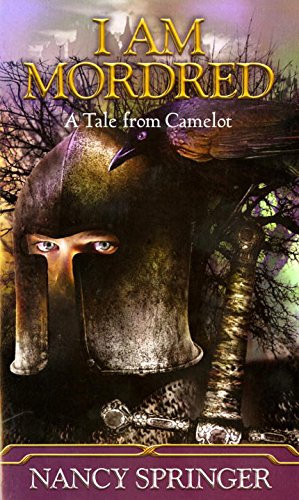
After a prophecy by Merlin that Mordred will grow up to kill his father, the beloved King Arthur, young Mordred struggles with fate, loathing the great king who tried to kill him as a baby, but he travels to Camelot, where he learns to idolize his father. An ALA Notable Book. Reprint.
Die Inhaltsangabe kann sich auf eine andere Ausgabe dieses Titels beziehen.
Über die Autorin bzw. den Autor
Nancy Springer has published forty novels for adults, young adults and children. In a career beginning shortly after she graduated from Gettysburg College in 1970, Springer wrote for ten years in the imaginary realms of mythological fantasy, then ventured on contemporary fantasy, magical realism, and women's fiction before turning her attention to children's literature. Her novels and stories for middle-grade and young adults range from contemporary realism, mystery/crime, and fantasy to her critically acclaimed novels based on the Arthurian mythos, I AM MORDRED: A TALE OF CAMELOT and I AM MORGAN LE FAY. Springer's children's books have won her two Edgar Allan Poe awards, a Carolyn W. Field award, various Children's Choice honors and numerous ALA Best Book listings. Her most recent series include the Tales of Rowan Hood, featuring Robin Hood’s daughter, and the Enola Holmes mysteries, starring the much younger sister of Sherlock Holmes.
Ms. Springer lives in East Berlin, Pennsylvania.
Auszug. © Genehmigter Nachdruck. Alle Rechte vorbehalten.
Chapter One
When I was a baby, my father tried to kill me.
I am Mordred, speaking to you from the wind with a raven's thin black tongue. I am Mordred, and it is no easier to say now than it ever was. Even hundreds of years ago, when I was human and young, when I first looked wide-eyed upon Camelot, it was hard to be who I was: Mordred, the shadow on all that shone, the bad seed.
Because I am Mordred, my father placed me naked in a coracle-a frail cockleshell of a boat-and cast me adrift on the sea.
I was too young to remember the days of starvation, the nights of cold. I do not remember my own crying. And I did not at first know that I was Mordred-and I did not at first think to hate my father, because my fishermother taught me no hatred. While she told me no lies, she kept from me the whole truth of those harsh days. Here is the way she would tell the tale to me:
"Once upon a time," she would say, "there was a poor common woman who was very unhappy."
"That was you, Mama!" I bounced in my bed until the straw rustled, for I had heard this tale many times in my six years, the true amazing tale of myself, and I loved it. She had told it to me almost every day since I could remember.
Her round brown face would crinkle with a smile as she went on, pretending I hadn't spoken. "A poor fisherman's wife. She was unhappy because her baby had died, and she had waited so long, and then to lay the poor little stranger in the ground . . . well, it was hard. The milk stung in her breasts and the tears stung in her eyes and she could not think of food or eating; she sat by the cold hearth and cried. But then-what do you think happened?"
"The fisherman found me!" I shouted.
"Shhhh. Softly, little one. Yes, it was-it was uncanny." Her smile turned rapt, and in back of her words I grew aware of the vast sea sighing and stirring and muttering like a sleeper outside our window. "Like a miracle. The good fisherman walked down to see to his nets, and there, beached almost at his door, what should he see but a fine coracle. And in the coracle what should he find but a wee naked baby boy, cold and hungry but still alive."
"That was me!"
"Yes, dear one, that was you." Now there was a bright glimmer in her smiling eyes. "The good fisherman picked you up and carried you against his chest, under his tunic to warm you, and he hurried to me-"
From his place by the fire my fisherfather grumbled, "I should have seen to the coracle first."
"Hush, you." Fishermother spoke gently because she knew he was teasing. He was a dank, silent man, as crusty as the salt on his nets, but she had an understanding with him. She went on with the story. "He hurried to me where I sat weeping and he gave you into my arms, poor wee babe, so weak and starved that you could barely cry, yet when I offered you the breast you suckled strongly. Like a miracle. And when he turned again to the sea the coracle was gone."
"As if it had never been."
"As if it had never been, yes. Uncanny."
My fisherfather growled, "The sea took it back, that's all."
"But the sea was calm. And never a splinter of that coracle did we see again." My fishermother spoke almost in a whisper. "Old Lyr had heard me crying, I think." Lyr was the god of the sea, who allowed Fisherfather's boat on his wide slumbering chest in the summer but shook the hut with purple storms in the cold of the year; I knew the power of Lyr. "Old Lyr had grown weary of hearing my crying and sent you to dry my tears, little one."
I lay quieted by the wonder of the story.
"Now go to sleep, Tad." My fishermother patted me. She called me Tad because I had come to her naked like a wriggling little tadpole from the sea. "Oh, look, there is the mark of Lyr's kiss!" She always made a show of discovering it, a brownish mark like an X behind my left ear. She kissed me there. "Sleep in peace."
And so I did. The murmuring of the sea was my lullaby, and my belly was full-I never went hungry. "The haddock leap into the nets," my fisherfather said sometimes in wonder "Thank the goodliness of our blessed King Arthur" For it was the soul-honor of the King that made the fish fat and plentiful. But I did not dream of Arthur, King in Camelot, not in those periwinkle days when I was Tad. The hut was warm and the sea breathed marvels in my ear, and in my sleep I dreamed sometimes that the waves rocked me, in their watery arms. I did not know myself to be bad seed cast away, and I did not think to wonder who was my real father or my real mother, for my fishermother had told me that I was a gift from Lyr. The sea was my father and my mother. And in the morning there would be warm white chowder to eat, and all day I would leap on the rocks and wade the shallows and run with the players on the gravel shore, and the sea was vast and the sky vast all around me, and I stood a god's gift over the sea amidst the sky, and the Forest Perilous was only a low blue mystery in the distance. And at night there would be kippered herring for supper and the warmth of Fishermother's arms and my story at bedtime, and I was happy.
It is instructive, looking back now that I am no longer mortal, instructive and curious to remember how it was to be happy.
All changed, of course, before I was strong enough or ready, on a summer day when a lady in green came riding on a great gray horse out of the Forest Perilous.
I saw her approaching, for I was gathering birds' eggs on the rocks, and as I squatted by the basket I glanced up and saw the horse shining like a mussel pearl against the darkness that was the forest. Speckled eggs dropped from my hands and cracked open at my feet. Crouching, I gawked at the horse and rider, for I had never seen such a thing, though I had heard of lords and ladies in the stories my fishermother told me. But to really see--it was beyond believing. A lady, a real lady, riding past our hut-
I left my basket and ran to tell my fishermother to come out and see.
In a moment I stood before the hut, so breathless, not from running but from wonder, that I could barely speak. But Mama was already at the door, staring.
And the lady sent the horse at a long floating trot straight toward us.
So this was a lady. I did not yet know enough to find it odd that she rode alone. She sat half sideward on the horse, and her gown flowed down like leaf-green water around her feet, covering them; I thought at first that she might not have feet, she seemed so different from my stout brown fisher- mother standing in the hut's low doorway. The lady's skin lustered as smooth and pale as moonfight. Her hair the color of a red hawk lay in sleek parted wings over her ears, then swept into plaits bound with crisscross ribbons of the same green as her shimmering gown, ending in clasps of gold. The plaits hung so long they lay like whiplashes against the horse's flanks, making it snort as it trotted toward us, a great dapple-gray horse-any horse would have seemed huge to me, for I had never seen one, but in truth this was a courser, a charger with massive shoulders and a mighty arched neck, a destrier, not a lady's gentle palfrey. My nose scarcely reached higher than the horse's knees as it halted before me.
There I stood in my coarse brown tunic, bare-legged, a child with a mouth like an O, agape at the sight of the lady upon the great gray horse, gazing up at her face-at her skin like moonlight, her eyes dark and secret, like deep pools at midnight-I looked up at her, and she looked back at me and smiled, a merry, tender smile, as if we shared a jest.
"Well met, Mordred," she said.
My fishermother wept even though Nyneve gave her a purse of gold.
That was the lady's name, Nyneve, and she was a sorceress. The snorting charger stood as still as the dapple-gray moon in the sky when she...
„Über diesen Titel“ kann sich auf eine andere Ausgabe dieses Titels beziehen.
Suchergebnisse für I Am Mordred: A Tale from Camelot

Beispielbild für diese ISBN
I Am Mordred: A Tale of Camelot
Anbieter: World of Books (was SecondSale), Montgomery, IL, USA
Verkäuferbewertung 5 von 5 Sternen

Zustand: Acceptable. Item in acceptable condition! Textbooks may not include supplemental items i.e. CDs, access codes etc. Artikel-Nr. 00095423408
Gebraucht kaufen
EUR 3,59
Versand gratis
Versand innerhalb von USA
Versand innerhalb von USA
Anzahl: 1 verfügbar
Beispielbild für diese ISBN
I Am Mordred: A Tale of Camelot
Verlag:
Firebird (edition ), 2002
ISBN 10: 0698118413
ISBN 13: 9780698118416
Gebraucht
Mass Market Paperback
Anbieter: BooksRun, Philadelphia, PA, USA
Verkäuferbewertung 5 von 5 Sternen
Mass Market Paperback. Zustand: Very Good. It's a well-cared-for item that has seen limited use. The item may show minor signs of wear. All the text is legible, with all pages included. It may have slight markings and/or highlighting. Artikel-Nr. 0698118413-11-1
Gebraucht kaufen
EUR 4,26
Versand gratis
Versand innerhalb von USA
Versand innerhalb von USA
Anzahl: 1 verfügbar
Beispielbild für diese ISBN
I Am Mordred: A Tale of Camelot
Verlag:
Firebird (edition Reprint), 2002
ISBN 10: 0698118413
ISBN 13: 9780698118416
Gebraucht
Mass Market Paperback
Anbieter: BooksRun, Philadelphia, PA, USA
Verkäuferbewertung 5 von 5 Sternen
Mass Market Paperback. Zustand: Fair. Reprint. The item might be beaten up but readable. May contain markings or highlighting, as well as stains, bent corners, or any other major defect, but the text is not obscured in any way. Artikel-Nr. 0698118413-7-1
Gebraucht kaufen
EUR 4,34
Versand gratis
Versand innerhalb von USA
Versand innerhalb von USA
Anzahl: 1 verfügbar
Beispielbild für diese ISBN
I Am Mordred
Anbieter: ThriftBooks-Reno, Reno, NV, USA
Verkäuferbewertung 5 von 5 Sternen
Mass Market Paperback. Zustand: Very Good. No Jacket. May have limited writing in cover pages. Pages are unmarked. ~ ThriftBooks: Read More, Spend Less. Artikel-Nr. G0698118413I4N00
Gebraucht kaufen
EUR 6,19
Versand gratis
Versand innerhalb von USA
Versand innerhalb von USA
Anzahl: 1 verfügbar
Beispielbild für diese ISBN
I Am Mordred
Anbieter: ThriftBooks-Dallas, Dallas, TX, USA
Verkäuferbewertung 5 von 5 Sternen
Mass Market Paperback. Zustand: Very Good. No Jacket. May have limited writing in cover pages. Pages are unmarked. ~ ThriftBooks: Read More, Spend Less. Artikel-Nr. G0698118413I4N00
Gebraucht kaufen
EUR 6,19
Versand gratis
Versand innerhalb von USA
Versand innerhalb von USA
Anzahl: 1 verfügbar
Beispielbild für diese ISBN
I Am Mordred : A Tale of Camelot
Verlag:
Penguin Group (SA) Limited, The, 2002
ISBN 10: 0698118413
ISBN 13: 9780698118416
Gebraucht
Softcover
Anbieter: Better World Books, Mishawaka, IN, USA
Verkäuferbewertung 5 von 5 Sternen
Zustand: Good. Former library copy. Pages intact with minimal writing/highlighting. The binding may be loose and creased. Dust jackets/supplements are not included. Includes library markings. Stock photo provided. Product includes identifying sticker. Better World Books: Buy Books. Do Good. Artikel-Nr. 3406632-6
Gebraucht kaufen
EUR 6,78
Versand gratis
Versand innerhalb von USA
Versand innerhalb von USA
Anzahl: 1 verfügbar
Beispielbild für diese ISBN
I Am Mordred: A Tale of Camelot
Anbieter: Wonder Book, Frederick, MD, USA
Verkäuferbewertung 5 von 5 Sternen
Zustand: Good. Signed Copy . Inscribed by author on title page. Cover creased. Earlier printing, 1998. Artikel-Nr. S03D-02462
Gebraucht kaufen
EUR 8,95
Versand gratis
Versand innerhalb von USA
Versand innerhalb von USA
Anzahl: 1 verfügbar