
Verwandte Artikel zu Doing Global Science: A Guide to Responsible Conduct...
Inhaltsangabe
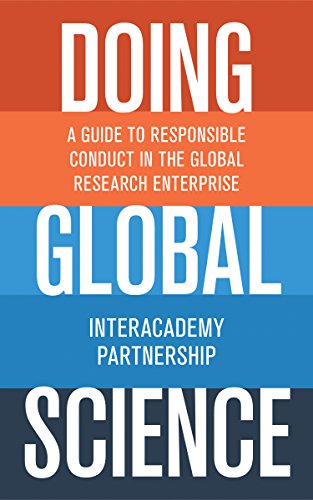
An essential introduction to the responsible conduct of science in today's interconnected world
This concise introductory guide explains the values that should inform the responsible conduct of scientific research in today's global setting. Featuring accessible discussions and ample real-world scenarios, Doing Global Science covers proper conduct, fraud and bias, the researcher's responsibilities to society, communication with the public, and much more. The book places special emphasis on the international and highly networked environment in which modern research is done, presenting science as an enterprise that is being transformed by globalization, interdisciplinary research projects, team science, and information technologies.
Accessibly written by an InterAcademy Partnership committee comprised of leading scientists from around the world, Doing Global Science is required reading for students, practitioners, and anyone concerned about the responsible conduct of science today.
- Provides practical guidance and instructions for doing scientific research in today's global setting
- Covers everything from responsible conduct to communication with the public
- Features numerous real-world scenarios drawn from an array of disciplines and national contexts
- Focuses on issues commonly encountered in international collaborations
- Written by a panel of leading experts from around the world
- An essential guide for practicing scientists and anyone concerned about fostering research integrity
Die Inhaltsangabe kann sich auf eine andere Ausgabe dieses Titels beziehen.
Über die Autorin bzw. den Autor
InterAcademy Partnership (IAP) is an umbrella organization formed by the merging of three established interacademy networks. The leadership of the new umbrella organization also includes representatives of four regional networks—in Africa, the Asia/Pacific region, Europe, and the Americas. IAP has 130 member academies, which together reach governments that represent 95 percent of the world's population.
Von der hinteren Coverseite
"Doing Global Science is a comprehensive code of conduct for scientific research, and a guide to responsible interactions by researchers with funding agencies, journals, policymakers, the public, and each other. In an interconnected world that is increasingly knowledge based and data driven, the plethora of resources and references in this book is invaluable to scientists and science communicators at all levels."--Maria Spiropulu, California Institute of Technology
"Welcome and timely. Even for an old-style theoretician like myself with a romantic view of science as a totally free adventure, these guidelines are a ringing bell about numerous very real issues that we cannot ignore."--Carlo Rovelli, Aix-Marseille University
"This unique book offers an international perspective on the difficulties and challenges of doing research."--Merav Opher, Boston University
"I thoroughly enjoyed reading this concise and accessible book. Doing Global Science covers a broad range of topics and is full of relevant and extremely useful information."--Ralph R. Ristenbatt III, Pennsylvania State University
Auszug. © Genehmigter Nachdruck. Alle Rechte vorbehalten.
Doing Global Science
A Guide to Responsible Conduct in the Global Research Enterprise
By Princeton University PressPRINCETON UNIVERSITY PRESS
Copyright © 2016 Princeton University Press
All rights reserved.
ISBN: 978-0-691-17075-6All rights reserved.
Contents
Foreword, vii,
Preface, ix,
1 Responsible Conduct of Research and the Global Context: An Overview, 1,
2 Planning and Preparing for Research, 9,
3 Preventing the Misuse of Research and Technology, 21,
4 Carrying Out Research, 31,
5 The Researcher's Responsibilities to Society, 47,
6 Preventing and Addressing Irresponsible Practices, 59,
7 Aligning Incentives with Responsible Research, 73,
8 Reporting Research Results, 81,
9 Benefits and Challenges of International Collaborations, 93,
10 Communicating with Policymakers and the Public, 101,
References, 111,
Committee on Research Integrity, 139,
Biographical Sketches of the Committee Members, 141,
Index, 147,
CHAPTER 1
RESPONSIBLE CONDUCT OF RESEARCH AND THE GLOBAL CONTEXT
An Overview
Scientific research is one of the great adventures of our time. Researchers are members of a global community that is producing new knowledge at an unprecedented rate. This new knowledge is transforming society by contributing to the development of new technologies and by changing how we think about the natural world, ourselves, and our institutions.
The growth and accelerating pace of scientific discovery has made the twenty-first century an exciting time to be a researcher. Large international teams are working on problems that were impossible to solve in the past, such as the annotation of the human genome, the search for dark matter, or the analysis of "big data" derived from social media. New fields of research are opening up at the intersection of traditional disciplines, such as nanobiology and neuro-economics (Glimcher 2003; Nussinov and Alemán 2006). Researchers are generating knowledge that could fundamentally alter agriculture, energy production, environmental protection, communications, and many other aspects of human life. Our future on this planet will depend to a considerable extent on the products of research.
Like the rest of society, the research enterprise has been undergoing momentous changes. Information technology is revolutionizing how research is done and how researchers interact with each other. Most researchers work not just on individual tasks but as parts of research teams that include people with many different backgrounds and perspectives and may be international in scope. Governments around the world, recognizing the critical role of research in improving the well-being of their citizens, are increasing their support for science and engineering. As a result, millions more scientists and engineers are working today than was the case just two decades ago (NSB 2012).
The changes going on within research have created challenges. Team research can create conflict as well as opportunity. The rapid expansion of the research community may disrupt the transmission of traditions and ethical principles to new researchers. Increased competition for resources may intensify the pressures faced by researchers, including young investigators, to publish more papers and to publish in the most prestigious journals. Technology -enabled tools such as blogs and social media increase the speed of scientific communication but may also contribute to eroding collegiality or facilitate the spread of unreliable information. Many researchers travel to countries where they may encounter different research practices than they are used to, or they may become involved in interdisciplinary research that is unlike research they have done before. The research landscape has become more diverse, more interconnected, faster paced, and more complex than ever.
Throughout the history of research, young and early career researchers have learned about standards of conduct by working with more experienced researchers. This process of learning by doing will continue to be essential in the training of future generations of researchers. However, new researchers can benefit from having a readily accessible and compact source of guidance — guidance that more -experienced researchers need to review and follow as well. All researchers can benefit from a better understanding of changes in the research landscape and their possible impacts.
In 2008, the International Council for Science (ICSU) published a booklet providing guidance about the responsibilities and freedom of researchers to maximize the benefits of science for society. One year later, the educational guide On Being a Scientist: A Guide to Responsible Conduct in Research (NAS-NAE-IOM 2009) was published. In 2012, the InterAcademy Council (IAC) and IAP — The Global Network of Science Academies — published Responsible Conduct in the Global Research Enterprise: A Policy Report, which describes the values of research and how those values should guide the conduct of research. This 2012 report acknowledged that different disciplines and countries have varying research traditions and cultures. But it argued that the fundamental values of research transcend disciplinary or national boundaries and form the basis for principles of conduct that govern all research.
The educational guide you are reading now is an adaptation and expansion of the earlier policy report and was written by the same committee. It includes much of the same content and in some cases even the same language; text from the recommendations of the report is printed in boldface type when it appears in this publication. However, this publication has a different goal than previous documents. It has been written as a practical guide to conduct in a research environment that is being transformed by globalization, interdisciplinary research projects, team science, and information technologies. It addresses both long-standing issues in the responsible conduct of research and emerging issues. It is aimed not only at new researchers but at more-experienced researchers and research administrators, funders, and policymakers, all of whom are caught up in the broad trends that are reshaping the research enterprise.
This guide provides an overview of which research behaviors are responsible and to be embraced and which are irresponsible and to be avoided. It uses specific examples from a variety of areas to provide guidance relevant to researchers in all fields. The organization of the guide parallels the research process. The even -numbered chapters follow the process of research, from planning and preparing to undertake research (chapter 2) to carrying out research (chapter 4), to preventing and addressing irresponsible research practices (chapter 6), to reporting research results (chapter 8), to communicating with policymakers and the public (chapter 10). The odd-numbered chapters discuss broader issues associated with performing research: the researcher's responsibilities to try to prevent the misuse of research and related technology (chapter 3), the researcher's responsibilities to society in planning and carrying out research (chapter 5), aligning incentives with responsible research (chapter 7), and the benefits and challenges of international collaboration (chapter 9). The references and additional resources do not represent an exhaustive bibliographic source, but they provide the reader with further material about the topics covered in...
„Über diesen Titel“ kann sich auf eine andere Ausgabe dieses Titels beziehen.
Suchergebnisse für Doing Global Science: A Guide to Responsible Conduct...

Beispielbild für diese ISBN
Doing Global Science: A Guide to Responsible Conduct in the Global Research Enterprise
Verlag:
Princeton University Press, 2016
ISBN 10: 0691170754
ISBN 13: 9780691170756
Gebraucht
Hardcover
Anbieter: World of Books (was SecondSale), Montgomery, IL, USA
Verkäuferbewertung 5 von 5 Sternen

Hardback. Zustand: Very Good. This concise introductory guide explains the values that should inform the responsible conduct of scientific research in today's global setting. Featuring accessible discussions and ample real-world scenarios, Doing Global Science covers proper conduct, fraud and bias, the researcher's responsibilities to society, communication with the public, and. Artikel-Nr. 00099736374
Gebraucht kaufen
EUR 5,43
Versand gratis
Versand innerhalb von USA
Versand innerhalb von USA
Anzahl: 1 verfügbar
Beispielbild für diese ISBN
Doing Global Science: A Guide to Responsible Conduct in the Global Research Enterprise
Verlag:
Princeton University Press (edition ), 2016
ISBN 10: 0691170754
ISBN 13: 9780691170756
Gebraucht
Hardcover
Anbieter: BooksRun, Philadelphia, PA, USA
Verkäuferbewertung 5 von 5 Sternen
Hardcover. Zustand: Very Good. It's a well-cared-for item that has seen limited use. The item may show minor signs of wear. All the text is legible, with all pages included. It may have slight markings and/or highlighting. Artikel-Nr. 0691170754-8-1
Gebraucht kaufen
EUR 5,44
Versand gratis
Versand innerhalb von USA
Versand innerhalb von USA
Anzahl: 1 verfügbar
Beispielbild für diese ISBN
Doing Global Science: A Guide to Responsible Conduct in the Global Research Enterprise
Verlag:
Princeton University Press, 2016
ISBN 10: 0691170754
ISBN 13: 9780691170756
Gebraucht
Hardcover
Anbieter: ThriftBooks-Atlanta, AUSTELL, GA, USA
Verkäuferbewertung 5 von 5 Sternen
Hardcover. Zustand: As New. No Jacket. Pages are clean and are not marred by notes or folds of any kind. ~ ThriftBooks: Read More, Spend Less. Artikel-Nr. G0691170754I2N00
Gebraucht kaufen
EUR 7,07
Versand gratis
Versand innerhalb von USA
Versand innerhalb von USA
Anzahl: 1 verfügbar
Beispielbild für diese ISBN
Doing Global Science
Anbieter: PBShop.store US, Wood Dale, IL, USA
Verkäuferbewertung 5 von 5 Sternen
HRD. Zustand: New. New Book. Shipped from UK. Established seller since 2000. Artikel-Nr. WP-9780691170756
Beispielbild für diese ISBN
Doing Global Science
Anbieter: PBShop.store UK, Fairford, GLOS, Vereinigtes Königreich
Verkäuferbewertung 5 von 5 Sternen
HRD. Zustand: New. New Book. Shipped from UK. Established seller since 2000. Artikel-Nr. WP-9780691170756
Neu kaufen
EUR 22,23
EUR 4,93 Versand
Versand von Vereinigtes Königreich nach USA
Versand von Vereinigtes Königreich nach USA
Anzahl: 2 verfügbar
Beispielbild für diese ISBN
Doing Global Science: A Guide to Responsible Conduct in the Global Research Enterprise
Anbieter: Kennys Bookstore, Olney, MD, USA
Verkäuferbewertung 5 von 5 Sternen
Zustand: New. Num Pages: 192 pages, 11 line illus. BIC Classification: PDN. Category: (P) Professional & Vocational; (U) Tertiary Education (US: College). Dimension: 203 x 127. . . 2016. Hardcover. . . . . Books ship from the US and Ireland. Artikel-Nr. V9780691170756
Neu kaufen
EUR 27,01
EUR 9,34 Versand
Versand innerhalb von USA
Versand innerhalb von USA
Anzahl: 1 verfügbar
Beispielbild für diese ISBN
Doing Global Science A Guide to Responsible Conduct in the Global Research Enterprise
Anbieter: Revaluation Books, Exeter, Vereinigtes Königreich
Verkäuferbewertung 5 von 5 Sternen
Hardcover. Zustand: Brand New. 160 pages. 8.00x5.00x0.40 inches. In Stock. Artikel-Nr. __0691170754
Neu kaufen
EUR 26,15
EUR 11,86 Versand
Versand von Vereinigtes Königreich nach USA
Versand von Vereinigtes Königreich nach USA
Anzahl: 2 verfügbar
Beispielbild für diese ISBN
Doing Global Science: A Guide to Responsible Conduct in the Global Research Enterprise
Anbieter: Ria Christie Collections, Uxbridge, Vereinigtes Königreich
Verkäuferbewertung 5 von 5 Sternen
Zustand: New. In English. Artikel-Nr. ria9780691170756_new
Neu kaufen
EUR 30,47
EUR 11,11 Versand
Versand von Vereinigtes Königreich nach USA
Versand von Vereinigtes Königreich nach USA
Anzahl: 2 verfügbar
Foto des Verkäufers
Doing Global Science : A Guide to Responsible Conduct in the Global Research Enterprise
Verlag:
Princeton University Press Mär 2016, 2016
ISBN 10: 0691170754
ISBN 13: 9780691170756
Neu
Hardcover
Anbieter: AHA-BUCH GmbH, Einbeck, Deutschland
Verkäuferbewertung 5 von 5 Sternen
Buch. Zustand: Neu. Neuware - An essential introduction to the responsible conduct of science in today's interconnected worldThis concise introductory guide explains the values that should inform the responsible conduct of scientific research in today's global setting. Featuring accessible discussions and ample real-world scenarios, Doing Global Science covers proper conduct, fraud and bias, the researcher's responsibilities to society, communication with the public, and much more. The book places special emphasis on the international and highly networked environment in which modern research is done, presenting science as an enterprise that is being transformed by globalization, interdisciplinary research projects, team science, and information technologies.Accessibly written by an InterAcademy Partnership committee comprised of leading scientists from around the world, Doing Global Science is required reading for students, practitioners, and anyone concerned about the responsible conduct of science today.- Provides practical guidance and instructions for doing scientific research in today's global setting- Covers everything from responsible conduct to communication with the public- Features numerous real-world scenarios drawn from an array of disciplines and national contexts- Focuses on issues commonly encountered in international collaborations- Written by a panel of leading experts from around the world- An essential guide for practicing scientists and anyone concerned about fostering research integrity. Artikel-Nr. 9780691170756
Neu kaufen
EUR 36,62
EUR 35,00 Versand
Versand von Deutschland nach USA
Versand von Deutschland nach USA
Anzahl: 1 verfügbar
Foto des Verkäufers
Doing Global Science: A Guide to Responsible Conduct in the Global Research Enterprise
Anbieter: moluna, Greven, Deutschland
Verkäuferbewertung 5 von 5 Sternen
Zustand: New. Über den AutorInterAcademy PartnershipKlappentextrnrnThe description for this book, Doing Global Science: A Guide to Responsible Conduct in the Global Research Enterprise, will be forthcoming. Artikel-Nr. 594886060
Neu kaufen
EUR 27,34
EUR 48,99 Versand
Versand von Deutschland nach USA
Versand von Deutschland nach USA
Anzahl: 2 verfügbar