
Verwandte Artikel zu GDP: A Brief but Affectionate History
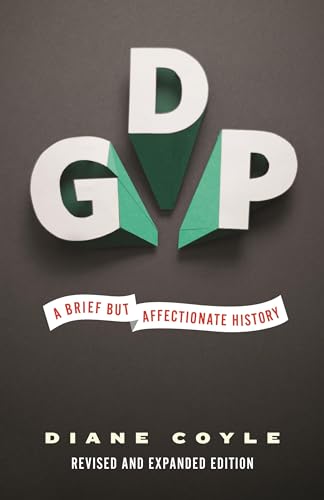
Inhaltsangabe
How GDP came to rule our lives-and why it needs to change Why did the size of the U.S. economy increase by 3 percent on one day in mid-2013-or Ghana's balloon by 60 percent overnight in 2010? Why did the U.K. financial industry show its fastest expansion ever at the end of 2008-just as the world's financial system went into meltdown? And why was Greece's chief statistician charged with treason in 2013 for apparently doing nothing more than trying to accurately report the size of his country's economy? The answers to all these questions lie in the way we define and measure national economies around the world: Gross Domestic Product. This entertaining and informative book tells the story of GDP, making sense of a statistic that appears constantly in the news, business, and politics, and that seems to rule our lives-but that hardly anyone actually understands. Diane Coyle traces the history of this artificial, abstract, complex, but exceedingly important statistic from its eighteenth- and nineteenth-century precursors through its invention in the 1940s and its postwar golden age, and then through the Great Crash up to today. The reader learns why this standard measure of the size of a country's economy was invented, how it has changed over the decades, and what its strengths and weaknesses are. The book explains why even small changes in GDP can decide elections, influence major political decisions, and determine whether countries can keep borrowing or be thrown into recession. The book ends by making the case that GDP was a good measure for the twentieth century but is increasingly inappropriate for a twenty-first-century economy driven by innovation, services, and intangible goods.
Die Inhaltsangabe kann sich auf eine andere Ausgabe dieses Titels beziehen.
Über die Autorin bzw. den Autor
Diane Coyle is professor of economics at the University of Manchester. She runs the consultancy Enlightenment Economics, and as well as a regular blog, she is the author of numerous books, including The Economics of Enough and The Soulful Science: What Economists Really Do and Why It Matters (both Princeton).
Von der hinteren Coverseite
"Diane Coyle renders GDP accessible and introduces a much-needed historical perspective to the discourse of what we measure and why. A must-read for those interested in the far-reaching impact of GDP on the global economy, just as we seek ways to go beyond it."--Angel Gurría, secretary-general of the Organisation for Economic Co-operation and Development
"Countries are judged by their success in producing GDP. But what is it and where do those numbers reported on television come from? Diane Coyle makes GDP come to life--we see its strengths and its fallibilities, and we learn to understand and respect both."--Mervyn King, governor of the Bank of England, 2003-2013
"This is an engaging and witty but also profoundly important book. Diane Coyle clearly and elegantly explains the fundamental difficulties of GDP--and how this headline figure is liable to radical change by apparently simple changes in method. She also provides a nice treatment of alternative proposals such as happiness surveys."--Harold James, author of Making the European Monetary Union
"GDP: A Brief But Affectionate History is a fascinating 140-page book that I cannot recommend highly enough. This is simply the best book on GDP that I've ever seen."--John Mauldin
"Well written, interesting, and useful, this book will appeal to many readers. I learned a lot from it."--Robert Hahn, University of Oxford
Auszug. © Genehmigter Nachdruck. Alle Rechte vorbehalten.
GDP
A Brief But Affectionate History
By DIANE COYLEPRINCETON UNIVERSITY PRESS
Copyright © 2014 Diane Coyle
All rights reserved.
ISBN: 978-0-691-16985-9All rights reserved.
Contents
Note on the Paperback Edition, vii,
Introduction, 1,
ONE From the Eighteenth Century to the 1930s: War and Depression, 7,
TWO 1945 to 1975: The Golden Age, 43,
THREE The Legacy of the 1970s: A Crisis of Capitalism, 61,
FOUR 1995 to 2005: The New Paradigm, 79,
FIVE Our Times: The Great Crash, 95,
SIX The Future: Twenty-first-Century GDP, 123,
Acknowledgments, 147,
Notes, 149,
Index, 161,
CHAPTER 1
From the Eighteenth Century to the 1930s: War and Depression
Warfare is the mother of invention. Many new technologies that end up in use in civilian life have been spurred by the demands of conflict and funded by the military. Among these inventions, ranging from the Internet to Teflon, radar to programmable electronic computers, is Gross Domestic Product. GDP is one of the many inventions of World War II.
Its name sounds as though it should be self-explanatory. Product: things that are produced. Domestic: at home. Gross: nothing deducted, the opposite of net (conversely, a cereal packet will give "net weight," meaning the contents alone, not including the packaging). GDP is just one figure in a full set of accounts for the economy, the national income accounts. We will get to the detail later. To make sense of the idea of GDP, first a brief history of the development of national statistics will help.
The Early Days of National Accounting
It was an earlier war that prompted the first systematic attempts to measure the whole of the economy. In 1665, a British scientist and official, William Petty, produced estimates of the income and expenditure, population, land, and other assets of England and Wales, with the aim of assessing the country's resources to fight a conflict and finance it through taxes (it was the now little-known Second Anglo-Dutch War, which lasted from 1664 to 1667). Petty wanted to prove not only that the country could bear a higher burden of taxes but also that it was capable of taking on its powerful neighbors, Holland and France. There was no need for it to win more land or increase the size of the population to ensure victory, because the available land and capital and labor could be used to better effect. This was a significant economic insight. Also significant was Petty's introduction of the tool of double-entry bookkeeping to keep records for the nation as a whole. Another early set of estimates, by Charles Davenant in 1695, had the title An Essay upon the Ways and Means of Supplying the War, making his aim perfectly clear. The word statistics has the same origin as state, and originally referred to the collection of figures concerning the state, specifically taxes. It proved to be a major advantage for England to have consolidated national income statistics, enabling calculations about the scope for increased output and tax revenues, when its larger and seemingly more powerful neighbor France lacked such information. Not until 1781 did the French king have similar strategically important economic and financial data, when the finance minister Jacques Necker delivered a famous compte rendu au roi, or report to the king, on the strength of the French economy. It enabled the king to raise new loans but did not, of course, help him avert the French Revolution in 1789.
Throughout the eighteenth century a number of successive statistical pioneers built on these first British attempts, although each was measuring slightly different things. The concept of "national income" may seem clear enough, but measuring it in practice means choosing what to include and exclude, which is surprisingly fuzzy. Unlike in our own time, there was no standardization, no commonly agreed definition; and what was measured was not at all like modern GDP. What these early national accounts had in common was the general idea that the national income depended on how much was available to spend now and how much remained for increasing the national stock of assets.
This framework evolved over the decades. Later authors emphasized different aspects of the economy. Some — among them the novelist and pamphleteer Daniel Defoe — thought that the key to the nation's prosperity was increasing trade, both overseas and within the country. At another time, the debate in coffeehouses and pamphlets centered firmly on the national debt, the figures for which the government published frequently between the late seventeenth and late eighteenth centuries. Once again, financing warfare was the motivation.
Then came a substantial intellectual innovation. In The Wealth of Nations (published 1776), Adam Smith introduced the distinction between "productive" and "unproductive" labor. An anonymous author had written in 1746, "What I mean by National Income is, all the whole body of our People get or receive from Land, Trade, Arts, Manufactures, Labour, or any other way whatsoever; and by Annual Expence I mean, the whole that they spend or consume." Yet in Adam Smith's definition thirty years later, the "whole body of our People" did not count. Only those involved in the making of physical commodities, agriculture and industry, would count toward national income. The provision of more services was a cost to the national economy, in his view. A servant was a cost to his employer, and did not create anything. Importantly, money spent on warfare or the interest on government debt was also being used unproductively. The nation's wealth was its stock of physical assets less the national debt. National income was what derived from the national wealth. According to Benjamin Mitra-Kahn, "The Wealth of Nations introduced a new idea of the economy, and through the effort of Adam Smith's students and admirers, it was adopted almost instantly."
In Smith's own words:
There is one sort of labour which adds to the value of the subject upon which it is bestowed: There is another which has no such effect. The former, as it produces a value, may be called productive; the latter, unproductive labour. Thus the labour of a manufacturer adds, generally, to the value of the materials which he works upon, that of his own maintenance, and of his master's profit. The labour of a menial servant, on the contrary, adds to the value of nothing.... A man grows rich by employing a multitude of manufacturers: He grows poor, by maintaining a multitude of menial servants.
The idea of a distinction between productive and unproductive activity, adopted by Adam Smith, dominated economic debate and measurement until the late nineteenth century. Karl Marx echoed it, and it remained the basis for measuring the centrally planned economies until the collapse of communism after 1989. For example, the Soviet Union's economic statistics counted material output and largely ignored service activities; yet by the late 1980s, these accounted for about two-thirds of GDP in the Western capitalist economies, so it was a large omission.
Still, this way of thinking about the national economy in terms of material production was generally adopted in the nineteenth century, until it too was overturned. Then the new generation of "neoclassical" economists (in contrast to "classical" economists such as Adam Smith) discarded the distinction between productive and unproductive activities. Alfred Marshall, as titanic a figure as Smith in the...
„Über diesen Titel“ kann sich auf eine andere Ausgabe dieses Titels beziehen.
Suchergebnisse für GDP: A Brief but Affectionate History

Beispielbild für diese ISBN
Gdp: A Brief But Affectionate History - Revised and Expanded Edition
Verlag:
Princeton University Press, 2015
ISBN 10: 0691169853
ISBN 13: 9780691169859
Gebraucht
Paperback
Anbieter: ThriftBooks-Reno, Reno, NV, USA
Verkäuferbewertung 5 von 5 Sternen

Paperback. Zustand: Good. No Jacket. Pages can have notes/highlighting. Spine may show signs of wear. ~ ThriftBooks: Read More, Spend Less. Artikel-Nr. G0691169853I3N00
Gebraucht kaufen
EUR 6,11
Versand gratis
Versand innerhalb von USA
Versand innerhalb von USA
Anzahl: 1 verfügbar
Beispielbild für diese ISBN
Gdp: A Brief But Affectionate History - Revised and Expanded Edition
Verlag:
Princeton University Press, 2015
ISBN 10: 0691169853
ISBN 13: 9780691169859
Gebraucht
Paperback
Anbieter: ThriftBooks-Dallas, Dallas, TX, USA
Verkäuferbewertung 5 von 5 Sternen
Paperback. Zustand: As New. No Jacket. Pages are clean and are not marred by notes or folds of any kind. ~ ThriftBooks: Read More, Spend Less. Artikel-Nr. G0691169853I2N00
Gebraucht kaufen
EUR 6,11
Versand gratis
Versand innerhalb von USA
Versand innerhalb von USA
Anzahl: 1 verfügbar
Beispielbild für diese ISBN
Gdp: A Brief But Affectionate History - Revised and Expanded Edition
Verlag:
Princeton University Press, 2015
ISBN 10: 0691169853
ISBN 13: 9780691169859
Gebraucht
Paperback
Anbieter: ThriftBooks-Dallas, Dallas, TX, USA
Verkäuferbewertung 5 von 5 Sternen
Paperback. Zustand: Good. No Jacket. Pages can have notes/highlighting. Spine may show signs of wear. ~ ThriftBooks: Read More, Spend Less. Artikel-Nr. G0691169853I3N00
Gebraucht kaufen
EUR 6,11
Versand gratis
Versand innerhalb von USA
Versand innerhalb von USA
Anzahl: 1 verfügbar
Beispielbild für diese ISBN
Gdp: A Brief But Affectionate History - Revised and Expanded Edition
Verlag:
Princeton University Press, 2015
ISBN 10: 0691169853
ISBN 13: 9780691169859
Gebraucht
Paperback
Anbieter: ThriftBooks-Phoenix, Phoenix, AZ, USA
Verkäuferbewertung 5 von 5 Sternen
Paperback. Zustand: Good. No Jacket. Pages can have notes/highlighting. Spine may show signs of wear. ~ ThriftBooks: Read More, Spend Less. Artikel-Nr. G0691169853I3N00
Gebraucht kaufen
EUR 6,11
Versand gratis
Versand innerhalb von USA
Versand innerhalb von USA
Anzahl: 1 verfügbar
Beispielbild für diese ISBN
Gdp: A Brief But Affectionate History - Revised and Expanded Edition
Verlag:
Princeton University Press, 2015
ISBN 10: 0691169853
ISBN 13: 9780691169859
Gebraucht
Paperback
Anbieter: ThriftBooks-Atlanta, AUSTELL, GA, USA
Verkäuferbewertung 5 von 5 Sternen
Paperback. Zustand: Good. No Jacket. Pages can have notes/highlighting. Spine may show signs of wear. ~ ThriftBooks: Read More, Spend Less. Artikel-Nr. G0691169853I3N00
Gebraucht kaufen
EUR 6,11
Versand gratis
Versand innerhalb von USA
Versand innerhalb von USA
Anzahl: 1 verfügbar
Beispielbild für diese ISBN
GDP: A Brief but Affectionate History - Revised and expanded Edition
Verlag:
Princeton University Press, 2015
ISBN 10: 0691169853
ISBN 13: 9780691169859
Gebraucht
Softcover
Anbieter: Wonder Book, Frederick, MD, USA
Verkäuferbewertung 5 von 5 Sternen
Zustand: As New. Like New condition. A near perfect copy that may have very minor cosmetic defects. Artikel-Nr. J05Q-0099
Gebraucht kaufen
EUR 6,40
Versand gratis
Versand innerhalb von USA
Versand innerhalb von USA
Anzahl: 1 verfügbar
Beispielbild für diese ISBN
GDP: A Brief but Affectionate History - Revised and expanded Edition
Verlag:
Princeton University Press, 2015
ISBN 10: 0691169853
ISBN 13: 9780691169859
Gebraucht
Softcover
Anbieter: Wonder Book, Frederick, MD, USA
Verkäuferbewertung 5 von 5 Sternen
Zustand: Good. Good condition. A copy that has been read but remains intact. May contain markings such as bookplates, stamps, limited notes and highlighting, or a few light stains. Artikel-Nr. A14B-02869
Gebraucht kaufen
EUR 6,40
Versand gratis
Versand innerhalb von USA
Versand innerhalb von USA
Anzahl: 1 verfügbar
Beispielbild für diese ISBN
Gdp : A Brief but Affectionate History - Revised and Expanded Edition
Verlag:
Princeton University Press, 2015
ISBN 10: 0691169853
ISBN 13: 9780691169859
Gebraucht
Softcover
Anbieter: Better World Books, Mishawaka, IN, USA
Verkäuferbewertung 5 von 5 Sternen
Zustand: Very Good. Pages intact with possible writing/highlighting. Binding strong with minor wear. Dust jackets/supplements may not be included. Stock photo provided. Product includes identifying sticker. Better World Books: Buy Books. Do Good. Artikel-Nr. 18021005-6
Gebraucht kaufen
EUR 6,54
Versand gratis
Versand innerhalb von USA
Versand innerhalb von USA
Anzahl: 3 verfügbar
Beispielbild für diese ISBN
Gdp : A Brief but Affectionate History - Revised and Expanded Edition
Verlag:
Princeton University Press, 2015
ISBN 10: 0691169853
ISBN 13: 9780691169859
Gebraucht
Softcover
Anbieter: Better World Books: West, Reno, NV, USA
Verkäuferbewertung 5 von 5 Sternen
Zustand: Good. Pages intact with minimal writing/highlighting. The binding may be loose and creased. Dust jackets/supplements are not included. Stock photo provided. Product includes identifying sticker. Better World Books: Buy Books. Do Good. Artikel-Nr. 18980818-6
Gebraucht kaufen
EUR 6,54
Versand gratis
Versand innerhalb von USA
Versand innerhalb von USA
Anzahl: 1 verfügbar
Beispielbild für diese ISBN
Gdp : A Brief but Affectionate History - Revised and Expanded Edition
Verlag:
Princeton University Press, 2015
ISBN 10: 0691169853
ISBN 13: 9780691169859
Gebraucht
Softcover
Anbieter: Better World Books: West, Reno, NV, USA
Verkäuferbewertung 5 von 5 Sternen
Zustand: Very Good. Pages intact with possible writing/highlighting. Binding strong with minor wear. Dust jackets/supplements may not be included. Stock photo provided. Product includes identifying sticker. Better World Books: Buy Books. Do Good. Artikel-Nr. 18021005-6
Gebraucht kaufen
EUR 6,54
Versand gratis
Versand innerhalb von USA
Versand innerhalb von USA
Anzahl: 1 verfügbar