
Verwandte Artikel zu A Taste for the Beautiful: The Evolution of Attraction
Inhaltsangabe
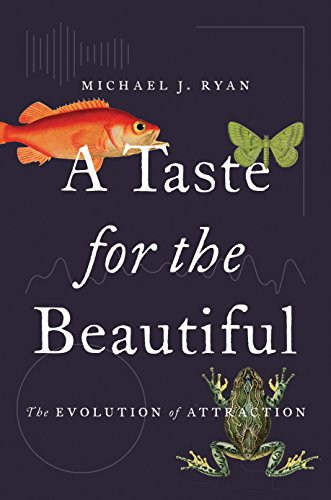
Darwin developed the theory of sexual selection to explain why the animal world abounds in stunning beauty, from the brilliant colors of butterflies and fishes to the songs of birds and frogs. He argued that animals have "a taste for the beautiful" that drives their potential mates to evolve features that make them more sexually attractive and reproductively successful. But if Darwin explained why sexual beauty evolved in animals, he struggled to understand how. In A Taste for the Beautiful, Michael Ryan, one of the world's leading authorities on animal behavior, tells the remarkable story of how he and other scientists have taken up where Darwin left off and transformed our understanding of sexual selection, shedding new light on human behavior in the process. Ryan explores the key questions: Why do animals perceive certain traits as beautiful and others not? Do animals have an inherent sexual aesthetic and, if so, where is it rooted? Ryan argues that the answers to these questions lie in the brain - particularly of females, who act as biological puppeteers, spurring the development of beautiful traits in males. This theory of how sexual beauty evolves explains its astonishing diversity and provides new insights about how much our own perception of beauty resembles that of other animals.
Die Inhaltsangabe kann sich auf eine andere Ausgabe dieses Titels beziehen.
Über die Autorin bzw. den Autor
Michael J. Ryan is the Clark Hubbs Regents Professor in Zoology at the University of Texas and a Senior Research Associate at the Smithsonian Tropical Research Institute in Panama. He is a leading researcher in the fields of sexual selection, mate choice, and animal communication. He lives in Austin, Texas.
Von der hinteren Coverseite
"In this engaging book, Michael Ryan explores why all animals look for beauty in the opposite sex. Using his studies of Central American frogs as a jumping-off point, he expertly guides us through new discoveries and ideas about how brains have evolved to yearn for the beautiful. Surprisingly, what female frogs admire in their male suitors illuminates our own desires and attractions."--Virginia Morell, author of the New York Times bestseller Animal Wise: How We Know Animals Think and Feel
"We say ‘beauty is in the eye of the beholder.' Turns out, beauty is in the brain. The brain decides what strikes us as beautiful. This book raises and answers an astonishing set of questions: What is the perception called beauty? How did our brains acquire it? On what basis do our brains inform us about what is beautiful? And why does a peacock's tail seem beautiful to both a peahen and a person? This is a profound, often amazing, book. It's, well, beautiful."--Carl Safina, author of Beyond Words: What Animals Think and Feel
"Written by a distinguished scientist and filled with fascinating stories, this book presents the revelation that, for very good evolutionary reasons, beauty is in the mind, as well as the eye, of the beholder."--Peter R. Grant, coauthor of 40 Years of Evolution: Darwin's Finches on Daphne Major Island
"This lovely book delves into the origins and perception of beauty--sensations that generate specific reward responses in the brain. Ranging from neurobiology to behavior and psychology, Mike Ryan seamlessly integrates animal and human data. He also describes how science works, which is more important now than ever."--John Endler, Deakin University, Australia
"This is a superb book on one of the most powerful selective forces in nature--the taste for beauty, especially the female preference for male beauty. Want to learn about smell and sex, the deeper meaning of bodily symmetry, or color vision as a route to emotionally understanding others? You have come to the right place. Michael Ryan weaves together all of this and much more to produce a beautiful tapestry on the meaning of beauty in nature."--Robert Trivers, author of Deceit and Self-Deception: Fooling Yourself the Better to Fool Others
"I loved this book! In this authoritative, informative, and entertaining popular science account of the biological basis of sexual beauty, Michael Ryan, a master of the subject, draws on his own pioneering work and seamlessly integrates it with other studies. The book shows how a deep understanding of the mechanisms of mate choice in nature help us to better understand ourselves."--Daniel T. Blumstein, University of California, Los Angeles
"This is a book for anyone who wants to know more about the mysteries of sexual selection. Michael Ryan guides readers through the complex and fascinating path of the evolution of beauty with the authority of somebody who is responsible for some of the subject's most important milestones."--Leonida Fusani, University of Vienna and University of Veterinary Medicine, Vienna, Austria
Auszug. © Genehmigter Nachdruck. Alle Rechte vorbehalten.
A Taste for the Beautiful
The Evolution of Attraction
By Michael J. RyanPRINCETON UNIVERSITY PRESS
Copyright © 2018 Princeton University Press
All rights reserved.
ISBN: 978-0-691-16726-8All rights reserved.
Contents
Preface, ix,
Chapter One Why All the Fuss about Sex?, 1,
Chapter Two Why All the Whining and Chucking?, 13,
Chapter Three Beauty and the Brain, 33,
Chapter Four Visions of Beauty, 53,
Chapter Five The Sounds of Sex, 77,
Chapter Six The Aroma of Adulation, 105,
Chapter Seven Fickle Preferences, 126,
Chapter Eight Hidden Preferences and Life in Pornotopia, 148,
Epilogue, 169,
Notes, 171,
Bibliography, 177,
Index, 187,
CHAPTER 1
Why All the Fuss about Sex?
The sight of a feather in a peacock's tail, whenever I gaze at it, makes me sick!
— Charles Darwin
NATURE USUALLY GETS DOWN TO BUSINESS. Let's think about sleep. When I go to bed, I pull back the sheets, put my head on the pillow, and I'm in dreamland. I do not have a sleeping ritual, I don't dance, sing, chant, or perfume myself. I just go to sleep. So do most animals. Eating is the same way. When a howler monkey finds an edible leaf, she plucks it and eats it; a heron just throws back his head and swallows the fish he speared out of the water; and a cheetah doesn't do a celebratory dance before she starts to devour the gazelle she just brought down, even though she sprinted at her personal best of 75 mph to do so. Granted, in our own species we can sometimes make a bigger deal out of eating, especially when a meal coincides with a special event. But for the most part, we are little different from the howler, the heron, and the cheetah. Take a bite, give it a good chew, and gulp it down. Much of life for most animals is like that — the job is to just get it done.
Sex is different: a just-get-it-done policy won't get it done. In humans and most other animals, extensive courtship rituals precede the sex act. Most of our sexual rituals are laden with accessories, including candles and music, poems and flowers, and even special wardrobes. The list goes on, but it is no less diverse for animals. Animals sing and dance, they perfume themselves, they show off their colors and even light themselves up, all in the hope of attracting a mate. Although we distinguish ourselves in the language and technology we deploy in courtship, all animals have evolved spectacular, even obscene, morphologies and behaviors as both sexual lures and strategies for consummation. The colors of butterflies and fishes, the songs of insects and birds, the sexual odors of moths and mammals all evolved in the service of sex. The same is true for many of the traits in our own species that make women sigh and men gasp when someone of striking beauty crosses their paths. These aspects of sexual beauty evolved not because they make their bearers live longer but because they enable them to mate more and thus pass on more offspring and genes to the next generation.
Sexual beauty is everywhere, woven through the fabric of all sexually reproducing animals. We humans strive for beauty; we pay for it; we judge whether others have it; and if they do, we treat them better. Animals and humans both go to extreme lengths to appear beautiful to those who judge them. Peacocks evolve magnificent tails that cause peahens to sway, fishes sport bright colors that catch the eye of the other sex, crickets chirp endearingly to their mates, and spiders dance and vibrate their webs to show off. We humans take a more active role in engineering our beauty than do most other animals. Perfumes, fashion, cars, and music have all been employed in the service of sexual beauty, as have the surgeon's knife and a pharmacopeia of drugs. But to enhance one's beauty, either through the painstakingly slow process of evolution or the more immediate gratification of beauty-engineering, one must have some notion of what is beautiful.
This book is about sexual beauty, where it comes from and what it is for. Of course, many have been inspired to write in appreciation of natural beauty and the enchanting mating behaviors that occur in wild animals. Their emphasis is usually on the details of beautiful male traits: How does having such a long tail benefit the peacock? How many carotenoids does the male guppy need to eat to be so brilliantly orange? How many syllables can a songbird pack into his complex vocal repertoire to make him even more sexy to females? These are interesting questions, but they represent only one-half of the equation of sexual beauty, because they ignore what is going on inside the head of those who actually judge beauty. Such studies often assume that the female brain must evolve tools to figure out what is beautiful. But instead, the converse is often true. The brain has a long evolutionary history that biases how it assesses the entire world around it, not just the world of sex; and it functions within the framework of numerous neurobiological and computational constraints. I argue that instead of the brain having to evolve to detect beauty, the brain determines what is beautiful, and all of its constraints and contingencies give rise to a breathtaking diversity of sexual aesthetics throughout the animal kingdom. In this book, I will show that to understand what beauty is, we need to understand the brain that perceives it.
I will expand our understanding of sexual beauty by asking how the details of an animal's brain give rise to its sexual aesthetics, which, in turn, drive the evolution of beauty in that species. Specifically, I argue that beauty only exists because it pleases the eyes, ears, or noses of the beholder; more generally, that beauty is in the brain of the beholder. Some of the brain's neural circuitry has evolved to sense and respond to sexual beauty so that animals can find a good mate. But the brain also has other things on its mind besides sex. Other adaptations of the brain, such as those that help an animal find food, avoid becoming food, or recognize the difference between its mother and its father, can have unintended but important consequences on how that brain defines beauty. Only when we understand the biological basis of sexual aesthetics can we understand how sexual aesthetics drive the evolution of sexual beauty.
I have a unique perspective to offer on these issues as I have spent the past forty years studying the sexual behavior of a tiny, bumpy frog in Central America. This work has opened my eyes and mind to both the diversity of sexual behavior in the animal kingdom and a core unifying theory that I have developed called sensory exploitation. The key idea is simple: features of the female's brain that find certain notes of the males' mating call attractive existed long before those attractive notes evolved. Thus, females are the biological puppeteers, making the males sing exactly what their brains desire. Beauty is indeed in the brain of the beholder, and in most cases, that means the female's brain, although I will review numerous cases where males judge female beauty and where there is mutual display and assessment of beauty by both sexes. This simple idea contributed to a paradigm shift in the study of sexual selection, one in which the importance of the sexual brain as a driver of evolution finally was acknowledged.
In this chapter, I will give some background on how scientists have come to understand the evolution of beauty and also explain which sex usually evolves this beauty and why. In the next one, I'll focus on the bumpy frog that has...
„Über diesen Titel“ kann sich auf eine andere Ausgabe dieses Titels beziehen.
Suchergebnisse für A Taste for the Beautiful: The Evolution of Attraction

Beispielbild für diese ISBN
A Taste for the Beautiful : The Evolution of Attraction
Verlag:
Princeton University Press, 2018
ISBN 10: 0691167265
ISBN 13: 9780691167268
Gebraucht
Hardcover
Anbieter: Better World Books, Mishawaka, IN, USA
Verkäuferbewertung 5 von 5 Sternen

Zustand: Good. Former library copy. Pages intact with minimal writing/highlighting. The binding may be loose and creased. Dust jackets/supplements are not included. Includes library markings. Stock photo provided. Product includes identifying sticker. Better World Books: Buy Books. Do Good. Artikel-Nr. 39755406-6
Gebraucht kaufen
EUR 6,37
Versand gratis
Versand innerhalb von USA
Versand innerhalb von USA
Anzahl: 1 verfügbar
Beispielbild für diese ISBN
A Taste for the Beautiful : The Evolution of Attraction
Verlag:
Princeton University Press, 2018
ISBN 10: 0691167265
ISBN 13: 9780691167268
Gebraucht
Hardcover
Anbieter: Better World Books, Mishawaka, IN, USA
Verkäuferbewertung 5 von 5 Sternen
Zustand: Very Good. Former library copy. Pages intact with possible writing/highlighting. Binding strong with minor wear. Dust jackets/supplements may not be included. Includes library markings. Stock photo provided. Product includes identifying sticker. Better World Books: Buy Books. Do Good. Artikel-Nr. 17163609-6
Gebraucht kaufen
EUR 6,37
Versand gratis
Versand innerhalb von USA
Versand innerhalb von USA
Anzahl: 1 verfügbar
Beispielbild für diese ISBN
A Taste for the Beautiful : The Evolution of Attraction
Verlag:
Princeton University Press, 2018
ISBN 10: 0691167265
ISBN 13: 9780691167268
Gebraucht
Hardcover
Anbieter: Better World Books: West, Reno, NV, USA
Verkäuferbewertung 5 von 5 Sternen
Zustand: Good. Former library copy. Pages intact with minimal writing/highlighting. The binding may be loose and creased. Dust jackets/supplements are not included. Includes library markings. Stock photo provided. Product includes identifying sticker. Better World Books: Buy Books. Do Good. Artikel-Nr. 39755406-6
Gebraucht kaufen
EUR 6,37
Versand gratis
Versand innerhalb von USA
Versand innerhalb von USA
Anzahl: 1 verfügbar
Beispielbild für diese ISBN
A Taste for the Beautiful: The Evolution of Attraction
Verlag:
Princeton University Press, 2018
ISBN 10: 0691167265
ISBN 13: 9780691167268
Gebraucht
Hardcover
Anbieter: Wonder Book, Frederick, MD, USA
Verkäuferbewertung 5 von 5 Sternen
Zustand: Good. Good condition. Very Good dust jacket. A copy that has been read but remains intact. May contain markings such as bookplates, stamps, limited notes and highlighting, or a few light stains. Artikel-Nr. L04R-0541
Gebraucht kaufen
EUR 6,50
Versand gratis
Versand innerhalb von USA
Versand innerhalb von USA
Anzahl: 1 verfügbar
Beispielbild für diese ISBN
A Taste for the Beautiful: The Evolution of Attraction
Verlag:
Princeton University Press, 2018
ISBN 10: 0691167265
ISBN 13: 9780691167268
Gebraucht
Hardcover
Anbieter: ThriftBooks-Phoenix, Phoenix, AZ, USA
Verkäuferbewertung 5 von 5 Sternen
Hardcover. Zustand: Very Good. No Jacket. Former library book; May have limited writing in cover pages. Pages are unmarked. ~ ThriftBooks: Read More, Spend Less. Artikel-Nr. G0691167265I4N10
Gebraucht kaufen
EUR 6,72
Versand gratis
Versand innerhalb von USA
Versand innerhalb von USA
Anzahl: 1 verfügbar
Beispielbild für diese ISBN
A Taste for the Beautiful: The Evolution of Attraction
Verlag:
Princeton University Press, 2018
ISBN 10: 0691167265
ISBN 13: 9780691167268
Gebraucht
Hardcover
Anbieter: ThriftBooks-Atlanta, AUSTELL, GA, USA
Verkäuferbewertung 5 von 5 Sternen
Hardcover. Zustand: Very Good. No Jacket. Former library book; May have limited writing in cover pages. Pages are unmarked. ~ ThriftBooks: Read More, Spend Less. Artikel-Nr. G0691167265I4N10
Gebraucht kaufen
EUR 6,74
Versand gratis
Versand innerhalb von USA
Versand innerhalb von USA
Anzahl: 1 verfügbar
Beispielbild für diese ISBN
A Taste for the Beautiful: The Evolution of Attraction
Verlag:
Princeton University Press, 2018
ISBN 10: 0691167265
ISBN 13: 9780691167268
Gebraucht
Hardcover
Anbieter: ThriftBooks-Atlanta, AUSTELL, GA, USA
Verkäuferbewertung 5 von 5 Sternen
Hardcover. Zustand: Very Good. No Jacket. May have limited writing in cover pages. Pages are unmarked. ~ ThriftBooks: Read More, Spend Less. Artikel-Nr. G0691167265I4N00
Gebraucht kaufen
EUR 6,74
Versand gratis
Versand innerhalb von USA
Versand innerhalb von USA
Anzahl: 1 verfügbar
Beispielbild für diese ISBN
A Taste for the Beautiful: The Evolution of Attraction
Verlag:
Princeton University Press, 2018
ISBN 10: 0691167265
ISBN 13: 9780691167268
Gebraucht
Hardcover
Anbieter: ThriftBooks-Atlanta, AUSTELL, GA, USA
Verkäuferbewertung 5 von 5 Sternen
Hardcover. Zustand: Very Good. No Jacket. Missing dust jacket; May have limited writing in cover pages. Pages are unmarked. ~ ThriftBooks: Read More, Spend Less. Artikel-Nr. G0691167265I4N01
Gebraucht kaufen
EUR 6,74
Versand gratis
Versand innerhalb von USA
Versand innerhalb von USA
Anzahl: 1 verfügbar
Beispielbild für diese ISBN
A Taste for the Beautiful: The Evolution of Attraction
Verlag:
Princeton University Press, 2018
ISBN 10: 0691167265
ISBN 13: 9780691167268
Gebraucht
Hardcover
Anbieter: ThriftBooks-Dallas, Dallas, TX, USA
Verkäuferbewertung 5 von 5 Sternen
Hardcover. Zustand: Fair. No Jacket. Readable copy. Pages may have considerable notes/highlighting. ~ ThriftBooks: Read More, Spend Less. Artikel-Nr. G0691167265I5N00
Gebraucht kaufen
EUR 6,74
Versand gratis
Versand innerhalb von USA
Versand innerhalb von USA
Anzahl: 1 verfügbar
Foto des Verkäufers
A Taste for the Beautiful: The Evolution of Attraction
Verlag:
Princeton University Press, 2018
ISBN 10: 0691167265
ISBN 13: 9780691167268
Gebraucht
Hardcover
Anbieter: WeBuyBooks, Rossendale, LANCS, Vereinigtes Königreich
Verkäuferbewertung 5 von 5 Sternen
hardcover. Zustand: Very Good. Most items will be dispatched the same or the next working day. A copy that has been read, but is in excellent condition. Pages are intact and not marred by notes or highlighting. The spine remains undamaged. Artikel-Nr. rev5812296650
Gebraucht kaufen
EUR 9,71
EUR 8,13 Versand
Versand von Vereinigtes Königreich nach USA
Versand von Vereinigtes Königreich nach USA
Anzahl: 1 verfügbar