
Verwandte Artikel zu The Bees in Your Backyard: A Guide to North America's...
Inhaltsangabe
The ultimate bee book for bee enthusiasts and experts alike
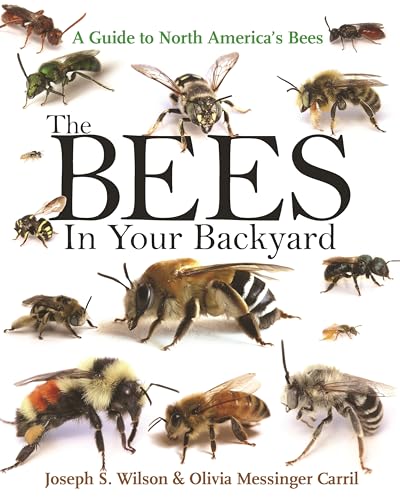
The Bees in Your Backyard provides an engaging introduction to the roughly 4,000 different bee species found in the United States and Canada, dispelling common myths about bees while offering essential tips for telling them apart in the field.
The book features more than 900 stunning color photos of the bees living all around us—in our gardens and parks, along nature trails, and in the wild spaces between. It describes their natural history, including where they live, how they gather food, their role as pollinators, and even how to attract them to your own backyard. Ideal for amateur naturalists and experts alike, it gives detailed accounts of every bee family and genus in North America, describing key identification features, distributions, diets, nesting habits, and more.
- Provides the most comprehensive and accessible guide to all bees in the United States and Canada
- Features more than 900 full-color photos
- Offers helpful identification tips and pointers for studying bees
- Includes a full chapter on how to attract bees to your backyard
Die Inhaltsangabe kann sich auf eine andere Ausgabe dieses Titels beziehen.
Über die Autorin bzw. den Autor
Joseph S. Wilson is assistant professor of biology at Utah State University and has been studying bees and wasps for more than a decade. Olivia Messinger Carril received her PhD in plant biology from Southern Illinois University and has been studying bees and the flowers they visit for nearly twenty years.
Von der hinteren Coverseite
"The decline of bees in recent years has led to a growing awareness of the importance of these insects. The Bees in Your Backyard provides a great introduction to the bees of North America and an invaluable aid to anyone learning to differentiate the various kinds. I know of no other book for general readers that describes all the genera to this extent."--Sheila Colla, coauthor of Bumble Bees of North America: An Identification Guide
"This book provides an easy-to-understand guide to the thousands of bees found in North America. The Bees in Your Backyard is a great place for novice bee enthusiasts to start and an exceptional reference for experts."--Kelly Allin, contributor to The Bee: A Natural History
Auszug. © Genehmigter Nachdruck. Alle Rechte vorbehalten.
The Bees in Your Backyard
A Guide to North America's Bees
By Joseph S. Wilson, Olivia Messinger CarrilPRINCETON UNIVERSITY PRESS
Copyright © 2016 Joseph S. Wilson and Olivia Messinger Carril
All rights reserved.
ISBN: 978-0-691-16077-1All rights reserved.
Contents
I INTRODUCTION, 7,
2 PROMOTING BEES IN YOUR NEIGHBORHOOD, 50,
3 ANDRENIDAE, 70,
4 COLLETIDAE, 96,
5 MELITTIDAE, 111,
6 HALICTIDAE, 118,
7 MEGACHILIDAE, 149,
8 API DAE, 189,
9 POLLEN THIEVES, 254,
Appendix: Guide to the Pronunciation of Bee Names, 278,
Index, 279,
Photographic Acknowledgments, 288,
CHAPTER 1
INTRODUCTION
Did you know that more than 4000 species of bees live in the United States and Canada? To put that in perspective, there are 4 times more species of bees in these two countries than all the bird species north of Mexico, 6 times more kinds of bees than butterflies, and about 10 times as many bee species as mammal species. Despite their diversity, few people know anything about bees, even the ones in their own backyards. For example, everyone knows that robins nest in trees, that bears hibernate, and that butterflies start out as caterpillars, but most people don't know where bees live, how they spend the winter, or what they eat. This book is designed to introduce you to the bees of the United States and Canada, including their lifestyles and habitat preferences, and what you can do to attract them to your neighborhood. Understanding bees is beneficial not only to the bees, but also to your gardens.
Over 20,000 species of bees have been identified around the world. New species are being found every year, even in places like New York City. Because new species are continually discovered, scientists estimate that up to 30,000 species might exist worldwide. Bees can be found on every continent (except Antarctica), on small islands, on treeless mountaintops, in jungles and deserts, and on top of high-rises in Chicago. They are most abundant in dry and hot environments, like Mediterranean Europe, and the southwestern United States.
Though the drab reddish-brown honey bee is the default image conjured by most when they hear the word "bee," these creatures are in fact diverse and stunning beauties, and the menagerie includes blue and green jewels like Osmia and Agapostemon, fire-engine red Nomada, jet-black fuzz-balls like Anthophora, and zebra-striped Anthidium. Some of the smallest bees in the world are found in North America. Perdita, found in the southwest United States, measure only 0.1 inch, smaller than George Washington's nose on a quarter. At the other extreme, North America is home to giant bumbling carpenter bees (Xylocopa). At more than an inch long, they sound like miniature helicopters as they hover near flowers.
Bees are thought to increase seed set in 70% of all flowering plants, including many of the fruits and vegetables we enjoy. The special relationship that exists between bees and the flowers they visit is not only economically (and gastronomically) important; it is also unique from a biological perspective. Although there are other organisms that are capable of pollination (and are, in fact, good at it), bees are the only ones to actively gather pollen from the flowers they visit, creating an evolutionary dynamic seen nowhere else in the animal kingdom. Despite the particular talents and unquestionable importance of bees, scientists have reason to believe that some bee species may be experiencing widespread population declines. While the specifics are still being assessed, some things are certain: bees are all around us, they enhance the quality of our lives, and they benefit from our improved understanding of them and their needs.
Our hope is that this book will turn amateur naturalists, gardeners, entomologists, and curious souls on to the amazing lives of the bees that not only reside in untamed wild areas, but also flourish in our very neighborhoods. With understanding comes appreciation; in addition to describing the life stories associated with the many bee species of the United States and Canada, we provide examples of ways to encourage these wonderful pollinators on your own plot of land.
1.1 IS THIS A BEE?
Even though bees are common in most neighborhoods, frequently seen on hikes, and ubiquitous residents of city parks, it is hard to tell whether an insect buzzing nearby is a bee or something else. It's no wonder people get confused. Because bees sting, resembling one is a successful strategy for vulnerable insects, and many a bug has evolved the appearance of a buzzing bee; however, a keen eye and a little practice are all you need to see past the ruse.
Bees and wasps are the most similar in appearance, and they are the most easily confused. It is not uncommon to hear complaints about the "bee" that landed on somebody's hamburger at a recent family picnic. Stories of the pesky nest dangling from a branch in the backyard abound. Hikers complain about the horrible buzzing creatures that swarmed from a log they used as a backrest halfway up the trail. And every summer, someone is attacked by "ground bees" while mowing the lawn. In all cases, the annoying insect was probably not a bee but a wasp. Wasps (including hornets and yellow jackets) and bees are close relatives, sharing in common a grandmother 100 million "greats" ago. In some instances the two are so similar that even trained scientists have difficulty distinguishing them. The bee called Neolarra (see section 9.1), for example, was thought to be a wasp by the first researchers to see it. It didn't help that the bee was dead and stuck to a pin, because the most telling differences between bees and wasps are their mannerisms and day-to-day behaviors.
Most important among these behavioral differences is that bees are pollen eaters. Wasps, in contrast, are meat eaters. While both visit flowers for nectar (the "energy drink" of the insect world), bees also visit flowers in order to collect pollen for their young. On the contrary, wasps pursue other insects and drag them back to the nest for their offspring to devour. This one dietary difference has resulted in very different bearings. To aid in the gathering of pollen, bees are usually hairy (pollen sticks to hair), and many species look like cotton candy with wings. Rooting around in flowers is messy business, and a few minutes rummaging among floral parts leaves a bee coated in hundreds of tiny grains of pollen. Using her many legs, the bee grooms herself, wiping all the pollen to the back of her body, where she stuffs it into the spaces between special stiff bristles on her legs or belly. These tufts or masses of special hairs are called scopa. Quite the opposite of the furry bee, wasps look like Olympic swimmers, devoid of all hair, skinny-waisted, and with long spindly legs.
There are exceptions to every rule, of course. Some bees have scant hair on their bodies and are wasp-thin. In these cases, look for silvery or golden hairs on the face; wasps tend to have glistening mugs, while bee hairs don't shimmer from any angle. Behavior, as mentioned above, can be telling, too. Bees spend more time on flowers than wasps do; wasps in contrast are more likely to raid your backyard barbeque in search of animal proteins accidentally left on a plate.
Since bees and wasps are difficult to distinguish, many stung victims often blame the hapless bee for crimes not committed. The culprit in these cases is likely a paper wasp, a hornet, or a yellow jacket. All live...
„Über diesen Titel“ kann sich auf eine andere Ausgabe dieses Titels beziehen.
Suchergebnisse für The Bees in Your Backyard: A Guide to North America's...

Beispielbild für diese ISBN
The Bees in Your Backyard: A Guide to North America's Bees
Verlag:
Princeton University Press (edition ), 2015
ISBN 10: 0691160775
ISBN 13: 9780691160771
Gebraucht
Paperback
Anbieter: BooksRun, Philadelphia, PA, USA
Verkäuferbewertung 5 von 5 Sternen

Paperback. Zustand: Very Good. It's a well-cared-for item that has seen limited use. The item may show minor signs of wear. All the text is legible, with all pages included. It may have slight markings and/or highlighting. Artikel-Nr. 0691160775-11-1
Gebraucht kaufen
EUR 13,81
Versand gratis
Versand innerhalb von USA
Versand innerhalb von USA
Anzahl: 1 verfügbar
Beispielbild für diese ISBN
The Bees in Your Backyard: A Guide to North America's Bees
Verlag:
Princeton University Press, 2015
ISBN 10: 0691160775
ISBN 13: 9780691160771
Gebraucht
Paperback
Anbieter: World of Books (was SecondSale), Montgomery, IL, USA
Verkäuferbewertung 5 von 5 Sternen
Paperback. Zustand: Good. The Bees in Your Backyard provides an engaging introduction to the roughly 4,000 different bee species found in the United States and Canada, dispelling common myths about bees while offering essential tips for telling them apart in the field. The book features more than 900 stunning color photos of the bees living all around us--in our gardens an. Artikel-Nr. 00110905182
Gebraucht kaufen
EUR 14,11
Versand gratis
Versand innerhalb von USA
Versand innerhalb von USA
Anzahl: 2 verfügbar
Beispielbild für diese ISBN
The Bees in Your Backyard: A Guide to North America's Bees
Verlag:
Princeton University Press, 2015
ISBN 10: 0691160775
ISBN 13: 9780691160771
Gebraucht
Paperback
Anbieter: World of Books (was SecondSale), Montgomery, IL, USA
Verkäuferbewertung 5 von 5 Sternen
Paperback. Zustand: Very Good. The Bees in Your Backyard provides an engaging introduction to the roughly 4,000 different bee species found in the United States and Canada, dispelling common myths about bees while offering essential tips for telling them apart in the field. The book features more than 900 stunning color photos of the bees living all around us--in our gardens an. Artikel-Nr. CIN0691160775VG
Gebraucht kaufen
EUR 14,11
Versand gratis
Versand innerhalb von USA
Versand innerhalb von USA
Anzahl: 1 verfügbar
Beispielbild für diese ISBN
The Bees in Your Backyard
Anbieter: PBShop.store US, Wood Dale, IL, USA
Verkäuferbewertung 5 von 5 Sternen
PAP. Zustand: New. New Book. Shipped from UK. Established seller since 2000. Artikel-Nr. WP-9780691160771
Beispielbild für diese ISBN
The Bees in Your Backyard
Anbieter: PBShop.store UK, Fairford, GLOS, Vereinigtes Königreich
Verkäuferbewertung 5 von 5 Sternen
PAP. Zustand: New. New Book. Shipped from UK. Established seller since 2000. Artikel-Nr. WP-9780691160771
Neu kaufen
EUR 27,94
EUR 8,07 Versand
Versand von Vereinigtes Königreich nach USA
Versand von Vereinigtes Königreich nach USA
Anzahl: 4 verfügbar
Beispielbild für diese ISBN
The Bees in Your Backyard: A Guide to North America's Bees
Anbieter: Majestic Books, Hounslow, Vereinigtes Königreich
Verkäuferbewertung 4 von 5 Sternen

Zustand: New. pp. 288. Artikel-Nr. 373701664
Neu kaufen
EUR 35,28
EUR 7,76 Versand
Versand von Vereinigtes Königreich nach USA
Versand von Vereinigtes Königreich nach USA
Anzahl: 3 verfügbar
Beispielbild für diese ISBN
The Bees in Your Backyard: A Guide to North America s Bees
Anbieter: Kennys Bookstore, Olney, MD, USA
Verkäuferbewertung 5 von 5 Sternen
Zustand: New. Num Pages: 288 pages, 926 color photos. 1 table. 99 maps. BIC Classification: 1KB; WNCN. Category: (G) General (US: Trade); (U) Tertiary Education (US: College). Dimension: 254 x 203. Weight in Grams: 999. . 2015. Paperback. . . . . Books ship from the US and Ireland. Artikel-Nr. V9780691160771
Neu kaufen
EUR 35,72
EUR 9,37 Versand
Versand innerhalb von USA
Versand innerhalb von USA
Anzahl: 1 verfügbar
Foto des Verkäufers
The Bees in Your Backyard: A Guide to North Americas Bees
Anbieter: PEMBERLEY NATURAL HISTORY BOOKS BA, ABA, Iver, Vereinigtes Königreich
Verkäuferbewertung 5 von 5 Sternen
Zustand: NEW. 288, 900+ col photos, col figs, maps. 255x202mm. PB. NEW. . An introduction to the c. 4,000 different bee species found in the United States and Canada. Features more than 900 colour photos; describes natural history, including where bees live, how they gather food, their role as pollinators, and how to attract them to your own backyard. Ideal for amateur naturalists and experts alike, the book gives detailed accounts of every bee family and genus in North America, describing key identification features, distributions, diets, nesting habits, and more. [9780691160771]. Artikel-Nr. N29130
Neu kaufen
EUR 23,06
EUR 26,27 Versand
Versand von Vereinigtes Königreich nach USA
Versand von Vereinigtes Königreich nach USA
Anzahl: 1 verfügbar
Beispielbild für diese ISBN
The Bees in Your Backyard A Guide to North America`s Bees
Anbieter: Revaluation Books, Exeter, Vereinigtes Königreich
Verkäuferbewertung 5 von 5 Sternen
Paperback. Zustand: Brand New. 288 pages. 10.00x8.00x0.75 inches. In Stock. Artikel-Nr. __0691160775
Neu kaufen
EUR 34,61
EUR 14,93 Versand
Versand von Vereinigtes Königreich nach USA
Versand von Vereinigtes Königreich nach USA
Anzahl: 2 verfügbar
Beispielbild für diese ISBN
The Bees in Your Backyard A Guide to North America`s Bees
Anbieter: Revaluation Books, Exeter, Vereinigtes Königreich
Verkäuferbewertung 5 von 5 Sternen
Paperback. Zustand: Brand New. 288 pages. 10.00x8.00x0.75 inches. In Stock. Artikel-Nr. xr0691160775
Neu kaufen
EUR 39,65
EUR 14,93 Versand
Versand von Vereinigtes Königreich nach USA
Versand von Vereinigtes Königreich nach USA
Anzahl: 2 verfügbar