
Verwandte Artikel zu Cultures in Motion (Publications in Partnership With...
Cultures in Motion (Publications in Partnership With the Shelby Cullom Davis Center at Princeton University) - Hardcover
Buch 5 von 5: Publications in Partnership with the Shelby Cullom Davis Center at Princeton University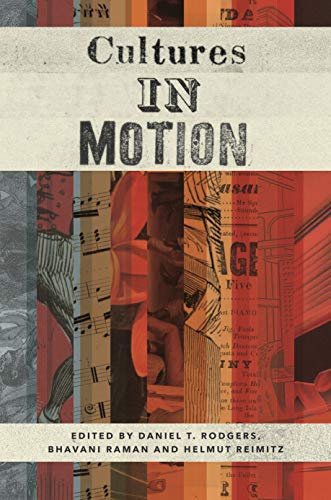
Inhaltsangabe
In the wide-ranging and innovative essays of Cultures in Motion, a dozen distinguished historians offer new conceptual vocabularies for understanding how cultures have trespassed across geography and social space. From the transformations of the meanings and practices of charity during late antiquity and the transit of medical knowledge between early modern China and Europe, to the fusion of Irish and African dance forms in early nineteenth-century New York, these essays follow a wide array of cultural practices through the lens of motion, translation, itinerancy, and exchange, extending the insights of transnational and translocal history.
Cultures in Motion challenges the premise of fixed, stable cultural systems by showing that cultural practices have always been moving, crossing borders and locations with often surprising effect. The essays offer striking examples from early to modern times of intrusion, translation, resistance, and adaptation. These are histories where nothing--dance rhythms, alchemical formulas, musical practices, feminist aspirations, sewing machines, streamlined metals, or labor networks--remains stationary.
In addition to the editors, the contributors are Celia Applegate, Peter Brown, Harold Cook, April Masten, Mae Ngai, Jocelyn Olcott, Mimi Sheller, Pamela Smith, and Nira Wickramasinghe.
Die Inhaltsangabe kann sich auf eine andere Ausgabe dieses Titels beziehen.
Über die Autorin bzw. den Autor
Daniel T. Rodgers is the Henry Charles Lea Professor Emeritus of History at Princeton University. Bhavani Raman is an associate professor in the Department of Historical and Cultural Studies at the University of Toronto, Scarborough. Helmut Reimitz is a professor in the Department of History at Princeton University..
Von der hinteren Coverseite
"Cultures in Motion represents first-rate scholarship and opens up a critical new space for historiography. Exploring the movement of things, ideas, and other cultural forms, the book--and the introduction in particular--gives an independent existence and importance to such work, and raises original questions about historical change and intercultural understandings."--Thomas Bender, author ofA Nation Among Nations
"This book provides a new approach to finding a language to describe the new realities that emerge from the interactions of geographically or temporally different cultural practices, material objects, and languages, as they meet in a given, shared space. The essays are engaging in subject matter and persuasively written, and the introduction is superb."--Barbara Metcalf, professor of history emerita, University of California, Davis
"This successful collection of essays focuses on the inherent instability of cultural spheres and the increasing recognition that traditional models of comparative, global, and transcultural/transnational investigation do not do justice to the complexities of human history. Cultures in Motion defines the contours of a new way of thinking and researching cultural history."--Patrick J. Geary, Institute for Advanced Study
Aus dem Klappentext
"Cultures in Motion represents first-rate scholarship and opens up a critical new space for historiography. Exploring the movement of things, ideas, and other cultural forms, the book--and the introduction in particular--gives an independent existence and importance to such work, and raises original questions about historical change and intercultural understandings."--Thomas Bender, author ofA Nation Among Nations
"This book provides a new approach to finding a language to describe the new realities that emerge from the interactions of geographically or temporally different cultural practices, material objects, and languages, as they meet in a given, shared space. The essays are engaging in subject matter and persuasively written, and the introduction is superb."--Barbara Metcalf, professor of history emerita, University of California, Davis
"This successful collection of essays focuses on the inherent instability of cultural spheres and the increasing recognition that traditional models of comparative, global, and transcultural/transnational investigation do not do justice to the complexities of human history. Cultures in Motion defines the contours of a new way of thinking and researching cultural history."--Patrick J. Geary, Institute for Advanced Study
Auszug. © Genehmigter Nachdruck. Alle Rechte vorbehalten.
Cultures in Motion
By Daniel T. Rodgers, Bhavani Raman, Helmut ReimitzPRINCETON UNIVERSITY PRESS
Copyright © 2014 Princeton University Press
All rights reserved.
ISBN: 978-0-691-15909-6All rights reserved.
Contents
| Acknowledgments............................................................ | vii |
| Cultures in Motion: An Introduction Daniel T. Rodgers..................... | 1 |
| Part I: The Circulation of Cultural Practices.............................. | 21 |
| Chapter One: The Challenge Dance: Black-Irish Exchange in Antebellum America April F. Masten................................................... | 23 |
| Chapter Two: Musical Itinerancy in a World of Nations: Germany, Its Music, and Its Musicians Celia Applegate......................................... | 60 |
| Chapter Three: From Patriae Amator to Amator Pauperum and Back Again: Social Imagination and Social Change in the West between Late Antiquity and the Early Middle Ages, ca. 300–600 Peter Brown........................ | 87 |
| Part II: Objects in Transit................................................ | 107 |
| Chapter Four: Knowledge in Motion: Following Itineraries of Matter in the Early Modern World Pamela H. Smith........................................ | 109 |
| Chapter Five: Fashioning a Market: The Singer Sewing Machine in Colonial Lanka Nira Wickramasinghe................................................. | 134 |
| Chapter Six: Speed Metal, Slow Tropics, Cold War: Alcoa in the Caribbean Mimi Sheller............................................................... | 165 |
| Part III: Translations..................................................... | 195 |
| Chapter Seven: The True Story of Ah Jake: Language, Labor, and Justice in Late-Nineteenth-Century Sierra County, California Mae M. Ngai............. | 197 |
| Chapter Eight: Creative Misunderstandings: Chinese Medicine in Seventeenth-Century Europe Harold J. Cook................................. | 215 |
| Chapter Nine: Transnational Feminism: Event, Temporality, and Performance at the 1975 International Women's Year Conference Jocelyn Olcott.......... | 241 |
| Afterwords................................................................. | 267–278 |
| Itinerancy and Power Bhavani Raman........................................ | 267 |
| From Cultures to Cultural Practices and Back Again Helmut Reimitz......... | 270 |
| List of Papers............................................................. | 279 |
| List of Contributors....................................................... | 283 |
| Notes...................................................................... | 285 |
| Index...................................................................... | 357 |
CHAPTER 1
The Challenge Dance
BLACK-IRISH EXCHANGE IN ANTEBELLUM AMERICA
April F. Masten
In his 1843 edition of Traits and Stories of the Irish Peasantry, Irishwriter William Carleton described the accomplishments of Bob M'Cann,whom he encountered in a "remote and isolated" part of Ireland. "Bob'scrack feat," Carleton recalled, "was performing the Screw-pin Dance, ofwhich we have only this to say, that by whatsoever means he becameacquainted with it, it is precisely the same dance which is said to havebeen exhibited by some strolling Moor before the late Queen Caroline."It is not surprising that Carleton recorded Bob's screw-pin dance in hisvolume since the love of dancing was considered a typical Irish trait, buthis speculation that it had African roots was exceptional.
Carleton was unable to pinpoint a site of exchange—that time orplace where African and Irish dancers shared steps, yet his details suggestmultiple possibilities. He identifies the dance as "Bob's crack feat,"which means it was his signature step, the humorous "brag" dance heperformed to show off or compete with other dancers. Bob might havemade it up himself, but the name "screw-pin dance" suggests he learnedit in a waterfront parish. Screw-pins were wooden spindles with whichsailors and dockworkers tightened the bales of cotton they stowed in theholds of ships. Negro stevedores used to sing as they pushed the spindlesaround, and these jack-screw shanties were transposed into dance tunesby shipboard and dockside musicians. Sailors hailing from England, Ireland,Europe, Africa, and the Americas traded dances on sea and in porttowns where ships docked and whites and blacks mixed freely. By the1840s, the U.S. South was the largest producer and exporter of cotton inthe world. So Bob's step could have been an American dance transportedto the coastal regions of Ireland in the body memory of ship passengers.
Or it might have been a Mediterranean hybrid transmitted straightfrom North Africa, another cotton-producing region, where the notoriousQueen Caroline spent the early 1800s carousing with her Italian servantsand a black dancer named Mahomet. During her trial for adulteryin 1820, Caroline's defenders compared Mahomet's dance to "the Spanishbolero or the negro dance" performed at theaters in London and Dublinsince the 1790s. Censored by the Spanish aristocracy, the bolero wasa sensuous peasant dance characterized by syncopated percussive steps,castanet clicks, and the pelvic twists common to many African dances.Then again, Mahomet's dance could have been like Bob's and incorporatedthe steps of sailors and actors visiting North Africa. In any case,by linking the brag dance of an Irish rube to that of a strolling Moor,Carleton was not denying its Irishness. Rather, his observation suggestsa contemporary awareness that peasant traditions were being producedaround the globe by intercultural mixing and a diaspora that sent millionsof Irish immigrants and African slaves to America.
This essay recovers the transnational origins of a distinctly Americantradition of brag dancing—the challenge dance. Part theater, partsport, challenge dances were jigging contests got up among and betweenwhite and black men, and sometimes women. Emerging in the antebellumera alongside boxing, scores of elaborate and impromptu jig-dancecompetitions enlivened riverfront and port cities from New Orleans toToronto. They took place on streets, docksides, and plantations, in marketsquares, taverns, and town halls, and in theaters and circus rings aspart of white and blackface shows. Spontaneous and planned, spread byword of mouth or announced in print, dance matches drew large raucouscrowds and were viewed, judged, and bet on like prizefights. Repeat winnersof large wagers claimed the title, or named themselves, "ChampionDancer of the World." These matches were the product of the intersectingdiasporas and cultural exchange of Irish and African emigrants movingthrough the Atlantic world.
Antebellum America's most famous rivals were a young African Americandancer called Master Juba and a young Irish American dancer calledMaster Diamond who engaged in a series of challenge dances between1843 and 1846. Master Juba, stage name of William Henry Lane, is afamiliar figure in the history of American dance. Visiting New York in1842, Charles Dickens saw him perform at Pete Williams's tavern inFive Points and immortalized him in his travelogue, American...
„Über diesen Titel“ kann sich auf eine andere Ausgabe dieses Titels beziehen.
Suchergebnisse für Cultures in Motion (Publications in Partnership With...

Beispielbild für diese ISBN
Cultures in Motion
Anbieter: PBShop.store US, Wood Dale, IL, USA
Verkäuferbewertung 5 von 5 Sternen

HRD. Zustand: New. New Book. Shipped from UK. Established seller since 2000. Artikel-Nr. WP-9780691159096
Beispielbild für diese ISBN
Cultures in Motion
Anbieter: PBShop.store UK, Fairford, GLOS, Vereinigtes Königreich
Verkäuferbewertung 5 von 5 Sternen
HRD. Zustand: New. New Book. Shipped from UK. Established seller since 2000. Artikel-Nr. WP-9780691159096
Neu kaufen
EUR 55,72
EUR 5,93 Versand
Versand von Vereinigtes Königreich nach USA
Versand von Vereinigtes Königreich nach USA
Anzahl: 1 verfügbar
Beispielbild für diese ISBN
Cultures in Motion
Anbieter: Kennys Bookstore, Olney, MD, USA
Verkäuferbewertung 5 von 5 Sternen
Zustand: New. Offers conceptual vocabularies for understanding how cultures have trespassed across geography and social space. This title challenges the premise of fixed, stable cultural systems by showing that cultural practices have always been moving, crossing borders and locations with often surprising effect. Editor(s): Rodgers, Daniel T.; Raman, Bhavani; Reimitz, Helmut. Series: Publications in Partnership with the Shelby Cullom Davis Center at Princeton University. Num Pages: 384 pages, 28 halftones. BIC Classification: HBG; JFC; JFF. Category: (P) Professional & Vocational; (U) Tertiary Education (US: College). Dimension: 243 x 170 x 28. Weight in Grams: 684. . 2013. First Edition, First Printing. Hardcover. . . . . Books ship from the US and Ireland. Artikel-Nr. V9780691159096
Neu kaufen
EUR 63,93
EUR 9,37 Versand
Versand innerhalb von USA
Versand innerhalb von USA
Anzahl: 1 verfügbar
Beispielbild für diese ISBN
Cultures in Motion (Publications in Partnership with the Shelby Cullom Davis Center at Princeton University)
Anbieter: Ria Christie Collections, Uxbridge, Vereinigtes Königreich
Verkäuferbewertung 5 von 5 Sternen
Zustand: New. In English. Artikel-Nr. ria9780691159096_new
Neu kaufen
EUR 66,38
EUR 13,34 Versand
Versand von Vereinigtes Königreich nach USA
Versand von Vereinigtes Königreich nach USA
Anzahl: 1 verfügbar
Beispielbild für diese ISBN
Cultures in Motion
Anbieter: Revaluation Books, Exeter, Vereinigtes Königreich
Verkäuferbewertung 5 von 5 Sternen
Hardcover. Zustand: Brand New. 368 pages. 9.50x6.50x1.25 inches. In Stock. Artikel-Nr. __0691159092
Neu kaufen
EUR 66,93
EUR 14,77 Versand
Versand von Vereinigtes Königreich nach USA
Versand von Vereinigtes Königreich nach USA
Anzahl: 1 verfügbar
Beispielbild für diese ISBN
Cultures in Motion
Anbieter: Revaluation Books, Exeter, Vereinigtes Königreich
Verkäuferbewertung 5 von 5 Sternen
Hardcover. Zustand: Brand New. 368 pages. 9.50x6.50x1.25 inches. In Stock. Artikel-Nr. x-0691159092
Neu kaufen
EUR 97,72
EUR 14,77 Versand
Versand von Vereinigtes Königreich nach USA
Versand von Vereinigtes Königreich nach USA
Anzahl: 2 verfügbar
Foto des Verkäufers
Cultures in Motion
Anbieter: moluna, Greven, Deutschland
Verkäuferbewertung 5 von 5 Sternen
Gebunden. Zustand: New. Offers conceptual vocabularies for understanding how cultures have trespassed across geography and social space. This title challenges the premise of fixed, stable cultural systems by showing that cultural practices have always been moving, crossing borders. Artikel-Nr. 594885270
Neu kaufen
EUR 73,93
EUR 48,99 Versand
Versand von Deutschland nach USA
Versand von Deutschland nach USA
Anzahl: 2 verfügbar
Foto des Verkäufers
Cultures in Motion
Verlag:
Princeton University Press Dez 2013, 2013
ISBN 10: 0691159092
ISBN 13: 9780691159096
Neu
Hardcover
Anbieter: AHA-BUCH GmbH, Einbeck, Deutschland
Verkäuferbewertung 5 von 5 Sternen
Buch. Zustand: Neu. Neuware - In the wide-ranging and innovative essays of Cultures in Motion, a dozen distinguished historians offer new conceptual vocabularies for understanding how cultures have trespassed across geography and social space. From the transformations of the meanings and practices of charity during late antiquity and the transit of medical knowledge between early modern China and Europe, to the fusion of Irish and African dance forms in early nineteenth-century New York, these essays follow a wide array of cultural practices through the lens of motion, translation, itinerancy, and exchange, extending the insights of transnational and translocal history. Cultures in Motion challenges the premise of fixed, stable cultural systems by showing that cultural practices have always been moving, crossing borders and locations with often surprising effect. The essays offer striking examples from early to modern times of intrusion, translation, resistance, and adaptation. These are histories where nothing--dance rhythms, alchemical formulas, musical practices, feminist aspirations, sewing machines, streamlined metals, or labor networks--remains stationary. In addition to the editors, the contributors are Celia Applegate, Peter Brown, Harold Cook, April Masten, Mae Ngai, Jocelyn Olcott, Mimi Sheller, Pamela Smith, and Nira Wickramasinghe. Artikel-Nr. 9780691159096
Neu kaufen
EUR 99,18
EUR 35,00 Versand
Versand von Deutschland nach USA
Versand von Deutschland nach USA
Anzahl: 1 verfügbar