
Verwandte Artikel zu Birds of Kenya's Rift Valley (Wildlife Explorer...
Birds of Kenya's Rift Valley (Wildlife Explorer Guides) - Softcover
Buch 5 von 12: Wildlife Explorer Guides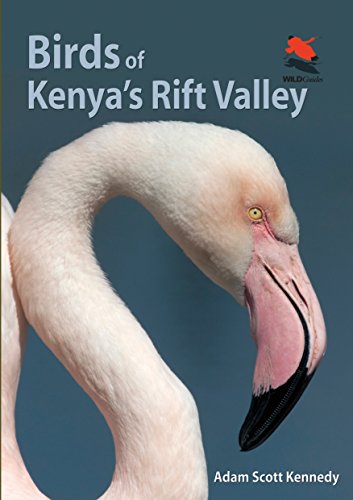
Inhaltsangabe
Kenya's Rift Valley includes four major national parks--Lake Nakuru, Lake Bogoria, Mount Longonot, and Hell's Gate--as well as many smaller areas that are outstanding for wildlife. Birds of Kenya's Rift Valley features the 320 bird species that are most likely to be encountered on safari in this world-famous region, which runs from Lake Baringo in the north to Lake Magadi in the south. Featuring over 500 stunning color photos, this beautiful guide breaks new ground with its eye-catching layout and easy-to-use format. The book follows a habitat-based approach and provides interesting information about the ecology and behaviors of each species. Birds of Kenya's Rift Valley avoids technical jargon in the species descriptions, which makes the guide easily accessible to anyone. With it, you will be identifying birds in no time.
- Stunning photos of 320 bird species
- Major plumage variations depicted
- Jargon-free text
- Helpful notes on what to look and listen for, behavior, and why some birds are so named
Die Inhaltsangabe kann sich auf eine andere Ausgabe dieses Titels beziehen.
Über die Autorin bzw. den Autor
Adam Scott Kennedy has served as principal leader on birding holidays in Africa, South America, Europe, and New Zealand. With his wife, Vicki, he currently operates as a private safari guide, specializing in photographic and wildlife safaris in East Africa. Information on their tours and stock image library can be found at www.rawnaturephoto.com. He is the author of Birds of the Masai Mara (Princeton WILDGuides).
Auszug. © Genehmigter Nachdruck. Alle Rechte vorbehalten.
Birds of Kenya's Rift Valley
By Adam Scott KennedyPRINCETON UNIVERSITY PRESS
Copyright © 2014 Adam Scott Kennedy
All rights reserved.
ISBN: 978-0-691-15907-2All rights reserved.
Contents
About this book, 9,
The geography of Kenya's Rift Valley, 13,
Maps of the Rift Valley, 23,
BIRDS OF LAKE AND MARSH,
UP IN THE AIR,
BIRD OF PREY,
BIRDS OF GRASSLAND AND OPEN AREAS,
BIRDS OF WOODS, SCRUB AND GARDEN,
BIRDS OF WOODLAND, SCRUB AND GARDEN (continued),
NIGHT BIRDS,
Further reading and useful resources, 244,
Acknowledgements, 245,
Photographic credits, 246,
Scientific names of the bird species included in this book, 247,
Index, 252,
Short Index, inside back cover,
CHAPTER 1
Pelicans
Great White Pelican
175 cm | 70" (wingspan 290 cm | 115")
General notes: East Africa is host to two of the world's eight pelican species. Both have different feeding strategies but rely on their huge bills, equipped with an expandable pouch, to catch fish. With their large, webbed feet, pelicans are great swimmers and you may notice that they sit high in the water for such bulky birds. This is because air sacs secreted under the skin help to maintain excellent buoyancy. Despite their great size pelicans are fantastic fliers and routinely commute over 100 km in search of feeding grounds, sometimes soaring 2–3 km above the ground. Both species are colonial breeders and gatherings of the noisy, fluffy white young form substantial crèches at breeding sites. At Lake Naivasha, both species are threatened by excessive water abstraction and rising toxicity levels due to the ever-expanding horticultural industry.
A huge, white waterbird with a bright yellow bill. Large flocks of this impressive bird gather in the Rift Valley, especially at Lake Nakuru where groups are very approachable as they loaf and preen along the water's edge. When feeding, groups gather in circles and plunge their mighty bills into the water in unison, creating quite a spectacle. Breeding birds develop a semi-erectile crest and the facial skin colour changes from the usual yellow to orange. The overall plumage of such birds turns quite peachy, so be careful not to confuse this species with the Pink-backed Pelican which, strangely, looks less pink than a breeding Great White! It only breeds on rocky islands on Lake Elementeita, but not every year. Young birds are able to fly after 3 months, when their plumage is still very brown, and may take 3 years to reach maturity.
BIRDS OF LAKE AND MARSH
Pink-backed Pelican
150 cm | 60" (wingspan 240 cm | 96")
A large, greyish waterbird with a dull-coloured bill. This is the smaller of the two East African pelicans. It is less numerous than the Great White Pelican and does not engage in group-feeding activities. The Pink-backed Pelican nests colonially in trees and breeding birds acquire a yellowish bill and paler body plumage, but this is never as bright as the Great White Pelican's and stays fairly drab for much of the year. It also acquires a comical shaggy crest during the breeding season. Despite the bird's name, it can be very difficult see the 'pink back' at any time during the year.
Darter and cormorants
African Darter 79 cm | 31"
A snake-necked bird of quiet waters. While built on a similar frame to the cormorants, the African Darter is a far more refined bird with an air of elegance about it. It has a long, slim neck and sharp bill that is used to spear fish like a harpoon – and it is not uncommon to see a bird rise from an underwater dive with a fish impaled on the end. Darters often swim on the surface with their backs submerged and can be difficult to find when just the long neck and head are exposed. At the breeding grounds, such as Lake Baringo, pairs nest in the company of herons and egrets. Young birds are white and fluffy.
Reed Cormorant 53 cm | 21"
A dark, duck-sized bird of open waters. Considerably smaller than the Great Cormorant, this bird is also much smaller in its proportions, with the exception of having a comparatively longer tail (and hence is often referred to as Long-tailed Cormorant). Adults are dark-necked and immatures much paler, while breeding adults sport a short crest above the bill. Although less obvious than the Great Cormorant, this bird is numerous and widespread across the Rift Valley lakes.
Great Cormorant 100 cm | 40"
A pied, goose-sized bird of open waters. There is great variation in the plumage of these thickset waterbirds: some adults are white-breasted, whereas others are mostly black with a white chin. However, when in breeding plumage, all show a large white patch on the thigh. Immature birds are usually off-white on the entire underside. With the benefit of impressive webbed feet, they are excellent swimmers and their diet consists almost entirely of fish caught underwater. Flocks of these cormorants are often seen following feeding parties of Great White Pelican (page 26), chasing fish that they flush. Various races of Great Cormorant can be found across Africa, Asia, Europe, Australia and the eastern seaboard of North America.
Egrets
Yellow-billed Egret 70 cm | 27"
A medium-sized, white heron with a yellow bill. Also known as Intermediate Egret, this bird is indeed intermediate in size between the larger Great White Egret and other smaller species, such as Cattle Egret. However judging size is only really possible when the different species are close by. Instead, try to base your identification on two other features – the gape and the neck. The gape is the line that runs from the bill opening and in this species does not extend beyond the eye (unlike Great White Egret). The neck is obviously elongated and shows at least one kink, quite unlike the Cattle Egret (page 32) which is invariably hunched most of the time and does not show a kinked neck. The leg colour changes from yellow to black in the breeding season but never has the mixed colour combination of Little Egret. Like all other egrets, the neck is recoiled backwards in flight.
Little Egret 64 cm | 25"
A medium-sized, white heron with a slim, black bill. The Little Egret is a delicate bird sharing many similarities with the larger Great White Egret but always shows black legs with bright-yellow feet. Also, the black bill contrasts with a yellow patch of skin in front of the eyes and a good view will usually reveal a long, elegant crest. This species has a rarely seen 'dark morph' plumage that is slaty-grey all over except for a white chin but beware of similar dark herons such as Western Reef Heron and Dimorphic Egret (neither shown) that are scarce wanderers to inland waters.
Great White Egret 92 cm | 36"
A large, elegant and long-necked white heron that is rarely seen far from water. Although the largest of the white egrets, confusion with other species is possible, especially the Yellow-billed Egret. By far the most reliable feature to separate these otherwise similar species is the length of the gape (the visible line that runs from the bill opening), which extends well behind the eye in this species. As with other egrets, the plumage varies slightly according to the time of year. Birds in breeding plumage show a greenish patch of skin at the base of a black bill, long white plumes flowing from the back and breast, and yellowish legs. Non-breeding birds have an all-yellow bill, blacker legs and lack the elegant white plumes.
Small...
„Über diesen Titel“ kann sich auf eine andere Ausgabe dieses Titels beziehen.
Suchergebnisse für Birds of Kenya's Rift Valley (Wildlife Explorer...

Beispielbild für diese ISBN
Birds of Kenya`s Rift Valley (
Verlag:
Princeton University Press, 2014
ISBN 10: 0691159076
ISBN 13: 9780691159072
Gebraucht
Softcover
Anbieter: World of Books (was SecondSale), Montgomery, IL, USA
Verkäuferbewertung 5 von 5 Sternen

Zustand: Good. Item in good condition. Textbooks may not include supplemental items i.e. CDs, access codes etc. Artikel-Nr. 00100048117
Gebraucht kaufen
EUR 4,61
Versand gratis
Versand innerhalb von USA
Versand innerhalb von USA
Anzahl: 3 verfügbar
Beispielbild für diese ISBN
Birds of Kenya`s Rift Valley (
Verlag:
Princeton University Press, 2014
ISBN 10: 0691159076
ISBN 13: 9780691159072
Gebraucht
Softcover
Anbieter: World of Books (was SecondSale), Montgomery, IL, USA
Verkäuferbewertung 5 von 5 Sternen
Zustand: Very Good. Item in very good condition! Textbooks may not include supplemental items i.e. CDs, access codes etc. Artikel-Nr. 00100048065
Gebraucht kaufen
EUR 4,61
Versand gratis
Versand innerhalb von USA
Versand innerhalb von USA
Anzahl: 4 verfügbar
Beispielbild für diese ISBN
Birds of Kenya's Rift Valley (Wildlife Explorer Guides)
Verlag:
Princeton University Press, 2014
ISBN 10: 0691159076
ISBN 13: 9780691159072
Gebraucht
Softcover
Anbieter: Wonder Book, Frederick, MD, USA
Verkäuferbewertung 5 von 5 Sternen
Zustand: As New. Like New condition. A near perfect copy that may have very minor cosmetic defects. Artikel-Nr. Y14K-00219
Gebraucht kaufen
EUR 6,33
Versand gratis
Versand innerhalb von USA
Versand innerhalb von USA
Anzahl: 1 verfügbar
Beispielbild für diese ISBN
Birds of Kenya's Rift Valley
Verlag:
Princeton University Press, 2014
ISBN 10: 0691159076
ISBN 13: 9780691159072
Gebraucht
Softcover
Anbieter: Better World Books, Mishawaka, IN, USA
Verkäuferbewertung 5 von 5 Sternen
Zustand: Very Good. Pages intact with possible writing/highlighting. Binding strong with minor wear. Dust jackets/supplements may not be included. Stock photo provided. Product includes identifying sticker. Better World Books: Buy Books. Do Good. Artikel-Nr. 55086772-6
Gebraucht kaufen
EUR 7,08
Versand gratis
Versand innerhalb von USA
Versand innerhalb von USA
Anzahl: 1 verfügbar
Beispielbild für diese ISBN
Birds of Kenya's Rift Valley
Verlag:
Princeton University Press, 2014
ISBN 10: 0691159076
ISBN 13: 9780691159072
Gebraucht
Softcover
Anbieter: Better World Books, Mishawaka, IN, USA
Verkäuferbewertung 5 von 5 Sternen
Zustand: Fine. Used book that is in almost brand-new condition. May contain a remainder mark. Better World Books: Buy Books. Do Good. Artikel-Nr. 55088472-6
Gebraucht kaufen
EUR 7,08
Versand gratis
Versand innerhalb von USA
Versand innerhalb von USA
Anzahl: 1 verfügbar
Beispielbild für diese ISBN
Birds of Kenya s Rift Valley
Verlag:
Princeton University Press ? WILDGuides, 2014
ISBN 10: 0691159076
ISBN 13: 9780691159072
Neu
Softcover
Anbieter: Kennys Bookstore, Olney, MD, USA
Verkäuferbewertung 5 von 5 Sternen
Zustand: New. Includes four major national parks - Lake Nakuru, Lake Bogoria, Mount Longonot, and Hell's Gate - as well as smaller outstanding wildlife areas. This book looks at the more than 300 bird species most likely to be encountered on safari in this world-famous region, from Lake Magadi in the south to Lake Baringo in the north. Series: Wildguides. Num Pages: 256 pages, 500 color illus. BIC Classification: 1HFGK; WNCB. Category: (G) General (US: Trade); (U) Tertiary Education (US: College). Dimension: 211 x 151 x 16. Weight in Grams: 538. 2014. paperback. Not a first edition copy. . . . Books ship from the US and Ireland. Artikel-Nr. 9780691159072
Beispielbild für diese ISBN
Birds of Kenya's Rift Valley
Verlag:
Princeton University Press, 2014
ISBN 10: 0691159076
ISBN 13: 9780691159072
Gebraucht
Paperback
Anbieter: Powell's Bookstores Chicago, ABAA, Chicago, IL, USA
Verkäuferbewertung 5 von 5 Sternen
Paperback. Zustand: Like New. Clean copy. May have remainder mark. Artikel-Nr. 2045552
Gebraucht kaufen
EUR 11,77
EUR 4,39 Versand
Versand innerhalb von USA
Versand innerhalb von USA
Anzahl: 18 verfügbar
Foto des Verkäufers
Birds of Kenya's Rift Valley (Wildlife Explorer Guides, 11)
Verlag:
Princeton University Press, 2014
ISBN 10: 0691159076
ISBN 13: 9780691159072
Gebraucht
Trade Paperback
Erstausgabe
Anbieter: Southampton Books, Sag Harbor, NY, USA
Verkäuferbewertung 5 von 5 Sternen
Trade Paperback. Zustand: Like New. First Edition. First Edition, First Printing. Published by Princeton University Press, 2014. Octavo. Pictorial wraps. Book is like new; clean with no writing or names. Sharp corners and spine straight. Binding tight and pages crisp. Covers have very light shelf wear. 256 pages. ISBN: 9780691159072. 100% positive feedback. 30 day money back guarantee. NEXT DAY SHIPPING! Excellent customer service. Please email with any questions or if you would like a photo. All books packed carefully and ship with free delivery confirmation/tracking. All books come with free bookmarks. Ships from Southampton, New York. We Buy Books! Individual titles, libraries, collections. Message us if you have books to sell! Artikel-Nr. 139978
Gebraucht kaufen
EUR 18,10
EUR 4,39 Versand
Versand innerhalb von USA
Versand innerhalb von USA
Anzahl: 1 verfügbar
Beispielbild für diese ISBN
Birds of Kenya's Rift Valley
Verlag:
Princeton University Press - WILDGuides, 2014
ISBN 10: 0691159076
ISBN 13: 9780691159072
Neu
PAP
Anbieter: PBShop.store UK, Fairford, GLOS, Vereinigtes Königreich
Verkäuferbewertung 5 von 5 Sternen
PAP. Zustand: New. New Book. Shipped from UK. Established seller since 2000. Artikel-Nr. WP-9780691159072
Neu kaufen
EUR 31,69
EUR 5,84 Versand
Versand von Vereinigtes Königreich nach USA
Versand von Vereinigtes Königreich nach USA
Anzahl: 15 verfügbar
Beispielbild für diese ISBN
Birds of Kenya's Rift Valley
Anbieter: Revaluation Books, Exeter, Vereinigtes Königreich
Verkäuferbewertung 5 von 5 Sternen
Paperback. Zustand: Brand New. 264 pages. 8.25x5.75x0.75 inches. In Stock. Artikel-Nr. 0691159076
Neu kaufen
EUR 33,03
EUR 14,53 Versand
Versand von Vereinigtes Königreich nach USA
Versand von Vereinigtes Königreich nach USA
Anzahl: 1 verfügbar