
Verwandte Artikel zu Modern Observational Physical Oceanography: Understanding...
Inhaltsangabe
The essential introduction to modern physical oceanography
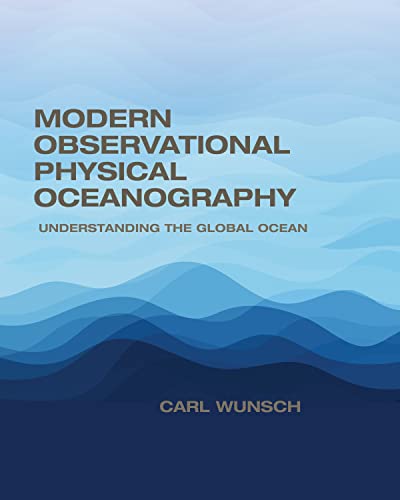
With the advent of computers, novel instruments, satellite technology, and increasingly powerful modeling tools, we know more about the ocean than ever before. Yet we also have a new generation of oceanographers who have become increasingly distanced from the object of their study. Ever fewer scientists collect the observational data on which they base their research. Instead, many download information without always fully understanding how far removed it is from the original data, with opportunity for great misinterpretation. This textbook introduces modern physical oceanography to beginning graduate students in marine sciences and experienced practitioners in allied fields. Real observations are strongly emphasized, as are their implications for understanding the behavior of the global ocean.
Written by a leading physical oceanographer, Modern Observational Physical Oceanography explains what the observational revolution of the past twenty-five years has taught us about the real, changing fluid ocean. Unlike any other book, it provides a broad and accessible treatment of the subject, covering everything from modern methods of observation and data analysis to the fluid dynamics and modeling of ocean processes and variability. Fully illustrated in color throughout, the book describes the fundamental concepts that are needed before delving into more advanced topics, including internal-inertial waves, tides, balanced motions, and large-scale circulation physics.
- Provides an accessible introduction to modern physical oceanography
- Written by a leading physical oceanographer
- Emphasizes real observations of the fluid ocean
- Features hundreds of color illustrations
- An online illustration package is available to professors
Die Inhaltsangabe kann sich auf eine andere Ausgabe dieses Titels beziehen.
Über die Autorin bzw. den Autor
Carl Wunsch is the Cecil and Ida Green Professor of Physical Oceanography, Emeritus, at the Massachusetts Institute of Technology and a long-term visiting professor at Harvard University. His books include Discrete Inverse and State Estimation Problems: With Geophysical Fluid Applications and The Ocean Circulation Inverse Problem. He is a member of the National Academy of Sciences and a foreign member of the Royal Society.
Von der hinteren Coverseite
"Anyone with a serious interest in understanding the oceans will want to own a copy of Wunsch's book. Its treatment of what is really known about the ocean is the fruit of a lifetime of effort by Wunsch in obtaining, analyzing, interpreting, and critically evaluating oceanic observations. This authoritative and helpfully opinionated book is a must-read for every oceanographer."--Joe Pedlosky, Woods Hole Oceanographic Institution
"In this magnificent book, Wunsch provides a broad introduction to modern observational physical oceanography, encompassing one of the most exciting and important scientific revolutions of the past three decades. It is a tour de force that should be mandatory reading for graduate students and researchers in physical oceanography and related disciplines."--David Marshall, University of Oxford
"Wunsch has led the effort to build a global ocean observing system, which has brought oceanography into a new era. Here, he enables students to appreciate the connections between the basics of this science with the infusion of data from satellites, robotic deep-sea probes, and classic expeditions with ships. We finally can see the inner working of the ocean, at a time when global warming is nudging it in dangerous directions."--Peter Rhines, University of Washington
"Essential reading for all serious students of physical oceanography. Wunsch explains how our knowledge derives from instrumental observations and conceptual models, yet how we often misunderstand the limits of what we see. Knowing these limits illuminates the history of the field and reveals the opportunities that lie ahead. This book's treatment--by one of the most profound thinkers in oceanography--is insightful, wise, erudite, and useful in practice."--Thomas Haine, Johns Hopkins University
"Wunsch is a world-renowned expert in oceanography, especially in observational oceanography, and this book is correspondingly authoritative. It discusses the real ocean, in particular how it is observed and what we can infer about the ocean from these observations. It is unique in its approach and a valuable addition to the canon."--Geoffrey K. Vallis, author ofClimate and the Oceans
Aus dem Klappentext
"Anyone with a serious interest in understanding the oceans will want to own a copy of Wunsch's book. Its treatment of what is really known about the ocean is the fruit of a lifetime of effort by Wunsch in obtaining, analyzing, interpreting, and critically evaluating oceanic observations. This authoritative and helpfully opinionated book is a must-read for every oceanographer."--Joe Pedlosky, Woods Hole Oceanographic Institution
"In this magnificent book, Wunsch provides a broad introduction to modern observational physical oceanography, encompassing one of the most exciting and important scientific revolutions of the past three decades. It is a tour de force that should be mandatory reading for graduate students and researchers in physical oceanography and related disciplines."--David Marshall, University of Oxford
"Wunsch has led the effort to build a global ocean observing system, which has brought oceanography into a new era. Here, he enables students to appreciate the connections between the basics of this science with the infusion of data from satellites, robotic deep-sea probes, and classic expeditions with ships. We finally can see the inner working of the ocean, at a time when global warming is nudging it in dangerous directions."--Peter Rhines, University of Washington
"Essential reading for all serious students of physical oceanography. Wunsch explains how our knowledge derives from instrumental observations and conceptual models, yet how we often misunderstand the limits of what we see. Knowing these limits illuminates the history of the field and reveals the opportunities that lie ahead. This book's treatment--by one of the most profound thinkers in oceanography--is insightful, wise, erudite, and useful in practice."--Thomas Haine, Johns Hopkins University
"Wunsch is a world-renowned expert in oceanography, especially in observational oceanography, and this book is correspondingly authoritative. It discusses the real ocean, in particular how it is observed and what we can infer about the ocean from these observations. It is unique in its approach and a valuable addition to the canon."--Geoffrey K. Vallis, author ofClimate and the Oceans
Auszug. © Genehmigter Nachdruck. Alle Rechte vorbehalten.
Modern Observational Physical Oceanography
Understanding the Global Ocean
By Carl WunschPRINCETON UNIVERSITY PRESS
Copyright © 2015 Princeton University Press
All rights reserved.
ISBN: 978-0-691-15882-2All rights reserved.
Contents
Preface, xiii,
1 Introduction, 1,
2 Observing the Ocean, 4,
3 What Does the Ocean Look Like?, 51,
4 Linear Wave Dynamics, 109,
5 Observations of Internal and Inertial Waves, 156,
6 The Tide Disturbing Potential and the Milankovitch Forcing, 169,
7 Observations of Tides and Related Phenomena, 195,
8 Balanced Motions, 228,
9 The Time-Mean Ocean Circulation, 250,
10 Large-Scale Circulation Physics, 294,
11 Interpreting and Using the Circulation, 314,
12 Low-Frequency, Time-Varying, Global-Scale Flow, 352,
A Brief Afterword, 377,
A A Primer of Analysis Methods, 379,
B Inverse and State Estimation Methods, 420,
C Problematic Terms and Concepts, 435,
D Useful Numerical Values, 441,
E Notation, Abbreviations, and Acronyms, 444,
References, 447,
Index, 477,
CHAPTER 1
Introduction
Study of the ocean circulation is a problem in fluid dynamics. Traditionally, however, descriptions of the oceanic general circulation have begun with pictures of the large-scale temperature, salt, and oxygen and other chemical tracer properties of the deep sea. This approach rests on good historical and logical grounds: until recent times, the only properties measurable on a global basis were these scalar "tracers." Furthermore, their overall distributions have proved remarkably stable in time, and in turn that has made it possible to combine data over many decades to achieve global pictures from shipboard measurements.
In contrast, this book begins with an emphasis on the time-varying flow field as observed from a variety of modern instruments. The more traditional discussion of the time-average properties of velocity, temperature, and salinity is postponed. These latter are to be set into a context more relevant to an observer coping with a changing velocity field. Conventional pictures showing the large-scale temperature, salinity, and related distributions led to the concept of the ocean circulation as a quasi-geological phenomenon, with little or no change occurring either spatially or temporally. In the process, sometimes it was forgotten that the ocean is a fluid, and not a series of slabs sliding over one another unrelated to the equations of physics. As long as the study of the circulation was primarily of interest to academic physical oceanographers, the consequences of this distortion were of little practical consequence. Today, however, the circulation is widely regarded as an essential element in the understanding of the climate system and as a dominant factor in such politically charged phenomena as global change, sea level, and biological variations. But misconceptions concerning the very character of the circulation generate unrealistic programs for climate forecasting, observing the ocean, interpreting the record of past climate, and a host of related practical issues such as the management of fish populations.
The term "oceanography" historically denoted a descriptive science, paralleling "geography"—with its heavy emphasis on terrain, crops, economic assets, regional particulars, etc. That traditional beginning is today recalled in "descriptive oceanography," to distinguish it from the wider subject employing the dynamical equations with much mathematics. Every region, depth, season, and probably year in the ocean is distinct from all others. A very large and growing literature exists depicting the elements and eccentricities of many geographical regions. Most of that subject is omitted here—rather, the focus is on those elements that can be understood in a more global context, because of their generality or exceptionality. But the reader must understand that no clear distinction exists between the regional- and global-scale descriptions, be it verbal or mathematical, and too much should not be made of the division.
Physical oceanography can no longer be encompassed in a single manageable volume, and I make no claim to being expert in more than a fraction of it. References are provided that should permit a reader interested in pursuing a subject in greater depth to do so by starting with the various papers and books cited. No serious attempt has been made to provide a historically correct attribution to the originator of an idea, and when a reference is given, unless explicitly stated otherwise no implication is intended that it refers either to the hrst, or even the most important, discussion. These references might be regarded as the analog of navigational beacons: they are neither the channel nor a shoal, but indicators of where those are to be found. Parts of the field are undergoing rapid development as I write, with new papers appearing weekly. Obsolescence in a book must be expected, with the navigational markers being more like bread crumbs in a world of birds and rainfall. Modern electronic search tools now permit easy access to both the earlier and later literature. Occasionally, a historical sketch is provided where it enables a better understanding of some concept.
My intention has been to make the book self-contained if not comprehensive; specific references to the fluid dynamics literature (e.g., Tritton, 1988; Kundu and Cohen, 2008) and to the more theoretical textbooks noted in the preface are provided so that the reader can locate a fuller derivation, a wider discussion, or illuminating applications. Much useful material can be found in the recent compendium of Siedler et al. (2013); like most multiauthor collections (there more than seventy), it is neither easily digested nor without internal contradictions.
By employing "boxed" discussions and appendices, I have tried to make the basic concepts, borrowed from a wide variety of subfields, at least heuristically sensible and have provided references for anyone who would like to know more. Thus sketches are provided of the singular value decomposition, the Radon transform, Bessel functions, etc. Within the text, in many cases, results are simply stated; in others, where the derivation is particularly easy or interesting or illuminating, it is at least sketched. I do not claim to have been consistent. The ocean and climate are nonlinear systems, a property one must always remember. Nonetheless, this book leans almost completely on linear mathematics on the grounds that most intuition and insight are built that way, and as has been found across the sciences, linear analyses often have skills well beyond their formal domain of validity.
Only elementary statistical methods are employed: sample means and variances, spectral estimates, etc.—just enough to get by on, given the existence of useful handbooks dealing with a variety of powerful techniques. Historically, oceanography and climate have almost never raised issues in which very fussy statistical tests were required—if apparent signals were so weak as to require powerful tests, they usually proved unimportant compared to much more conspicuous, and still unexplained, signals. Many statistical methods exist for extracting weak signals from noise. In practice, however, oceanographic and climate measurements are usually subject to such basic problems as calibration drifts, sampling distribution changes, unknown external contributors, small sample size, and poorly understood statistical characteristics (e.g., they are never truly Gaussian,...
„Über diesen Titel“ kann sich auf eine andere Ausgabe dieses Titels beziehen.
Suchergebnisse für Modern Observational Physical Oceanography: Understanding...

Beispielbild für diese ISBN
Modern Observational Physical Oceanography: Understanding the Global Ocean
Verlag:
Princeton University Press, 2015
ISBN 10: 0691158827
ISBN 13: 9780691158822
Gebraucht
Hardcover
Anbieter: World of Books (was SecondSale), Montgomery, IL, USA
Verkäuferbewertung 5 von 5 Sternen

Hardback. Zustand: Very Good. With the advent of computers, novel instruments, satellite technology, and increasingly powerful modeling tools, we know more about the ocean than ever before. Yet we also have a new generation of oceanographers who have become increasingly distanced from the object of their study. Ever fewer scientists collect the observational data on which they. Artikel-Nr. 00107148923
Gebraucht kaufen
EUR 33,23
Versand gratis
Versand innerhalb von USA
Versand innerhalb von USA
Anzahl: 2 verfügbar
Beispielbild für diese ISBN
Modern Observational Physical Oceanography: Understanding the Global Ocean
Anbieter: AwesomeBooks, Wallingford, Vereinigtes Königreich
Verkäuferbewertung 5 von 5 Sternen
Hardcover. Zustand: Very Good. Modern Observational Physical Oceanography: Understanding the Global Ocean This book is in very good condition and will be shipped within 24 hours of ordering. The cover may have some limited signs of wear but the pages are clean, intact and the spine remains undamaged. This book has clearly been well maintained and looked after thus far. Money back guarantee if you are not satisfied. See all our books here, order more than 1 book and get discounted shipping. Artikel-Nr. 7719-9780691158822
Gebraucht kaufen
EUR 31,43
EUR 4,80 Versand
Versand von Vereinigtes Königreich nach USA
Versand von Vereinigtes Königreich nach USA
Anzahl: 2 verfügbar
Beispielbild für diese ISBN
Modern Observational Physical Oceanography: Understanding the Global Ocean
Verlag:
Princeton University Press -, 2015
ISBN 10: 0691158827
ISBN 13: 9780691158822
Gebraucht
Hardcover
Anbieter: Bahamut Media, Reading, Vereinigtes Königreich
Verkäuferbewertung 4 von 5 Sternen

hardcover. Zustand: Very Good. Shipped within 24 hours from our UK warehouse. Clean, undamaged book with no damage to pages and minimal wear to the cover. Spine still tight, in very good condition. Remember if you are not happy, you are covered by our 100% money back guarantee. Artikel-Nr. 6545-9780691158822
Gebraucht kaufen
EUR 55,91
EUR 8,14 Versand
Versand von Vereinigtes Königreich nach USA
Versand von Vereinigtes Königreich nach USA
Anzahl: 1 verfügbar
Beispielbild für diese ISBN
Modern Observational Physical Oceanography
Anbieter: PBShop.store US, Wood Dale, IL, USA
Verkäuferbewertung 5 von 5 Sternen
HRD. Zustand: New. New Book. Shipped from UK. Established seller since 2000. Artikel-Nr. WP-9780691158822
Beispielbild für diese ISBN
Modern Observational Physical Oceanography
Anbieter: PBShop.store UK, Fairford, GLOS, Vereinigtes Königreich
Verkäuferbewertung 5 von 5 Sternen
HRD. Zustand: New. New Book. Shipped from UK. Established seller since 2000. Artikel-Nr. WP-9780691158822
Neu kaufen
EUR 90,95
EUR 9,90 Versand
Versand von Vereinigtes Königreich nach USA
Versand von Vereinigtes Königreich nach USA
Anzahl: 3 verfügbar
Beispielbild für diese ISBN
Modern Observational Physical Oceanography: Understanding the Global Ocean
Anbieter: Kennys Bookstore, Olney, MD, USA
Verkäuferbewertung 5 von 5 Sternen
Zustand: New. Num Pages: 512 pages, 246 color illus. 8 tables. BIC Classification: RBKC. Category: (P) Professional & Vocational; (U) Tertiary Education (US: College). Dimension: 217 x 265 x 33. Weight in Grams: 1644. . 2015. Hardcover. . . . . Books ship from the US and Ireland. Artikel-Nr. V9780691158822
Neu kaufen
EUR 119,43
EUR 9,23 Versand
Versand innerhalb von USA
Versand innerhalb von USA
Anzahl: 1 verfügbar
Beispielbild für diese ISBN
Modern Observational Physical Oceanography
Anbieter: Majestic Books, Hounslow, Vereinigtes Königreich
Verkäuferbewertung 4 von 5 Sternen
Zustand: New. pp. 600 246 Illus. (Col.). Artikel-Nr. 322534809
Neu kaufen
EUR 125,10
EUR 7,58 Versand
Versand von Vereinigtes Königreich nach USA
Versand von Vereinigtes Königreich nach USA
Anzahl: 3 verfügbar
Beispielbild für diese ISBN
Modern Observational Physical Oceanography: Understanding the Global Ocean
Anbieter: Ria Christie Collections, Uxbridge, Vereinigtes Königreich
Verkäuferbewertung 5 von 5 Sternen
Zustand: New. In English. Artikel-Nr. ria9780691158822_new
Neu kaufen
EUR 124,75
EUR 17,41 Versand
Versand von Vereinigtes Königreich nach USA
Versand von Vereinigtes Königreich nach USA
Anzahl: 3 verfügbar
Beispielbild für diese ISBN
Modern Observational Physical Oceanography: Understanding the Global Ocean
Anbieter: Revaluation Books, Exeter, Vereinigtes Königreich
Verkäuferbewertung 5 von 5 Sternen
Hardcover. Zustand: Brand New. 600 pages. 10.50x8.50x1.25 inches. In Stock. Artikel-Nr. __0691158827
Neu kaufen
EUR 135,38
EUR 23,31 Versand
Versand von Vereinigtes Königreich nach USA
Versand von Vereinigtes Königreich nach USA
Anzahl: 2 verfügbar