
Verwandte Artikel zu The Crooked Timber of Humanity: Chapters in the History...
Inhaltsangabe
"Out of the crooked timber of humanity, no straight thing was ever made."--Immanuel Kant
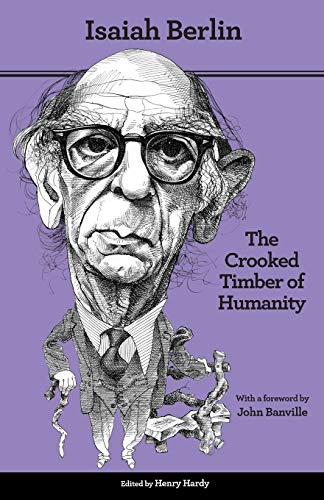
Isaiah Berlin was one of the most important philosophers of the twentieth century--an activist of the intellect who marshaled vast erudition and eloquence in defense of the endangered values of individual liberty and moral and political plurality. In The Crooked Timber of Humanity he exposes the links between the ideas of the past and the social and political cataclysms of our own time: between the Platonic belief in absolute truth and the lure of authoritarianism; between the eighteenth-century reactionary ideologue Joseph de Maistre and twentieth-century Fascism; between the romanticism of Schiller and Byron and the militant--and sometimes genocidal--nationalism that convulses the modern world.
This new edition features a revised text that supplants all previous versions, a new foreword in which award-winning novelist John Banville discusses Berlin's life and ideas, particularly his defense of pluralism, and a substantial new appendix that provides rich context, including letters by Berlin and previously uncollected writings, most notably his virtuoso review of Bertrand Russell's A History of Western Philosophy.
Die Inhaltsangabe kann sich auf eine andere Ausgabe dieses Titels beziehen.
Über die Autorin bzw. den Autor
Isaiah Berlin was a Fellow of All Souls College, Oxford. He was renowned as an essayist and as the author of many books, among them Karl Marx, Four Essays on Liberty, Russian Thinkers, The Sense of Reality, The Proper Study of Mankind, and, from Princeton, Concepts and Categories, Personal Impressions, The Crooked Timber of Humanity, The Hedgehog and the Fox, The Roots of Romanticism, The Power of Ideas, and Three Critics of the Enlightenment. Henry Hardy, a Fellow of Wolfson College, Oxford, is one of Isaiah Berlin's literary trustees. He has edited several other volumes by Berlin and is currently preparing Berlin's letters and remaining unpublished writings for publication.
Auszug. © Genehmigter Nachdruck. Alle Rechte vorbehalten.
THE CROOKED TIMBER OF HUMANITY
CHAPTERS IN THE HISTORY OF IDEAS
By ISAIAH BERLIN, Henry HardyPRINCETON UNIVERSITY PRESS
Copyright © 2013 Isaiah Berlin
All rights reserved.
ISBN: 978-0-691-15593-7All rights reserved.
Contents
| Foreword by John Banville.................................................. | xi |
| Editor's Preface........................................................... | xix |
| Note on References......................................................... | xxvi |
| The Pursuit of the Ideal................................................... | 1 |
| The Decline of Utopian Ideas in the West................................... | 21 |
| Giambattista Vico and Cultural History..................................... | 51 |
| Alleged Relativism in Eighteenth-Century European Thought.................. | 73 |
| Joseph de Maistre and the Origins of Fascism............................... | 95 |
| Appendix: Violence and Terror.............................................. | 178 |
| European Unity and Its Vicissitudes........................................ | 186 |
| The Apotheosis of the Romantic Will: The Revolt against the Myth of an Ideal World................................................................ | 219 |
| The Bent Twig: On the Rise of Nationalism.................................. | 253 |
| Appendix to the Second Edition............................................. | 279 |
| Index...................................................................... | 335 |
Excerpt
CHAPTER 1
The Pursuit of the Ideal
I
There are, in my view, two factors that, above all others,have shaped human history in the twentieth century. One is thedevelopment of the natural sciences and technology, certainlythe greatest success story of our time – to this, great and mountingattention has been paid from all quarters. The other, withoutdoubt, consists in the great ideological storms that have alteredthe lives of virtually all mankind: the Russian Revolution and itsaftermath – totalitarian tyrannies of both right and left and theexplosions of nationalism, racism and, in places, religious bigotrywhich, interestingly enough, not one among the most perceptivesocial thinkers of the nineteenth century had ever predicted.
When our descendants, in two or three centuries' time (ifmankind survives until then), come to look at our age, it is thesetwo phenomena that will, I think, be held to be the outstandingcharacteristics of our century – the most demanding of explanationand analysis. But it is as well to realise that these greatmovements began with ideas in people's heads: ideas about whatrelations between men have been, are, might be and should be;and to realise how they came to be transformed in the name ofa vision of some supreme goal in the minds of the leaders, aboveall of the prophets with armies at their backs. Such ideas are thesubstance of ethics. Ethical thought consists of the systematicexamination of the relations of human beings to each other, theconceptions, interests and ideals from which human ways oftreating one another spring, and the systems of value on whichsuch ends of life are based. These beliefs about how life shouldbe lived, what men and women should be and do, are objects ofmoral enquiry; and when applied to groups and nations, and, indeed,mankind as a whole, are called political philosophy, whichis but ethics applied to society.
If we are to hope to understand the often violent world inwhich we live (and unless we try to understand it, we cannotexpect to be able to act rationally in it and on it), we cannotconfine our attention to the great impersonal forces, naturaland man-made, which act upon us. The goals and motives thatguide human action must be looked at in the light of all thatwe know and understand; their roots and growth, their essence,and above all their validity, must be critically examined withevery intellectual resource that we have. This urgent need, apartfrom the intrinsic value of the discovery of truth about humanrelationships, makes ethics a field of primary importance.Only barbarians are not curious about where they come from,how they came to be where they are, where they appear to begoing, whether they wish to go there, and if so, why, and if not,why not.
The study of the variety of ideas about the views of life thatembody such values and such ends is something that I have spentforty years of my long life in trying to make clear to myself. Ishould like to say something about how I came to becomeabsorbed by this topic, and particularly about a turning-pointwhich altered my thoughts about the heart of it. This will,to some degree, inevitably turn out to be somewhat auto biographical– from this I offer my apologies, but I do not knowhow else to give an account of it.
II
When I was young I read War and Peace by Tolstoy, much tooearly. The real impact on me of this great novel came only later,together with that of other Russian writers, both novelists andsocial thinkers, of the mid-nineteenth century. These writersdid much to shape my outlook. It seemed to me, and still does,that the purpose of these writers was not principally to giverealistic accounts of the lives and relationships to one another ofindividuals or social groups or classes, not psychological or socialanalysis for its own sake – although, of course, the best of themachieved precisely this, incomparably. Their approach seemedto me essentially moral: they were concerned most deeply withwhat was responsible for injustice, oppression, falsity in humanrelations, imprisonment whether by stone walls or conformism– unprotesting submission to man-made yokes – moral blindness,egoism, cruelty, humiliation, servility, poverty, helplessness,bitter indignation, despair on the part of so many. In short, theywere concerned with the nature of these experiences and theirroots in the human condition: the condition of Russia in thefirst place, but, by implication, of all mankind. And converselythey wished to know what would bring about the opposite ofthis, a reign of truth, love, honesty, justice, security, personalrelations based on the possibility of human dignity, decency,independence, freedom, spiritual fulfilment.
Some, like Tolstoy, found this in the outlook of simple people,unspoiled by civilisation; like Rousseau, he wished to believe thatthe moral universe of peasants was not unlike that of children,not distorted by the conventions and institutions of civilisation,which sprang from human vices – greed, egoism, spiritual blindness;that the world could be saved if only men saw the truththat lay at their feet; if they but looked, it was to be found inthe Christian gospels, the Sermon on the Mount. Others amongthese Russians put their faith in scientific rationalism, or in socialand political revolution founded on a true theory of historicalchange. Others again looked for answers in the teachings of theOrthodox theology, or in liberal Western democracy, or in areturn to ancient Slav values, obscured by the reforms of Peterthe Great and his successors.
What was common to all these outlooks was the belief thatsolutions to the central problems existed, that one could discoverthem, and, with sufficient selfless effort, realise them on earth.They all believed that the essence of human beings was to be ableto...
„Über diesen Titel“ kann sich auf eine andere Ausgabe dieses Titels beziehen.
Suchergebnisse für The Crooked Timber of Humanity: Chapters in the History...

Foto des Verkäufers
The Crooked Timber of Humanity: Chapters in the History of Ideas
Verlag:
Princeton University Press, Princeton, 2013
ISBN 10: 0691155933
ISBN 13: 9780691155937
Gebraucht
Softcover
Anbieter: Between the Covers-Rare Books, Inc. ABAA, Gloucester City, NJ, USA
Verkäuferbewertung 5 von 5 Sternen

Softcover. Zustand: Fine. Second edition. Edited by Henry Hardy. Foreword by John Banville. Octavo. 351pp. Crown with a tiny bump else fine in wrappers. Artikel-Nr. 528555
Gebraucht kaufen
EUR 18,39
EUR 4,91 Versand
Versand innerhalb von USA
Versand innerhalb von USA
Anzahl: 1 verfügbar
Beispielbild für diese ISBN
The Crooked Timber of Humanity Chapters in the History of Ideas Second Edition
Anbieter: Revaluation Books, Exeter, Vereinigtes Königreich
Verkäuferbewertung 5 von 5 Sternen
Paperback. Zustand: Brand New. 2nd edition. 376 pages. 8.20x5.50x1.20 inches. In Stock. Artikel-Nr. x-0691155933
Neu kaufen
EUR 27,49
EUR 11,84 Versand
Versand von Vereinigtes Königreich nach USA
Versand von Vereinigtes Königreich nach USA
Anzahl: 2 verfügbar
Foto des Verkäufers
The Crooked Timber of Humanity: Chapters in the History of Ideas (Second Edition)
Anbieter: moluna, Greven, Deutschland
Verkäuferbewertung 5 von 5 Sternen
Zustand: New. Über den AutorIsaiah Berlin was a Fellow of All Souls College, Oxford. He was renowned as an essayist and as the author of many books, among them Karl Marx, Four Essays on Liberty, Russian Thinkers, The Sense of Reality, T. Artikel-Nr. 39543800
Neu kaufen
EUR 23,86
EUR 48,99 Versand
Versand von Deutschland nach USA
Versand von Deutschland nach USA
Anzahl: Mehr als 20 verfügbar
Foto des Verkäufers
The Crooked Timber of Humanity : Chapters in the History of Ideas - Second Edition
Verlag:
Princeton University Press Jun 2013, 2013
ISBN 10: 0691155933
ISBN 13: 9780691155937
Neu
Taschenbuch
Anbieter: AHA-BUCH GmbH, Einbeck, Deutschland
Verkäuferbewertung 5 von 5 Sternen
Taschenbuch. Zustand: Neu. Neuware - 'Out of the crooked timber of humanity, no straight thing was ever made.'--Immanuel Kant Isaiah Berlin was one of the most important philosophers of the twentieth century--an activist of the intellect who marshaled vast erudition and eloquence in defense of the endangered values of individual liberty and moral and political plurality. In The Crooked Timber of Humanity he exposes the links between the ideas of the past and the social and political cataclysms of our own time: between the Platonic belief in absolute truth and the lure of authoritarianism; between the eighteenth-century reactionary ideologue Joseph de Maistre and twentieth-century Fascism; between the romanticism of Schiller and Byron and the militant--and sometimes genocidal--nationalism that convulses the modern world. This new edition features a revised text that supplants all previous versions, a new foreword in which award-winning novelist John Banville discusses Berlin's life and ideas, particularly his defense of pluralism, and a substantial new appendix that provides rich context, including letters by Berlin and previously uncollected writings, most notably his virtuoso review of Bertrand Russell's A History of Western Philosophy. Artikel-Nr. 9780691155937
Neu kaufen
EUR 39,54
EUR 35,00 Versand
Versand von Deutschland nach USA
Versand von Deutschland nach USA
Anzahl: 2 verfügbar