
Verwandte Artikel zu Religious Difference in a Secular Age: A Minority Report
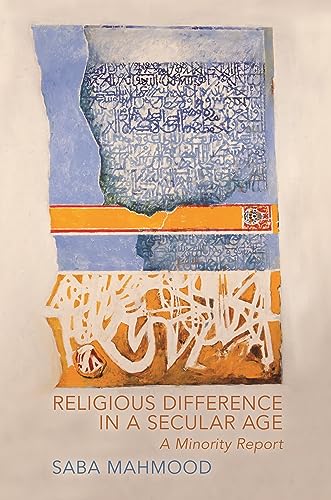
Inhaltsangabe
The plight of religious minorities in the Middle East is often attributed to the failure of secularism to take root in the region. Religious Difference in a Secular Age challenges this assessment by examining four cornerstones of secularism - political and civil equality, minority rights, religious freedom, and the legal separation of private and public domains. Saba Mahmood shows how modern secular governance has exacerbated religious tensions and inequalities rather than reduced them. Tracing the historical career of secular legal concepts in the colonial and postcolonial Middle East, she explores how contradictions at the very heart of political secularism have aggravated and amplified existing forms of Islamic hierarchy, bringing minority relations in Egypt to a new historical impasse. Through a close examination of Egyptian court cases and constitutional debates about minority rights, conflicts around family law, and controversies over freedom of expression, Mahmood invites us to reflect on the entwined histories of secularism in the Middle East and Europe.
Die Inhaltsangabe kann sich auf eine andere Ausgabe dieses Titels beziehen.
Über die Autorin bzw. den Autor
Saba Mahmood is professor of anthropology at the University of California, Berkeley. She is the author of Politics of Piety: The Islamic Revival and the Feminist Subject (Princeton) and the coauthor of Is Critique Secular? Blasphemy, Injury, and Free Speech.
Von der hinteren Coverseite
"Saba Mahmood is a premier scholar of the constitutive powers of secular governance. This extraordinary work is at once a fascinating ethnography of two religious minorities in Egypt and a compelling formulation of how secularism generates strife it claims only to modulate."--Wendy Brown, University of California, Berkeley
"Mahmood delivers an expectedly insightful scholarly performance about the ways secularism, purported to be a solution to interreligious conflict, has in fact not only contributed to that conflict but also exacerbated it by producing new forms of religious polarization. This book is both an indispensable and intellectually delightful read."--Wael B. Hallaq, author of The Impossible State: Islam, Politics, and Modernity's Moral Predicament
"In this stunning book, Mahmood calls into question a good deal of the received wisdom about secularism and the divisions between East and West. Religious Difference in a Secular Age is original, pathbreaking, and important."--Joan Wallach Scott, author of The Politics of the Veil
"Written by one of the most prominent anthropologists of her generation, Religious Difference in a Secular Age is a significant contribution to political theory and the study of religion in the contemporary world."--Webb Keane, author of Christian Moderns: Freedom and Fetish in the Mission Encounter
Auszug. © Genehmigter Nachdruck. Alle Rechte vorbehalten.
Religious Difference in a Secular Age
A Minority Report
By Saba MahmoodPRINCETON UNIVERSITY PRESS
Copyright © 2016 Saba Mahmood
All rights reserved.
ISBN: 978-0-691-15328-5All rights reserved.
Contents
ACKNOWLEDGMENTS, ix,
NOTE ON TRANSLATION AND TRANSLITERATION, xiii,
Introduction, 1,
Part I,
Chapter 1. Minority Rights and Religious Liberty: Itineraries of Conversion, 31,
Chapter 2. To Be or Not to Be a Minority?, 66,
Part II,
Chapter 3. Secularism, Family Law, and Gender Inequality, 111,
Chapter 4. Religious and Civil Inequality, 149,
Chapter 5. Secularity, History, Literature, 181,
Epilogue, 208,
BIBLIOGRAPHY, 215,
INDEX, 229,
CHAPTER 1
MINORITY RIGHTS AND RELIGIOUS LIBERTY: ITINERARIES OF CONVERSION
This chapter provides an account of political secularism in the Middle East by tracking the career of two of its signature concepts — religious liberty and minority rights — across the nineteenth and early twentieth centuries. Less a chronological history than a genealogy, it seeks to capture key shifts in the meaning and praxis of these concepts in order to understand how relations between Muslims and non-Muslims were reconfigured in the modern period. Because I am interested in how religious difference has come to be regulated and remade under conditions of modern secular governance, I focus on the problem of religious minorities rather than groups defined by ethnic, linguistic, or other attributes. This chapter tracks broader international and regional developments that are crucial to how religious difference has come to be imagined and lived in modern Egypt. In doing so, I go back and forth between European and Middle Eastern history because I firmly believe that no analysis of secular political concepts and institutions in the latter is complete without simultaneously accounting for their evolution in the former. Consequently, this chapter does not so much offer an "indigenous genealogy" of the concepts of religious liberty and minority rights as it highlights the overlapping histories that have shaped their modern trajectory.
There are three historical shifts around which this chapter is organized. I start in the nineteenth century, when the concepts of religious liberty and minority rights gained traction in the region with the expansion of European power into the territories ruled by the Ottoman Empire. Christian European states systematically used the discourse of religious liberty and minority rights to undermine Ottoman sovereignty in the name of safeguarding the interests of "Eastern Christians," as they were called at the time. Eventually, a weakened Ottoman Empire adopted religious liberty and minority rights within its governing apparatus in order to shore up its territorial sovereignty and harness the fractious loyalties of diverse irredentist groups. The adoption of these legal concepts did not simply level old religious hierarchies but recalibrated them to a new calculus, opening up certain forms of political belonging for non-Muslims while closing others.
A second historical shift in the meaning of religious liberty and minority rights came about with the institutionalization of the nation-state as the globally dominant form premised on the principle of popular sovereignty and formal equality. From instruments of imperial patronage, religious liberty and minority rights became part of the broader vocabulary of civil and political rights. While in Europe, the transition from imperial to popular sovereignty was a fait accompli by the end of the nineteenth century, this was not the case in the Middle East; there, popular sovereignty had to be developed institutionally and discursively within the context of expanding missionary activity and (direct or indirect) colonial rule. International law, which was supposed to institute a global political order based on the doctrine of sovereignty, readily accommodated the exceptional nature of colonial and mandatory rule. As a result, the meaning and praxis of religious liberty and minority rights in the Middle East were forged in the context of differential sovereignty between Europe and the Middle East, a context that, as I hope to show in this book, remains relevant to how the minority issue is debated in Egypt today.
A third shift that I track in the concept of minority rights belongs to the interwar period. Under the auspices of the League of Nations, an authoritative definition of "national minority" was developed and a system of minority treaties was established to track infractions in countries that were, for the most part, subject to European power. This period in the League's history is instructive not only because it exemplifies the logic of differential sovereignty that attends rights discourse in international law, but also for its consistent thematization of an irresolvable tension located at the heart of the concept of minority: on the one hand, a minority is supposed to be an equal partner with the majority in the building of the nation; on the other hand, its difference (religious, racial, ethnic) poses an incipient threat to the identity of the nation that is grounded in the religious, linguistic, and cultural norms of the majority. Even though the League of Nations and its minority treaties system were dismantled, eventually replaced by the United Nations and its charter of human rights, contemporary struggles over minority rights continue to reenact this tension in various forms.
This chapter is also an argument for why the discourse on religious liberty and national minorities needs to be urgently rethought outside the framework of rights. It belongs, I want to suggest, to a far broader field of secular political praxis that secures the prerogative of the modern state to serve as the arbiter of religious differences, to remake and regulate religious life while proclaiming its sanctity, in the process fundamentally transforming how people perceive and negotiate religious identity and communal relations. Viewed from this perspective, religious liberty does not simply protect religious belief (or unbelief) from state intervention, but secures the distinction between public and private that is so foundational to secular political rule. Similarly, the legal concept of national minority does not simply signify a predetermined demographic group upon whom the modern state confers rights and obligations. Rather, its institutionalization also produces the kinds of subjects who can speak in its name, transforming how religious differences are lived, recognized, and contested. Perhaps if we can apprehend these dimensions of religious liberty and minority rights we may be able to appreciate the double-edged character of political secularism, which promises religious neutrality even as it remakes the fundamental contours of religious life.
Sovereignty and Religious Liberty
The signing of the Peace of Westphalia treaties in 1648 is often narrated as the foundational moment in the emergence of the concept of religious liberty; it not only brought an end to nearly one hundred years of religious warfare among Christians, but also created a political order in which subjects of a state were allowed to hold religious beliefs that were different from the ruler's. While some scholars view the Peace of Westphalia as an earlier moment in Europe's unfolding commitment to the virtue of religious tolerance, others see it as a far more pragmatic instrument that helped settle long-standing territorial disputes by granting formal independence to polities struggling to be free...
„Über diesen Titel“ kann sich auf eine andere Ausgabe dieses Titels beziehen.
Suchergebnisse für Religious Difference in a Secular Age: A Minority Report

Beispielbild für diese ISBN
Religious Difference in a Secular Age : A Minority Report
Verlag:
Princeton University Press, 2015
ISBN 10: 0691153280
ISBN 13: 9780691153285
Gebraucht
Softcover
Anbieter: Better World Books, Mishawaka, IN, USA
Verkäuferbewertung 5 von 5 Sternen

Zustand: Very Good. Former library copy. Pages intact with possible writing/highlighting. Binding strong with minor wear. Dust jackets/supplements may not be included. Includes library markings. Stock photo provided. Product includes identifying sticker. Better World Books: Buy Books. Do Good. Artikel-Nr. 16194782-75
Gebraucht kaufen
EUR 19,24
Versand gratis
Versand innerhalb von USA
Versand innerhalb von USA
Anzahl: 1 verfügbar
Beispielbild für diese ISBN
Religious Difference in a Secular Age
Anbieter: PBShop.store UK, Fairford, GLOS, Vereinigtes Königreich
Verkäuferbewertung 5 von 5 Sternen
PAP. Zustand: New. New Book. Shipped from UK. Established seller since 2000. Artikel-Nr. WP-9780691153285
Neu kaufen
EUR 28,45
EUR 4,92 Versand
Versand von Vereinigtes Königreich nach USA
Versand von Vereinigtes Königreich nach USA
Anzahl: 2 verfügbar
Beispielbild für diese ISBN
Religious Difference in a Secular Age: A Minority Report
Anbieter: Kennys Bookstore, Olney, MD, USA
Verkäuferbewertung 5 von 5 Sternen
Zustand: New. Editors: Jan. 1902-Jan. 1905, J.S. Bassett; Apr. 1905-Jan. 1919, W.H. Glasson (with Edwin Mims, Apr. 1905-July 1909; W.P. Few, Oct. 1909-Jan. 1919); Apr. 1919- W.K. Boyd, W.H. Wannamaker. Num Pages: 248 pages. BIC Classification: HRAM; HRAX; JHMC. Category: (P) Professional & Vocational; (U) Tertiary Education (US: College). Dimension: 229 x 152. Weight in Grams: 399. . 2015. Paperback. . . . . Books ship from the US and Ireland. Artikel-Nr. V9780691153285
Neu kaufen
EUR 35,47
EUR 9,38 Versand
Versand innerhalb von USA
Versand innerhalb von USA
Anzahl: 1 verfügbar
Beispielbild für diese ISBN
Religious Difference in a Secular Age: A Minority Report
Anbieter: Ria Christie Collections, Uxbridge, Vereinigtes Königreich
Verkäuferbewertung 5 von 5 Sternen
Zustand: New. In English. Artikel-Nr. ria9780691153285_new
Neu kaufen
EUR 38,95
EUR 13,34 Versand
Versand von Vereinigtes Königreich nach USA
Versand von Vereinigtes Königreich nach USA
Anzahl: Mehr als 20 verfügbar
Beispielbild für diese ISBN
Religious Difference in a Secular Age A Minority A Minority Report
Anbieter: Revaluation Books, Exeter, Vereinigtes Königreich
Verkäuferbewertung 5 von 5 Sternen
Paperback. Zustand: Brand New. 237 pages. 9.50x6.50x1.00 inches. In Stock. Artikel-Nr. xr0691153280
Neu kaufen
EUR 44,70
EUR 11,82 Versand
Versand von Vereinigtes Königreich nach USA
Versand von Vereinigtes Königreich nach USA
Anzahl: 2 verfügbar
Beispielbild für diese ISBN
RELIGIOUS DIFFERENCE IN A SECULAR AGE
Anbieter: Speedyhen, Hertfordshire, Vereinigtes Königreich
Verkäuferbewertung 5 von 5 Sternen
Zustand: NEW. Artikel-Nr. NW9780691153285
Neu kaufen
EUR 28,47
EUR 48,45 Versand
Versand von Vereinigtes Königreich nach USA
Versand von Vereinigtes Königreich nach USA
Anzahl: 2 verfügbar
Foto des Verkäufers
Religious Difference in a Secular Age : A Minority Report
Verlag:
Princeton University Press Nov 2015, 2015
ISBN 10: 0691153280
ISBN 13: 9780691153285
Neu
Taschenbuch
Anbieter: AHA-BUCH GmbH, Einbeck, Deutschland
Verkäuferbewertung 5 von 5 Sternen
Taschenbuch. Zustand: Neu. Neuware - The plight of religious minorities in the Middle East is often attributed to the failure of secularism to take root in the region. Religious Difference in a Secular Age challenges this assessment by examining four cornerstones of secularism - political and civil equality, minority rights, religious freedom, and the legal separation of private and public domains. Saba Mahmood shows how modern secular governance has exacerbated religious tensions and inequalities rather than reduced them. Tracing the historical career of secular legal concepts in the colonial and postcolonial Middle East, she explores how contradictions at the very heart of political secularism have aggravated and amplified existing forms of Islamic hierarchy, bringing minority relations in Egypt to a new historical impasse. Through a close examination of Egyptian court cases and constitutional debates about minority rights, conflicts around family law, and controversies over freedom of expression, Mahmood invites us to reflect on the entwined histories of secularism in the Middle East and Europe. Artikel-Nr. 9780691153285
Neu kaufen
EUR 42,81
EUR 35,00 Versand
Versand von Deutschland nach USA
Versand von Deutschland nach USA
Anzahl: 1 verfügbar
Foto des Verkäufers
The Religious Difference in a Secular Age
Anbieter: moluna, Greven, Deutschland
Verkäuferbewertung 5 von 5 Sternen
Zustand: New. Editors: Jan. 1902-Jan. 1905, J.S. Bassett Apr. 1905-Jan. 1919, W.H. Glasson (with Edwin Mims, Apr. 1905-July 1909 W.P. Few, Oct. 1909-Jan. 1919) Apr. 1919- W.K. Boyd, W.H. Wannamaker.The plight of religious minorities in the Middle East is often att. Artikel-Nr. 35203637
Neu kaufen
EUR 36,74
EUR 48,99 Versand
Versand von Deutschland nach USA
Versand von Deutschland nach USA
Anzahl: 2 verfügbar
Foto des Verkäufers
Religious Difference in a Secular Age | A Minority Report
Anbieter: preigu, Osnabrück, Deutschland
Verkäuferbewertung 5 von 5 Sternen
Taschenbuch. Zustand: Neu. Religious Difference in a Secular Age | A Minority Report | Saba Mahmood | Taschenbuch | Einband - flex.(Paperback) | Englisch | 2015 | Princeton University Press | EAN 9780691153285 | Verantwortliche Person für die EU: Libri GmbH, Europaallee 1, 36244 Bad Hersfeld, gpsr[at]libri[dot]de | Anbieter: preigu. Artikel-Nr. 104802205
Neu kaufen
EUR 41,80
EUR 70,00 Versand
Versand von Deutschland nach USA
Versand von Deutschland nach USA
Anzahl: 1 verfügbar
Beispielbild für diese ISBN
Religious Difference in a Secular Age: A Minority Report
Verlag:
Princeton Univers. Press, 2015
ISBN 10: 0691153280
ISBN 13: 9780691153285
Gebraucht
Softcover
Anbieter: BUCHSERVICE / ANTIQUARIAT Lars Lutzer, Wahlstedt, Deutschland
Verkäuferbewertung 5 von 5 Sternen
Zustand: gut. 2015. Religious Difference in a Secular Age: A Minority Report In englischer Sprache. pages. Artikel-Nr. BN263959
Gebraucht kaufen
EUR 179,90
EUR 39,95 Versand
Versand von Deutschland nach USA
Versand von Deutschland nach USA
Anzahl: 1 verfügbar