
Verwandte Artikel zu Introduction to Jungian Psychology: Notes of the Seminar...
Introduction to Jungian Psychology: Notes of the Seminar on Analytical Psychology Given in 1925 (Philemon Series - Bollingen Series, 99, Band 99) - Softcover
Buch 3 von 12: Lectures Delivered at ETH Zurich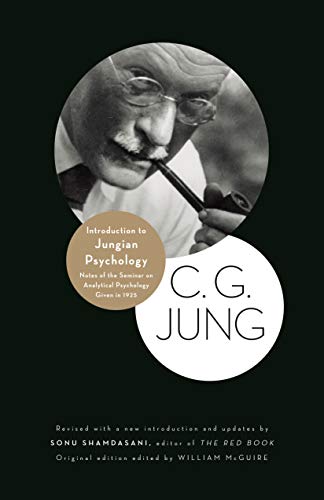
Inhaltsangabe
In 1925, while transcribing and painting in his Red Book, C. G. Jung presented a series of seminars in English in which he spoke for the first time in public about his early spiritualistic experiences, his encounter with Freud, the genesis of his psychology, and the self-experimentation he called his "confrontation with the unconscious," describing in detail a number of pivotal dreams and fantasies. He then presented an introductory overview of his ideas about psychological typology and the archetypes of the collective unconscious, illustrated with case material and discussions concerning contemporary art. He focused particularly on the contra-sexual elements of the personality, the anima and the animus, which he discussed with the participants through psychological analyses of popular novels, such as Rider Haggard's She. The notes from these seminars form the only reliable published autobiographical account by Jung and the clearest and most important account of the development of his work.
Die Inhaltsangabe kann sich auf eine andere Ausgabe dieses Titels beziehen.
Über die Autorin bzw. den Autor
Sonu Shamdasani is editor of The Red Book and Philemon Professor of Jung History at University College London.
Auszug. © Genehmigter Nachdruck. Alle Rechte vorbehalten.
INTRODUCTION TO JUNGIAN PSYCHOLOGY
NOTES OF THE SEMINAR ON ANALYTICAL PSYCHOLOGY GIVEN IN 1925By C. G. JungPRINCETON UNIVERSITY PRESS
Copyright © 2012 Princeton university PressAll right reserved.
ISBN: 978-0-691-15205-9
Contents
Preface to the 2012 Philemon Series Edition, by Sonu Shamdasani.....................viiIntroduction, by Sonu Shamdasani....................................................ixIntroduction to the 1989 Edition, by William McGuire................................xxvAcknowledgments.....................................................................xxxvMembers of the Seminar..............................................................xxxviiList of Abbreviations...............................................................xxxixForeword, by Cary F. de Angulo......................................................xliLecture 1...........................................................................3Lecture 2...........................................................................9Lecture 3...........................................................................15Lecture 4...........................................................................27Lecture 5...........................................................................37Lecture 6...........................................................................47Lecture 7...........................................................................55Lecture 8...........................................................................63Lecture 9...........................................................................71Lecture 10..........................................................................79Lecture 11..........................................................................89Lecture 12..........................................................................99Lecture 13..........................................................................109Lecture 14..........................................................................119Lecture 15..........................................................................127Lecture 16..........................................................................131APPENDIX TO LECTURE 16..............................................................143"SHE"...............................................................................146"THE EVIL VINEYARD".................................................................154"L'ATLANTIDE".......................................................................1611. GENERAL INDEX....................................................................1712. CASES IN SUMMARY.................................................................1773. DREAMS, FANTASIES, AND VISIONS...................................................1794. CHRONOLOGICAL INDEX OF JUNG'S WORKS CITED AND DISCUSSED..........................181The Collected Works of C. G. Jung...................................................183
Chapter One
LECTURE 1 23 March 1925
Dr. Jung:
No one seriously interested in analytical psychology can fail to have been struck with the astonishing width of the field embraced by it, and so I have thought it would be useful to all of us if, in the course of these lectures, we could obtain a view of that field. At the beginning, I would like to give you a brief sketch of the development of my own conceptions from the time I first became interested in problems of the unconscious. As on previous occasions, you can assist me greatly if you contribute written questions, permitting me to select the ones suitable for discussion.
* * *
In 1896 something happened to me that served as an impetus for my future life. A thing of this sort is always to be expected in a man's life—that is to say, his family history alone is never the key to his creative achievements. The thing that started me off in my interest in psychology was the case of the fifteen-and-a-half-year-old girl whose case I have described in the Collected Papers, as the first contribution to that series. This girl was a somnambulist, and it was discovered by her sisters that they could obtain extraordinary answers to questions put to her when she was in the sleeping state: in other words, she was found to be a medium. I was impressed with the fact that, notwithstanding appearances, there must be a hidden life of the mind manifesting itself only in trance or in sleep. a little hypnosis would send this girl into a trance from which she would later awake as from sleep. During the trance several personalities would manifest themselves; and, little by little, I found I could call up by suggestion one personality or another. In short, I found I could have a formative influence on them.
Of course I became deeply interested in all these things and began to try to explain them, something I could not do as I was only twenty-one at the time, and quite ignorant along these lines. I said to myself, however, that there must be some world behind the conscious world, and that it was this world with which the girl was in contact. I began to study the literature of spiritism but could find no satisfaction there. Then I turned to philosophy, always seeking for a possible clue to these strange phenomena.
I was a student of medicine at the time and deeply interested in it, but also deeply interested in philosophy. Finally in my searching I came to Schopenhauer and Hartmann. From Schopenhauer I got a very enlightening point of view. His fundamental standpoint is that the will as a blind urge to existence is aimless; it simply "happened to the creative will to make the world." This is his position in The World as Will and Idea. However, in Will in Nature he drifts into a teleological attitude, though this is in direct opposition to his original thesis, something, be it said, which not infrequently happens to a philosopher. In this latter work he assumes that there is direction in the creating will, and this point of view I took as mine. My first conception of the libido then was not that it was a formless stream so to speak, but that it was archetypal in character. That is to say, libido never comes up from the unconscious in a formless state, but always in images. Using a figure of speech, the ore brought up from the mine of the unconscious is always crystallized.
Out of this reading of Schopenhauer, I got a tentative explanation of the possible psychology of the case I was studying; that is, I thought the personifications might be the result of this image-forming tendency of the libido. If I suggested a given person to the girl during her unconscious states, she would act that person out, and her answers to questions would come in a manner characteristic of the person suggested. From this I became convinced of the tendency of the unconscious material to flow into definite moulds. This gave a clue, too, to the disintegration of personality. In dementia praecox, for example, there is an independent working of the different parts of the psyche, but there is generally nothing vague about the different parts; the voices that are heard are the voices of definite individuals, of particular persons, and that is why they are so real. In the same way a spiritualist will always claim a high degree of individuality and personal character for his "spirits." At this time I thought that after all there might be ghosts.
My ideas of the unconscious, then, first became enlightened through...
„Über diesen Titel“ kann sich auf eine andere Ausgabe dieses Titels beziehen.
Suchergebnisse für Introduction to Jungian Psychology: Notes of the Seminar...

Beispielbild für diese ISBN
Introduction to Jungian Psychology: Notes of the Seminar on Analytical Psychology Given in 1925 (Philemon Foundation Series)
Verlag:
Princeton University Press (edition Revised), 2011
ISBN 10: 0691152055
ISBN 13: 9780691152059
Gebraucht
Paperback
Anbieter: BooksRun, Philadelphia, PA, USA
Verkäuferbewertung 5 von 5 Sternen

Paperback. Zustand: Very Good. Revised. It's a well-cared-for item that has seen limited use. The item may show minor signs of wear. All the text is legible, with all pages included. It may have slight markings and/or highlighting. Artikel-Nr. 0691152055-11-1
Gebraucht kaufen
EUR 4,50
Versand gratis
Versand innerhalb von USA
Versand innerhalb von USA
Anzahl: 1 verfügbar
Beispielbild für diese ISBN
Introduction to Jungian Psychology: Notes of the Seminar on Analytical Psychology Given in 1925
Verlag:
Princeton University Press, 2011
ISBN 10: 0691152055
ISBN 13: 9780691152059
Gebraucht
Paperback
Anbieter: ThriftBooks-Dallas, Dallas, TX, USA
Verkäuferbewertung 5 von 5 Sternen
Paperback. Zustand: Very Good. No Jacket. May have limited writing in cover pages. Pages are unmarked. ~ ThriftBooks: Read More, Spend Less. Artikel-Nr. G0691152055I4N00
Gebraucht kaufen
EUR 6,48
Versand gratis
Versand innerhalb von USA
Versand innerhalb von USA
Anzahl: 1 verfügbar
Beispielbild für diese ISBN
Introduction to Jungian Psychology: Notes of the Seminar on Analytical Psychology Given in 1925
Verlag:
Princeton University Press, 2011
ISBN 10: 0691152055
ISBN 13: 9780691152059
Gebraucht
Paperback
Anbieter: World of Books (was SecondSale), Montgomery, IL, USA
Verkäuferbewertung 5 von 5 Sternen
Paperback. Zustand: Good. In 1925, while transcribing and painting in his "Red Book", C. G. Jung presented a series of seminars in English in which he spoke for the first time in public about his early spiritualistic experiences, his encounter with Freud, the genesis of his psychology, and the self-experimentation he called his "confrontation with the unconscious," describing in detail a number of pivotal dreams and fantasies. He then presented an introductory overview of his ideas about psychological typology and the archetypes of the collective unconscious, illustrated with case material and discussions concerning contemporary art. He focused particularly on the contra-sexual elements of the personality, the anima and the animus, which he discussed with the participants through psychological analyses of popular novels, such as Rider Haggard's "She". The notes from these seminars form the only reliable published autobiographical account by Jung and the clearest and most important account of the development of his work. This revised edition features additional annotations, information from "the Red Book", and an introduction by Sonu Shamdasani, Philemon Professor of Jung History at University College London. Artikel-Nr. 00108093627
Gebraucht kaufen
EUR 8,34
Versand gratis
Versand innerhalb von USA
Versand innerhalb von USA
Anzahl: 1 verfügbar
Beispielbild für diese ISBN
Introduction to Jungian Psychology: Notes of the Seminar on Analytical Psychology Given in 1925 (Philemon Foundation Series)
Verlag:
Princeton University Press, 2011
ISBN 10: 0691152055
ISBN 13: 9780691152059
Gebraucht
Paperback
Anbieter: WorldofBooks, Goring-By-Sea, WS, Vereinigtes Königreich
Verkäuferbewertung 5 von 5 Sternen
Paperback. Zustand: Very Good. The book has been read, but is in excellent condition. Pages are intact and not marred by notes or highlighting. The spine remains undamaged. Artikel-Nr. GOR009128106
Gebraucht kaufen
EUR 10,34
EUR 6,68 Versand
Versand von Vereinigtes Königreich nach USA
Versand von Vereinigtes Königreich nach USA
Anzahl: 2 verfügbar
Beispielbild für diese ISBN
Introduction to Jungian Psychology: Notes of the Seminar on Analytical Psychology Given in 1925 (Revised)
Verlag:
Princeton University Press December 2011, 2011
ISBN 10: 0691152055
ISBN 13: 9780691152059
Neu
Paper Back
Anbieter: Eagle Eye Books, Decatur, GA, USA
Verkäuferbewertung 4 von 5 Sternen

Paper Back. Zustand: New. Artikel-Nr. 899600
Neu kaufen
EUR 16,46
EUR 3,55 Versand
Versand innerhalb von USA
Versand innerhalb von USA
Anzahl: 1 verfügbar
Beispielbild für diese ISBN
Introduction to Jungian Psychology Notes of the Seminar on Analytical Psychology Given in 1925
Anbieter: Revaluation Books, Exeter, Vereinigtes Königreich
Verkäuferbewertung 5 von 5 Sternen
Paperback. Zustand: Brand New. translation edition. 240 pages. 8.40x5.50x0.80 inches. In Stock. Artikel-Nr. xr0691152055
Neu kaufen
EUR 18,50
EUR 11,92 Versand
Versand von Vereinigtes Königreich nach USA
Versand von Vereinigtes Königreich nach USA
Anzahl: 1 verfügbar
Beispielbild für diese ISBN
Introduction to Jungian Psychology Notes of the Seminar on Analytical Psychology Given in 1925
Anbieter: Revaluation Books, Exeter, Vereinigtes Königreich
Verkäuferbewertung 5 von 5 Sternen
Paperback. Zustand: Brand New. translation edition. 240 pages. 8.40x5.50x0.80 inches. In Stock. Artikel-Nr. __0691152055
Neu kaufen
EUR 18,60
EUR 11,92 Versand
Versand von Vereinigtes Königreich nach USA
Versand von Vereinigtes Königreich nach USA
Anzahl: 1 verfügbar
Foto des Verkäufers
Introduction to Jungian Psychology : Notes of the Seminar on Analytical Psychology Given in 1925
Verlag:
Princeton University Press Dez 2011, 2011
ISBN 10: 0691152055
ISBN 13: 9780691152059
Neu
Taschenbuch
Anbieter: AHA-BUCH GmbH, Einbeck, Deutschland
Verkäuferbewertung 5 von 5 Sternen
Taschenbuch. Zustand: Neu. Neuware - In 1925, while transcribing and painting in his Red Book, C. G. Jung presented a series of seminars in English in which he spoke for the first time in public about his early spiritualistic experiences, his encounter with Freud, the genesis of his psychology, and the self-experimentation he called his 'confrontation with the unconscious,' describing in detail a number of pivotal dreams and fantasies. He then presented an introductory overview of his ideas about psychological typology and the archetypes of the collective unconscious, illustrated with case material and discussions concerning contemporary art. He focused particularly on the contra-sexual elements of the personality, the anima and the animus, which he discussed with the participants through psychological analyses of popular novels, such as Rider Haggard's She. The notes from these seminars form the only reliable published autobiographical account by Jung and the clearest and most important account of the development of his work. Artikel-Nr. 9780691152059
Neu kaufen
EUR 26,92
EUR 35,00 Versand
Versand von Deutschland nach USA
Versand von Deutschland nach USA
Anzahl: 1 verfügbar
Foto des Verkäufers
Introduction to Jungian Psychology: Notes of the Seminar on Analytical Psychology Given in 1925
Anbieter: moluna, Greven, Deutschland
Verkäuferbewertung 5 von 5 Sternen
Zustand: New. In 1925, while transcribing and painting in his Red Book, C. G. Jung presented a series of seminars in English in which he spoke for the first time in public about his early spiritualistic experiences, his encounter with Freud, the genesis of his psychology. Artikel-Nr. 594884800
Neu kaufen
EUR 25,18
EUR 48,99 Versand
Versand von Deutschland nach USA
Versand von Deutschland nach USA
Anzahl: 1 verfügbar