
Verwandte Artikel zu Neuro: The New Brain Sciences and the Management of...
Inhaltsangabe
How the new brain sciences are transforming our understanding of what it means to be human
The brain sciences are influencing our understanding of human behavior as never before, from neuropsychiatry and neuroeconomics to neurotheology and neuroaesthetics. Many now believe that the brain is what makes us human, and it seems that neuroscientists are poised to become the new experts in the management of human conduct. Neuro describes the key developments—theoretical, technological, economic, and biopolitical—that have enabled the neurosciences to gain such traction outside the laboratory. It explores the ways neurobiological conceptions of personhood are influencing everything from child rearing to criminal justice, and are transforming the ways we "know ourselves" as human beings. In this emerging neuro-ontology, we are not "determined" by our neurobiology: on the contrary, it appears that we can and should seek to improve ourselves by understanding and acting on our brains.
Neuro examines the implications of this emerging trend, weighing the promises against the perils, and evaluating some widely held concerns about a neurobiological "colonization" of the social and human sciences. Despite identifying many exaggerated claims and premature promises, Neuro argues that the openness provided by the new styles of thought taking shape in neuroscience, with its contemporary conceptions of the neuromolecular, plastic, and social brain, could make possible a new and productive engagement between the social and brain sciences.
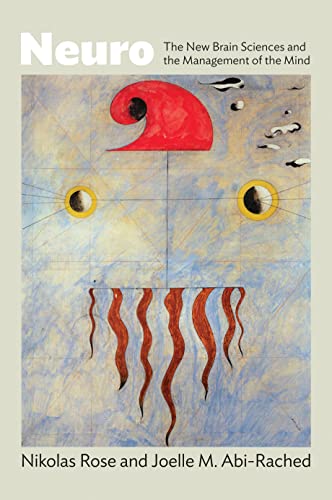
Copyright note: Reproduction, including downloading of Joan Miro works is prohibited by copyright laws and international conventions without the express written permission of Artists Rights Society (ARS), New York.
Die Inhaltsangabe kann sich auf eine andere Ausgabe dieses Titels beziehen.
Über die Autorin bzw. den Autor
Nikolas Rose is professor of sociology and head of the Department of Social Science, Health, and Medicine at King's College London. His books include The Politics of Life Itself: Biomedicine, Power, and Subjectivity in the Twenty-First Century (Princeton). Joelle M. Abi-Rached is a PhD candidate in the history of science at Harvard University.
Von der hinteren Coverseite
"The 'neurofication' of the humanities, social sciences, public policy, and the law has attracted promoters and detractors. What we have lacked until now is a critical but open-minded look at 'neuro.' This is what Rose and Abi-Rached have given us in this thoughtful and well-researched book. They do not jump on the neuro bandwagon, but instead offer a clear accounting of its appeal, its precedents in psychology and genetics, its genuine importance, and ultimately its limitations. A fascinating and important book."--Martha J. Farah, University of Pennsylvania
"Neuro makes a significant and original contribution to our understanding of the impact of the brain sciences on social and cultural processes. The scholarship throughout is brilliant. This book gives us extremely perceptive, detailed, and illuminating analyses of what is actually being claimed in the various branches of the neurosciences. It will attract a great deal of interest and controversy."--Emily Martin, author of Bipolar Expeditions: Mania and Depression in American Culture
"I enjoyed reading this book. It provides an interesting and comprehensive map of the many sciences and quasi-sciences that have embraced the 'neuro' prefix. I also appreciate how Rose and Abi-Rached manage to examine the explosion of 'neuros' with a critical eye, but without dismissing the genuine prospects that it may hold."--Michael E. Lynch, Cornell University
Auszug. © Genehmigter Nachdruck. Alle Rechte vorbehalten.
Neuro
The New Brain Sciences and the Management of the MindBy Nikolas Rose Joelle M. Abi-RachedPRINCETON UNIVERSITY PRESS
Copyright © 2013 Princeton University PressAll right reserved.
ISBN: 978-0-691-14961-5
Contents
Acknowledgments...................................................ixAbbreviations.....................................................xiIntroduction......................................................1One The Neuromolecular Brain......................................25Two The Visible Invisible.........................................53Three What's Wrong with Their Mice?...............................82Four All in the Brain?............................................110Five The Social Brain.............................................141Six The Antisocial Brain..........................................164Seven Personhood in a Neurobiological Age.........................199Conclusion Managing Brains, Minds, and Selves.....................225Appendix How We Wrote this Book...................................235Notes.............................................................237References........................................................277Index.............................................................325
Chapter One
The Neuromolecular Brain
Those of us who have lived through the period in which molecular biology grew up ... realized that here was an enormous opportunity for a new synthesis ... [an] approach to understanding the mechanisms and phenomena of the human mind that applies and adapts the revolutionary advances in molecular biology achieved during the postwar period. The breakthrough to precise knowledge in molecular genetics and immunology—"breaking the molecular code" resulted from the productive interaction of physical and chemical sciences with the life sciences. It now seems possible to achieve similar revolutionary advances in understanding the human mind. —Francis O. Schmitt, "Progress Report on the Neurosciences Research Program," 1963
In the summer of 1961, at the Massachusetts Institute of Technology (MIT), Francis O. Schmitt and a small group of collaborators began to lay the plans for a project that was as simple to state as it was ambitious to imagine: to do for the brain what Watson and Crick had so recently done for the gene when they discovered the structure of DNA and "cracked the genetic code." In the process they were to invent what they would come to term neuroscience (Swazey 1975, 531). "To this end, new devices are being forged," wrote Schmitt in 1967, "with one of which I am closely identified. This is the Neurosciences Research Program (familiarly known as NRP), being a group of 34 gifted scientists—mathematicians, physicists, chemists, neurobiologists, neurologists, psychologists, and psychiatrists—who meet regularly to study the problem and who sponsor a center and a center staff which arranges work sessions on relevant topics of conceptual importance and which communicates the harvest of the work sessions in the program's Bulletin" (Schmitt 1967, 562).
The NRP had grown out of the first Intensive Study Program (ISP) that took place in 1966 at the University of Colorado at Boulder, where more than a hundred participants from diverse professional backgrounds gathered to "unify the disparate neurosciences" and shed the light on the emerging trends, issues, hypotheses, and findings that could further advance our knowledge of the human brain (Quarton, Melnechuk, Schmitt et al. 1967). The community brought together by this first study program defined itself by its set of objects of study: the brain, the nervous system, and their relation to their arising "products" (for example, learning, memory, sleep, arousal, reflex, etc.). The challenge, as they saw it, was to bring together the disparate fields of neurologists, behavioral scientists, physicists, chemists, and mathematicians into meaningful communication with one another under the rubric of what Schmitt (1970)—in one of the first journal articles to mention neuroscience in its title—was to call "brain and behavior." In other words, the intention was to integrate not just the neuro disciplines—neurophysiology, neuroanatomy, neurochemistry, and neurology—but also the psy disciplines of psychology, psychoanalysis, and psychiatry, as well as some other less obvious fields such as immunology (Schmitt 1990). Their approach was characterized by the attempt to combine analysis at many levels: cellular, molecular, anatomical, physiological, and behavioral (Quarton, Melnechuk, Schmitt, et al. 1967). Twenty years later it seemed easy to state the program's aim: it was to answer the question "What is neuroscience?" (Schmitt 1985, 1990).
The terms neuroscience and neuroscientist now seem the obvious ones for this kind of research on the brain. But neither the name nor its implications were immediately evident to those visionaries at the time. Judith Swazey tells us that Schmitt first used the terms "mental biophysics" and "biophysics of the mind" to encapsulate his attempt to bring together the "wet, the moist and the dry" disciplines that addressed central nervous system functioning (Swazey 1975). He and his colleagues later worked under the title "the Mens Project" (adopting the Latin term for mind) and initially applied to the NIH for a grant for a "Neurophysical Sciences Study Program"—which was approved in just two weeks. The project only became the "Neurosciences Research Program" in a subsequent grant application to NASA and the term neuroscience made its first public appearance (in the plural) in 1963 in the title of the Neurosciences Research Program Bulletin of that year.
Schmitt was a biophysicist who was recruited to MIT in 1941 at the request of MIT's president, Karl Compton, and its then vice-president, Vannevar Bush, author of the classic text on the endless frontier of science published in 1945 (Bush 1945). Compton and Bush were keen on establishing a "new kind of biology" or "biological engineering" that would combine physics, mathematics, and chemistry (Bloom 1997). This vision, as we have suggested, was explicitly informed by the rapid developments in molecular biology during the 1950s (Schmitt 1990). The new kind of biology that Schmitt was called upon to establish at MIT was a molecular biology heavily rooted in biophysics, biochemistry, and biophysical chemistry (Schmitt 1990). Swazey tells us that when Schmitt was sketching out his plans in 1961, "he listed nine 'basic disciplines' for mental biophysics: solid state physics, quantum chemistry, chemical physics, biochemistry, ultrastructure (electron microscopy and x-ray diffraction), molecular electronics, computer science, biomathematics, and literature research" (Swazey 1975, 531). Physical chemistry, bioelectric studies and computer science seemed to be essential to study the "physical basis" of memory, learning, consciousness, and cognitive behavior.
In a later paper the list was expanded to twenty-five areas of study, and in its progress report to the NIH in 1963, the NRP enumerated fourteen disciplines represented in their program: chemistry, biochemistry, neurochemistry, physical chemistry, mathematics, physics, biophysics, molecular biology, electrophysiology, neurobiology, neuroanatomy, psychology, psychiatry, and clinical medicine. This was in danger of becoming an enterprise without limits! By 1967, however, Schmitt created a simpler diagram that divided the neurosciences into "three intellectual areas":...
„Über diesen Titel“ kann sich auf eine andere Ausgabe dieses Titels beziehen.
Suchergebnisse für Neuro: The New Brain Sciences and the Management of...

Beispielbild für diese ISBN
Neuro: The New Brain Sciences and the Management of the Mind
Verlag:
Princeton University Press, 2013
ISBN 10: 0691149615
ISBN 13: 9780691149615
Gebraucht
Softcover
Anbieter: World of Books (was SecondSale), Montgomery, IL, USA
Verkäuferbewertung 5 von 5 Sternen

Zustand: Very Good. Item in very good condition! Textbooks may not include supplemental items i.e. CDs, access codes etc. Artikel-Nr. 00106423109
Gebraucht kaufen
EUR 10,26
Versand gratis
Versand innerhalb von USA
Versand innerhalb von USA
Anzahl: 1 verfügbar
Beispielbild für diese ISBN
Neuro â" The New Brain Sciences and the Management of the Mind
Verlag:
Princeton University Press, 2013
ISBN 10: 0691149615
ISBN 13: 9780691149615
Gebraucht
paperback
Anbieter: Sell Books, Elland, YORKS, Vereinigtes Königreich
Verkäuferbewertung 5 von 5 Sternen
paperback. Zustand: Good. Our good condition books are generally good for reading but not for gifting or collecting. They could have imperfections such as creasing, fanning, inscriptions, margin notes, yellowing, staining on edge or cover or pages, bumps, scuffs, etc etc (sometimes multiple of these). It's a wide category that encompasses anything that isn't almost-new down to anything that is slightly better than poor. We would NOT recommend gifting Good books - these should be considered reading copies. Our books are dispatched from a Yorkshire former cotton mill. We list via barcode/ISBN so please note that the images are stock images and may not be the exact copy you receive, furthermore the details about edition and year might not be accurate as many publishers reuse the same ISBN for multiple editions and as we simply scan a barcode or enter an ISBN we do not check the validity of the edition data when listing. If you're looking for an exact edition please don't order (at least not without checking with us first, although we don't always have time to check). We aim to dispatch prompty, the service used will depend on order value and book size. We can ship to most countries, see our shipping policies. Payment is via Abe only. Artikel-Nr. mon0000021577
Gebraucht kaufen
EUR 4,22
EUR 14,20 Versand
Versand von Vereinigtes Königreich nach USA
Versand von Vereinigtes Königreich nach USA
Anzahl: 1 verfügbar
Beispielbild für diese ISBN
Neuro
Anbieter: PBShop.store US, Wood Dale, IL, USA
Verkäuferbewertung 5 von 5 Sternen
PAP. Zustand: New. New Book. Shipped from UK. Established seller since 2000. Artikel-Nr. WP-9780691149615
Beispielbild für diese ISBN
Neuro
Anbieter: PBShop.store UK, Fairford, GLOS, Vereinigtes Königreich
Verkäuferbewertung 5 von 5 Sternen
PAP. Zustand: New. New Book. Shipped from UK. Established seller since 2000. Artikel-Nr. WP-9780691149615
Neu kaufen
EUR 30,25
EUR 5,87 Versand
Versand von Vereinigtes Königreich nach USA
Versand von Vereinigtes Königreich nach USA
Anzahl: 4 verfügbar
Beispielbild für diese ISBN
Neuro: The New Brain Sciences and the Management of the Mind
Verlag:
Princeton University Press, 2013
ISBN 10: 0691149615
ISBN 13: 9780691149615
Gebraucht
Softcover
Anbieter: Anybook.com, Lincoln, Vereinigtes Königreich
Verkäuferbewertung 5 von 5 Sternen
Zustand: Good. This is an ex-library book and may have the usual library/used-book markings inside.This book has soft covers. In good all round condition. Please note the Image in this listing is a stock photo and may not match the covers of the actual item,600grams, ISBN:9780691149615. Artikel-Nr. 4145138
Gebraucht kaufen
EUR 20,52
EUR 15,89 Versand
Versand von Vereinigtes Königreich nach USA
Versand von Vereinigtes Königreich nach USA
Anzahl: 1 verfügbar
Beispielbild für diese ISBN
Neuro
Anbieter: Majestic Books, Hounslow, Vereinigtes Königreich
Verkäuferbewertung 4 von 5 Sternen

Zustand: New. pp. 352. Artikel-Nr. 57100818
Neu kaufen
EUR 40,45
EUR 7,59 Versand
Versand von Vereinigtes Königreich nach USA
Versand von Vereinigtes Königreich nach USA
Anzahl: 3 verfügbar
Beispielbild für diese ISBN
Neuro: The New Brain Sciences and the Management of the Mind
Anbieter: Kennys Bookstore, Olney, MD, USA
Verkäuferbewertung 5 von 5 Sternen
Zustand: New. 2013. Paperback. Num Pages: 352 pages. BIC Classification: JMM; PDX; PSAN. Category: (P) Professional & Vocational; (U) Tertiary Education (US: College). Dimension: 234 x 155 x 21. Weight in Grams: 498. . . . . . Books ship from the US and Ireland. Artikel-Nr. V9780691149615
Neu kaufen
EUR 40,50
EUR 9,06 Versand
Versand innerhalb von USA
Versand innerhalb von USA
Anzahl: 1 verfügbar
Beispielbild für diese ISBN
Neuro: The New Brain Sciences and the Management of the Mind
Anbieter: Ria Christie Collections, Uxbridge, Vereinigtes Königreich
Verkäuferbewertung 5 von 5 Sternen
Zustand: New. In English. Artikel-Nr. ria9780691149615_new
Neu kaufen
EUR 37,12
EUR 14,00 Versand
Versand von Vereinigtes Königreich nach USA
Versand von Vereinigtes Königreich nach USA
Anzahl: 6 verfügbar
Beispielbild für diese ISBN
Neuro The New Brain Sciences and the Management of the Mind
Anbieter: Revaluation Books, Exeter, Vereinigtes Königreich
Verkäuferbewertung 5 von 5 Sternen
Paperback. Zustand: Brand New. 335 pages. 9.50x6.75x1.00 inches. In Stock. Artikel-Nr. x-0691149615
Neu kaufen
EUR 49,77
EUR 14,60 Versand
Versand von Vereinigtes Königreich nach USA
Versand von Vereinigtes Königreich nach USA
Anzahl: 2 verfügbar